
Last updated September 8, 2026 · Editorial policy
- Best time to visit Yellowstone: at a glance
- Best Time to Visit Yellowstone National Park: Month-by-Month Guide
- Best Months to Visit Yellowstone National Park
- Yellowstone National Park Travel Seasons at a Glance
- Festivals & Events in Yellowstone National Park
- When to Visit by Travel Goal
- What to Avoid
- Booking Tips
- The Honest Pick: Why Late September Beats Peak Summer
- Frequently Asked Questions
- Related Yellowstone National Park Travel Guides
- Related Articles
Best time to visit Yellowstone: at a glance
Short answer: May–September; July–August for full access, September for wildlife & fewer crowds.
| Season | Months | What to expect |
|---|---|---|
| Peak | Jul–Aug | All roads open, warm; busiest |
| Shoulder (best value) | May–Jun, Sep | Wildlife active, fewer crowds |
| Low | Oct–Apr | Snowbound; limited (snowcoach) access |
Best Time to Visit Yellowstone National Park: Month-by-Month Guide
Quick take: When should you actually go to Yellowstone National Park? Below: the honest month-by-month guide — not the watered-down tourism-board version.
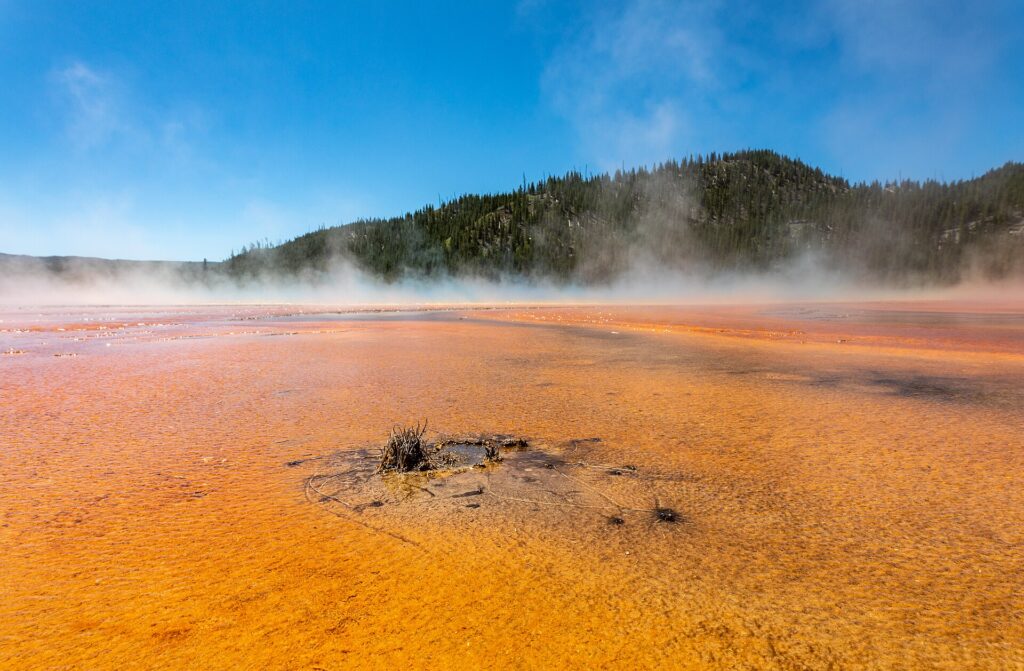
Peak: summer (June-August) · Off-season: winter (December-February)
Knowing the best time to visit Yellowstone National Park can transform your trip — saving you hundreds on flights and hotels while putting you in better weather with fewer crowds. This guide breaks down each season, key events, and what to expect month by month so you can pick the right travel dates.
Best Months to Visit Yellowstone National Park
Top pick: Early September through early October, right after Labor Day. Summer crowds thin fast while all park roads typically stay open, elk bugle through the rut, and bears feed ahead of hibernation. Days run in the 50s to 60s F with crisp nights, and gateway lodging rates drop roughly 20 to 40 percent from peak summer.
Yellowstone National Park Travel Seasons at a Glance
| Season | Months | What to Expect |
|---|---|---|
| Peak | summer (June-August) | Best weather (for that region), highest prices, biggest crowds. Book hotels 3-6 months ahead. |
| Shoulder | shoulder seasons (typically April-May and September-October) | Sweet spot: good weather, moderate crowds, 15-30% lower prices than peak. |
| Off-season | winter (December-February) | Cheapest, quietest. Some sights may be closed. Best for budget travelers and shoulder-month flexibility. |
Festivals & Events in Yellowstone National Park
The elk rut in the second half of September is Yellowstone’s most booking-critical window: it overlaps the park’s best-value weeks, so lodging in Gardiner and Mammoth sells out months ahead. If bugling elk are your goal, lock rooms by early spring for a September trip.
- Elk Rut (Bugling) (Sep)
- Bison Rut (Aug)
- Winter Wolf Watching (Lamar Valley) (Dec-Feb)
- Fall Foliage (late Sep-early Oct)
When to Visit by Travel Goal
- Best weather: July and August bring the mildest conditions, with daytime highs near 21-27C, daylight until roughly 9pm, and mostly dry mornings; nights still drop toward freezing, so pack layers.
- Lowest prices: winter (December-February). Hotels and flights cut 30-50%. Trade weather for savings.
- Fewest crowds: While roads are open, April and October are the quietest months, followed by early May and the last half of September once Labor Day passes. Winter is emptier still, though access is limited to snowcoach tours and the year-round Gardiner-to-Cooke City road.
- Festivals & culture: Yellowstone’s marquee events are natural ones: the elk rut fills September with bugling bulls around Mammoth Hot Springs, and Lamar Valley’s winter wolf watching peaks roughly December through February. Nearby Cody adds its famous Stampede Rodeo around July 4 if you want a human festival.
- Outdoor activities: Hike and watch wildlife from late June through September, once high-country snow melts; avoid November through April, when most park roads close to cars and trails stay buried in snow.
- Budget travelers: April and late October through November are typically the cheapest windows, when gateway towns like West Yellowstone and Gardiner drop rates between seasons. Check road status first, since much of the park is closed then; early June and late September offer better access at moderate prices.
What to Avoid
- Peak crowds: summer (June-August) brings 2-3x the visitors. Major sites require ticket reservations weeks ahead.
- Major holidays: Memorial Day weekend opens the rush, the July 4 week is typically the single busiest stretch of the year, and Labor Day closes it. Entrance lines and lodging around those three US holiday weekends fill first, so book well ahead or aim for the days just after.
- Closures: Most park roads close to cars around early November and reopen in stages from mid-April; only the Gardiner-to-Cooke City road stays open year-round. In winter, interior sights like Old Faithful are reachable only by snowcoach or guided snowmobile, and most in-park lodges shut from October to late spring.
Booking Tips
- Yellowstone’s peak runs July through August, and gateway airports like Bozeman and Jackson Hole are small, so summer fares climb early. For July-August trips, look at flights around 3-4 months out; for May, June, or September shoulder visits, booking roughly 8-10 weeks ahead typically works fine.
- Yellowstone’s real shoulder windows are mid-May to mid-June and the week after Labor Day through early October. You trade a chance of snow squalls and some unopened high passes in spring for active wildlife, easier lodging, and near-summer access; September typically keeps every road open with far thinner crowds.
- The US summer break is the calendar that matters here: American families dominate visitation from early June through late August, with numbers easing fast once schools reopen. International visitors add to July and August, so the first weeks of September deliver the sharpest crowd drop.
- Travel insurance earns its keep here: snowstorms can close park roads even in May or September, late-summer wildfire smoke occasionally shuts areas, and summer in-park lodging is hard to rebook. Look for coverage that includes trip interruption and road-closure delays, especially for winter snowcoach trips.
The Honest Pick: Why Late September Beats Peak Summer
The calendar most visitors ignore is the one that matters. July and August deliver every road open and average highs around 75F, but that window also draws the heaviest crowds of the year, with the June-through-August stretch accounting for the bulk of annual traffic. If full access is the only priority, take it. For nearly the same park with a fraction of the friction, the smarter play is the week after Labor Day through late September.

September is the editor’s pick. Average highs sit around 65F, the elk rut brings bugling bulls into the open, and visitor numbers fall by roughly 30 percent once the holiday passes. Hotel and flight rates ease in step. May is the spring counterpart: highs around 55F, bison calves on the valleys, and most main roads open by the third Friday in April (April 17 in 2026), though high passes thaw later.
What to plan around:
- Avoid the July 4 to mid-August peak unless you book lodging months out.
- Skip late October onward, when wheeled-vehicle roads close around October 31, except the North-to-Northeast Entrance route, which stays open year-round.
Frequently Asked Questions
Are there major festivals in Yellowstone National Park?
Yes — Yellowstone National Park hosts notable events including: Elk Rut (Bugling) (Sep), Bison Rut (Aug), Winter Wolf Watching (Lamar Valley) (Dec-Feb), Fall Foliage (late Sep-early Oct). Major festivals can spike hotel prices 50-200% — book 3-6 months ahead if attending.
What should I pack for Yellowstone National Park?
Pack for the season you’re visiting and the climate zone. Summer in Yellowstone National Park: lightweight breathable clothes, sunscreen, hat, comfortable walking shoes. Winter: layers, waterproof jacket, warm accessories. Check the 10-day forecast 1-2 weeks before departure and adjust.
Related Yellowstone National Park Travel Guides
Related Articles
- Best Things to Do in Yellowstone National Park
- Yellowstone vs Yosemite: National Park Pick
- Best Things to Do in Yosemite National Park
- Best Things to Do in Zion National Park
You Might Also Love

Written by
John Morrison is the founder and lead travel writer at Packzup. Over the past decade he has explored destinations across Africa, the Americas, Asia, Europe, the Middle East, and Oceania — always self-funded, never on a press trip.
