
Last updated August 27, 2026 · Editorial policy
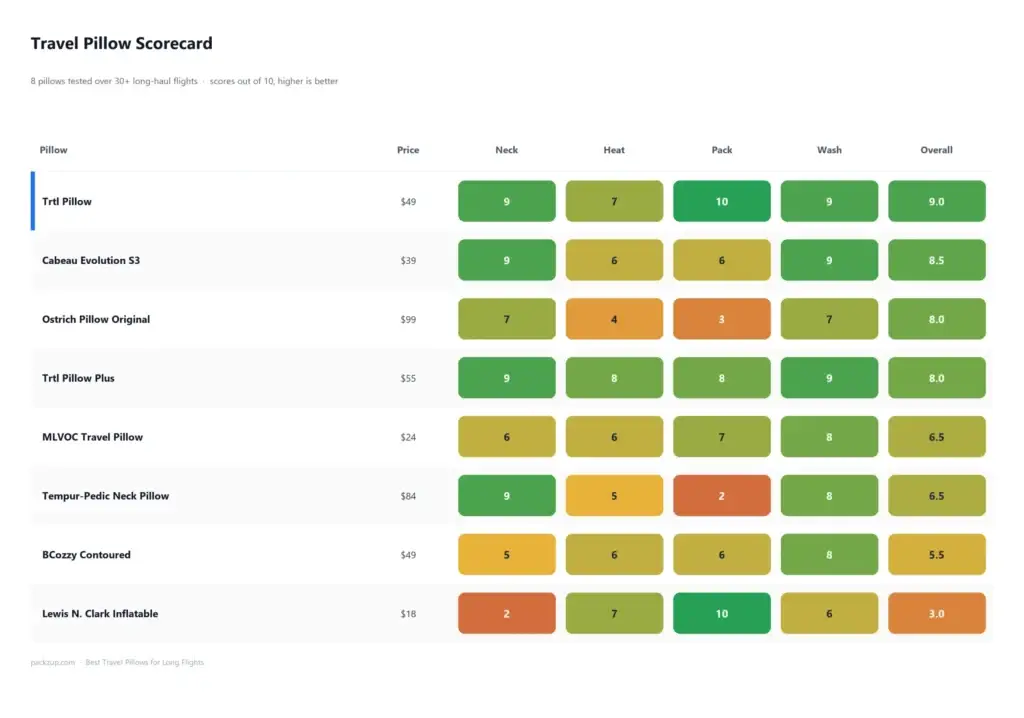
I have tested 8 travel pillows across 30+ long-haul flights since 2019 — red-eyes to Europe, ten-hour Atlantic crossings, and more overnight economy seats than my spine cares to remember. I bought every pillow in this guide myself, roughly $450 in total, and flew with each one on real flights instead of judging them on a couch. Seven years in, my honest conclusion has not changed: most travel pillows are useless. Three actually work.
This guide covers all eight — what each one gets right, where it falls apart, and who should buy it. The TL;DR and comparison table below give you the short answer in under a minute; the full reviews, my complete plane-sleep setup, and a short care guide follow.
Disclosure: As an Amazon Associate I earn from qualifying purchases. Packzup is a participant in the Amazon Services LLC Associates Program, and if you buy through links in this guide we earn a small commission at no extra cost to you. I bought all eight pillows with my own money, and no brand paid for, supplied, or reviewed this guide. Prices are what Amazon showed at the time of writing and change often — check the current price before buying.
Editor’s picks at a glance
Eight pillows, ranked by how they actually performed on long-haul economy flights. Categories below reflect what each pillow is genuinely best at — including the two I would not buy.
Trtl Pillow
$49
The only pillow here that reliably stops head-bob in an upright economy seat.
Cabeau Evolution S3
$39
Foam firm enough to actually hold the weight of your head — the U-shape that works.
Trtl Pillow Plus
$55
Adjustable height and the coolest-running fabric of the effective options.
Ostrich Pillow Original
$99
A light- and noise-blocking cocoon that earns its bulk on 10+ hour overnights.
MLVOC Travel Pillow
$24
Real memory foam at the lowest competent price — fine for two trips a year.
Tempur-Pedic Travel Neck Pillow
$84
The best foam in the guide, in the wrong vehicle: it does not compress for carry-on.
BCozzy Contoured
$49
Chin support without a brace-like frame — but at $49 it no longer undercuts the Trtl.
Lewis N. Clark Inflatable
$18
Packs smaller than anything here — and loses air mid-flight. Scored lowest overall (3/10).
The TL;DR
Top pick: Trtl Pillow ($49). Looks like a scarf, works like a soft neck brace, and is the only pillow here that reliably stops the head-bob during upright sleep. Folds flat at about five ounces.
Best traditional U-shape: Cabeau Evolution S3 ($39). If you cannot give up the classic U-shape, this is the one to get: memory foam firm enough to actually hold the weight of your head, with a removable, washable cover and a carrying clip.
Best for overnight flights: Ostrich Pillow Original ($99). A ridiculous-looking cocoon designed for tray-table sleeping that blocks light and noise. Worth it on overnight flights of 10+ hours, overkill everywhere else.
Budget pick: MLVOC Travel Pillow ($24). A competent budget memory-foam U-shape that is decent for occasional use. The foam compresses over time, so treat it as a two-trips-a-year pillow.
Avoid: Lewis N. Clark Inflatable ($18). It loses air during the flight, and a pillow that slowly deflates under you wakes you up precisely when it fails.
| Pillow | Best for | Type | Packed size | Comfort /10 | Washable | Price | Buy |
|---|---|---|---|---|---|---|---|
| Trtl Pillow | Window seats, carry-on-only | Wrap with internal frame | Folds flat, ~5 oz | 9 | Yes | $49 | Check price → |
| Cabeau Evolution S3 | Aisle & middle seats | Memory-foam U-shape | Clips to a bag strap | 8.5 | Yes (cover) | $39 | Check price → |
| Trtl Pillow Plus | Longer necks, hot sleepers | Adjustable wrap with frame | Folds flat, bulkier than Trtl | 8 | Yes | $55 | Check price → |
| Ostrich Pillow Original | Overnight hauls, tray-table leaners | Cocoon / tray-table | Bulky, ~helmet-sized | 8 | Yes (gentle) | $99 | Check price → |
| MLVOC Travel Pillow | Occasional flyers | Memory-foam U-shape | Snap compression bag | 6.5 | Yes (cover) | $24 | Check price → |
| Tempur-Pedic Travel Neck Pillow | Car & train travel | Dense memory foam | Does not compress | 6.5 | Yes (cover) | $84 | Check price → |
| BCozzy Contoured | Chin support, no frame feel | Contoured chin-support U | Flattens and snaps down | 5.5 | Yes (whole) | $49 | Check price → |
| Lewis N. Clark Inflatable | Extreme ultralight only | Inflatable U-shape | Pocket-sized | 3 | Wipe clean | $18 | Check price → |
Pack smarter, not just softer: Best Travel Apps · How to Beat Jet Lag · Carry-On Size Checker (tool)
How I tested
Everything in this guide comes from 30+ long-haul flights since 2019 — real overnight sectors, in economy, next to strangers. That matters because the failure modes of travel pillows only show up in the air: pressure changes that deflate inflatables, dry cabin heat that turns memory foam into a heat pack, and a heavy head tipping forward the moment you fall asleep upright.
I scored every pillow against four criteria. Neck support: does your head actually stay put when you lose consciousness, or do you get the whiplash nod? Heat: memory foam and fleece both trap warmth, and an overheated neck will wake you faster than turbulence. Packability: I fly carry-on only, and anything that could not earn its space against the standard I use for my carry-on-only packing list started with a handicap. Washability: a travel pillow lives against your face for ten hours at a time, then gets stuffed in a bag — if you cannot wash it, you should not own it.
One honest note: the scores are judgment calls informed by all that flying, not lab measurements. They reflect how well each pillow does its actual job — letting you sleep on a plane — which is exactly why the most expensive pillow here is not the winner.
Trtl Pillow ($49): the top pick
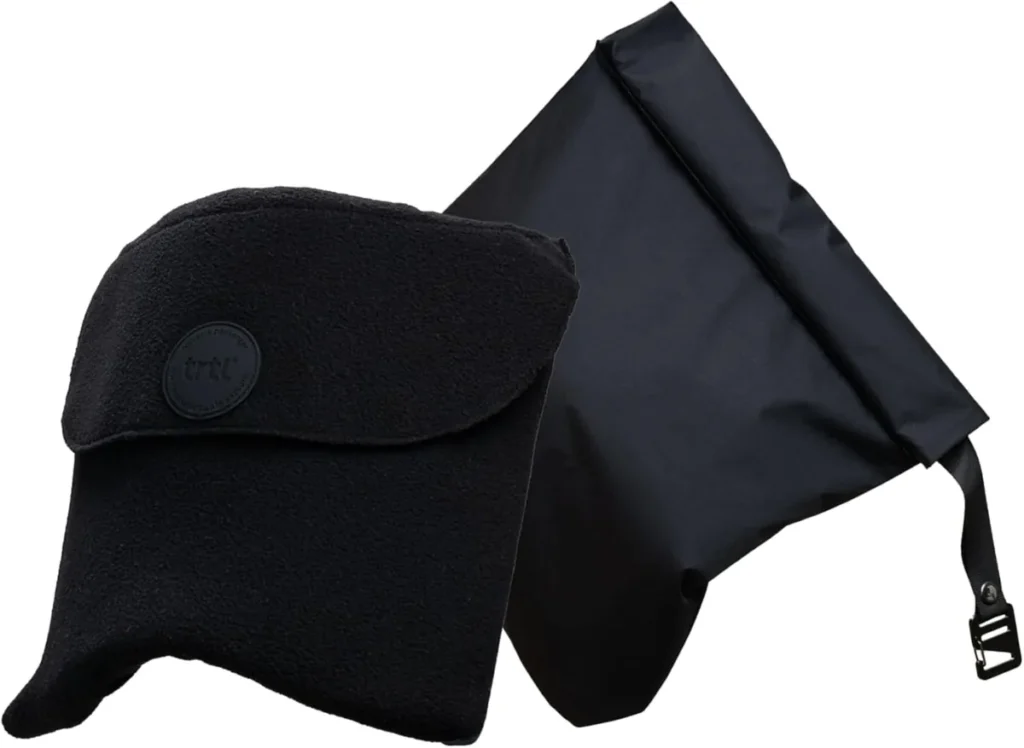
Quick verdict: The only pillow tested that reliably stops head-bob in an upright economy seat.
Best for: Window seats, upright economy sleep, carry-on-only packers
Not ideal for: Business or lie-flat seats, and anyone set on a classic U-shape
The Trtl does not look like a travel pillow at all. It looks like a fleece scarf, and inside that scarf is an internal plastic frame that supports your neck and chin like a soft brace. You wrap it around your neck, position the frame under your jaw on one side, and lean into it. That is the whole trick — and it is the only design I have tested that genuinely prevents head-bobbing during upright sleep. Your head weight rests on the frame, the frame rests on your shoulder, and the involuntary micro-nod stops.
The packability is almost unfair compared to the U-shape competition. It folds flat, weighs around five ounces, and disappears into a carry-on pocket. The fleece cover is machine washable. The honest flaws: the fleece runs warm on hot cabins, the one-sided support takes a flight to get used to, and you do look slightly like you are recovering from a minor neck injury. None of that changes the outcome — I fall asleep faster and stay asleep longer with the Trtl than with anything else in this guide.
It is best for window seat sleepers, who can combine the frame’s support with a lean against the fuselage. Score breakdown: neck support 9/10, heat 7/10, packability 10/10, washability 9/10. Overall: 9/10.
Pros
- Internal frame supports the chin and neck like a soft brace
- Folds flat at about 5 oz — packability 10/10
- Machine washable (9/10)
- Highest overall score in the guide (9/10)
Cons
- Looks like a scarf, which puts some people off
- Fleece runs warmer than the Plus (heat 7/10)
- Fixed support height can sit low on a longer neck
Pros
- Best neck support here (9/10) via an internal frame
- Packs flattest of any effective pillow (10/10, about 5 oz)
- Machine washable (9/10); doubles as a fleece scarf
Cons
- Wrap-and-fasten setup is fiddlier than dropping on a U-shape
- Support is one-sided — it shines at the window, not the aisle
- Fleece can run warm on hot cabins
Check current price on Amazon →
Cabeau Evolution S3 ($39): the best traditional U-shape
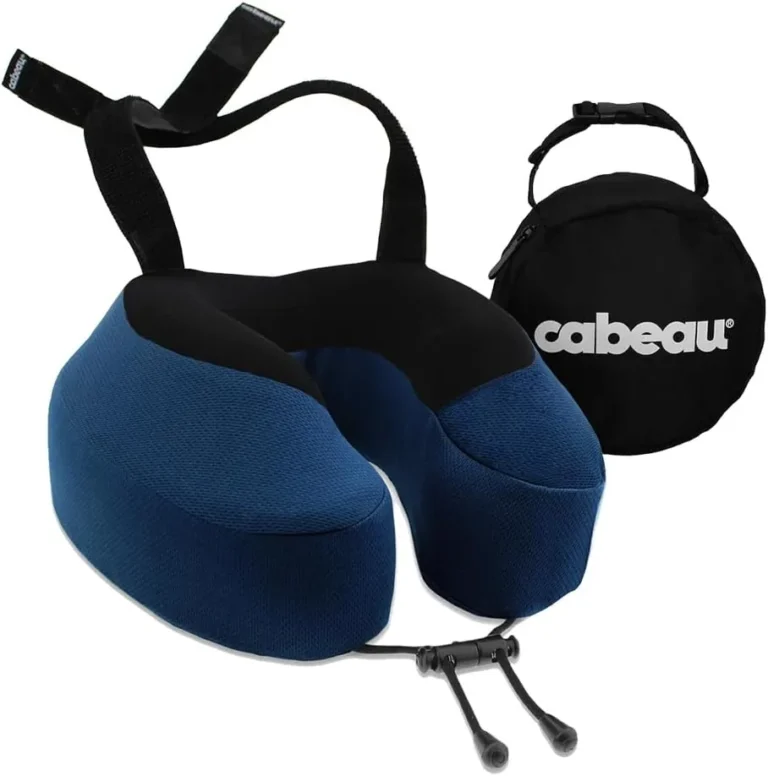
Quick verdict: The traditional U-shape done properly: foam firm enough to hold a head up.
Best for: Aisle and middle seats, and big or tall travellers
Not ideal for: Hot sleepers and anyone counting every cubic inch
Most U-shape pillows fail for one reason: the foam is too soft to hold the weight of a human head, so your chin ends up on your chest anyway, just with a fuzzy donut around your neck. The Evolution S3 is the exception. The memory foam is genuinely firm enough to hold weight, the raised side walls keep your head from lolling sideways, and the flat back panel does not shove your head forward against the seat.
The practical details are done properly too. The cover is removable and machine washable, and it ships with a carrying clip so it can ride on the outside of your bag instead of eating carry-on space. That clip matters, because this is still a memory-foam pillow: it does not fold flat, and inside a bag it takes real room. The other trade-off is heat — memory foam sleeps warm, and on a stuffy cabin you will feel it.
It suits travelers who already know they like the traditional U-shape and want the version that actually works, and it is more forgiving than the Trtl in aisle and middle seats since it supports both sides at once. Score breakdown: neck support 9/10, heat 6/10, packability 6/10, washability 9/10. Overall: 8.5/10.
Pros
- Memory foam dense enough not to bottom out (neck support 9/10)
- Removable, washable cover (9/10)
- Clips to a bag strap
- Cheapest of the genuinely effective pillows at $39
Cons
- Traps heat against the neck (6/10)
- Bulkier than the Trtl (packability 6/10)
Pros
- Firm enough for genuine neck support (9/10)
- Removable, machine-washable cover (9/10)
- Clips to a bag strap; lowest price of the top picks
Cons
- Runs warmer against the neck (6/10 heat)
- Bulkier than the Trtl (6/10 packability)
Check current price on Amazon →
Ostrich Pillow Original ($99): the overnight-flight specialist
Quick verdict: A light- and noise-blocking cocoon that earns its bulk only on long overnights.
Best for: Overnight economy hauls of 10+ hours where you can lean on the tray table
Not ideal for: Short flights, and anyone who cannot lean forward comfortably
The Ostrich Pillow is the strangest thing I have flown with, and I say that with affection. It is not a neck pillow — it is a padded cocoon you pull over your entire head, with a breathing hole and side pockets for your hands. It is designed for tray-table sleeping: fold the tray down, lean forward, and rest your cocooned head on it. It looks ridiculous. It works.
What it does that nothing else here can: it blocks light and noise at the same time it cushions you. On a 10+ hour overnight that combination is worth its weight — cabin lights snapping on and galley noise simply do not reach you. The flaws are equally obvious. It is warm inside, it is by far the bulkiest item in this guide, it only works if you can lean forward comfortably, and it costs $99. You will also be photographed by strangers. Accept this.
It is best for long overnight flights where sleep is the whole point, and wrong for basically everything shorter. Score breakdown: neck support 7/10, heat 4/10, packability 3/10, washability 7/10 (the cover is machine washable). Overall: 8/10 for its niche — but only its niche.
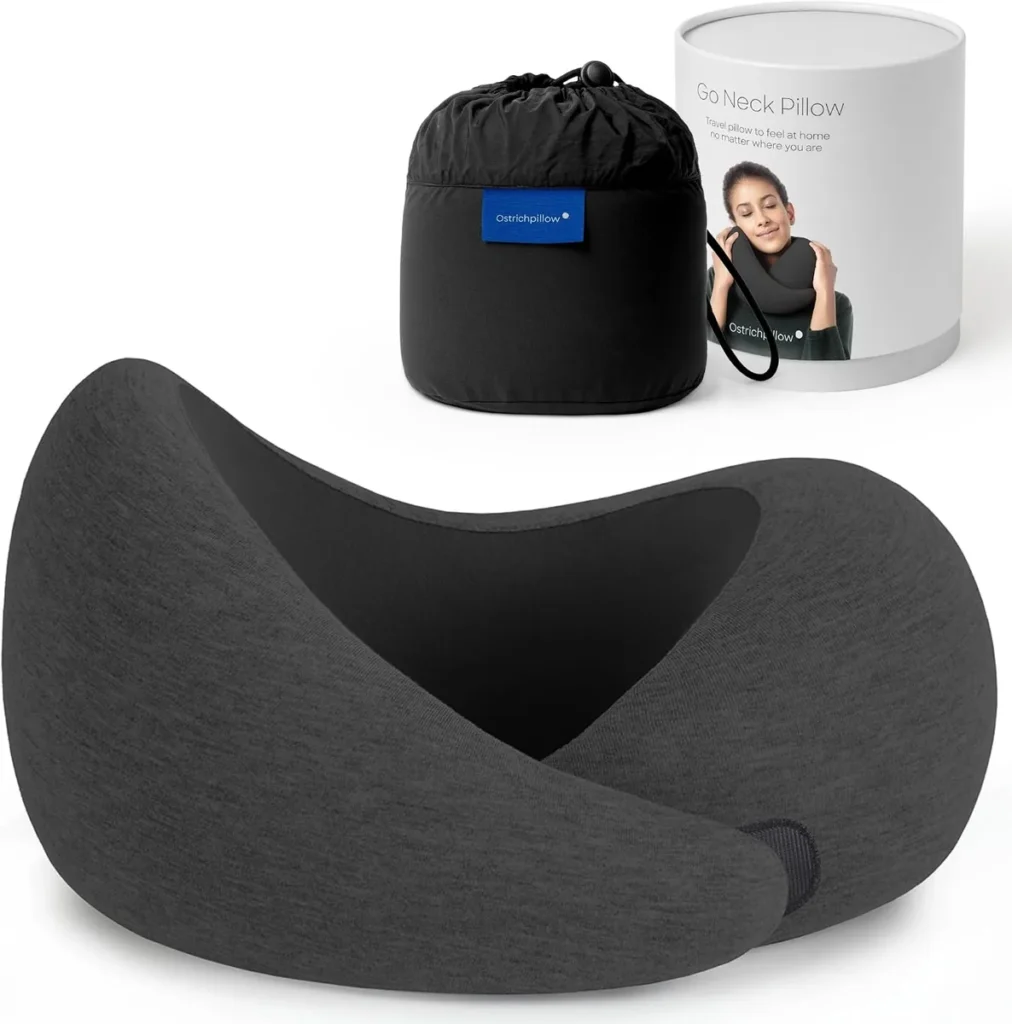
Also from Ostrichpillow: the brand makes the Ostrichpillow GO ($69), a 360° memory-foam neck pillow — a completely different design from the Original cocoon reviewed above. I have not tested the GO, so it is not one of the eight pillows scored in this guide and it does not appear in the comparison table.
Pros
- Blocks light and noise in a way no neck pillow can
- Genuinely effective for tray-table sleep
- Machine washable on a gentle cycle
Cons
- Bulky, roughly helmet-sized (packability 3/10)
- Hottest pillow tested (heat 4/10)
- Useless if you cannot lean forward
- At $99, the most expensive pick here
Pros
- Unmatched light and noise blocking for forward-lean sleep
- Genuinely comfortable cocoon design
- Removable, washable elements (7/10)
Cons
- Bulky and helmet-sized — barely packs (3/10)
- Runs hot (4/10); only works leaning on a tray table
- Most expensive pillow here
Check current price on Amazon →
MLVOC Travel Pillow ($24): the budget backup
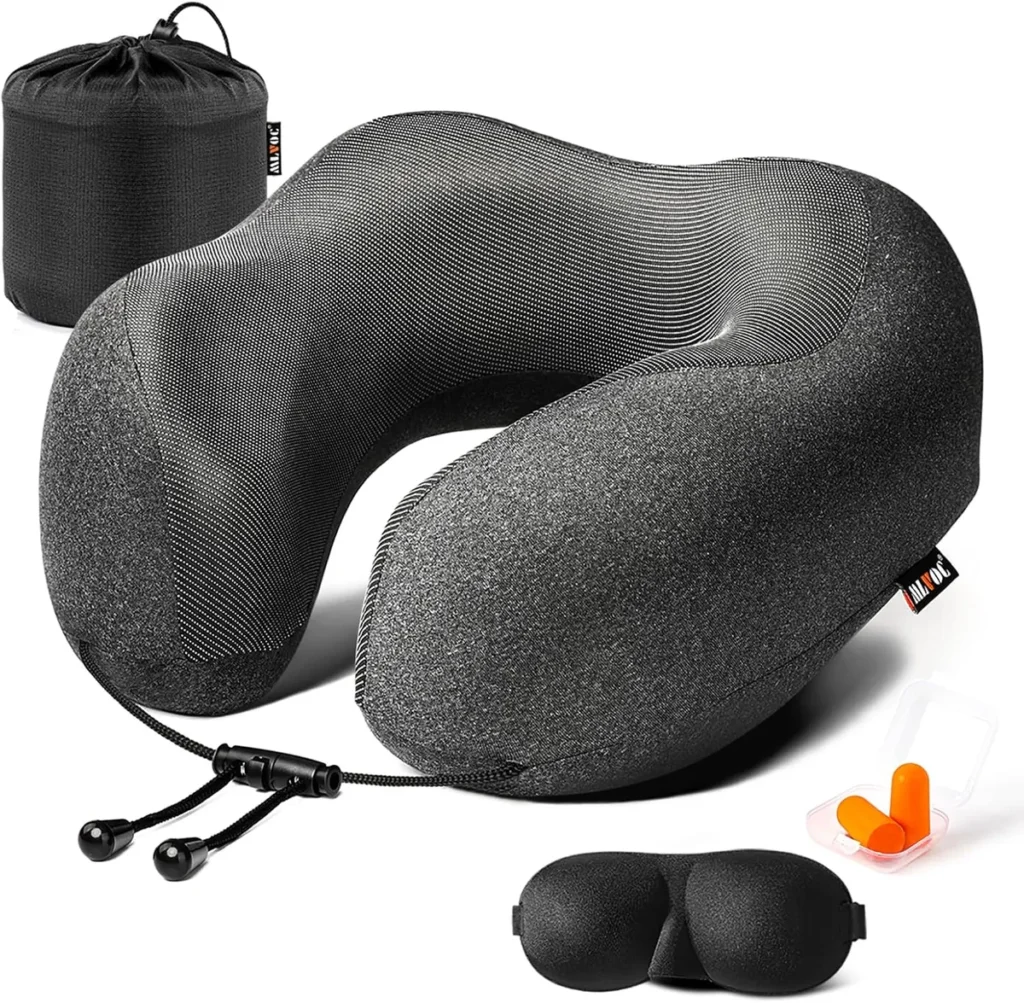
Quick verdict: A competent budget memory-foam U-shape for people who fly twice a year.
Best for: Occasional flyers who cannot justify $49
Not ideal for: Frequent flyers and hot sleepers
The MLVOC is the answer to a fair question: what if you fly twice a year and cannot justify $49 on a pillow? It is a budget U-shape with real memory foam — not the bead-filled fabric tubes that populate airport kiosks — and for occasional use it is genuinely decent. It comes with a snap-closure compression bag that squeezes it to roughly half size, and the cover is removable for washing.
The catch showed up over time: the foam compresses. What starts as adequately supportive slowly becomes a softer, flatter version of itself. That is the trade at $24 versus $39 for the Cabeau, whose denser foam holds its shape better.
It suits the occasional flyer — a couple of trips a year, no interest in optimizing. If you fly monthly, buy once and buy the Cabeau. Score breakdown: neck support 6/10, heat 6/10, packability 7/10, washability 8/10. Overall: 6.5/10.
Pros
- Real memory foam, not bead filling
- Snap-closure compression bag
- Washable cover (8/10)
- Lowest price among the competent options at $24
Cons
- Foam compresses over time into a flatter version of itself
- Softer and less supportive than the Cabeau (neck 6/10)
- Traps heat (6/10)
Pros
- Real memory foam, not bead filling
- Comes with an eye mask, earplugs and a compression bag
- Washable cover (8/10); cheapest pillow here
Cons
- Foam softens over time
- Middling neck support (6/10); no standout category
Check current price on Amazon →
Trtl Pillow Plus ($55): the Trtl for longer necks
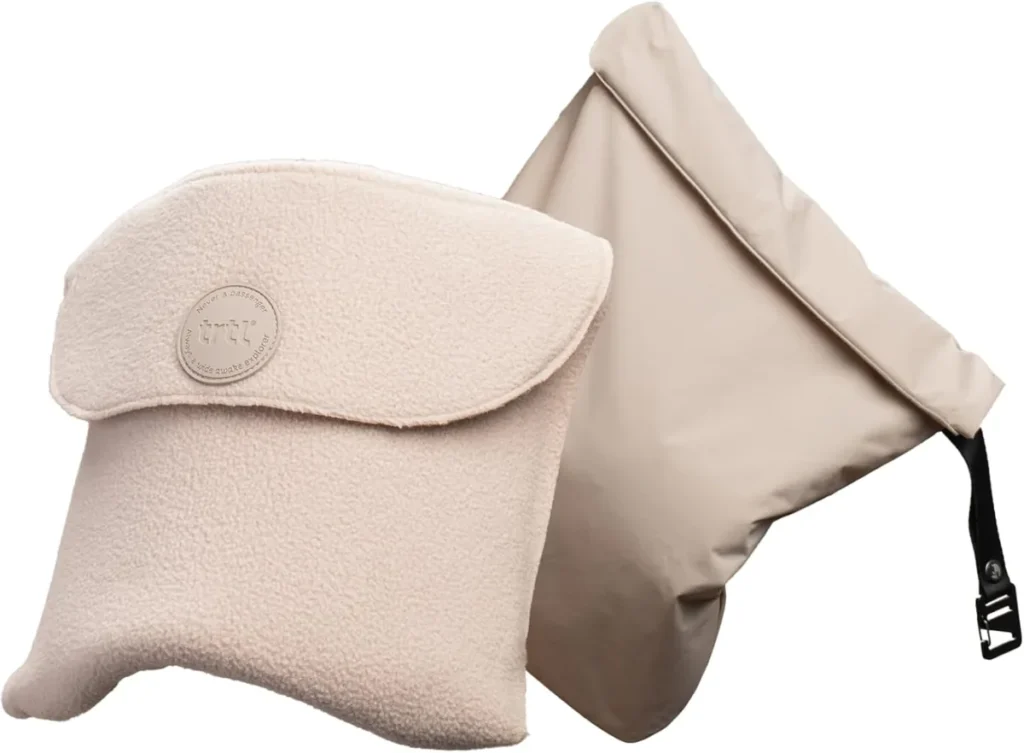
Quick verdict: The Trtl with adjustable height and a cooler fabric — $6 more than the standard.
Best for: Longer necks, taller travellers and hot sleepers
Not ideal for: Most people, whom the standard Trtl already fits
The Trtl Plus is the upgraded version of my top pick, and the headline change is adjustable height. On the standard Trtl the support height is fixed, and a longer neck can leave the frame sitting slightly too low to fully carry your head. The Plus fixes exactly that, and my verdict stands: worth $6 more if you have a longer neck — and not otherwise.
The Plus also uses a more breathable fabric than the original’s fleece, which helps on warm cabins, and it ships with its own carry bag. The trade-off is a slightly bulkier fold than the standard Trtl, though it still packs flatter than any memory-foam U-shape here.
It suits taller travelers, anyone whose neck made the standard Trtl sit too low, and hot sleepers who like the Trtl concept but not the fleece. Score breakdown: neck support 9/10, heat 8/10, packability 8/10, washability 9/10. Overall: 8/10 — docked only because most people do not need the upgrade.
Pros
- Adjustable support height fixes the standard Trtl’s one flaw
- Coolest-running of the effective options (heat 8/10)
- Ships with its own carry bag
- Machine washable (9/10)
Cons
- Slightly bulkier fold than the standard Trtl
- The upgrade is unnecessary for average neck length
Pros
- Same top-tier frame support (9/10)
- Coolest of the effective pillows (8/10 heat)
- Adjustable height; packs flat (8/10); machine washable (9/10)
Cons
- Slightly bulkier fold than the standard Trtl
- Height adjustment is wasted if the original already sits right
Check current price on Amazon →
BCozzy Contoured ($49): close, but get the Trtl
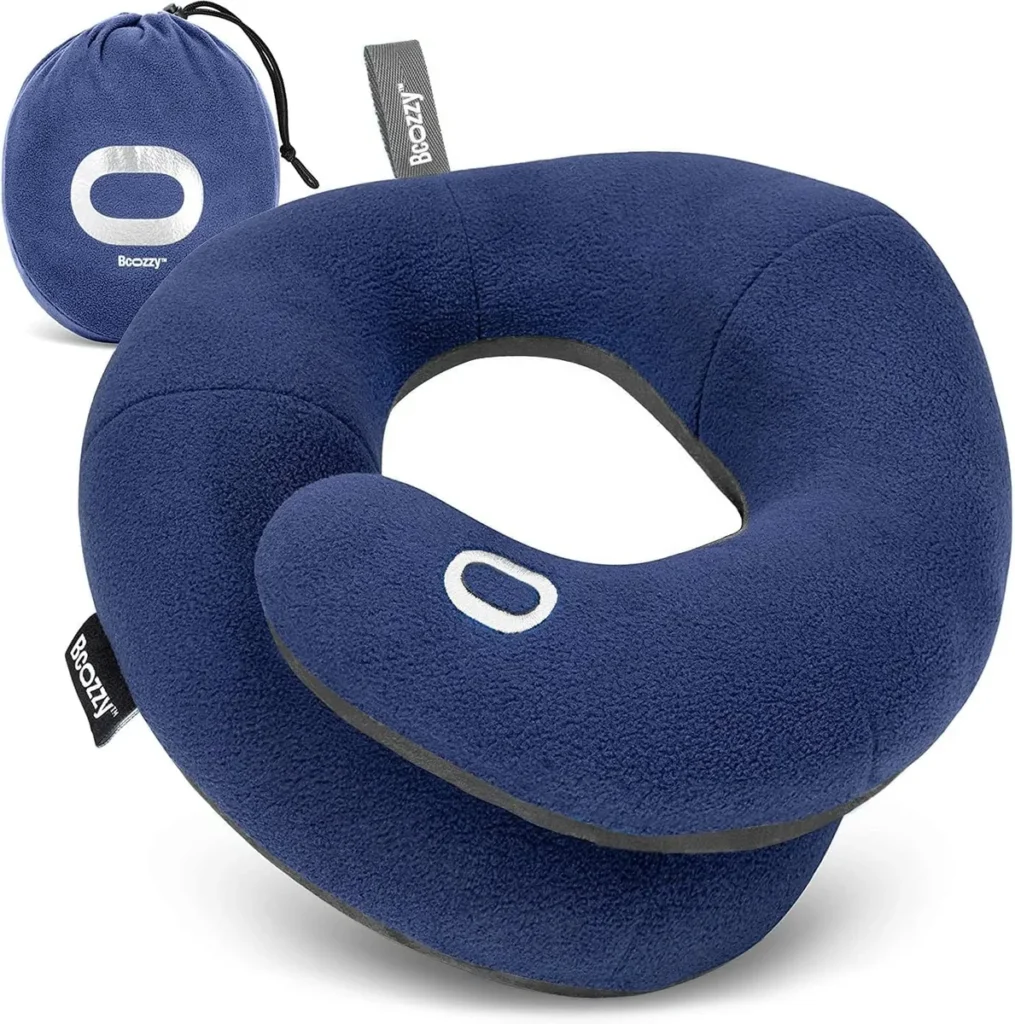
Quick verdict: The right idea in a softer execution — and no longer cheaper than the Trtl.
Best for: Travellers who want chin support without a brace-like frame
Not ideal for: Anyone choosing on price, since it now costs the same as the Trtl
The BCozzy chases the same insight as the Trtl — the chin needs support, not just the sides of the neck — but executes it in a traditional wrap shape. The two ends of the pillow overlap in front, and you rest your chin on the doubled-up section. You can adjust the overlap, wear it high or low, and flatten and snap it against a bag when not in use.
In the air, it simply proved less effective than the Trtl. The chin support is softer than the Trtl’s internal frame, the overlapping ends can shift apart as you sleep, and once they do you are back to the standard U-shape head-bob. It is machine washable, and if a brace-like frame sounds unpleasant, it is a reasonable compromise — but at $49 it no longer undercuts the Trtl on price, and it is still a compromise.
It suits travelers who specifically want chin support without the Trtl’s brace feel. Everyone else should buy the Trtl instead, which now costs exactly the same. Score breakdown: neck support 5/10, heat 6/10, packability 6/10, washability 8/10. Overall: 5.5/10.
Pros
- Brings chin support to a familiar wrap shape
- Machine washes whole (8/10)
- Overlap can be worn high or low
Cons
- Ends shift apart during sleep, returning the head-bob (neck 5/10)
- Identical $49 price to the higher-scoring Trtl
- Overall 5.5/10
Pros
- Machine-washable whole (8/10)
- Comfortable, adjustable chin support
Cons
- Softer support that can shift as you sleep (5/10 neck)
- No price advantage over the higher-scoring Trtl at the same $49
Check current price on Amazon →
Lewis N. Clark Inflatable ($18): avoid
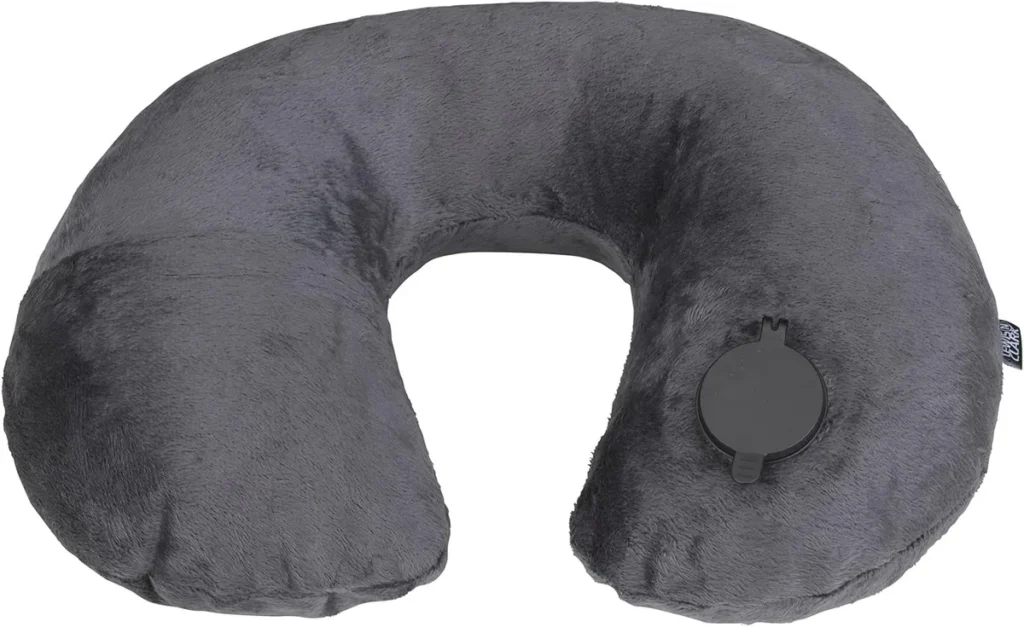
Quick verdict: Packs smaller than anything here, and loses air mid-flight.
Best for: Extreme ultralight packing where size genuinely outranks sleep
Not ideal for: Anyone who actually intends to sleep
I wanted the inflatable to win. On paper it is the perfect carry-on pillow: it deflates to pocket size, weighs almost nothing, and costs $18. In practice, it loses air during the flight. Temperature and cabin-pressure changes work against an air bladder at altitude, and a pillow that slowly softens beneath you has a special talent for waking you at the exact moment it stops doing its job.
Even fully inflated, an air chamber does not provide structural support the way dense foam or a frame does — your head sits on it rather than being held by it. The one honest use case is an emergency backup that lives in a daypack pocket. Even then, I would rather roll up a hoodie.
Not recommended. Score breakdown: neck support 2/10, heat 7/10, packability 10/10, washability 6/10. Overall: 3/10.
Pros
- Smallest packed size of any pillow tested (packability 10/10)
- Weighs almost nothing
- Cheapest at $18
- Needs only a wipe-down
Cons
- Loses air during the flight (neck support 2/10)
- Deflates under you and wakes you
- Lowest overall score in the guide (3/10)
Pros
- Packs to pocket size (10/10) and weighs almost nothing
- Wipe-clean (6/10); cheapest option
Cons
- Loses air mid-flight as cabin pressure and temperature change
- Almost no neck support (2/10) — an air bladder can’t bear a head’s weight
Check current price on Amazon →
Tempur-Pedic Travel Neck Pillow ($84): great foam, wrong vehicle
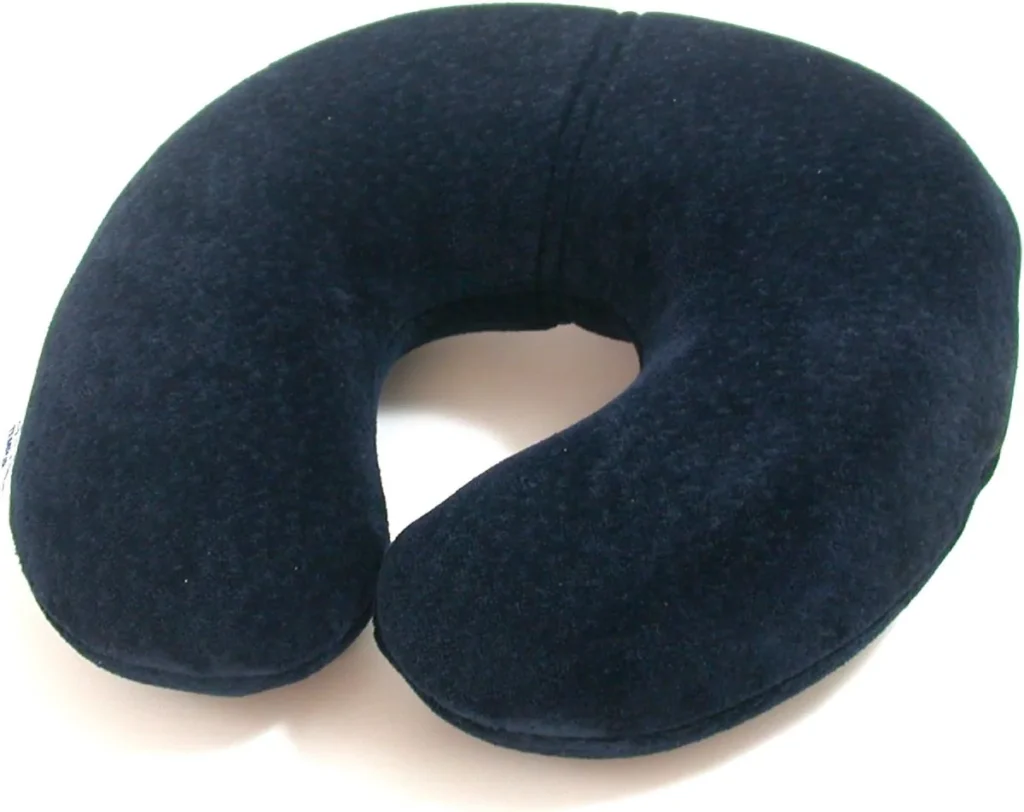
Quick verdict: The best foam in the guide, in the wrong vehicle for carry-on travel.
Best for: Car and train journeys where packed size is irrelevant
Not ideal for: Carry-on-only flying — it will not compress
This is the strangest verdict in the guide: the Tempur-Pedic is arguably the highest-quality object here, and I still cannot recommend it for flying. The proprietary Tempur foam is exactly what the company’s mattress reputation promises — dense, slow-recovering, and superbly supportive around your neck.
The problem: dense foam is the enemy of packing. It does not compress, fold, or ship with any compression system, and in a carry-on it occupies a shoe-sized block of space. That cost is unjustifiable when the Trtl delivers better upright support at five ounces, folded flat.
Where it shines is ground travel: road trips, trains, and long bus rides, where packed size does not matter. If your travel is mostly by car or rail, mentally add two points. For flying, it stays where it is. Score breakdown: neck support 9/10, heat 5/10, packability 2/10, washability 8/10 (removable washable cover). Overall: 6.5/10.
Pros
- Dense, slow-recovering Tempur foam is genuinely excellent
- Neck support scores 9/10, level with the Trtl
- Removable washable cover
Cons
- Does not compress at all (packability 2/10)
- Traps heat (5/10)
- At $84 it is the second-priciest pillow tested
Pros
- Excellent dense foam with strong neck support (9/10)
- Removable, washable cover (8/10); durable build
Cons
- Barely packs — does not compress (2/10)
- Runs warm (5/10); priced high for a pillow you can’t easily fly with
Check current price on Amazon →
Which pillow for which traveler
Which pillow for your seat
It comes down to one thing: whether you have a wall to lean on.
You can lean the internal support frame into the fuselage — the closest economy gets to real sleep.
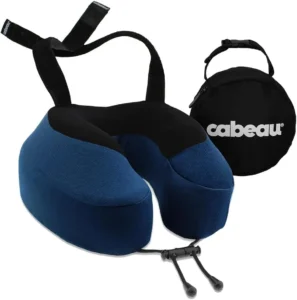
No wall on either side, so you want firm memory foam that keeps your head centred instead of drifting.
The actually-best sleeping setup on planes
After 30+ long-haul flights of trial and error, I can tell you the uncomfortable truth: the pillow is maybe a third of the equation. Real plane sleep comes from a system, and every piece of it fits in a carry-on. Here is the full setup, in order of importance.
1. A window seat. It gives you a wall to lean on and removes the two great sleep-killers of the aisle: the drink cart and the seatmate climbing over you. Book it early — leaving seat selection to check-in is one of the classic travel mistakes that costs you a night of sleep. 2. The Trtl or the Cabeau S3, per everything above. 3. A contoured eye mask — I use a Manta Sleep mask, whose cups do not press on your eyelids. 4. Noise-canceling earbuds or foam earplugs. Engine drone is manageable; the galley conversation at 3 a.m. is not. 5. Compression socks, which do more for how you feel on landing than any pillow. 6. A light blanket or large scarf, because cabin temperature swings from tropical to refrigerated on every long haul. 7. Low-dose melatonin — 0.5mg about 30 minutes before you want to sleep; less is more, and check with your doctor first.
Everything on that list is small, packable, and boring — plane sleep is won with logistics, not gadgets. The full kit takes less room than a pair of shoes, and every item earns its slot on my ultimate packing list for exactly that reason.
Care and washing
A travel pillow spends ten hours at a time against your face and then lives in a bag next to your shoes, so wash it more often than you think. The Trtl and Trtl Plus covers are machine washable — cold wash, air dry, and never machine-dry the section with the frame. The Cabeau S3, MLVOC, and Tempur-Pedic all have removable covers that take a normal machine cycle; never soak the foam cores — memory foam holds water and takes days to dry — wipe them with a barely damp cloth instead.
The Ostrich Pillow Original is machine washable on a gentle cycle. The BCozzy machine-washes whole. The Lewis N. Clark inflatable just needs a wipe-down — the one chore it wins. Whatever you own, make sure it is bone dry before it goes back in a compression bag; packing damp foam is how a good pillow becomes a mildew experiment.
FAQ
What is the best travel pillow for long flights?
Do travel pillows actually work?
How do I pack a travel pillow in a carry-on?
Are inflatable travel pillows worth it?
What else do I need to sleep on a plane besides a pillow?
Which travel pillow is best for side sleepers?
Which travel pillow packs the smallest?
Which travel pillow is best for economy class?
Which travel pillow has the best neck support?
What is the best travel pillow for backpackers and carry-on-only travel?
What is the best travel pillow under $50?
Which travel pillow is best for hot sleepers?
Which travel pillow is easiest to clean?
Trtl or Cabeau — which should I actually buy?
Are expensive travel pillows worth it?
Do travel pillows count as a carry-on or personal item?
Can you take a travel pillow through airport security?
How do you attach a travel pillow to your luggage?
How do you use a travel pillow correctly?
You Might Also Love





Written by
John Morrison is the founder and lead travel writer at Packzup. Over the past decade he has explored destinations across Africa, the Americas, Asia, Europe, the Middle East, and Oceania — always self-funded, never on a press trip.
