
Last updated September 1, 2026 · Editorial policy
- 1. Húsavík, Iceland
- 2. The Azores, Portugal
- 3. Kaikōura, New Zealand
- 4. Hermanus, South Africa
- 5. Baja California, Mexico
- 6. Vava'u, Tonga
- 7. Mirissa, Sri Lanka
- 8. Hervey Bay, Australia
- 9. Vancouver Island, Canada
- Watch responsibly
- A Closer Look: Season, Cost, and the Inside Line on Each Pick
- The Southern Trio: New Zealand, South Africa, and Baja
- How to Choose — and How to Actually Get There
Few wildlife encounters rival watching a whale surface beside your boat. These ten spots offer the world’s most reliable sightings — and we’ve flagged the season that gives you the best odds at each.
1. Húsavík, Iceland
Iceland’s whale-watching capital, on Skjálfandi Bay, where humpbacks feed through the long summer days. Minke whales, white-beaked dolphins and even blue whales appear. Best June to August; bring serious layers, it’s cold on the water.
2. The Azores, Portugal
One of the world’s great whale destinations — resident sperm whales year-round, plus migrating blue and fin whales in spring. Lookouts on shore radio sightings to the boats, so success rates are high. April to June is prime.
3. Kaikōura, New Zealand
A deep underwater canyon close to shore means giant sperm whales are present all year, alongside dusky dolphins and seals. The dramatic Southern Alps backdrop is a bonus. Sightings are reliable in every season.
4. Hermanus, South Africa
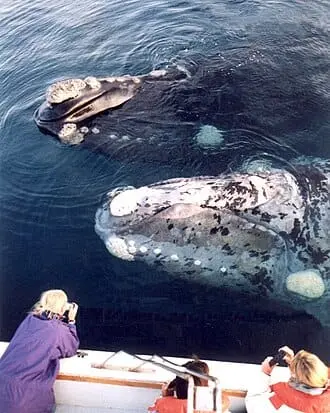
Famous for land-based whale watching — southern right whales come so close to the cliffs you barely need a boat. The town even has a “whale crier.” Peak season is July to November.

5. Baja California, Mexico
In the lagoons of San Ignacio and Magdalena Bay, gray whales migrate to calve — and curious mothers often nudge their calves right up to the boats. January to March is the window for these rare close encounters.
6. Vava’u, Tonga
One of the few places on earth where you can responsibly swim with humpback whales, which come to breed in the warm, clear water. The season runs July to October; choose licensed, low-impact operators.
7. Mirissa, Sri Lanka
The south coast sits on a migration route for blue whales — the largest animal that has ever lived — plus sperm whales and spinner dolphins. December to April offers calm seas and the best chances.
8. Hervey Bay, Australia
A sheltered bay where humpbacks pause to rest and play on their migration, often breaching repeatedly. It’s calmer than open-ocean trips, good for those prone to seasickness. July to early November is the season.
9. Vancouver Island, Canada
Orcas (both resident and transient pods), humpbacks and gray whales patrol these waters. Tofino and Telegraph Cove are top bases. May to October is best; go with naturalist-guided Zodiacs for the closest, most informed trips.
Watch responsibly
Choose operators who keep their distance, cut engines near animals and follow local codes of conduct. The best encounters are the ones that leave the whales completely undisturbed.
A Closer Look: Season, Cost, and the Inside Line on Each Pick
The five picks above aren’t interchangeable — each one is built around a different whale, a different window, and a very different vibe. Here’s the honest breakdown so you book the right one.
- Húsavík, Iceland — Iceland’s whale-watching capital, on Skjálfandi Bay. Why go: humpbacks that breach and slap right beside the boat, plus minke whales and puffins. Season: roughly late March–November, peaking May–September. Cost: a classic 3-hour tour with a pioneer operator like North Sailing runs about $85–110 per adult. Planning note: book North Sailing’s Original tour early with promo code SUMMER2026 for 10% off, and choose their carbon-neutral electric schooner Opal — silent running means whales stay closer, longer.
- The Azores, Portugal — mid-Atlantic volcanic islands with resident sperm whales year-round. Why go: spring brings migrating blue whales, fin, and sei whales — the largest animals to ever live. Season: April–June for the giants; sperm whales and dolphins all year. Cost: half-day trip about $60–75 per adult. Planning note: base on Pico, not São Miguel — the central-island waters record far more blue whales, and old shore-based vigias (lookouts) spot them from clifftops to guide boats.
The Southern Trio: New Zealand, South Africa, and Baja
- Kaikōura, New Zealand — an offshore submarine canyon plunges 1,000m just minutes from the coast, concentrating food. Why go: the world’s most reliable spot for giant sperm whales year-round, with a ~95% sighting rate. Season: any month; winter often has calmest seas. Cost: Whale Watch Kaikōura’s boat tour is about NZD $169 (~$100 USD) with an 80% refund if no whale surfaces; a 30-minute helicopter flight is around NZD $330 (~$195). Planning note: if you’re prone to seasickness, take the chopper — the canyon swell is real, and from the air you see the whole animal.
- Hermanus, South Africa — arguably the best land-based whale watching on Earth. Why go: southern right whales cruise within meters of the 12km clifftop path — no boat required. Season: June–December, peaking September–October. Cost: the Cliff Path is free; a boat trip from the New Harbour runs roughly $60–90. Planning note: listen for Hermanus’s whale crier — the only one in the world — who blows a kelp horn to announce live sightings near Gearing’s Point.
- Baja California, Mexico — the gray-whale nurseries. Why go: in San Ignacio Lagoon the famously curious “friendly” grays nudge up to your panga to be touched. Season: mid-January–April, best Feb–March. Cost: multi-day camp packages start around $495; Magdalena Bay day trips are cheaper. Planning note: pick San Ignacio for the most respectful, best-regulated encounters — mother whales actively present their calves to boats here.
How to Choose — and How to Actually Get There
Choosing your trip comes down to the whale and the experience you’re after:
- Want a guaranteed sighting? Kaikōura (sperm whales, year-round, ~95%) or Húsavík in summer.
- Want the biggest animals alive? The Azores in spring for blue and fin whales.
- Don’t want a boat at all? Hermanus — watch from the cliffs, free.
- Want to touch a wild whale? Baja’s San Ignacio Lagoon, Feb–March.
- Want breaching drama? Húsavík’s humpbacks.
Getting there:
- Húsavík: fly to Akureyri (AEY), then a scenic 1-hour drive northeast; twice-daily buses run ~$25.
- Azores: direct flights from Boston and New York to Ponta Delgada (São Miguel), then a short SATA inter-island hop to Pico.
- Kaikōura: a straightforward 181km / ~1h45m drive up SH1 from Christchurch, hugging the coast the whole way — or take the Coastal Pacific train.
- Hermanus: about a 1.5-hour drive east from Cape Town along the R43.
- Baja: fly into Loreto or drive from Guerrero Negro; most lagoon camps arrange transfers as part of the package.
You Might Also Love



Written by
John Morrison is the founder and lead travel writer at Packzup. Over the past decade he has explored destinations across Africa, the Americas, Asia, Europe, the Middle East, and Oceania — always self-funded, never on a press trip.