
Last updated September 11, 2026 · Editorial policy
Savannah and New Orleans occupy the same corner of the American imagination: moss-draped, ghost-obsessed, humid, gorgeous, and slightly unhinged in the best possible way. Both are walkable historic cities where carrying a drink down the street is legal, dinner is the main event of the day, and every other building has a story involving pirates, fires, or yellow fever. If you’re planning one big Southern city break, these two end up on the same shortlist almost every single time, and picking between them is harder than it looks.
Having done both more than once, here’s the short version: they are far less interchangeable than the photos suggest. Savannah is a slow exhale, a beautiful small city you wander at walking pace with a to-go cup and no real agenda. New Orleans is a full sensory event that grabs you the moment you land and doesn’t let go until your flight home. Below is the honest breakdown a friend would give you over a beer: real costs, food, music, day trips, weather, and clear winners by traveler type. No fence-sitting.
| Category | Savannah | New Orleans | Winner |
|---|---|---|---|
| Food & drink | Excellent Lowcountry cooking, smaller scene | One of the world’s great food cities | New Orleans |
| Nightlife & live music | Pleasant bars, mostly quiet by 11pm | Live music every night of the week | New Orleans |
| Historic charm & architecture | Leafy squares and near-perfect preservation | French Quarter and Garden District icons | Savannah, barely |
| Walkability | Compact, flat, entirely walkable | Walkable by neighborhood, streetcar between | Savannah |
| Pace & relaxation | Slow, romantic, low-pressure | Intense, thrilling, occasionally exhausting | Savannah |
| Day trips & beaches | Tybee Island is 20 minutes away | Swamp tours great, beaches are a haul | Savannah |
| Festivals & events | Huge St. Patrick’s Day, otherwise modest | Mardi Gras, Jazz Fest, a constant calendar | New Orleans |
| Value for money | Slightly cheaper and far more predictable | Cheap off-season, brutal during festivals | Savannah |
Cost comparison
Day to day, these cities cost roughly the same, but Savannah is a touch cheaper and far more predictable. A genuine budget traveler can do either city on around $110-160 a day: a basic hotel or guesthouse slightly outside the core, po’ boys and counter-service meals, happy hour drinks, and free wandering, which both cities reward heavily. A comfortable mid-range trip for two, staying in the historic heart with one proper restaurant dinner a day and a tour or two, runs roughly $350-500 a day in Savannah and closer to $400-550 in New Orleans.
The real difference is event pricing. New Orleans hotel rates during Mardi Gras or Jazz Fest can easily double or triple, with minimum-stay requirements on top, while the same rooms in August or early December go for a relative song. Savannah only spikes hard around St. Patrick’s Day. It’s a bit like Croatia vs Portugal in that sense: the “cheaper” destination flips entirely depending on when you show up.
Two smaller notes from experience. Cocktails in the tourist cores of both cities have crept into the $13-17 range, but New Orleans balances this with some of the best happy hour culture in America. And both cities hand you a lot for free: Savannah’s squares cost nothing, and New Orleans street music is world-class, though you should absolutely tip the brass bands.
Food and drink: which city eats better
Let’s not pretend this is close. New Orleans is one of the few American cities whose food culture belongs in the same sentence as Mexico City. Gumbo, étouffée, char-grilled oysters, overstuffed po’ boys, beignets at midnight, and the whole layered Creole and Cajun story behind every dish. What makes it special isn’t the famous restaurants, it’s the floor: a random neighborhood joint with plastic tables will casually serve you the best plate of your trip. You could eat there for two weeks and never repeat a style.

Savannah eats well, genuinely. Shrimp and grits done properly, fried chicken worth the wait, fresh Georgia oysters in the cooler months, and a Southern brunch culture that takes the meal seriously. The quality is high; the bench is just shorter. A long weekend pretty much exhausts the must-eat list, whereas in New Orleans a long weekend barely scratches it. It reminds me of the Italy vs Spain debate: both countries eat wonderfully, but one of them built its entire identity around the table. New Orleans is the Italy here.
Music and nightlife
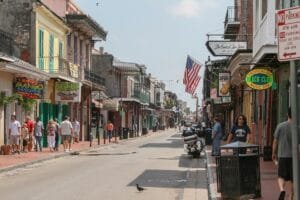
New Orleans wins this category by such a margin it feels unfair to Savannah. Live music happens every single night of the week, and the honest local tip stands: spend twenty curious minutes on Bourbon Street to say you did, then get to Frenchmen Street, where the clubs stack next to each other and you can hop between brass, jazz, and funk until very late. Music leaks out of doorways all over the city. Even people who don’t think of themselves as live music fans get converted here.

Savannah’s nightlife is nicer than its reputation but modest in scale. The open-container rule in the historic district means a slow to-go-cup stroll counts as an evening out, and it’s a lovely one. There are atmospheric taverns, rooftop bars overlooking the river, and enough art students around to keep things younger than you’d expect. But most nights wind down early. If bars and bands are a core part of your trip, this alone should settle the decision.
History, architecture and atmosphere
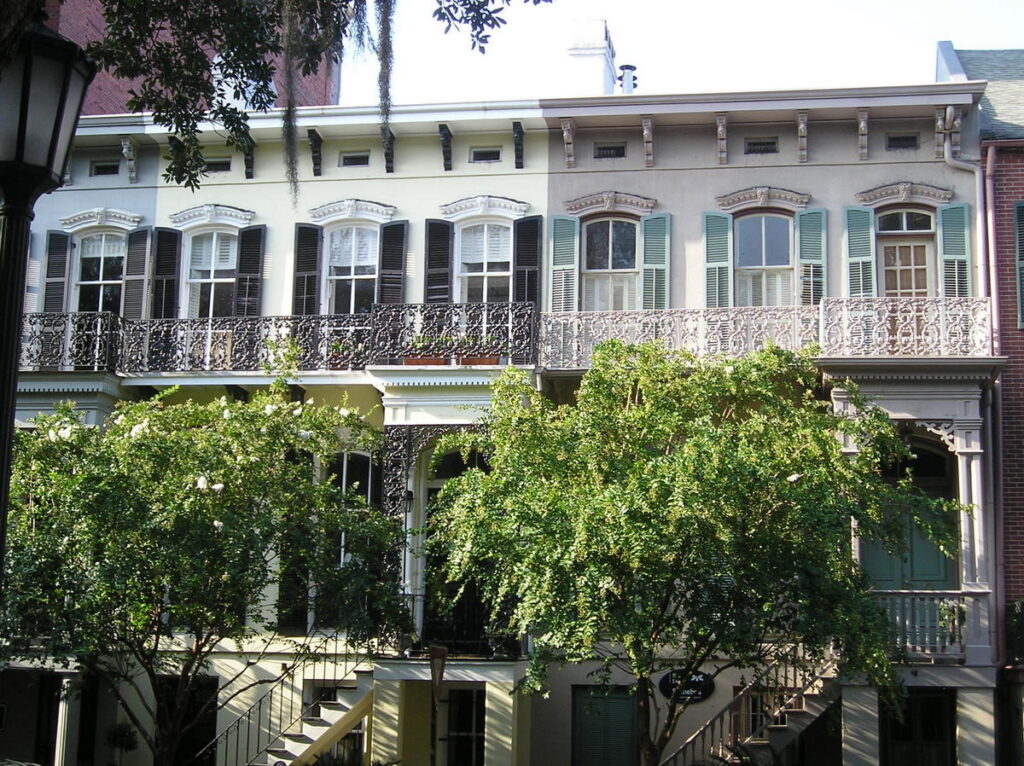
This is where Savannah earns its plane ticket. The historic district is laid out around a grid of leafy squares, each one canopied in live oaks and Spanish moss, each ringed by preserved townhouses and churches. It is, without exaggeration, one of the prettiest urban environments in North America, and Bonaventure Cemetery on the edge of town might be the most beautiful cemetery you’ll ever walk through. The whole district feels like a film set that people happen to live in.
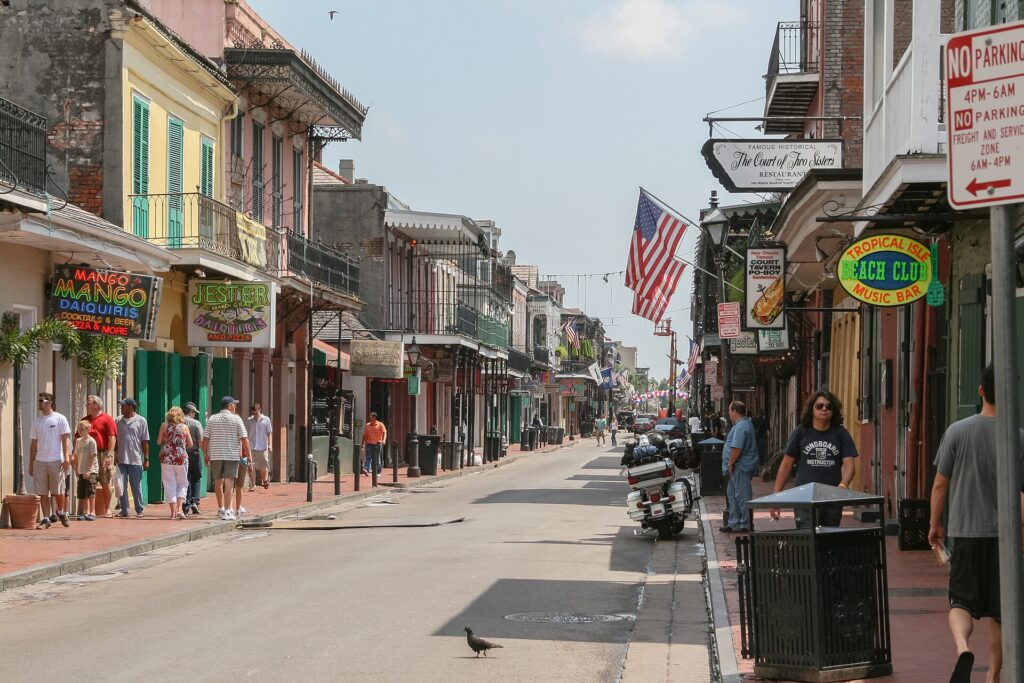
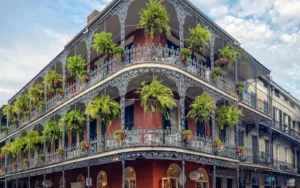
New Orleans counters with layers rather than polish: Creole townhouses with iron-lace balconies in the French Quarter, the mansions of the Garden District, above-ground cemeteries, and a cultural gumbo of French, Spanish, Caribbean, and African influence you can hear in the accents and taste in the food. Savannah is prettier; New Orleans has the deeper, stranger story. Both cities run ghost tours on an industrial scale, and both, honestly, earn them.
Walkability and neighborhoods
Savannah is one of the easiest walking cities in the country. The historic district is flat and compact, the squares break up every walk into pleasant two-block chapters, and you can realistically go car-free for an entire trip if you skip the beach. Staying anywhere in or beside the historic district puts everything within a twenty-minute stroll.
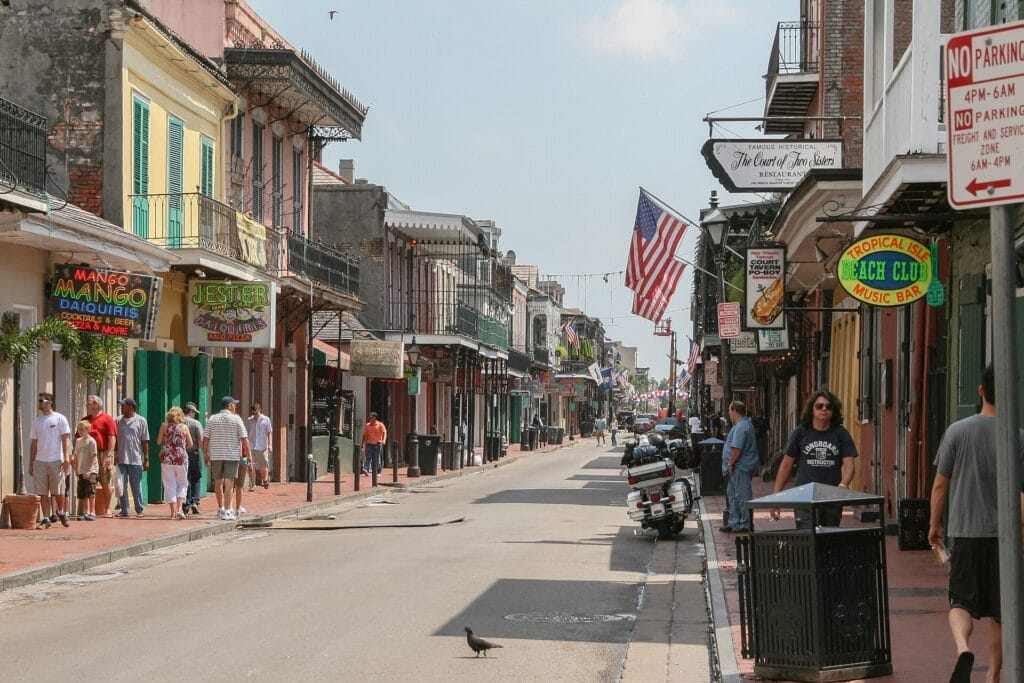
New Orleans is walkable in chapters rather than as a whole. The French Quarter, Marigny, and the riverfront link up nicely on foot, and the streetcar out to the Garden District is a genuine pleasure that costs pocket change. But some connecting stretches are dull or feel sketchy late at night, so you’ll lean on rideshares after dark more than you would in Savannah. In summer, both cities demand a siesta rhythm: walk mornings, hide from 1 to 4, come back out in the evening.
Day trips and beaches
Savannah has a quiet superpower: Tybee Island sits about twenty to thirty minutes from downtown, with a wide sandy beach, a climbable lighthouse, and proper beach-town seafood shacks. Hilton Head is under an hour away, and Charleston makes a doable day trip at around two hours each direction. Adding two lazy beach days to a Savannah city break requires zero planning skill.
New Orleans day trips lean atmospheric rather than sandy. A swamp or bayou tour is legitimately worth your money, gators and all, and Whitney Plantation offers a sobering, essential telling of plantation history from the perspective of the enslaved. But real Gulf beaches involve a serious drive, so nobody should pick New Orleans for a beach add-on. If sand is part of your fantasy, Savannah wins outright.
Festivals and events
New Orleans essentially runs on festivals. Mardi Gras is a weeks-long season rather than a single day, Jazz Fest takes over late April and early May, French Quarter Fest fills the spring, and something is happening most weekends year-round. It’s electric, and it’s also the reason hotel pricing there resembles a stock chart.
Savannah’s calendar is calmer with one giant exception: its St. Patrick’s Day celebration is among the biggest in the United States, and the city books out months ahead for it. Spring home and garden tours are the other lovely, low-key draw. Festival chasers should choose New Orleans without hesitation; everyone else should simply check the calendar so a festival doesn’t accidentally double their hotel bill.
Weather and when to go
Both cities are subtropical, which means glorious springs, mild winters, and summers that feel like walking through soup. June through September is hot, sticky, and stormy in both, and hurricane season technically runs into November, with New Orleans historically the more exposed of the two. Neither city is a mistake in summer, but you’ll live around the heat rather than in spite of it.
The sweet spots are March through May and October through November. Spring means azaleas exploding across Savannah’s squares and festival season in New Orleans, with prices and crowds to match. Fall is the connoisseur’s pick in both: warm days, walkable evenings, saner hotel rates. December is underrated too, with Savannah dressed up for the holidays and New Orleans offering some of its cheapest decent-weather weeks of the year. August is the month to avoid unless you genuinely enjoy 95 degrees with full humidity.
Getting there and around
New Orleans is the easier city to reach. Its airport is a proper hub-adjacent international gateway with nonstop flights from most big US cities and, seasonally, from Europe, and fares run cheap by American standards. Savannah’s airport is smaller and pleasant, but travelers from farther afield often connect through Atlanta or Charlotte. Both airports sit within roughly twenty minutes of downtown.
One crucial planning fact: these cities are about 600 miles apart, a nine-to-ten-hour drive, so for a normal one-week trip this is genuinely an either/or decision, not a twofer. On the ground, New Orleans gives you historic streetcars for a couple of dollars plus rideshares; Savannah barely needs transport at all beyond your feet, though a rental car for a day makes Tybee and Hilton Head trivially easy. Neither city requires a car for the core experience, and parking in both historic districts is an expensive nuisance anyway.
Savannah or New Orleans: the honest verdict
For foodies, it’s New Orleans and it isn’t close. The same goes for anyone who cares about live music, late nights, or festival energy: New Orleans delivers a version of all three that no other American city can match. Solo travelers who feed off a city’s energy will also be happier there, because the city does half the social work for you.
For first-timers who want an easy, gorgeous, low-stress long weekend, pick Savannah. It’s also the clear winner for couples, for families with younger kids, and for anyone who wants to bolt two beach days onto a city trip. Budget travelers should lean Savannah too, unless you can hit New Orleans in its summer or early-December lulls.
This pair splits the same way France vs Italy does: one is composure, prettiness, and ease, the other is glorious, slightly chaotic abundance, and your gut probably already knows which one you are. And if you’re asking which city to see once before you die, the answer is New Orleans, because there is nothing else like it on earth. Savannah is the one you’ll quietly go back to again and again.
FAQ
Is Savannah or New Orleans cheaper?
Can you visit Savannah and New Orleans on the same trip?
Which is better for a bachelorette party?
Is Savannah safer than New Orleans?
Planning the trip? Go deeper with things to do in Savannah GA and things to do in New Orleans.
You Might Also Love


Written by
John Morrison is the founder and lead travel writer at Packzup. Over the past decade he has explored destinations across Africa, the Americas, Asia, Europe, the Middle East, and Oceania — always self-funded, never on a press trip.
