
Last updated September 12, 2026 · Editorial policy
- Cost comparison: what a day actually costs
- Beaches: sand vs pebbles, and it matters more than you think
- Food: a real local cuisine vs polished and pricey
- Nightlife: old-town bars vs bottle service
- Old towns, walkability and everyday atmosphere
- Day trips: the same coastline, two different launchpads
- Weather & when to go
- Getting there & around
- Nice or Cannes: the honest verdict
- FAQ
Nice and Cannes sit about twenty miles apart on the same curve of the French Riviera. They share a train line, the same improbably blue water, and roughly the same density of designer sunglasses per square meter, and yet they are completely different trips. I have based myself in both, in high summer and in the dead quiet of the off-season, and the question friends keep asking me is some version of: which one do I actually stay in? The honest answer is that one of these is a real, working city that happens to have beaches, and the other is a polished resort town that spends a good chunk of the year waiting for May to arrive.
That difference shapes everything downstream: what you will spend, what you will eat, whether anything is open on a Tuesday night in November, and whether the beach under your towel is soft sand or smooth grey pebbles. Below is the comparison I wish someone had handed me before my first Riviera trip. Real daily budgets, the sand-versus-pebbles question settled, food, nightlife, day trips, and a verdict that actually picks winners instead of shrugging that both are lovely.
| Category | Nice | Cannes | Winner |
|---|---|---|---|
| Beaches | Pebbly, free, very clear water | Sandy, but heavily privatized | Cannes |
| Food & markets | Its own genuine local cuisine, cheap eats everywhere | Polished and pricey, one superb market | Nice |
| Nightlife | Varied, year-round, affordable | Glitzy clubs and casinos, seasonal | Nice |
| Old town & atmosphere | Vieux Nice is big, alive and gorgeous | Le Suquet is pretty but tiny | Nice |
| Day trips | Monaco, Menton, Villefranche, Eze by quick train | Iles de Lerins, Antibes, Grasse | Nice (barely) |
| Getting around | Trams, major airport, walkable core | Compact and walkable, no airport | Nice |
| Glamour & people-watching | Relaxed, lived-in elegance | Yachts, red carpets, beach clubs | Cannes |
| Value for money | Good by Riviera standards | Consistently 20-40% pricier | Nice |
Cost comparison: what a day actually costs
Let’s get the money question out of the way, because it is the clearest difference between the two. In Nice, a genuine budget traveler can get by on roughly $80-120 a day: a hostel dorm or cheap guesthouse, socca and market lunches, a free pebble beach, and a carafe of house wine somewhere in the old town. Mid-range travelers should plan on $160-260 a day for a decent three-star near Vieux Nice, two sit-down meals, and a museum or two. Comfortable-to-splurgy starts around $300 and climbs politely from there.
Cannes has a higher floor. There are very few true budget beds, cheap eats are thinner on the ground, and the whole town is calibrated for people who are not checking prices. A realistic budget day is $110-160 and takes actual effort; mid-range lands at $200-320; and if you want the classic Cannes day, a lounger at a private beach club alone runs about 25-45 euros before you have eaten anything. During the film festival in mid-May, hotel prices don’t rise so much as detonate, often tripling or worse, and everything bookable within walking distance of the Croisette evaporates months out.
Neither town is cheap in July and August, when the whole coast surges. If your trip is fundamentally budget-driven, it is worth being honest that the Riviera is one of France’s priciest corners; our France vs Portugal comparison is the read if you’re open to a coastline that costs half as much.
Beaches: sand vs pebbles, and it matters more than you think
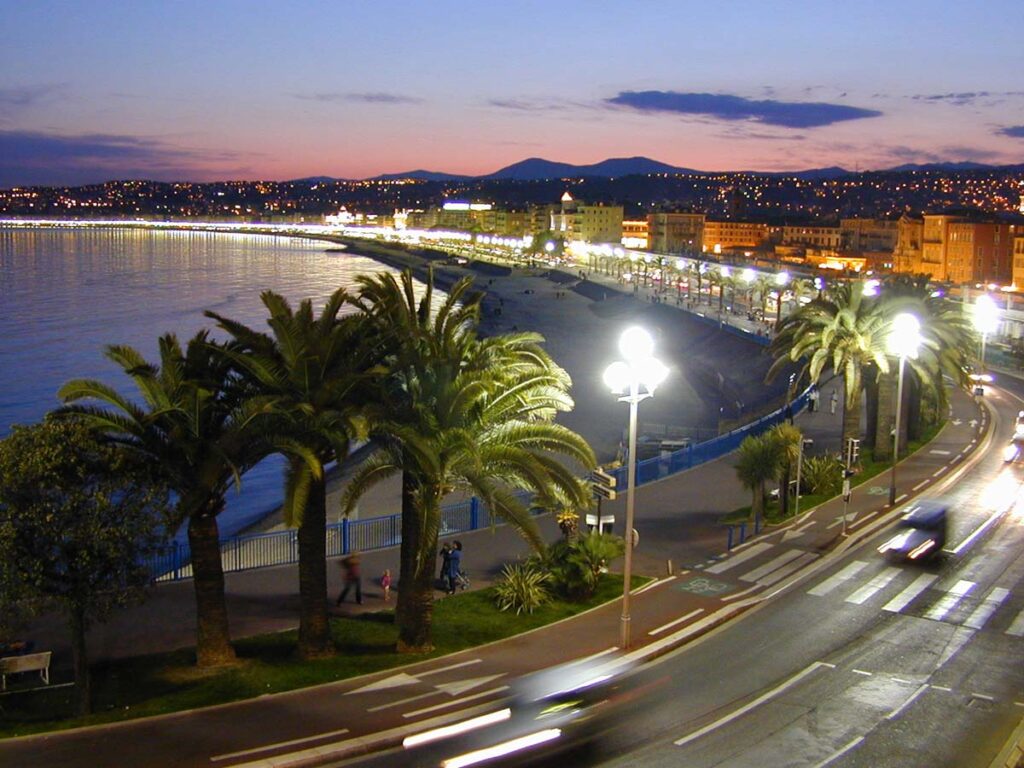
Here is the single most practical fact in this article: Nice’s beaches are pebbles, Cannes’s are sand. Not gravel-adjacent coarse sand. In Nice we are talking smooth, fist-sized grey stones called galets that make walking to the water a small act of penance and make lying down without a thick mat genuinely uncomfortable. Pack water shoes and a proper mat and it’s honestly fine, and you get something in return: the water off Nice is strikingly clear precisely because there’s no sand churning in it, and the long public stretches below the Promenade des Anglais are free for miles.
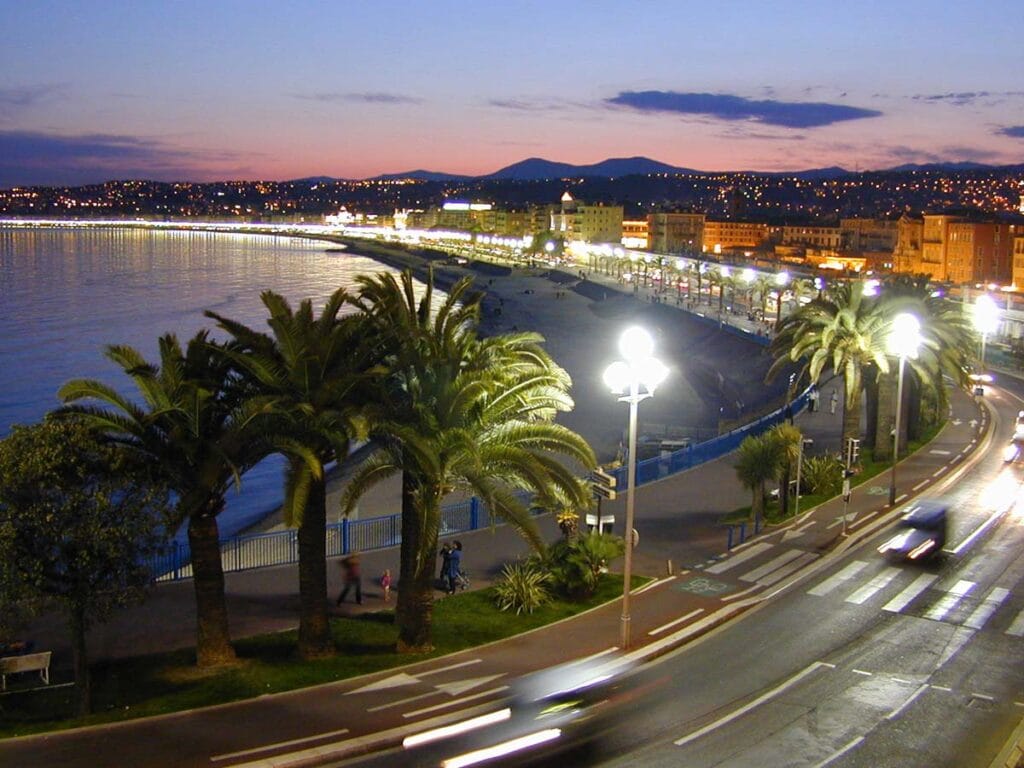
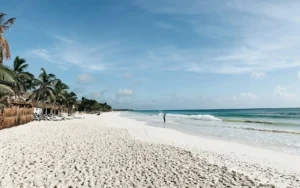
Cannes gives you the soft golden entry that most people picture when they book the south of France. The catch is ownership. A large share of the central beachfront along the Croisette is carved up into private clubs where a sunbed costs real money, and the free public sections, while perfectly usable, sit at the ends of town or in slivers between the concessions and get packed by mid-morning in summer. If a sandy beach day is the core memory you’re chasing, Cannes wins this category and it is not close. If you mostly swim, float, and read, Nice’s clear water plus zero cost arguably delivers the better actual beach day.
Food: a real local cuisine vs polished and pricey
Nice is one of the few cities in France with a named cuisine of its own, and it is cheap, portable and everywhere. Socca, the blistered chickpea pancake sold by the paper-wrapped wedge; pan bagnat, essentially a salade nicoise packed into a soaked round loaf; pissaladiere with its onions and anchovies; little stuffed vegetables in the traiteur windows. You can eat memorably in Nice for the price of a sandwich elsewhere on the coast, and the Cours Saleya market, touristy as it has become, is still a real pleasure early in the morning.
Cannes cooks well but charges for the postcode. The restaurant scene skews polished, international and expensive, especially within scent of the Croisette, and the cheap-and-brilliant hole-in-the-wall category that Vieux Nice does effortlessly is much thinner here. Cannes’s trump card is the Marche Forville, a genuinely excellent covered market that feels more local than anything equivalent in Nice; go hungry, buy rotisserie chicken and cheese and fruit, and eat it on the port. That market alone keeps this category from being a blowout, but Nice still takes it comfortably on personality and price.
Nightlife: old-town bars vs bottle service
Nice is a city of around 340,000 people with universities, a big year-round population and a working port, and its nightlife reflects that. The lanes of the old town fill up nightly with everything from grubby student bars to serious cocktail rooms, the port side has a more local, less touristy scene, and crucially it all still functions in February. Prices are reasonable by French resort standards, and you can bar-hop on foot all night.
Cannes nightlife is a different sport. It is beach clubs that turn into parties, hotel bars where the people-watching is the entertainment, casinos, and glossy clubs where a table costs more than your flight. When it’s on, in summer or around the festival and the various congresses, it is glamorous in a way Nice never quite manages. The rest of the year it can feel like the lights are on but nobody’s home. Unless your trip is specifically a dress-up blowout weekend, Nice wins for most travelers, most nights of the year.
Old towns, walkability and everyday atmosphere
Vieux Nice is one of the great old towns of the Mediterranean: a broad tangle of ochre and terracotta lanes, laundry strung between shutters, gelato queues, tiny chapels, and enough depth that you can get pleasantly lost for days. Climb Castle Hill at the end of it and you get the famous view over the Baie des Anges that justifies the whole trip. Beyond the old town, Nice is simply a substantial city, France’s fifth largest, with real museums including the Matisse and Chagall collections up in Cimiez, and a UNESCO World Heritage listing recognizing its history as the Riviera’s original winter resort.
Cannes’s old quarter, Le Suquet, climbs a small hill above the old port and is legitimately charming: cobbled, flower-boxed, lovely at sunset. It is also finished in about ninety minutes. Step away from the Croisette and the Rue d’Antibes shopping strip and Cannes reveals itself as a normal small French town of about 75,000, which is either endearing or underwhelming depending on what you were promised. For atmosphere you can live inside for a week rather than photograph in an afternoon, Nice wins clearly.
Day trips: the same coastline, two different launchpads
Both towns sit on the same coastal TER rail line, which is the great equalizer of the Riviera, but their day-trip menus differ. From Nice, the greatest hits stack up absurdly fast: Villefranche-sur-Mer is minutes away, Monaco is roughly twenty-five minutes, Menton and the Italian border a bit beyond, and Eze and Saint-Paul-de-Vence are short bus rides into the hills. If you have ever been torn between the two countries at the border here, our France vs Italy comparison exists for exactly that argument.
Cannes counters with quality over quantity. The Iles de Lerins, fifteen minutes offshore by boat, are the single best day trip either town offers: pine forests, quiet rocky coves, a fort with the Man in the Iron Mask legend on Sainte-Marguerite, and monks who still make wine on Saint-Honorat. Add Antibes ten minutes up the line and Grasse, the perfume town, in the hills behind, and Cannes is no slouch. Nice takes the category on sheer range and train frequency, but by a nose, and the Lerins islands are worth a day no matter where you sleep.
Weather & when to go
The climate is the same for both: classic Mediterranean, with something like 300 sunny days a year, hot dry summers in the mid-80s Fahrenheit, and mild winters that hang around the 50s. The sweet spots are May-June and September-October, when the sea is swimmable, the light is ridiculous, and the crowds are humane. July and August are hot, packed and at peak price everywhere on this coast.
Two calendar quirks matter. Mid-May, the film festival takes Cannes hostage: rooms multiply in price, beaches host private events, and the town is simultaneously at its most glamorous and least visitable for normal travelers. February, meanwhile, is Nice’s carnival season, and Nice generally stays awake through winter in a way Cannes does not; a fair number of Cannes beach clubs and restaurants simply shut until spring. If you’re planning an off-season Riviera trip, that tilts things heavily toward Nice.
Getting there & around
Nice wins the logistics war before you even land. Nice Cote d’Azur airport is the Riviera’s main gateway and one of France’s busiest, and the tram runs from both terminals into the city center for a couple of euros. Cannes has no commercial airport of its own; you’ll land in Nice and take a direct express bus (roughly 45-50 minutes) or connect by train, which is painless but is still a transfer at both ends of your trip.
Between the two, the TER train takes about 30-40 minutes and costs little, so day-tripping in either direction is trivial. Within Nice, trams and flat seafront walking cover almost everything; within Cannes, you can walk end to end in about twenty minutes. Neither requires a car, and honestly neither forgives one, since parking on this coast is expensive misery. If you’re weighing France against its neighbors for a bigger multi-country trip, our Spain vs France breakdown covers how the Riviera stacks up against the Costa Brava crowd.
Nice or Cannes: the honest verdict
For budget travelers, it’s Nice and it is not remotely close. Hostels exist, street food is a genuine cuisine rather than a compromise, the beaches are free, and the trains make the expensive towns day-trippable from a cheap base.
For foodies, Nice again, on the strength of cuisine nicoise and the sheer density of affordable, characterful eating in the old town. But schedule one Cannes morning around the Marche Forville, because it is the best market on this stretch of coast.
For beach purists, Cannes. Sand wins, full stop. Pay for one proper beach-club day, do it without guilt, and accept the bill as part of the experience.
For first-timers to the Riviera, Nice. Better airport, better base, more to do when it rains, more range of day trips, and it stays interesting after dark year-round. Stay in Nice, take the train to Cannes and the boat to the Lerins islands, and you get both towns for one hotel bill. And for a glamour trip, an anniversary, a dress-up weekend where the whole point is yachts and terraces and looking fabulous, book Cannes and don’t look at the prices. If this whole exercise has you zooming out to compare Mediterranean countries instead of towns, our Italy vs Spain matchup is the logical next rabbit hole.
FAQ
Is it better to stay in Nice or Cannes as a base for the French Riviera?
Which is more expensive, Nice or Cannes?
Does Cannes have better beaches than Nice?
How far apart are Nice and Cannes, and can you visit both in one trip?
Planning the trip? Go deeper with things to do in Nice.
You Might Also Love
More side-by-side comparisons


Written by
John Morrison is the founder and lead travel writer at Packzup. Over the past decade he has explored destinations across Africa, the Americas, Asia, Europe, the Middle East, and Oceania — always self-funded, never on a press trip.
