
Last updated September 11, 2026 · Editorial policy
- Cost comparison: what you will actually spend
- Beaches: drama versus swimmability
- Hiking and scenery: not remotely close
- Food: Oahu is the entire podium
- Where to stay: one real city versus four small bases
- Vibe, crowds, and nightlife
- Weather and when to go
- Getting there and around
- Kauai or Oahu: the honest verdict
- FAQ
Kauai vs Oahu is the Hawaii decision that ruins more group chats than any other. One island gave the world Waikiki, Pearl Harbor, and the North Shore’s famous surf breaks; the other looks like the opening scene of Jurassic Park because it literally is. I have spent time on both, talked friends into both, and watched people pick wrong in both directions. The short version: these two islands are far more different than first-timers expect, and picking from a couple of Instagram photos is how you end up on the wrong one.
Oahu is the city island. Honolulu is a real metropolis with world-class food, lively beaches, and more organized activities than you could clear in a month. Kauai is the nature island: a permanent population smaller than many mainland suburbs, one main road that does not even complete a loop around the island, and scenery that makes loud people go quiet. Below is the friend-to-friend comparison I wish someone had given me: real costs, beaches, hiking, food, and a verdict that actually picks winners instead of telling you both are wonderful.
| Category | Kauai | Oahu | Winner |
|---|---|---|---|
| Beaches | Wild, dramatic, uncrowded | Swimmable, lively, lifeguarded | Kauai |
| Hiking and scenery | Na Pali Coast, Waimea Canyon | Diamond Head, Koko Head | Kauai |
| Food and restaurants | Good but limited | Outstanding at every price | Oahu |
| Nightlife | Asleep by 9 p.m. | Waikiki bars, live music, Chinatown | Oahu |
| Ease for first-timers | Needs planning and a car | Walkable base in Waikiki | Oahu |
| Peace and quiet | Rural, slow, empty trails | A city of a million people | Kauai |
| Family-friendliness | Best with older kids | Calm beaches, endless activities | Oahu |
| Value for money | High lodging, car required | Options at every budget | Oahu |
Cost comparison: what you will actually spend
Neither island is cheap, so let’s get the wincing out of the way early. On Oahu, a genuinely frugal traveler can manage on about $140 to $200 per person per day: a hostel bed or older Waikiki hotel for $60 to $130 a night, plate lunches and poke bowls for $12 to $18, the surprisingly useful TheBus network for around $3 a ride, and free beaches and hikes filling the days. That budget floor barely exists on Kauai. Cheap lodging is scarce, a rental car is close to mandatory at $50 to $90 a day, and groceries cost noticeably more, so a realistic Kauai minimum lands nearer $220 to $280 per person per day.
Mid-range is where most trips settle. Couples should budget roughly $450 to $650 a day on Oahu and $550 to $800 on Kauai for a nice hotel or condo, a car (optional on Oahu), two restaurant meals, and an activity every day or two. Watch the quiet extras on both islands: resort fees and hotel parking commonly add $40 to $80 a night before you have done a single thing. For perspective, either island costs more per day than both countries in our Croatia vs Portugal matchup, so nobody wins Hawaii on price. Oahu simply loses less.
Beaches: drama versus swimmability
Kauai’s beaches are the ones you remember years later. Hanalei Bay is a two-mile crescent backed by green ridgelines and waterfalls, and it somehow never feels full. Polihale, at the end of a rough dirt road on the west side, is a vast stretch of sand where your nearest neighbor might be a quarter mile away. Tunnels (Makua) offers superb summer snorkeling, and Poipu on the sunny south shore is the reliable family option, often with a monk seal napping on the sand. The catch: winter surf on the north shore is genuinely dangerous, many beaches have no lifeguards, and reaching Ke’e Beach now requires an advance reservation through the Ha’ena State Park system.
Oahu trades some of that drama for convenience and consistency. Waikiki is crowded for a reason: gentle rolling waves perfect for a first surf lesson, warm water, and a beach you can walk to from hundreds of hotels. Lanikai and Kailua on the windward side are legitimate postcard material with powder-soft sand. Hanauma Bay is one of the easiest world-class snorkeling spots anywhere, though it now requires a timed reservation and an entry fee. In winter the North Shore becomes a spectator sport, with professionals riding huge waves at Pipeline and Sunset Beach. If you want space and raw beauty, Kauai wins. If you want to actually swim every single day without checking a surf report, Oahu is the safer bet.
Hiking and scenery: not remotely close
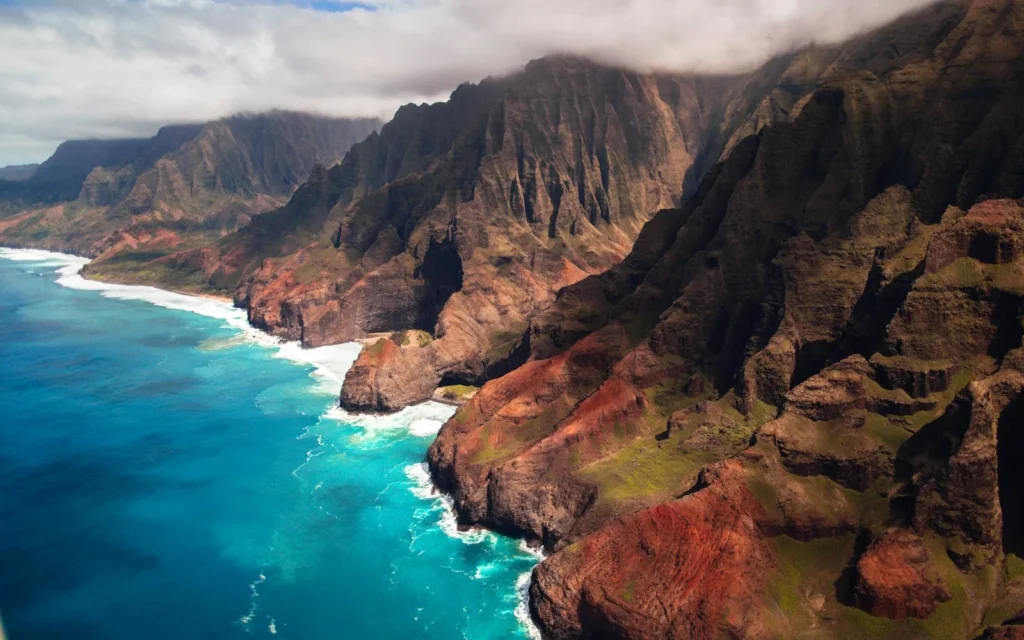
Kauai is, mile for mile, the best hiking island in Hawaii. The Kalalau Trail along the Na Pali Coast is the famous one: the first two miles to Hanakapiai Beach work as a day hike with a Ha’ena State Park reservation, while the full eleven miles demand a hard-to-get camping permit. Waimea Canyon, nicknamed the Grand Canyon of the Pacific, has rim lookouts and red-dirt trails that feel like another planet, and the Kokee State Park trails above it deliver views straight down the Na Pali cliffs. Even mellow options like the Sleeping Giant trail near Kapaa pay out panoramic coastline for an hour of effort.
Oahu holds its own for casual hikers. Diamond Head is a short, historic climb with a full sweep over Waikiki (non-residents now need to reserve entry in advance). The Koko Head railway stairs are a brutal, satisfying hour of step-ups, Makapuu Lighthouse is a paved, family-friendly stroll with whale sightings in winter, and Manoa Falls gets you into proper rainforest fifteen minutes from downtown. All good. None of it touches the Na Pali Coast. If hiking is the point of your trip, book Kauai and do not look back.
Food: Oahu is the entire podium
Flip everything for eating. Oahu has one of the best food scenes in the United States, full stop. Helena’s Hawaiian Food has been serving kalua pig and pipikaula since the 1940s and won a James Beard award doing it. Leonard’s Bakery makes the malasadas everyone talks about, Giovanni’s shrimp truck up near Kahuku launched an entire genre, Marukame Udon in Waikiki keeps a permanent line for a reason, and Honolulu’s Chinatown runs from old-school dim sum to genuinely exciting newer kitchens. Poke here is an everyday grocery-store item and still better than what most mainland restaurants plate.
Kauai eats well, but it plays in a smaller league. Hamura Saimin in Lihue is a true institution, the food-truck clusters around Hanalei and Kapaa are strong, JoJo’s shave ice in Waimea is worth the drive, and the farmers markets are excellent. The problems are depth and hours: high-end options are thin, and a lot of kitchens close early. If you plan entire trips around eating, the way readers of our Japan vs China comparison tend to, Oahu is not just the winner here. It is the whole podium.
Where to stay: one real city versus four small bases
On Kauai your base matters enormously, because driving takes longer than the map suggests. Poipu on the south shore is the sunniest, most resort-heavy area and the default for families. Princeville on the north shore is the dramatic, green, occasionally rainy option with the best scenery on the island. Kapaa sits in the middle with more affordable condos and the island’s worst traffic, and Waimea on the west side is quiet and close to the canyon. There is no big-city option because there is no big city.

Oahu is simpler: the overwhelming majority of visitors stay in Waikiki, and for a first trip that is the right call. You can walk to the beach, dozens of restaurants, and tour pickups without touching a car. Ko Olina on the leeward coast is the calm, lagoon-front family alternative, Kailua gives you a residential beach-town feel, and the North Shore around Turtle Bay is the only true resort pocket up there. One warning: Oahu regulates short-term rentals strictly, so verify any vacation rental is legal before you pay.
Vibe, crowds, and nightlife
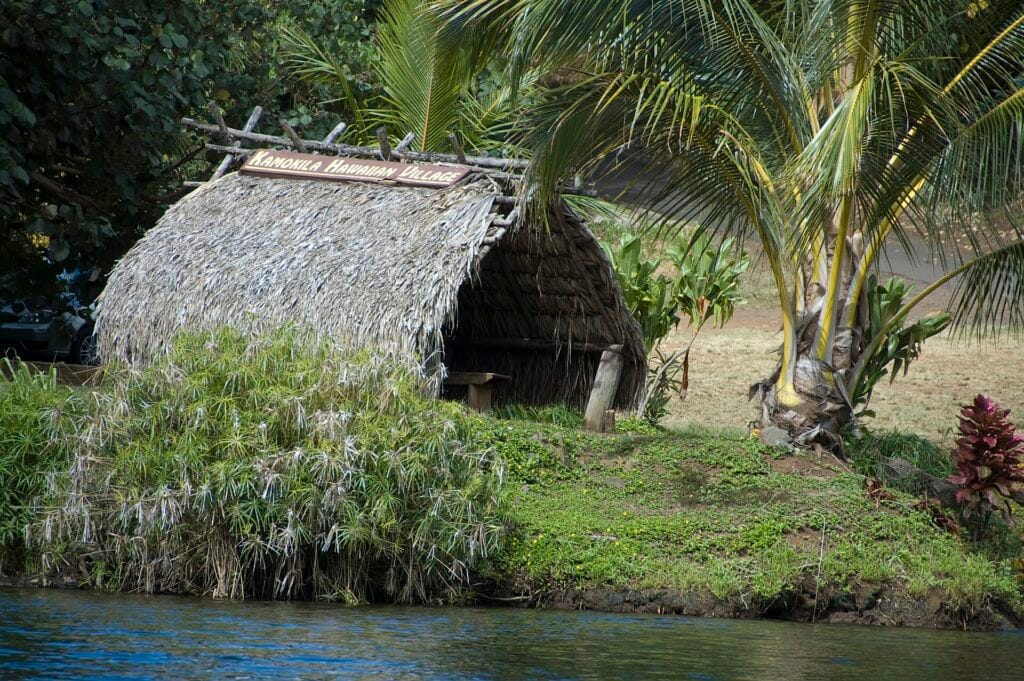
This is the part people underestimate. Kauai holds a small fraction of Oahu’s population, no building stands taller than a coconut tree (as locals like to put it), and the island observes an unofficial bedtime of roughly 9 p.m. Roosters are your alarm clock. The main highway narrows to one-lane bridges on the north shore, and Kapaa traffic is real, but the overall feeling is rural and slow in the best way. Nightlife means sunset, a long dinner, and maybe live slack-key guitar somewhere in Hanalei.
Oahu is a functioning city of about a million people, with everything that implies: genuine rush-hour traffic on the H-1, but also bars that stay open, live music every night of the week, rooftop happy hours in Waikiki, and a Chinatown that turns into a proper night-out district on weekends. If you have ever come home from a beautiful-but-dead destination feeling restless, you are an Oahu person. If your dream vacation is a book, a beach chair, and no plans, Kauai was built for you.
Weather and when to go
Both islands stay warm year-round, with daytime highs roughly 78 to 88 degrees Fahrenheit and cooler, pleasant nights. The real difference is rain. Kauai is the greener island because it is the wetter island: Mount Waialeale at its center is one of the wettest spots on earth, and the north shore around Hanalei and Princeville sees serious rain in winter. The south and west sides, Poipu and Waimea, stay far drier. Oahu is drier overall, especially the south and leeward shores where most visitors stay, so weather washes out fewer days there.
Seasonally the two work the same way. Winter, November through March, brings huge surf to both north shores, humpback whales offshore from December to March, and peak prices around the holidays. Summer means calm water, hotter days, and family crowds. The sweet spots are April to early June and September to mid-November: thinner crowds, gentler prices, reliably good weather. Hurricane season technically runs June through November, but direct hits are rare.
Getting there and around
Honolulu (HNL) is one of the best-connected airports in the Pacific, with nonstops from dozens of mainland cities plus Asia and Oceania; West Coast flights run five to six hours. Lihue (LIH) on Kauai has a solid handful of West Coast nonstops too, but fewer of them, and travelers from elsewhere usually connect through Honolulu. The inter-island hop between the two takes about 35 minutes. Even Vancouver has nonstop service to Honolulu, and it makes a great stopover in its own right; see our things to do in Vancouver guide if you are routing through.
On the ground, the islands diverge completely. On Oahu you can skip the rental car if you base in Waikiki: TheBus reaches most of the island cheaply, rideshares are everywhere, and most tours include hotel pickup, which matters when hotel parking runs $40 to $60 a night. On Kauai a car is effectively mandatory. There is one main road, it does not connect around the Na Pali Coast, and nothing is walkable between towns. Book the car when you book the flight, and treat map-app time estimates as optimistic.
Kauai or Oahu: the honest verdict
Budget travelers: Oahu. It has Hawaii’s only real budget-lodging scene, an actual public bus, free world-class beaches and hikes, and you can genuinely skip the rental car. Kauai quietly punishes thin wallets at every turn.
Foodies: Oahu, by a landslide. A week of eating on Oahu is a legitimate reason for the trip. A week of eating on Kauai is pleasant support for a trip you took for other reasons.
Beach and nature lovers: Kauai. Na Pali, Waimea Canyon, Hanalei Bay, Polihale. Oahu has beautiful corners, but Kauai is beautiful everywhere you point your face.
First-timers: Oahu, with one caveat. It is the easiest, most forgiving introduction to Hawaii and gives you a taste of everything. The caveat: if crowds and cities drain you at home, they will drain you in paradise too, and you should start with Kauai instead. As with our Greece vs Portugal verdict, the answer depends less on the destinations than on who you are.
Honeymooners and hikers: Kauai. Quiet, dramatic, romantic, and the trail quality is unmatched in the state. If you have ten days or more, do both: fly into Honolulu, spend four or five nights on Oahu, then take the short hop to Lihue and let Kauai slow you down.
FAQ
Is Kauai or Oahu better for a first trip to Hawaii?
Is Kauai more expensive than Oahu?
Can you visit both Kauai and Oahu in one trip?
Which island has better beaches, Kauai or Oahu?
Planning the trip? Go deeper with things to do in Kauai and things to do in Oahu.
You Might Also Love
More side-by-side comparisons




Written by
John Morrison is the founder and lead travel writer at Packzup. Over the past decade he has explored destinations across Africa, the Americas, Asia, Europe, the Middle East, and Oceania — always self-funded, never on a press trip.