
Last updated September 6, 2026 · Editorial policy
More: When to visit Vancouver · Vancouver travel guide
- Things to Do in Vancouver: 12 Experiences You Can’t Miss: What Is Actually Worth Your Time
- How do TransLink's fare zones work in Vancouver?
- Compass Card or Compass Ticket: which does a visitor need?
- Does the SkyTrain reach Vancouver airport, and what is the extra charge?
- How do you get to Stanley Park, and what does parking cost?
- Getting to the North Shore, and why it rains more there
- Grouse Mountain and Capilano are private businesses, not city parks
- What do Parks Canada sites near Vancouver charge?
- What catches visitors out in Vancouver
- At a glance
- Frequently asked questions
Things to Do in Vancouver: 12 Experiences You Can’t Miss: What Is Actually Worth Your Time
Quick answer: This is an honest look at Vancouver: 12 Experiences You Can’t Miss: which popular attraction to think twice about, what to do with that time instead, and the spot most visitors never reach. It also covers the transit and money moves that save the most hassle.
The Capilano Suspension Bridge is the attraction most visitors feel obligated to do, and it is the one I would skip. Adult admission runs around CAD 70 to 80 for a 460-foot span and a few engineered add-ons, and the parking lot fills with tour coaches by mid-morning. Drive ten minutes further to Lynn Canyon Park instead: its suspension bridge is free, it sways more, and the surrounding rainforest trails and swimming holes are where North Shore locals actually spend their afternoons.
The pick most people miss is Quarry Rock, the lookout reached by a roughly 2.5-mile out-and-back trail from Deep Cove. You get a payoff over Indian Arm that rivals any paid viewpoint, then you walk back into the village for a doughnut at Honey. It beats paying for the Grouse Mountain Skyride if your real goal is the view rather than the gift shop.
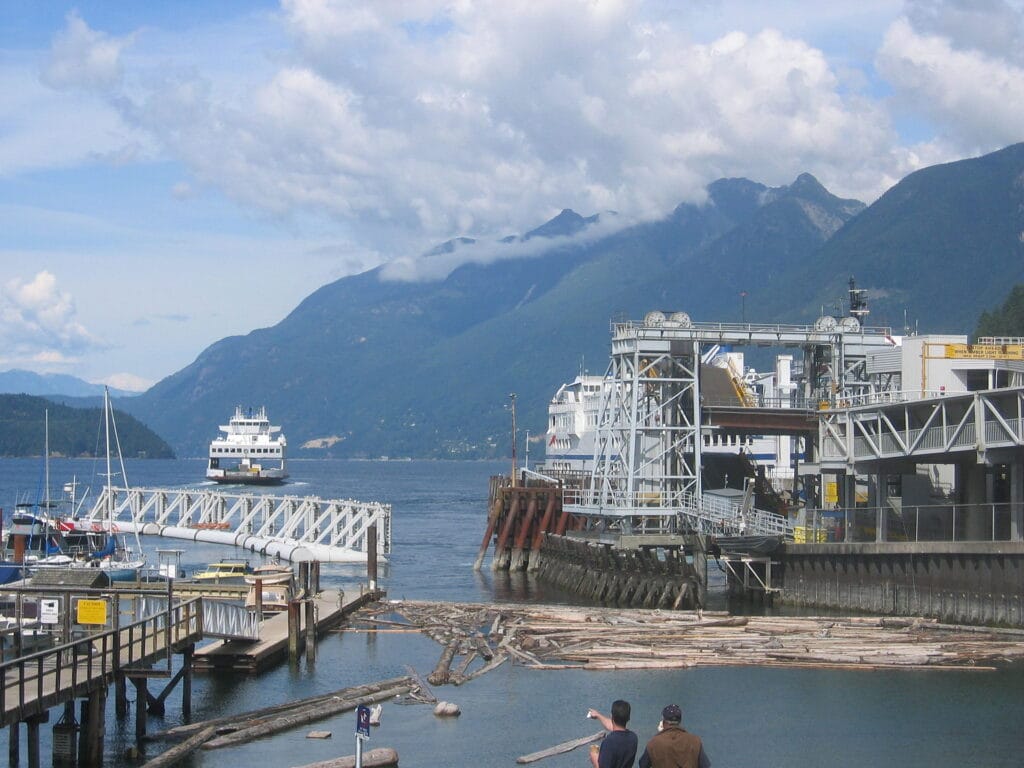
One smart money move: instead of booking a harbour cruise, ride the SeaBus from Waterfront Station to Lonsdale Quay. It is a regular transit trip on a Compass fare, the crossing takes about 12 minutes, and the deck looks straight at Stanley Park, the Lions Gate Bridge and the north shore mountains. Walk the free Stanley Park seawall the same day and you have done the city’s best sightseeing for transit fare.
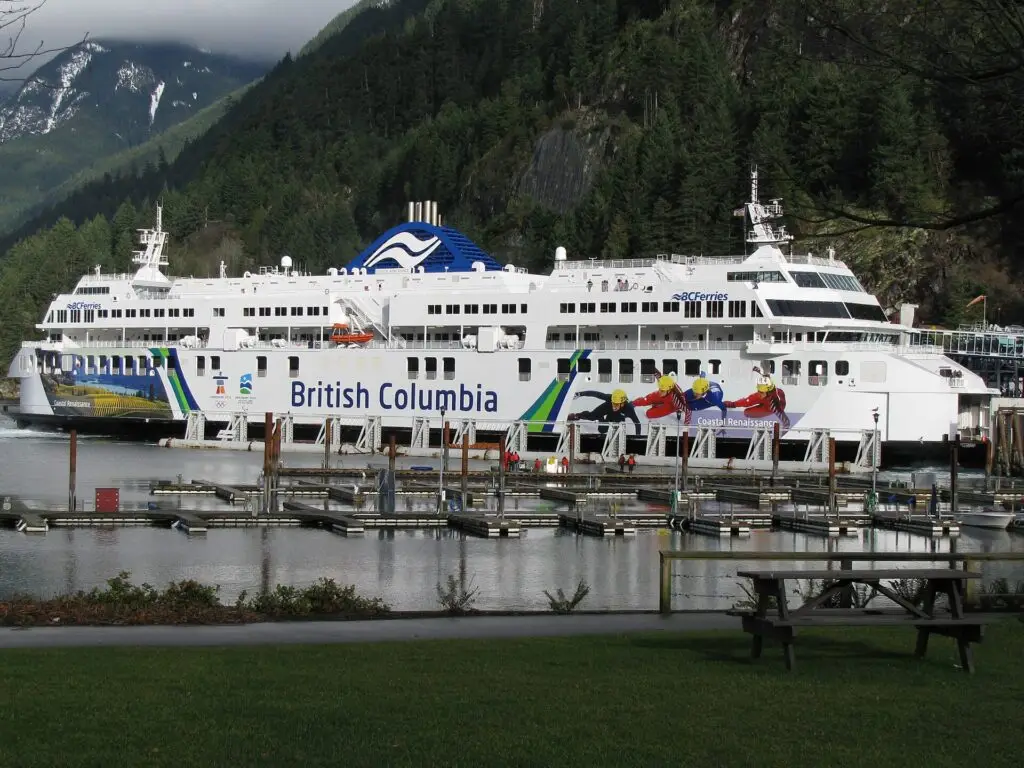
How do TransLink’s fare zones work in Vancouver?
Three zones, but two rules cancel most of them out. TransLink divides Metro Vancouver into Zone 1, Zone 2 and Zone 3 for SkyTrain, SeaBus and West Coast Express, and charges by how many zone boundaries you cross. Then it exempts almost everything else.
The first rule: All bus and HandyDART trips are a 1-Zone fare at all times. Take a bus from downtown to the far end of Burnaby and you pay the cheapest fare on the system. The second rule: All trips across the system starting after 6:30 p.m. (Monday to Friday) and all travel on weekends (Saturday and Sunday) are a 1-Zone fare. So the zone map only bills you on rail and SeaBus, on weekdays, before half past six in the evening.
Fares rose on 1 July 2026 by an average of 5%. The adult stored-value fare on a Compass Card is $2.85 for one zone, $4.20 for two and $5.40 for three. Paying by Compass Ticket or cash costs noticeably more: $3.50, $5.10 and $6.70. Concession is $2.30, $3.40 and $4.60 whichever way you pay, so there is no stored-value discount at the concession rate.
A DayPass is $12.55 adult and $9.75 concession. The arithmetic is worth doing: a DayPass beats two three-zone Compass Ticket trips at $6.70 each, but it costs more than two three-zone stored-value trips at $5.40. Monthly passes are $117.20 for one zone, $156.70 for two and $211.65 for three, with a concession all-zone pass at $66.95. All figures are Canadian dollars, confirmed 6 September 2026.
Compass Card or Compass Ticket: which does a visitor need?
A Compass Card if you are staying more than about two days, a Compass Ticket only for a single journey. The Card carries a $6 refundable fee, is reloadable, and unlocks the cheaper stored-value fares. A Compass Ticket is single use, and TransLink notes that tickets bought at vending machines can only be used on the day they’re purchased, so an unused ticket is a wasted one.
The tapping rule is where visitors get fined. TransLink’s instruction is to tap your card or ticket on the blue validator when entering buses and HandyDART, and at the gates when entering and exiting SkyTrain and West Coast Express stations or SeaBus terminals. In plain terms: tap in and out on rail and the SeaBus, tap in only on buses. Miss the tap out at a SkyTrain gate and the system cannot see where you finished, and TransLink states that failing to tap, or using a fare product that you are not eligible for, could result in a fine.
The transfer window is 90 minutes, or 120 minutes where West Coast Express is involved. Your travel time starts when you first tap into a fare-paid zone, so a bus to a SkyTrain to a second bus inside that window is one fare, not three.
Contactless payment works too: TransLink accepts Interac, American Express, Mastercard and Visa, and Apple Pay, Google Pay and Samsung Pay. Convenience has a cost, though, because contactless is one of the payment types that attracts the airport surcharge described next.
Does the SkyTrain reach Vancouver airport, and what is the extra charge?
Yes. The Canada Line runs into YVR-Airport station, and there are two more stations on Sea Island, Sea Island Centre and Templeton. The catch is a surcharge that exists nowhere else on the network.
TransLink states that an additional $6.50 charge is added to some trips that start at the YVR Airport, and that it applies to eastbound trips that start at YVR Airport, Sea Island Centre, or Templeton, and end at any station from Bridgeport onwards. TransLink’s own Buzzer blog records the AddFare as $5, brought in under the 2009 funding stabilisation plan, so the current $6.50 is the figure that arrived with the 1 July 2026 fare change.
The direction is the whole trick. The AddFare is charged leaving the airport, not arriving at it. Your last trip of the holiday, downtown to the terminal, is an ordinary fare. Your first trip, terminal to downtown, is an ordinary fare plus $6.50.
Which products pay it is published and specific. It applies to single-use tickets and DayPasses bought at YVR Airport, Sea Island Centre and Templeton stations, to Compass Card stored value, and to Tap to Pay contactless payments. It does not apply to monthly pass holders, to travel between the three Sea Island stations, to DayPasses not purchased on Sea Island, to single-use Compass Tickets not purchased at Sea Island stations, to programme passes including U-Pass BC, the BC Bus Pass, CNIB and the TransLink employee pass, or to Burkeville resident programme card holders. For a visitor arriving with no card, there is no practical way around it, so treat it as part of the airport transfer price rather than a fee to dodge.
How do you get to Stanley Park, and what does parking cost?
By bus, on a one-zone fare. TransLink route 19 runs between Metrotown Station and Stanley Park and carries more than four million trips a year, and because every bus trip is a one-zone fare at all times, reaching the park costs $2.85 on stored value whatever time you travel and wherever you board.
Driving is the expensive option, because the Vancouver Park Board charges for parking across the park and prices it seasonally, with a higher summer rate and a lower winter rate, an hourly charge and a daily maximum, applied every day including holidays. Some machines at the busiest stops do not sell all-day tickets at all. Take the current rates from vancouver.ca rather than from a sign you half remember, since the Park Board reset its parking strategy and its fee schedule in late 2025.
On the free shuttle around the park: do not build a day around one. The Vancouver Park Board’s own free shuttle has not been confirmed as running, and the hop-on service that operates the loop is a commercial tour sold as a 24-hour or 48-hour pass, which is a different thing at a different price. Confirm what is running with the Park Board before you rely on it, and note that shuttle routes around the park have changed between seasons.
The practical answer for most visitors is the one that costs least and fails least: take the 19 in, walk or cycle the seawall, and leave the car where it is.
Getting to the North Shore, and why it rains more there
The SeaBus is the fast way across Burrard Inlet, and it is the one journey where the zone system will actually bill you. It runs between Waterfront in downtown Vancouver and Lonsdale Quay in North Vancouver, and it crosses a zone boundary, so a weekday afternoon crossing is a two-zone fare at $4.20 on stored value or $5.10 on a Compass Ticket.
Cross after 6:30 p.m. on a weekday, or at any time on a Saturday or Sunday, and TransLink’s own rule makes the same crossing a one-zone fare at $2.85. Riding a bus across the Lions Gate Bridge instead is a one-zone fare at any hour, because all bus trips are. Two ways over the same water, priced differently by the clock.
The weather is a real difference, not a figure of speech. The North Shore mountains rise steeply straight off the water, and air forced up them drops its moisture, so the North Shore reliably collects more rain than Vancouver International Airport does on the flat delta to the south, and the gap widens with elevation.
We are not putting a number on either total. Environment and Climate Change Canada publishes 1991 to 2020 climate normals station by station, but its results tables are generated from a search form and we could not open a station page to read the annual figures. Run the station nearest your destination through the Canadian Climate Normals search at climate.weather.gc.ca rather than reading a Vancouver city forecast rather than a Vancouver city forecast, and pack for a wetter day on the North Shore than the downtown forecast implies. In winter that difference frequently shows up as rain downtown and snow above about 300 metres.
Grouse Mountain and Capilano are private businesses, not city parks
This is the single most common budgeting mistake in Vancouver. Grouse Mountain and the Capilano Suspension Bridge are privately operated attractions on the North Shore, each with its own admission price set by its own operator. No TransLink fare, DayPass or monthly pass includes entry to either.
What a transit fare buys you is the journey. TransLink fare products cover buses, SkyTrain, the SeaBus and West Coast Express, and nothing else. So the honest way to budget a North Shore day is two separate lines: a one-zone or two-zone transit fare to get there, and a separately purchased admission at the gate.
Prices at both attractions are set commercially, vary by date and season, and have moved between years, so we are not quoting a figure here. Take the current adult price from each operator’s own site on the day you book, and check what the ticket actually includes, since mountain admission and individual activities on the mountain are often sold separately.
The same caution applies to the shuttle buses these attractions advertise. Those are run by the businesses themselves, on their own timetables, and are not part of the public network, so a Compass Card will not open the door and TransLink cannot tell you when the next one leaves. Contrast that with Stanley Park, which is a public park run by the Vancouver Park Board where the only charge is parking.
What do Parks Canada sites near Vancouver charge?
The Parks Canada site closest to the city is Fort Langley National Historic Site, about an hour east in the Fraser Valley, and its published daily admission is $10.00 adult and $8.50 senior, with youth free. Parks Canada has admitted youth 17 and under free at all its places since 1 January 2018.
Those day rates are the ones that apply for the rest of 2026. Under the Canada Strong Pass, Parks Canada admission was free from 19 June to 7 September 2026 inclusive, with a 25 per cent discount on camping and roofed accommodation over the same window and no entry pass or ticket required. Parks Canada states that regular fees apply as of September 8, 2026. So unless the scheme returns for a further summer, a visit from 8 September onwards pays the published price. The pass has run in consecutive summers, so if you are planning for next year, check whether the window has been announced before you budget admission.
If you are combining several Parks Canada places, the Discovery Pass is $83.50 adult, $71.50 senior and $167.50 family or group, valid for twelve full months from purchase. Against a $10.00 adult day fee at Fort Langley, the pass only makes sense if you are also visiting national parks further out, which for a Vancouver-based trip usually means Gulf Islands National Park Reserve or a run across to Vancouver Island.
Note the three-way split that governs almost everything a visitor pays for around Vancouver: TransLink sets transit fares, the Vancouver Park Board runs the city parks and charges only for parking, and Parks Canada charges admission at national sites. None of the three honours the others’ passes.
What catches visitors out in Vancouver
Five things, and four of them are about which body charges you.
Buying single tickets all week. The gap between Compass Ticket and stored value is $0.65 on a one-zone trip and $1.30 on a three-zone one. Over a week of rail journeys the $6 refundable card fee is recovered several times over.
Forgetting to tap out. Buses take one tap. SkyTrain, SeaBus and West Coast Express take two, in and out at the gates, and TransLink says failing to tap can result in a fine.
Being surprised by the airport surcharge. The $6.50 AddFare is charged eastbound out of Sea Island and applies to stored value, single tickets, Sea Island DayPasses and contactless taps. Only monthly and program passes, and DayPasses or tickets bought elsewhere, escape it.
Expecting a transit pass to open a private gate. Grouse Mountain and Capilano charge their own admission. So does Parks Canada. The Vancouver Park Board charges for parking rather than entry.
Dressing for the downtown forecast. The North Shore is wetter and, in winter, colder and higher. Check the Environment and Climate Change Canada station nearest where you are actually going.
Two re-check instructions, both dated 6 September 2026: fares changed on 1 July 2026 and change again on future 1 July dates, so confirm current prices on translink.ca; and Parks Canada’s regular fees apply from 8 September 2026, the Canada Strong Pass free window having run 19 June to 7 September 2026, so confirm on parks.canada.ca rather than assuming either way.
At a glance
| Fare or charge | Adult | Concession | What triggers it |
|---|---|---|---|
| 1 zone, Compass stored value | $2.85 | $2.30 | All buses at all times; everything after 6:30 p.m. and at weekends |
| 2 zones, Compass stored value | $4.20 | $3.40 | Rail or SeaBus across one boundary, weekdays before 6:30 p.m. |
| 3 zones, Compass stored value | $5.40 | $4.60 | Rail across two boundaries, weekdays before 6:30 p.m. |
| 1 zone, Compass Ticket or cash | $3.50 | $2.30 | Paying without a Compass Card |
| 2 zones, Compass Ticket or cash | $5.10 | $3.40 | Paying without a Compass Card |
| 3 zones, Compass Ticket or cash | $6.70 | $4.60 | Paying without a Compass Card |
| DayPass | $12.55 | $9.75 | Unlimited travel for the day |
| Monthly pass, 1 zone | $117.20 | $66.95 all zones | Calendar month |
| YVR Airport AddFare | $6.50 | $6.50 | Eastbound trips starting at YVR Airport, Sea Island Centre or Templeton |
| Compass Card fee | $6 refundable | $6 refundable | Picking up the card |
All amounts in Canadian dollars. TransLink fares effective 1 July 2026, an average increase of 5%. Confirmed 6 September 2026.
Frequently asked questions
How much is a SkyTrain ticket in Vancouver?
On a Compass Card with stored value the adult fare is $2.85 for one zone, $4.20 for two and $5.40 for three. Paying by Compass Ticket or cash costs $3.50, $5.10 and $6.70. Fares rose on 1 July 2026 by an average of 5%. All trips starting after 6:30 p.m. on weekdays, and all travel at weekends, are charged as one zone.
Does the SkyTrain go to Vancouver airport?
Yes, the Canada Line serves YVR-Airport station, plus Sea Island Centre and Templeton on the same island. Leaving the airport eastbound adds a $6.50 YVR Airport AddFare to trips ending at Bridgeport or beyond. Travelling to the airport does not attract it.
How do you avoid the YVR AddFare?
Mostly you do not. TransLink exempts monthly pass holders, travel between the three Sea Island stations, DayPasses not bought on Sea Island, single-use Compass Tickets not bought at Sea Island stations, programme passes such as U-Pass BC, the BC Bus Pass, CNIB and the TransLink employee pass, and Burkeville resident programme card holders. Stored value, contactless taps, single tickets and Sea Island DayPasses all pay it. A visitor arriving from abroad will pay it once, in the airport-to-city direction only.
Is the bus cheaper than the SkyTrain in Vancouver?
Often, yes. TransLink charges all bus and HandyDART trips as a 1-zone fare at all times, however far you go. A SkyTrain or SeaBus trip crossing a zone boundary on a weekday before 6:30 p.m. costs more. Crossing to North Vancouver by SeaBus is a two-zone fare at $4.20 on stored value, while a bus over the Lions Gate Bridge is a one-zone fare at $2.85.
Do you need a car to visit Stanley Park?
No. TransLink route 19 runs from Metrotown Station to Stanley Park, and every bus trip is a one-zone fare. Driving means Vancouver Park Board pay parking, which runs at a higher summer rate and a lower winter rate every day including holidays, with a daily maximum, and some machines at busy stops do not sell all-day tickets. Check current rates on vancouver.ca.
Is Grouse Mountain covered by a transit pass?
No. Grouse Mountain and the Capilano Suspension Bridge are privately operated attractions that set their own admission. TransLink fare products cover buses, SkyTrain, the SeaBus and West Coast Express only. Budget the transit fare and the admission separately, and take the current admission price from the operator’s own site.
How much is Fort Langley National Historic Site?
Parks Canada lists daily admission at $10.00 adult and $8.50 senior, with youth 17 and under free since 1 January 2018. Those rates apply from 8 September 2026, the date Parks Canada gives for the return of regular fees after the Canada Strong Pass free-admission window, which ran from 19 June to 7 September 2026 inclusive. The annual Discovery Pass is $83.50 adult, $71.50 senior and $167.50 family or group, valid twelve full months from purchase.
You Might Also Love

Written by
John Morrison is the founder and lead travel writer at Packzup. Over the past decade he has explored destinations across Africa, the Americas, Asia, Europe, the Middle East, and Oceania — always self-funded, never on a press trip.
