
Last updated September 1, 2026 · Editorial policy
- Marrakech Itinerary: 5-Day Day-by-Day Travel Plan
- Marrakech Itinerary at a Glance
- Day-by-Day Itinerary
- Where to Stay in Marrakech
- Budget Breakdown (5 Days)
- What to Pack
- Routing Marrakech Without Backtracking: Cluster by Quarter, Mind the Day-Trip Trap
- Frequently Asked Questions
- Related Marrakech Travel Guides
Marrakech itineraries by trip length
Still deciding? Compare: Marrakech vs Fez · Marrakech vs Fes
Marrakech Itinerary: 5-Day Day-by-Day Travel Plan
Quick answer: A five-day Marrakech loop through the medina’s Jemaa el-Fnaa and souks, its historic palaces and gardens, and a High Atlas day trip to the Ourika Valley (or Agafay Desert).
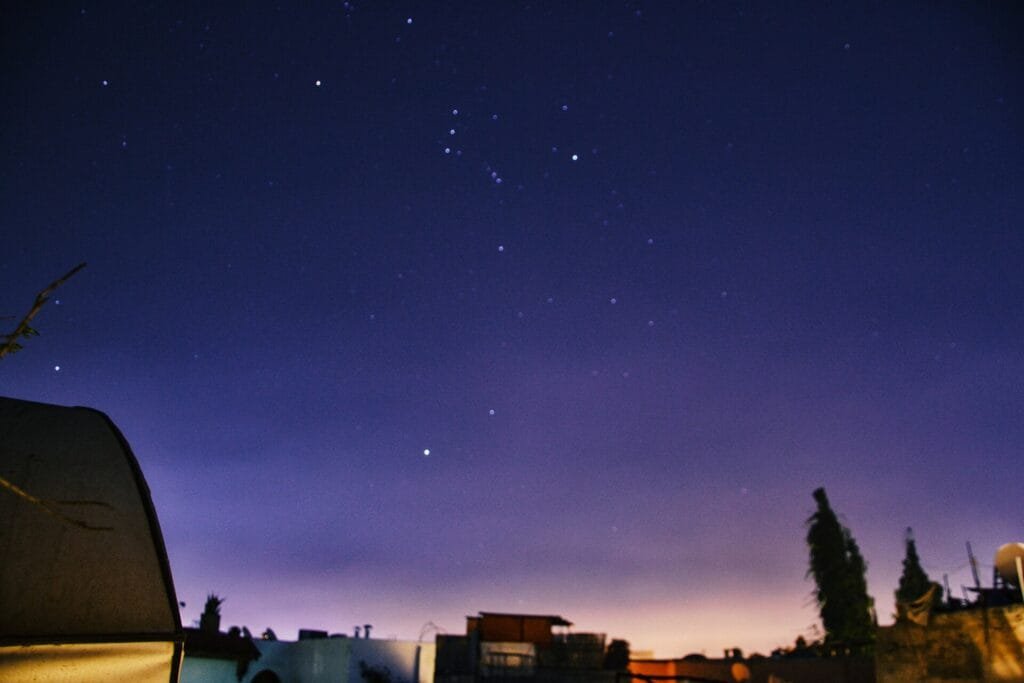
Planning a trip to Marrakech? This itinerary is built from a first-time-visitor perspective: hit the icons, eat the best food, and finish with memorable experiences. Each day mixes a major sight, food stops, and downtime.
Marrakech Itinerary at a Glance
| Day | Focus |
|---|---|
| Day 1 | Medina & Jemaa el-Fnaa |
| Day 2 | Palaces & Saadian Tombs |
| Day 3 | Gardens & Guéliz |
| Day 4 | Atlas & Ourika Valley |
| Day 5 | Souks & Slow Farewell |
Day-by-Day Itinerary
Day 1 — Medina & Jemaa el-Fnaa
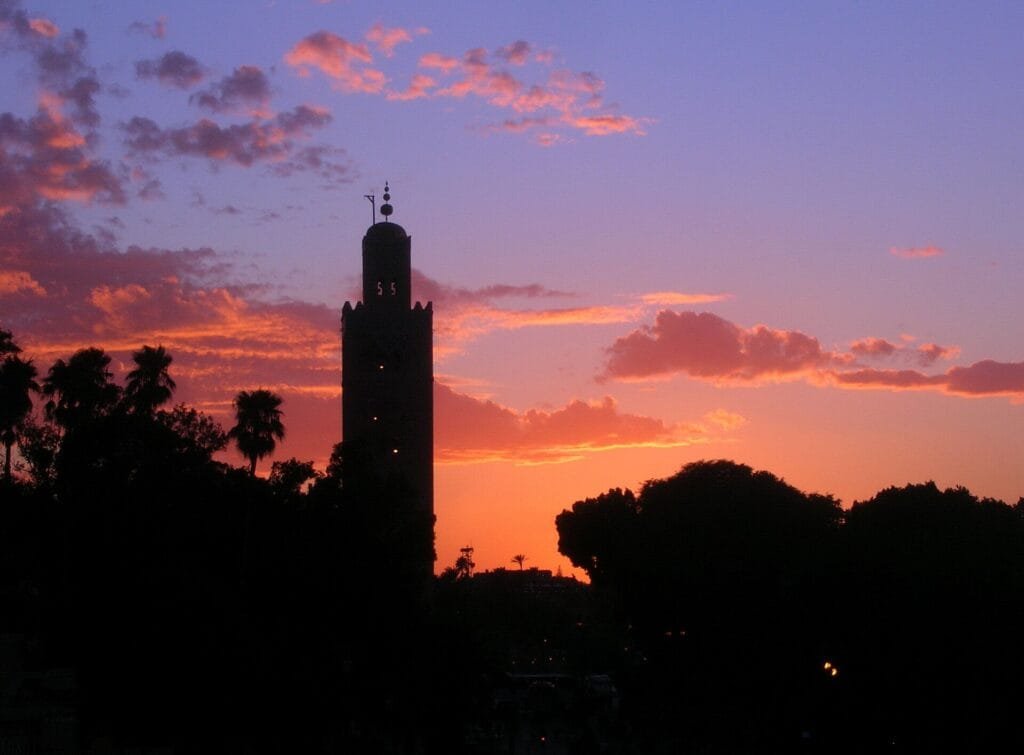
Ease in gently within the medina walls. Start at the Koutoubia Mosque, whose 12th-century minaret is the city’s tallest landmark and orients you for the whole trip (non-Muslims can’t enter, but the surrounding gardens are open). Wander north into Le Jardin Secret on Rue Mouassine — a restored riad garden with an Islamic and exotic courtyard; entry runs about 100 MAD (roughly $10). Stop for a mint tea, then let the afternoon dissolve into the lanes. Come dusk, arrive at Jemaa el-Fnaa, the UNESCO-listed main square, as the food stalls fire up around 6–7pm. Grab a fresh orange juice (about 10–15 MAD) and try a bowl of harira, the tomato-lentil soup locals break their fast with. Planning note: skip the chained Barbary-ape and snake handlers — sit at a rooftop cafe on the square’s edge instead and watch the whole spectacle from above for the price of a coffee.
Day 2 — Palaces & Saadian Tombs
Go early to beat both heat and crowds. Open at 9am, the Bahia Palace in the southern medina is a 19th-century grand-vizier residence of painted cedar ceilings and zellij courtyards; entry is roughly 70–100 MAD (about $7–$10), cash preferred. A short walk south brings you to the Saadian Tombs, the 16th-century royal necropolis rediscovered in 1917, and the ruined-but-atmospheric El Badi Palace nearby, where storks nest on the ramparts. Break for lunch in the neighbouring Mellah, the old Jewish quarter, then browse its spice-and-textile lanes. In the afternoon, cross to the Ben Youssef Madrasa (open until 7pm, about 50 MAD), a former Quranic college with jaw-dropping carved-plaster and cedar detail around a reflecting-pool courtyard. Planning note: buy Madrasa tickets in cash at the door — card readers there are unreliable, and combined-monument tickets often aren’t honoured.
Day 3 — Gardens & Guéliz
Trade the medina for greenery and the Ville Nouvelle. Book a morning slot for Jardin Majorelle, the cobalt-blue garden Yves Saint Laurent saved from demolition; garden entry is about 170 MAD (roughly $17), with the adjoining Musée Yves Saint Laurent around 140 MAD more — buy timed tickets online, as walk-up queues are long. From there stroll into Guéliz, Marrakech’s modern district, for lunch and the boutiques and galleries along Rue de la Liberté. Late afternoon, take a petit taxi (insist on the meter, or agree roughly 30–50 MAD first) out to the Menara Gardens, whose reflecting pool mirrors the Atlas peaks at golden hour. Planning note: a genuine local dish to seek out today is tangia — a slow-cooked lamb pot traditionally sealed and left in the embers of a hammam furnace, distinct from the more famous tagine and hard to find outside Marrakech.
Day 4 — Atlas & Ourika Valley
Escape the city into the mountains. The Ourika Valley lies about 60 km southeast — roughly a 90-minute drive along a river gorge through Berber villages; shared and private tours leave around 8–9am from most riads. The road climbs past roadside argan-oil co-ops and saffron plots to Setti Fatma, trailhead for the seven waterfalls. The guided scramble to the first fall takes about 45–60 minutes uphill over rocky, uneven steps — wear proper shoes, not sandals. Lunch is grilled meat or a valley tagine at a riverside table with your feet near the cool water; budget roughly 80–150 MAD ($8–$15). Alternatively, swap Ourika for the lunar Agafay Desert, a rocky “stone desert” only about 40 minutes out with camel rides and sunset camps. Planning note: agree the full price and inclusions with any local guide at the trailhead before setting off — verbally, and up front.
Day 5 — Souks & Slow Farewell
Spend your last morning doing the souks properly, now that you know the layout. Aim for the Souk Semmarine spine and its branches — Souk des Teinturiers (the dyers’ lane of hanging wool skeins), the leather and babouche stalls, and the metalworkers near the Mouassine fountain. Haggling is expected: counter at roughly 40–50% of the opening price and be willing to walk away. Pause at a traditional hammam or a rooftop for a last mint tea. For a final meal, seek out a proper seffa or a chicken-and-preserved-lemon tagine rather than a tourist set menu. If your flight is later, the Menara Airport is only about 15–20 minutes by petit taxi (roughly 70–100 MAD from the medina; agree the fare first). Planning note: change leftover dirhams before security — Morocco restricts taking the currency out, and exchange desks airside are scarce and poorly priced.
Where to Stay in Marrakech
Choose a central neighborhood within walking distance of major sights — you’ll save hours of commute time over 5 days. Book 6-12 weeks ahead for best rates.
Budget Breakdown (5 Days)
Morocco is rated Budget-friendly in our Travel Cost Index 2026. Figures are country-level daily ranges per person and exclude international flights.
| Travel style | Per day | Total 5 days |
|---|---|---|
| Budget | $12-25 | $60-125 |
| Mid-range | $45-90 | $225-450 |
| Luxury | $180-350 | $900-1,750 |
Source: Packzup Travel Cost Index 2026 — country-level averages; city and peak-season prices run higher. Excludes international flights.
What to Pack
- Clothing: Light, breathable layers that cover shoulders and knees for the medina, a warm layer for chilly desert evenings, and sturdy closed shoes for uneven cobbled souk lanes.
- Tech: Morocco uses type C and E plugs at 220V, so EU-style adapters work. Download offline maps, GPS struggles in the medina’s alleys. Local SIMs and eSIMs from Maroc Telecom or Orange are inexpensive.
- Documents: Many nationalities, including US, UK, and EU visitors, currently enter Morocco visa-free for up to 90 days, but check the latest rules before flying. Carry passport copies and travel insurance details separately.
- Money: The Moroccan dirham is a closed currency, so exchange or withdraw cash on arrival. Souks and taxis run on cash, while cards work in riads and restaurants. Keep small notes for tipping.
- Day bag: Sunscreen, a hat, and a scarf for the strong sun, bottled water since tap water is not recommended, small dirham notes, and a zipped pocket for crowded souks.
Routing Marrakech Without Backtracking: Cluster by Quarter, Mind the Day-Trip Trap
The classic mistake here is zig-zagging across the medina because the big sights sit in different quarters. Group your walking by area instead. The Bahia Palace, the ruined El Badi Palace and the Saadian Tombs all sit in the southern Kasbah and Mellah, within a few minutes of each other, so do them as one loop rather than three separate trips. All three keep similar hours (Bahia and El Badi run roughly 9am to 5pm), so start by 9am before the tour groups arrive. Save the Ben Youssef Madrasa for a separate northern push, since it is about a 10 to 15 minute walk up through the souks from Jemaa el-Fnaa.
Two routing notes that trip people up:
- The Jardin Majorelle is not in the medina at all. It sits in Gueliz, around 2km out, so pair it with a taxi and your new-city errands rather than expecting to walk there. Book the timed-entry ticket in advance, because same-day slots sell out.
- Jemaa el-Fnaa is sleepy by day and only fills with food stalls and performers after dusk, so plan an evening there, not a midday one.
On day trips, watch the clock. Essaouira is a 2.5 to 3 hour drive each way, which eats most of a day; the Ourika Valley sits about an hour out and leaves far more time on the ground. Skip queuing for Koutoubia, since non-Muslims cannot enter; admire the minaret from the gardens and move on.
Frequently Asked Questions
Is 5 days enough for Marrakech?
For first-time visitors, 5 days in Marrakech covers the main highlights without rushing. If you want to add day trips, slower pace, or hidden gems, plan 2-3 more days.
How much will a 5-day Marrakech trip cost?
Using the Budget Breakdown table above, drawn from our Travel Cost Index 2026: Budget $12-25/day ($60-125 for 5 days), Mid-range $45-90/day ($225-450 for 5 days), Luxury $180-350/day ($900-1,750 for 5 days). Country-level averages, excluding international flights.
What’s the best time for this Marrakech itinerary?
Shoulder seasons offer the best balance of weather, crowds, and prices for Marrakech. See destination-specific best-time guide.
How do I get around Marrakech?
Skip the car: the medina is car-free and walkable, and cheap petits taxis or the inDrive app handle longer hops. ONCF trains reach Casablanca, while CTM and Supratours buses cover Essaouira and the Atlas; rent a car only for desert road trips.
What should I pack for 5 days in Marrakech?
Pack loose clothing that covers shoulders and knees for the medina, sturdy shoes for its uneven lanes, and layers: summer days top 40C while winter nights in unheated riads drop toward 5C.
Should I book hotels in advance?
Riads are tiny, often under ten rooms, so the best sell out fast. Book 2 to 3 months ahead for spring, October-November, Easter, and Christmas-New Year; last-minute is fine in the July-August heat.
Related Marrakech Travel Guides
- Best Things to Do in Marrakech
- Where to Stay in Marrakech
- Best Food in Marrakech
- Best Time to Visit Marrakech
Best time to visit Marrakech (real climate data)
Best months: March, April, November.
Marrakech’s warmest month is July (avg 39°C / 103°F), the coolest is January (low 5°C / 42°F). The wettest is March (55 mm) and the driest is June.
Source: Open-Meteo ERA5 climate normals (2019–2023). See the full month-by-month weather →
You Might Also Love

Written by
Drew Treasury is a contributing travel writer at Packzup, specialising in city culture, food markets, street art, and neighbourhood-level travel.
Trip prep: before you travel, plan what to wear, check the tap water, sort your mobile data, and see if it is a cash or card country, and skim local etiquette.
