Last updated July 26, 2026 · Editorial policy
| At a glance | Norway | Switzerland |
|---|---|---|
| Daily budget (mid-range) | €120–190 | €130–210 |
| Signature | Fjords, Lofoten, aurora | Jungfrau, Matterhorn, lakes |
| Best months | June–August | June–September (ski Dec–March) |
| Getting around | Self-drive + ferries | World-class trains |
Torn between Norway and Switzerland for your next trip? Both are fantastic — but they suit different travelers, budgets, and trip styles. Here is an honest, data-driven comparison of Norway vs Switzerland across cost, visas, best time to visit, and overall vibe, with a clear verdict on which to choose.
Norway vs Switzerland: traveler quick facts
Quick facts: Norway runs about $180-300/day mid-range (Pricey) vs Switzerland at about $500-900/day (Very expensive). Norway is roughly 66% cheaper per day mid-range.
| Traveler factor | Norway | Switzerland |
|---|---|---|
| Daily cost (mid-range) | $180-300 (Pricey) | $500-900 (Very expensive) |
| Tourist tax | Municipal visitor levy up to 3% rolling out from 2026 where approved; not yet nationwide | CHF 2-7 pp/night, varies by city/canton (Geneva CHF 4.25, Zurich ~CHF 2.50) |
| Tipping | Optional / appreciated | Round up only |
| Plug & voltage | C, F | 230V | J, C | 230V |
| Adapter needed from US | Yes | Yes |
Compiled from Packzup's Travel Cost Index, Tourist Tax Index, Tipping Index and Power Plug Index — updated 2026. Costs are per person, mid-range, excluding flights.
Choose Norway if budget is your priority — it works out cheaper day to day. Choose Switzerland if it better matches the experience you are after. Both reward travelers who plan around the right season.
When to go: Norway vs Switzerland
Measured, not guessed — five years of ERA5 reanalysis (2019–2023). Months are ranked by how close the average high sits to 25°C, penalised by wet days.
Norway
- Best month
- June
- Then expect
- 22.1°C · 11 wet days
- Next best
- August, July
- Wettest month
- October (15 wet days)
Switzerland
- Best month
- August
- Then expect
- 24.2°C · 12 wet days
- Next best
- July, June
- Wettest month
- May (17 wet days)
- Different windows — Norway peaks in June, Switzerland in August. If your dates are fixed, that is the deciding factor.
- Norway is the drier bet at its peak — 11 wet days vs 12.
- Biggest split is October — Switzerland is 5.7°C warmer that month.
Source: ERA5 reanalysis (2019–2023) via Open-Meteo, CC BY 4.0 — Packzup Travel Climate Dataset (open data).
Norway vs Switzerland at a glance
| Norway | Switzerland | |
|---|---|---|
| Best for | Fjords, coast, Northern Lights | The Alps, lakes, precision |
| Vibe | Rugged, vast, coastal | Pristine, compact, premium |
| Daily budget (mid-range) | $150–250 | €180–280 |
| Best time | Jun–Aug; auroras Sep–Mar | Jun–Sep (hike), Dec–Mar (ski) |
| Don't miss | Geirangerfjord, Lofoten, Bergen | Jungfrau, Zermatt, Lucerne |
| The catch | Vast distances | Extremely expensive |
Norway vs Switzerland: Cost & Entry Snapshot
| Norway | Switzerland | |
|---|---|---|
| Region | Europe | Europe |
| Daily cost (mid-range) | $180-$300 | $500-$900 |
| Budget daily | $55-$100 | $150-$250 |
| Cost level | Pricier | Expensive |
| US visa | Visa-Free | Visa-Free |
| Currency | NOK | CHF |
| Capital | Oslo | Bern |
Which is cheaper, Norway or Switzerland?
Day to day, Norway is the more budget-friendly choice. A mid-range traveler spends about $240/day in Norway versus $700/day in Switzerland. Over a one-week trip that is roughly $1,680 vs $4,900 per person — a meaningful gap if you are watching your budget. Backpackers can go lower in both, and luxury travelers will spend well above these figures in either country.
Visas & entry
For US passport holders, Norway typically requires visa-free and Switzerland requires visa-free. Rules vary by nationality and change often — always confirm with the official government source before booking. See our full visa guides linked below for a passport-by-passport breakdown.
Norway or Switzerland: which is better?
- You want a Europe trip with pricier daily costs.
- Budget is a priority — your money stretches further here.
- Signature: Fjords, Lofoten, aurora.
- Best months: June–August.
- You want a Europe trip with expensive daily costs.
- You are happy to spend a bit more for the experience.
- Signature: Jungfrau, Matterhorn, lakes.
- Best months: June–September (ski Dec–March).
So which one should you actually book?
Choose Norway if you want the most dramatic raw landscape in Europe, and choose Switzerland if you want that scenery served with flawless logistics. The deciding factor is whether you prize wild geography or seamless travel between the highlights.
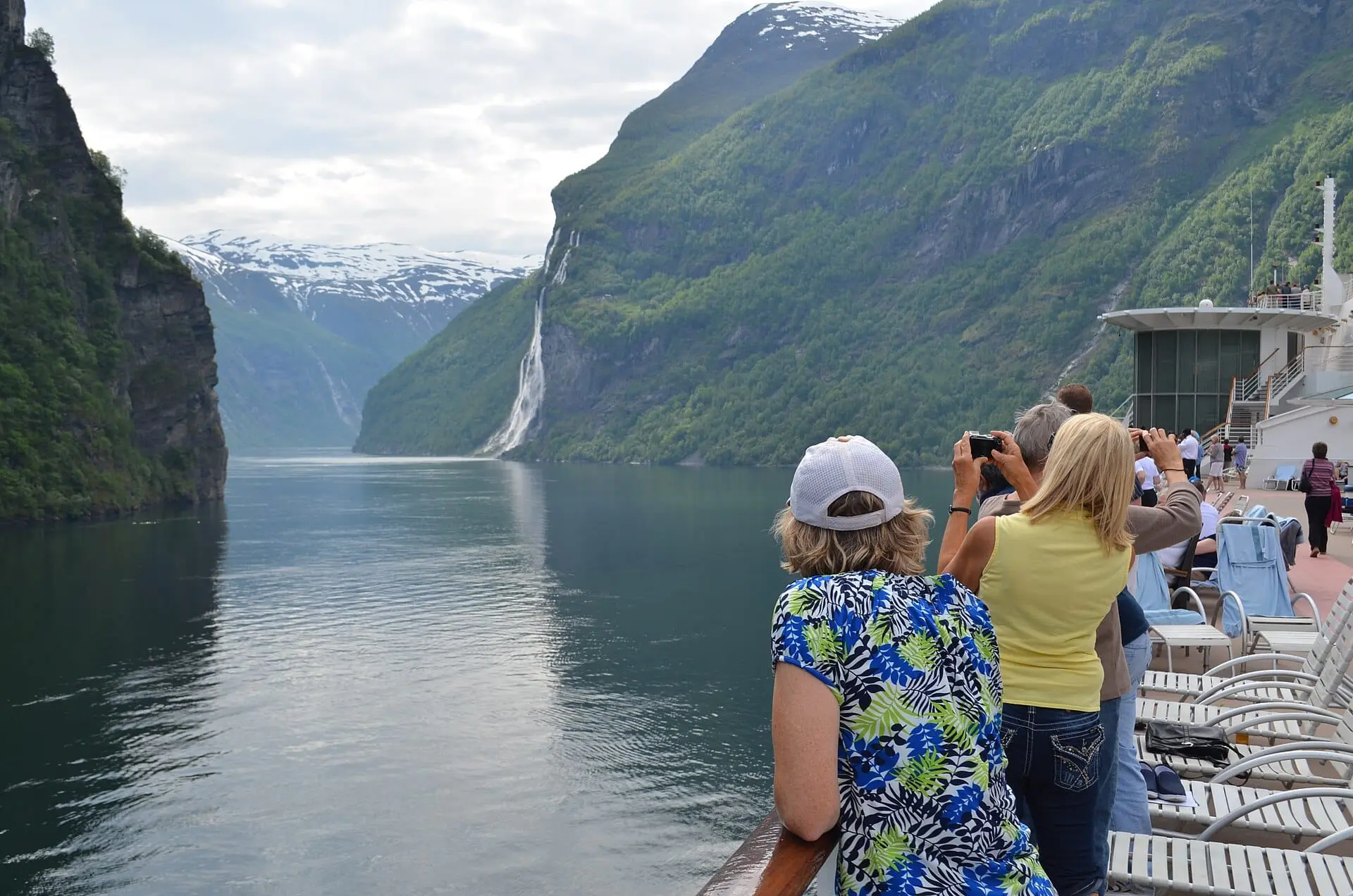
The terrain itself is different. Norway's fjords cut deeper than anything in Switzerland, with sheer walls rising up to 1,800 metres straight from the water; the 15 km Geirangerfjord and the cliffs of Lofoten have no Swiss equivalent because Switzerland is landlocked and has no fjords at all. Switzerland counters with density and access: you can ride the Glacier Express, summit the Jungfraujoch, and cruise Lake Geneva in three easy days, where Norway's distances mean ferries, long drives, and more planning.
The clincher is light. Above the Arctic Circle in Lofoten, June brings the midnight sun and roughly 20 hours of daylight; come autumn the same skies deliver the Northern Lights from September to March. Switzerland's peaks are higher and its trains never miss, but it can't sell you a fjord at midnight under a sun that won't set.
Norway vs Switzerland FAQ
Is Norway cheaper than Switzerland?
Norway or Switzerland: which is better for first-time visitors?
Can I visit both Norway and Switzerland in one trip?
Do I need a visa for Norway or Switzerland?
Nordic nature pick? Iceland vs Norway
Which is better for your trip, Norway or Switzerland?
For families
Verdict: Switzerland wins for families. Distances are short, trains run like clockwork, and the free Swiss Family Card lets kids under 16 travel free with a parent holding a Swiss Travel Pass. Bases like Interlaken and Lucerne put cogwheel railways, lake cruises, and stroller-friendly trails within minutes of your hotel, and car-free Zermatt adds the Gornergrat railway that kids love. Norway's fjords are stunning, but the driving distances and ferry logistics between highlights ask a lot of younger kids.
For couples & honeymoons
Verdict: Norway wins for couples. Nothing in the Alps matches watching the northern lights from a Tromso or Lofoten cabin between late September and early April, the midnight sun over Lofoten from late May to mid-July, or cruising Geirangerfjord on June evenings when the light barely fades. Fjord-side hotels in Flam and Balestrand feel remote and cinematic in a way Switzerland's busier resort towns rarely do. Switzerland counters with five-star spa romance in Zermatt and St. Moritz, but at prices that outrun even Norway's.
For budget travelers
Verdict: Norway wins on a budget. Both countries sit at the top of Europe's price charts, but Norway's allemannsretten (right to roam) means you can legally wild camp for free across most uncultivated land, and DNT hiking cabins undercut Swiss mountain hotels by a wide margin. Supermarket chains like Rema 1000 and Kiwi make self-catering realistic, and budget carriers fly into Oslo and Bergen cheaply from across Europe. In Switzerland, a basic restaurant meal routinely tops 25 CHF and mountain lifts add up fast.
For hikers
Verdict: Switzerland wins for hiking. Its 65,000 km of signposted trails, staffed mountain huts, and lifts that put you at 2,500 m before breakfast make world-class routes like the Eiger Trail and the Zermatt-area balcony walks accessible to almost anyone from June through September. Norway's icons are spectacular but demand more: Trolltunga is a 27 km, 10-plus-hour day, Romsdalseggen a full ridge traverse, and even the shorter Preikestolen walk has no hut or lift to fall back on. Go to Norway for wilderness; go to Switzerland to hike hard and sleep comfortably.
You Might Also Love


Written by
John Morrison is the founder and lead travel writer at Packzup. Over the past decade he has explored destinations across Africa, the Americas, Asia, Europe, the Middle East, and Oceania — always self-funded, never on a press trip.