
Last updated September 11, 2026 · Editorial policy
- Cost comparison: what a day really costs
- Theme parks and attractions: not a contest
- Beaches: Miami's turn to win by a mile
- Food: Miami wins, but Orlando is better than its reputation
- Nightlife: one of these cities sleeps
- Family travel: Orlando was built for this
- Day trips: easy wins vs spectacular ones
- Weather & when to go
- Getting there & around
- Orlando or Miami: the honest verdict
- FAQ
On a map, Orlando and Miami look like the same trip: both in Florida, about three and a half hours apart, both sold with palm trees and sunshine. In reality, they are two completely different vacations that happen to share a state. Orlando is the theme-park capital of the world, a sprawling inland city built around engineered fun, resort pools, and the world’s most efficient machine for separating families from their money. Miami is a Latin American metropolis that happens to sit on American soil, with genuinely great beaches, serious food, and nightlife that starts when Orlando’s fireworks end.
I’ve done both cities multiple times, with kids in tow and without, and the number of people who pick the wrong one is remarkable. Couples end up eating chain food on International Drive wondering where the vibe is; families drag toddlers down Ocean Drive at midnight wondering where the rides are. This is the honest comparison I give friends, the same way we break down big either-or trips like France vs Italy: real costs, who each city actually suits, and the mistakes to avoid, starting with the assumption that Orlando has a beach. It doesn’t.
| Category | Orlando | Miami | Winner |
|---|---|---|---|
| Theme parks & attractions | World capital: Disney, Universal, SeaWorld | No major parks; urban attractions instead | Orlando |
| Beaches | None; Cocoa Beach is an hour away | Miles of warm Atlantic sand in the city | Miami |
| Food scene | Underrated locally, chain-heavy in tourist zones | One of America’s great Latin food cities | Miami |
| Nightlife | Sanitized resort fun, small downtown scene | Clubs, rooftops, and bars until sunrise | Miami |
| Family-friendliness | Purpose-built for kids of every age | Doable, but not designed for it | Orlando |
| Walkability & transit | Car or rideshare essential almost everywhere | South Beach walkable, free Metromover downtown | Miami |
| Day trips | Kennedy Space Center, springs, Cocoa Beach | Everglades, Florida Keys, Key West | Tie |
| Value for money | Cheap base, brutal ticket costs | Expensive base, free main attraction | Depends on parks (see below) |
Cost comparison: what a day really costs
Orlando’s secret weapon is hotel supply. There are so many rooms around the parks that decent mid-range hotels commonly run $90 to $160 a night outside the theme-park gates, and food is cheap once you escape the tourist corridors. The problem is the tickets. A single day at a major Orlando park generally costs somewhere in the $110 to $190 per person range depending on the park and the date, before you add line-skipping products, parking, or the $8 churros. A no-parks Orlando day can be done comfortably on $100 to $150 per person. A park day for a mid-range traveler realistically lands around $250 to $350 per person once tickets, food inside the gates, and transport are counted, and that’s per day, per human.
Miami inverts the math. The baseline is higher: beach-area hotels in winter season often run $180 to $350 a night, frequently with resort fees stacked on top, and hotel parking alone can cost $30 or more per night. Cocktails in the trendy neighborhoods sit in the high teens, and dinner mains in South Beach or Brickell commonly run $25 to $40. Budget travelers can scrape by around $130 to $180 a day with cheaper lodging and Cuban lunch counters; a comfortable mid-range day is more like $250 to $400. The saving grace is that Miami’s headline attraction, the beach, costs nothing.
The honest summary: Orlando is cheaper if you limit park days or skip them, but nobody flies to Orlando to skip the parks. A full multi-park Orlando itinerary is usually the more expensive vacation. A beach-focused Miami trip where you resist the clubs can undercut it.
Theme parks and attractions: not a contest
If theme parks are the point of the trip, stop reading and book Orlando. Walt Disney World alone is four theme parks and two water parks; Universal Orlando now runs three parks including Epic Universe, its huge new gate that opened in 2025; SeaWorld and its sister parks round it out. You could spend two weeks in Orlando and not repeat a park day. The scale, the engineering, the sheer competence of it all is genuinely impressive even for cynics.
Miami has nothing that competes and doesn’t pretend to. Its attractions are urban: the Art Deco architecture of South Beach, the Wynwood Walls street-art district, the cafes and cigar shops of Little Havana, the Vizcaya mansion and gardens, decent museums. They’re the kind of things you wander between with a cafecito in hand, not things you queue for. Different species of fun entirely.
Beaches: Miami’s turn to win by a mile
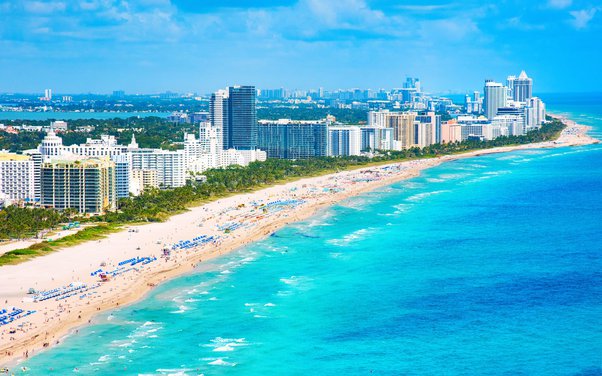
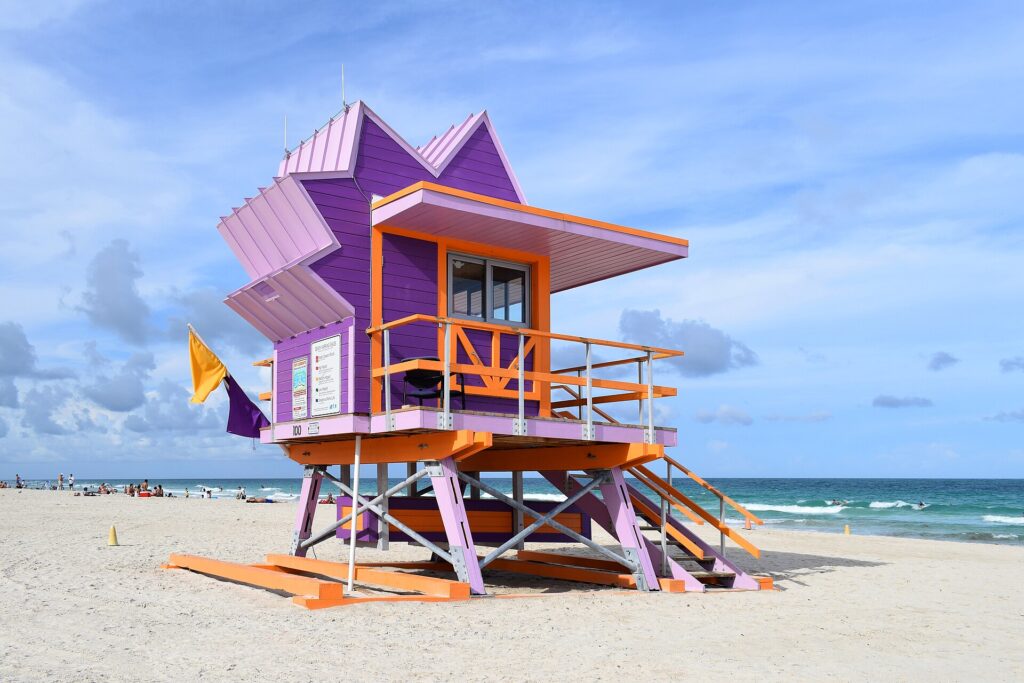
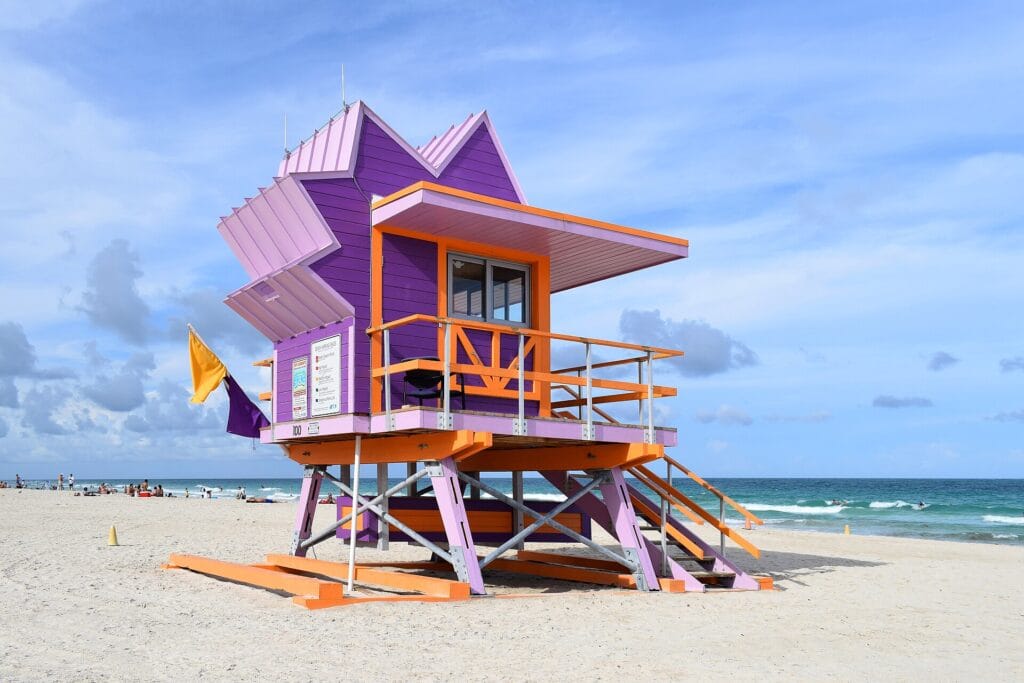
Miami is a real beach city. South Beach delivers the famous scene, lifeguard towers and all; the mid-beach stretches are calmer and better for actually relaxing; Key Biscayne, across the causeway, has the mellow, family-friendly sand and shallow water. The Atlantic here is warm enough to swim most of the year, and in winter it’s the warmest big-city ocean swimming in the mainland US.
Orlando is landlocked. The nearest proper beach is Cocoa Beach, about an hour east, which makes a fine day trip paired with Kennedy Space Center but is not the same as walking out of your hotel onto sand. If beach quality is what actually drives your travel decisions, Miami wins this category the way it’s rarely won in our comparisons; even close beach fights like Greece vs Portugal are tighter than this one.
Food: Miami wins, but Orlando is better than its reputation
Miami is one of the great Latin food cities in the Western Hemisphere. Cuban food anchors it, from the tourist-famous Versailles in Little Havana to no-name lunch counters serving croquetas and cortaditos, but the real depth is the spread: Peruvian ceviche bars, Colombian bakeries, Haitian griot in Little Haiti, Argentine parrillas, Venezuelan arepas. It’s the closest you can get to eating across Latin America without leaving the US, and if that’s the kind of eating that plans your trips, you’ll probably also enjoy our Colombia vs Mexico comparison. The high-end scene is real too, with prices to match.

Orlando’s tourist corridors, International Drive especially, are chain-restaurant purgatory, and that’s where most visitors form their opinion. It’s unfair. Local Orlando eats well: the Mills 50 district has some of the best Vietnamese food in the Southeast, the Puerto Rican and Caribbean bakeries are excellent, and Sand Lake Road’s restaurant row does solid upscale dinners. You just have to leave the bubble to find it, and most park visitors never do. Miami takes the category, but the gap is smaller than people assume.
Nightlife: one of these cities sleeps
Miami’s nightlife is the stuff of legend for a reason. South Beach clubs run until sunrise, Wynwood has breweries and cocktail bars with actual character, and the Brickell rooftop scene delivers skyline views with your overpriced drink. The catch is cost and friction: cover charges, bottle-service pressure, dress codes, and $20 cocktails are standard in the flashy venues. Budget accordingly or stick to Wynwood and the Cuban dive bars.
Orlando’s nightlife is mostly resort-flavored: Universal CityWalk and Disney Springs are polished, safe, and close at reasonable hours. Downtown Orlando’s Orange Avenue has a genuine local bar scene that tourists rarely see. It’s fine. It’s just not why anyone books the flight.
Family travel: Orlando was built for this
Orlando is the most family-optimized destination on Earth. Everything, from hotel layouts to restaurant menus to stroller-rental infrastructure to character breakfasts, is engineered around traveling with children. Kids from toddler to teenager have a tier of parks aimed precisely at them, and when the parks get exhausting, the resort pools are an attraction in themselves.

Miami with kids is workable rather than wonderful. Key Biscayne’s calm beaches, Zoo Miami, and the Frost science museum fill a family itinerary, and plenty of families have a great beach week here. But South Beach at night is not a family zone, restaurant culture skews late and loud, and nothing about the city is designed around children the way Orlando is. Traveling with kids who care about characters and rides? There is no decision to make.
Day trips: easy wins vs spectacular ones
Orlando’s day trips are convenient and surprisingly good. Kennedy Space Center, about an hour east, is a world-class attraction that regularly outranks the theme parks in visitor satisfaction; pair it with Cocoa Beach. The natural springs north of the city offer crystal-clear swimming, and Blue Spring fills with manatees on cold winter mornings. Tampa’s parks and aquarium sit ninety minutes west.
Miami’s day trips are flat-out spectacular. The Everglades start less than an hour from downtown, with airboats, boardwalk trails, and more alligators than you can count. The Florida Keys begin at Key Largo about ninety minutes out, and Key West, at the end of the Overseas Highway, is one of the great American road trips even if it makes for a long day. Miami is also the main US gateway to South America, which is why half the planning conversations in our Argentina vs Brazil comparison start with a Miami layover. Call this category a tie: Orlando’s trips are easier, Miami’s are grander.
Weather & when to go
Both cities share Florida’s basic pattern: hot, humid, and stormy from roughly May through October, with near-daily afternoon thunderstorms in summer and hurricane season officially running June through November, peaking late August to October. Late November through April is the dry, pleasant season in both, and it’s when both cities are at their best and busiest.
The difference shows in winter. Miami stays genuinely warm, with swimmable ocean water even in January. Orlando winters are mostly lovely for park-walking but can turn surprisingly cool, with evenings occasionally cold enough for a real jacket. Crowd calendars differ too: Orlando’s crowds track school holidays almost perfectly, so late January, early February, and the gaps between breaks are golden. Miami surges around events instead, with early December’s art week and March’s spring break the two periods to either seek out or flee. The cheapest weeks in both are September and early October, which is also peak hurricane risk; travel insurance stops being optional then.
Getting there & around
Both are easy to reach. Orlando’s MCO is one of the busiest airports in the country with a huge nonstop network and generally competitive fares. Miami has MIA plus Fort Lauderdale’s FLL about forty-five minutes north, which budget carriers love, so it often wins on airfare. The Brightline train now links Orlando’s airport with downtown Miami in around three and a half hours, which has quietly made the do-both trip painless: no rental car drop fees, no I-95 traffic.
On the ground, the cities diverge. Orlando without a car is genuinely hard unless you stay on Disney or Universal property and use their internal transport; distances are huge and everything assumes you’re driving. Miami is no transit paradise, but it’s denser: South Beach is properly walkable, the free Metromover loops downtown and Brickell, and rideshares cover the rest. With beach-area hotel parking costing what it does, many Miami visitors are better off skipping the rental car entirely, something you’d never say about Orlando.
Orlando or Miami: the honest verdict
Budget travelers: Miami, narrowly, and only if you’re beach-focused. Its main event is free, while Orlando’s headline acts start at over a hundred dollars a day before you’ve eaten. If you’re going to Orlando without park tickets, you’ve booked the wrong city.
Families: Orlando, and it isn’t close. No city on the planet handles kids better. Save Miami for the trip after they’ve outgrown the characters.
Foodies: Miami. Little Havana alone beats Orlando’s entire tourist corridor, and the pan-Latin depth rewards a full week of eating.
Beach lovers: Miami, obviously. Warm water, real sand, city energy behind it. Orlando’s “beach” is an hour’s drive and a compromise.
Nightlife seekers and couples: Miami. Orlando after 10pm is a resort, not a city.
First-timers to Florida: If you’re traveling with kids or you feel the pull of the parks, Orlando. If neither is true, Miami is the more interesting place: a real city with real culture that also happens to have a great beach. And if you have a full week, the Brightline makes the honest best answer “both”: four days of parks, train south, three days of beach and croquetas.
FAQ
Is Orlando or Miami cheaper?
How far apart are Orlando and Miami, and can you visit both?
Does Orlando have a beach?
Which is better for families, Orlando or Miami?
Compare: Key West vs Miami — the two ends of the Overseas Highway compared.
Planning the trip? Go deeper with best time to visit Disney World Orlando and things to do in Miami.
You Might Also Love
More side-by-side comparisons





Written by
John Morrison is the founder and lead travel writer at Packzup. Over the past decade he has explored destinations across Africa, the Americas, Asia, Europe, the Middle East, and Oceania — always self-funded, never on a press trip.
