
Last updated September 12, 2026 · Editorial policy
If you are reading this in July 2026, you already know: the World Cup has turned North America into one giant street party, and two of its three co-hosts, the USA and Mexico, have spent the summer draped in flags from Mexico City to New Jersey. Both are football-mad in their own way, one through a young, loud, fast-growing soccer culture, the other through a century of pure obsession.
But this is not a football article. It is a travel comparison, written from repeated trips through both countries, for anyone deciding where the next proper vacation should go once the tournament noise dies down. The short version: Mexico wins on value, food and warmth, while the USA wins on wilderness, infrastructure and sheer variety. The long version, with real numbers, is below.
| Category | USA | Mexico | Winner |
|---|---|---|---|
| Daily budget | $120–350+ | $40–150 | Mexico |
| Food | Huge variety, high prices | One of the world’s great cuisines | Mexico |
| Beaches/Nature | Unmatched national parks | Caribbean beaches and cenotes | Tie |
| Cities & culture | New York, Chicago, New Orleans | Mexico City, Oaxaca, Guanajuato | Tie |
| Weather | Extreme regional swings | Reliable dry-season sun | Mexico |
| Ease of travel | Easy for US readers, car-dependent | Simple entry, great buses | USA |
| Nightlife | Live-music capitals | Cantinas to beach clubs | Tie |
| Value for money | Weak, tips add 20% | Outstanding | Mexico |
When to go: United States vs Mexico
Measured, not guessed — five years of climate normals (WMO 1991–2020, or ERA5 2019–2023 where unavailable). Months are ranked by how close the average high sits to 25°C, penalised by wet days.
United States
- Best month
- September
- Then expect
- 24.6°C · 10 wet days
- Next best
- June, August
- Wettest month
- July (13 wet days)
Mexico
- Best month
- February
- Then expect
- 25.1°C · 1 wet days
- Next best
- December, November
- Wettest month
- July (27 wet days)
- Different windows — United States peaks in September, Mexico in February. If your dates are fixed, that is the deciding factor.
- Mexico is the drier bet at its peak — 1 wet days vs 10.
- Biggest split is February — Mexico is 18.9°C warmer that month.
Source: climate normals (WMO 1991–2020, or ERA5 2019–2023 where unavailable) via Open-Meteo, CC BY 4.0 — Packzup Travel Climate Dataset (open data).
Cost comparison: what a day actually costs
Let’s get the biggest gap out of the way first, because nothing else in this comparison is this lopsided.
In Mexico, a genuine budget traveler can live well on $40–60 a day: a hostel dorm runs $12–20, street tacos are $1–2 each, a comida corrida lunch is $4–6, and first-class buses between cities often cost less than a US airport sandwich. Mid-range travelers, meaning boutique hotels, sit-down dinners and the odd guided tour, should plan on $80–150 a day. Luxury in Mexico, roughly $250–450 a day, buys the kind of hotel that would cost triple in California.
The USA is a different universe. Even hostel beds in big cities run $40–70, roadside motels $70–120, and a fast-casual burrito bowl hits $15–18 once tax and tip land. A realistic budget floor is $120–180 a day, mid-range trips run $250–400, and luxury starts around $600 and climbs quickly. Tipping culture adds 18–22% to nearly every sit-down meal, something visitors consistently underestimate until the third bill arrives.
Winner: Mexico, by a mile. Your dollar roughly triples in purchasing power the moment you cross south.
Food: Mexico, and it is not close
I say this as someone who genuinely loves eating across the USA: Mexican food at the source is one of the greatest cuisines on the planet, and it costs pocket change. Tacos al pastor carved off the spit in Mexico City, seven kinds of mole in Oaxaca, cochinita pibil in the Yucatán, fresh ceviche on the Pacific coast; every region is effectively its own food country. Mexico City alone now has a fine-dining scene that draws chefs from around the world, and the market stalls are often better than the restaurants anyway.
The USA fights back with breadth rather than depth. New Orleans is a legitimate world food city, Texas barbecue is worth a flight on its own, and the immigrant food scenes of Los Angeles, New York and Chicago mean you can eat brilliantly from any continent in a single week. But you will pay three to four times more for the privilege, and, controversial or not, the best Mexican food in the USA still is not quite Mexico. For what it is worth, Mexico has taken the food round in nearly every matchup I have written, including Colombia vs Mexico.
Beaches & nature: two different kinds of spectacular
This is the closest category, because the two countries are barely playing the same sport. The USA has the greatest national park system on Earth: the Grand Canyon, Yellowstone, Zion, Yosemite, plus Hawaii, the Pacific Coast Highway and Alaska if you are feeling ambitious. For pure wilderness, road-trip drama and hiking, nothing in Mexico competes at that scale.
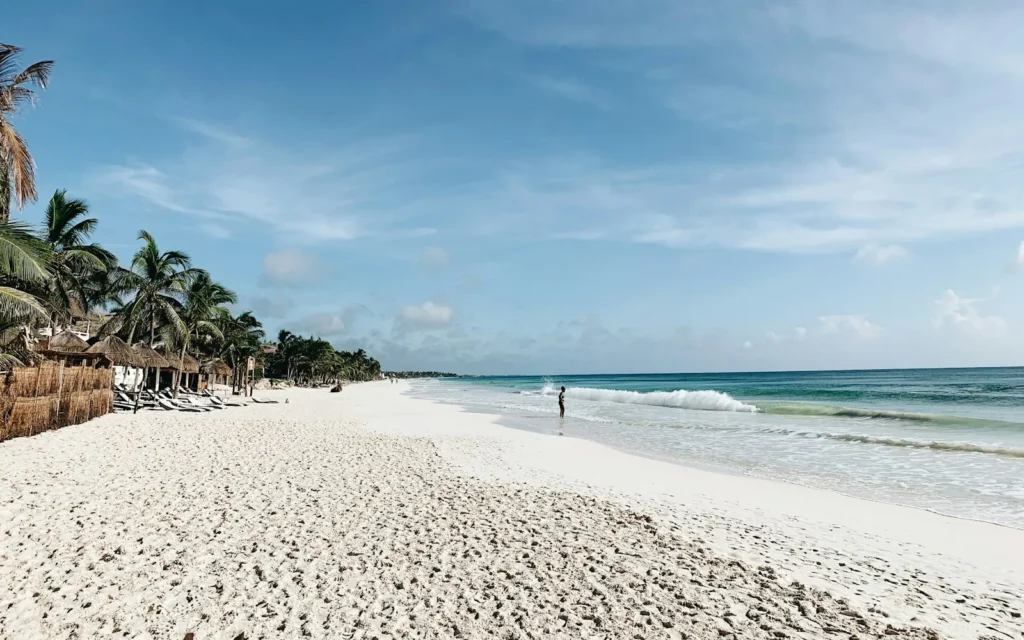
Mexico answers with coastline. The Caribbean side, think Tulum, Isla Holbox and the lagoon at Bacalar, has water the mainland USA simply does not have. The Pacific side around Puerto Escondido and Sayulita is a surf paradise, and Baja California offers whale watching that feels like a nature documentary. Add the Yucatán’s cenotes, freshwater sinkholes you can actually swim in, and Mexico takes the beach crown comfortably. Call the overall category a tie: USA for parks and mountains, Mexico for sand and sea.
Cities & culture
The USA does big-city energy like nowhere else. New York is relentless in the best way, Chicago is an open-air architecture museum, New Orleans has music pouring out of doorways, and Austin turns a random weeknight into a festival. American cities are expensive, but they deliver.
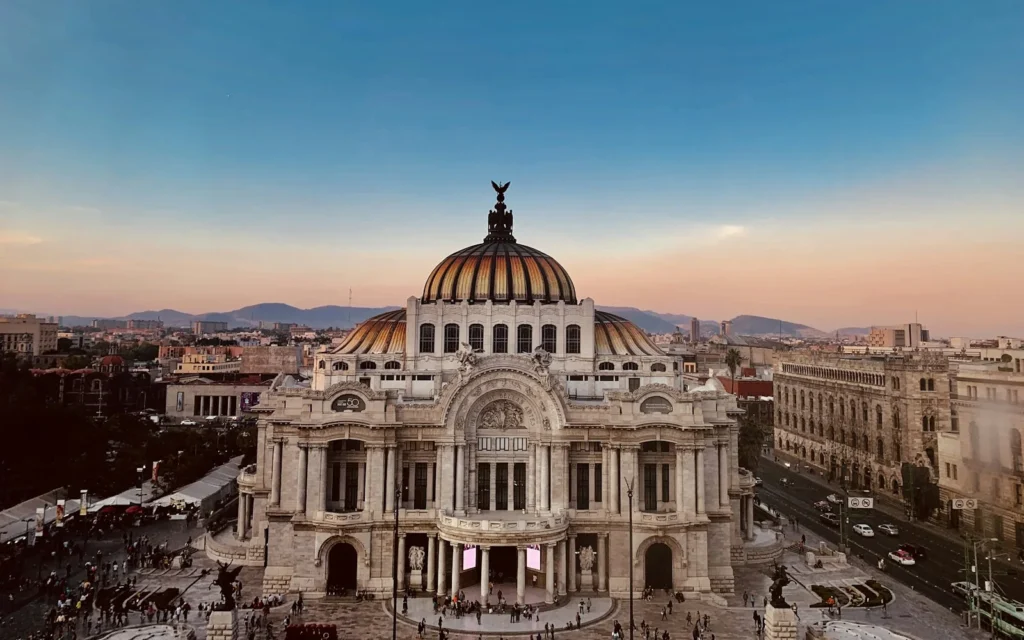
Mexico counters with one of the world’s great capitals. Mexico City is a genuine heavyweight: world-class museums, the green sprawl of Chapultepec, the Roma and Condesa neighborhoods, and food on every corner. If you have never been, start with our full guide to things to do in Mexico City. Then come the colonial towns, Oaxaca, Guanajuato, San Miguel de Allende and Mérida, layered over pre-Hispanic history that goes back millennia. Standing on the pyramids of Teotihuacán or under Chichén Itzá gives a historical depth the USA, as a young country, cannot match. Another tie, and a happy one: skyscrapers and swagger versus pyramids and plazas.
Weather & when to go
Mexico is the more predictable of the two. The dry season, roughly November to April, is glorious almost everywhere: sunny coasts, mild highlands, low humidity. May to October brings afternoon rains, and June through November is hurricane season on both coasts, usually a non-event but worth watching. Mexico City and the central highlands sit high enough to feel spring-like most of the year.
The USA is a continent pretending to be a country, so there is no single answer. Summer is ideal for the national parks and the northern cities but brutal in the desert Southwest and the humid South. Fall belongs to New England, and winter means skiing in Colorado or thawing out in Florida. Right now, in July, Mexico’s beach towns are hot and stormy while its highlands are lovely, and most of the USA is in peak-season crowds at peak-season prices. Winner for sheer reliability: Mexico.
Getting around & safety
For American readers, the USA obviously wins on paper: no passport, no entry forms, your phone just works. The catch is that the USA is car country. Outside the Northeast corridor, trains are scarce and cities sprawl, so budget $50–90 a day for a rental plus fuel. Domestic flights are frequent and often cheap. One practical 2026 note: REAL ID-compliant identification is now required for domestic flights, so check your license before you book anything.
Mexico is easier than most first-timers expect. ADO’s first-class buses are comfortable, punctual and cheap, low-cost carriers like Volaris and VivaAerobus connect the whole country for modest fares, and Mexico City has an extensive metro. Entry is simple for US citizens: no visa for tourism, a valid passport to fly in (a passport card works at land crossings), and stays of up to 180 days are possible, though the immigration officer decides what you actually receive. Keep your entry record.
Safety deserves an honest paragraph, not a slogan. Mexico’s security situation varies enormously by state. The places most travelers actually visit, the Yucatán, Oaxaca and central Mexico City among them, are broadly fine with normal city sense: use Uber or DiDi rather than hailing street cabs at night, keep flashy items to a minimum, and read the US State Department’s state-by-state advisories rather than the headlines. The USA, meanwhile, is not the risk-free baseline people assume; its cities carry their own crime statistics, and its medical costs make travel insurance essential in both directions. Winner: USA for logistics, but the gap is smaller than the news suggests.
Nightlife & vibe
The USA’s nightlife superpower is live music. Austin, Nashville and New Orleans are pilgrimage cities where a random Tuesday can deliver the best band you have seen in years, and the craft beer and cocktail scenes run as deep as anywhere on Earth. The downside is the bill: $12–18 drinks plus tip, cover charges, and last call arriving earlier than you would like in many states.
Mexico runs later, looser and far cheaper. Mexico City’s mezcalerías and old cantinas, Guadalajara’s dance floors, and the beach clubs of the Cancún–Tulum strip cover everything from candle-lit sipping to sunrise sets, with drinks at $3–6 once you step outside the resort zones. The broader vibe difference is real too: the USA excels at convenience and spectacle, Mexico at warmth and spontaneity. Strangers talk to you in Mexico. Call nightlife a tie and vibe a Mexican win.
the USA or Mexico: the honest verdict
No fence-sitting. Here is who should book what.
Budget travelers: Mexico, and it is a landslide. Two to three weeks in Mexico costs what one week in the USA does, at a higher standard of living throughout.
Foodies: Mexico. The USA’s breadth is admirable, but Mexico’s depth, prices and market culture make it one of the best food destinations anywhere.
Beach lovers: Mexico. Caribbean water, Pacific surf and cenotes as a bonus. Hawaii is the USA’s one true counterargument, and it costs a fortune to reach and to stay.
First-time road-trippers and national-park pilgrims: USA. If you want two weeks of canyon-and-coast grandeur with seamless logistics, nothing on the planet beats it, and that is the one trip Mexico cannot replicate.
Overall: Mexico. It has quietly become the benchmark I measure other destinations against, it also came out ahead in our Argentina vs Mexico comparison, and for most travelers, most budgets and most trip lengths, it delivers more joy per dollar than its northern neighbor.
FAQ
Which is better for a football-fan trip?
Is Mexico really that much cheaper than the USA?
Do US citizens need a visa for Mexico?
Which country is safer?
Planning the trip? Go deeper with our Usa Travel guide and our Mexico Travel guide.
You Might Also Love
More side-by-side comparisons




Written by
John Morrison is the founder and lead travel writer at Packzup. Over the past decade he has explored destinations across Africa, the Americas, Asia, Europe, the Middle East, and Oceania — always self-funded, never on a press trip.
