
Last updated September 1, 2026 · Editorial policy
Quick answer: When the season turns fickle, altitude and glaciers are the only guarantees: Val Thorens (Europe’s highest resort), glacier-backed Saas-Fee and Hintertux, Tignes’ high bowls and Obergurgl’s quiet reliability: book these and the snow report stops mattering.
1. Val Thorens, France (2,300m)
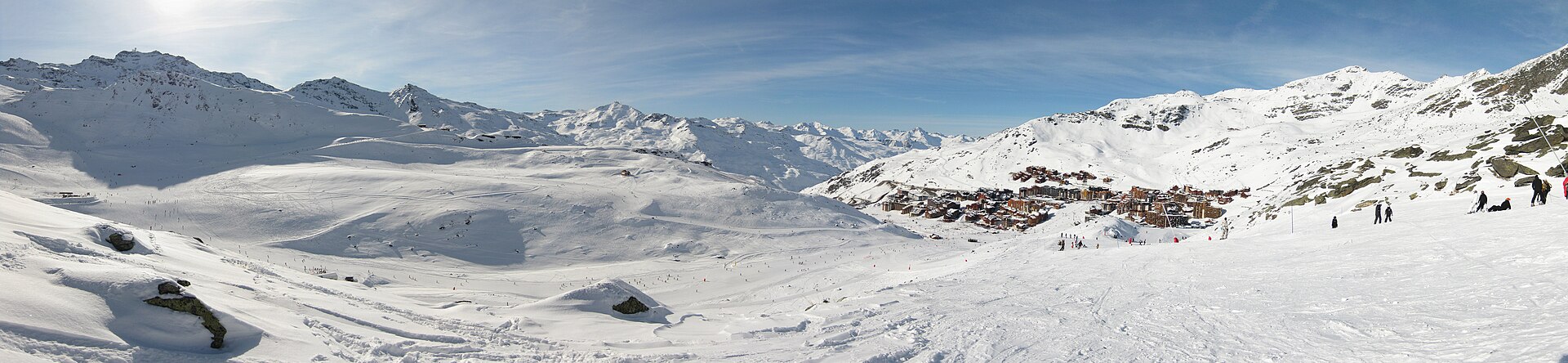
Europe’s highest resort, skiing to 3,230m across the Trois Vallees: November-to-May reliability with the world’s largest linked area attached: the default answer to “where will definitely have snow?”
2. Saas-Fee, Switzerland
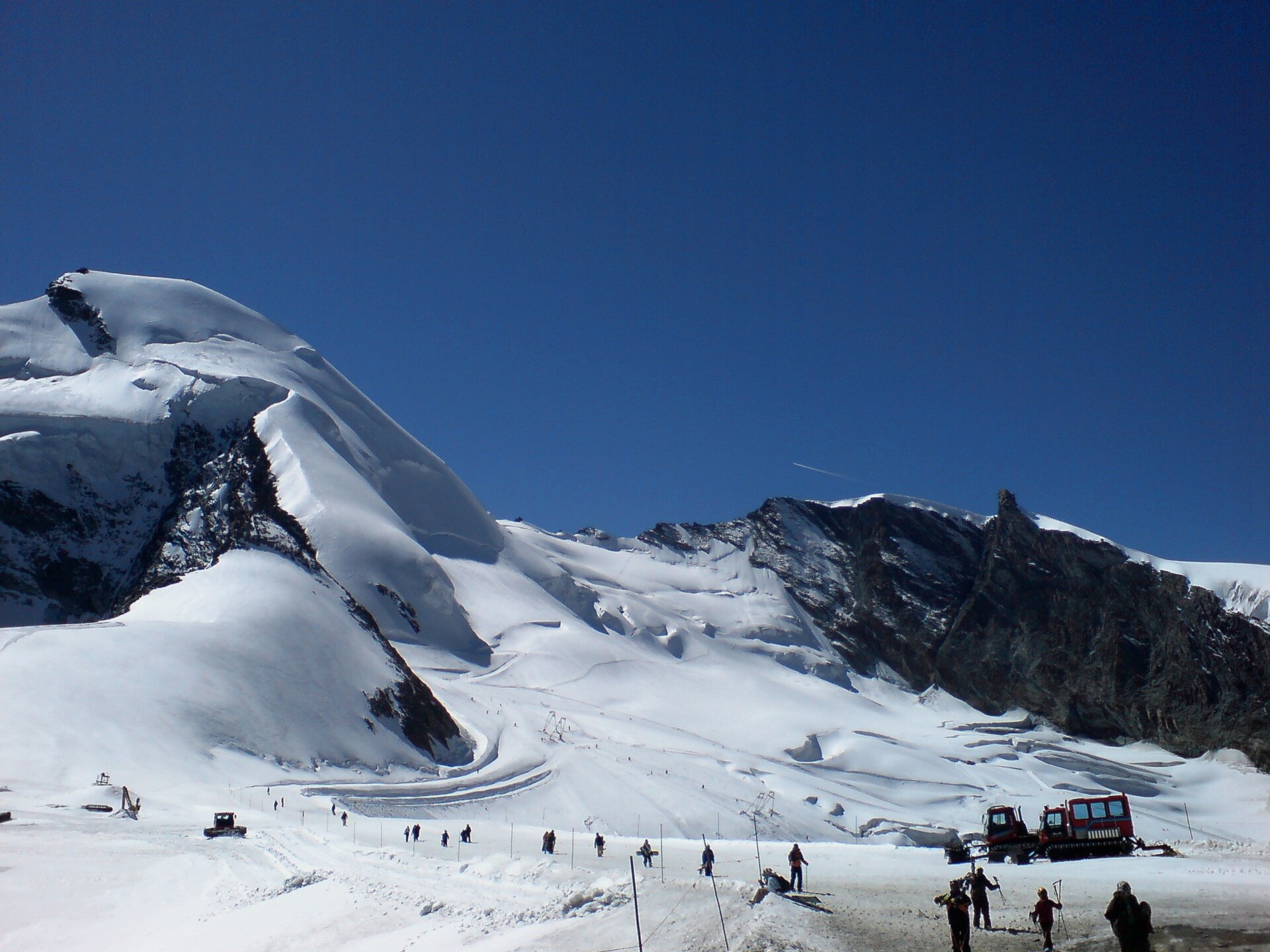
A car-free village beneath 4,000m peaks, skiing year-round terrain on the Allalin glacier: cold, high and dependable: with Zermatt’s glamour an hour away when rest-day envy strikes.
3. Hintertux, Austria

The all-year glacier: 365 days of lift-served skiing, deep-winter powder bowls and autumn race-team training laps: the snow-sure benchmark of the Alps.
4. Tignes, France (2,100m)
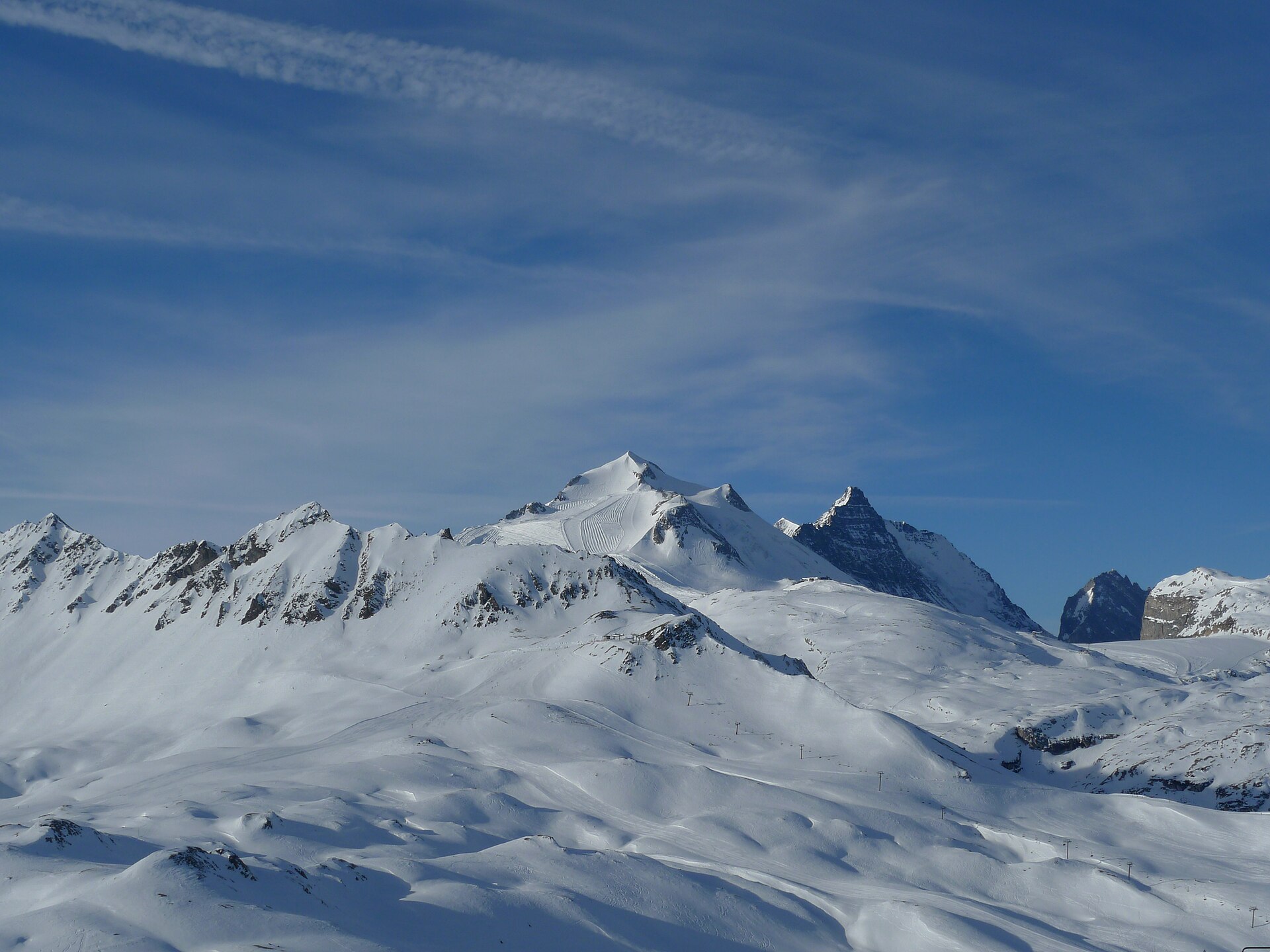
High bowls linked with Val d’Isere’s legendary terrain: glacier skiing on the Grande Motte and a long October-May season: brutalist looks, beautiful snow.
5. Obergurgl-Hochgurgl, Austria (1,930m)
The quiet connoisseur’s pick: high, cold, uncrowded and family-calm, with November openings the Alps envy: less famous, rarely disappointed.
6. Cervinia, Italy (2,050m)
Sunny Italian flank of the Matterhorn: high motorway pistes, spring reliability and Zermatt’s glacier link doubling the insurance policy: plus polenta-at-altitude lunch culture.
| Resort | Country | Top altitude | Glacier | Reliable season |
|---|---|---|---|---|
| Val Thorens | France | 3,230 m | — | Nov–May |
| Saas-Fee | Switzerland | 3,600 m | Yes (Allalin) | Year-round |
| Hintertux | Austria | 3,250 m | Yes | 365 days |
| Tignes | France | 3,450 m | Yes (Grande Motte) | Oct–May |
| Obergurgl | Austria | 3,080 m | — | Nov–Apr |
| Cervinia | Italy | 3,480 m | Glacier link | Nov–May |
Snow-sure strategy
Book altitude over reputation for December and late-March trips, check glacier access on shoulder dates, and remember: high also means colder and more exposed: pack for minus-twenty wind on the first lift. Pair with our budget picks to balance certainty against cost.
More ski & snow guides
- Cheapest ski resorts in Europe
- Best family ski resorts
- Best late-season & spring skiing
- Best beginner ski resorts
- How much a ski holiday costs
- When to book a ski holiday
Why each pick earns its place: season, cost & planning notes
These five aren’t just “high” — each one solves a different snow-sure problem, and knowing which is which saves you a wasted trip.
- Val Thorens (France) — Europe’s highest resort village at 2,300m, with lifts to the 3,200m Cime de Caron. Go for the sheer scale: it’s your gateway to the 600km Three Valleys. The Val Thorens–Orelle area runs roughly 22 Nov 2025 to early May 2026. Day pass about $80 (Three Valleys nearer $96). Planning note: take the Orelle side first thing — same lift pass, half the crowds, and the longest top-to-bottom runs.
- Saas-Fee (Switzerland) — skiing on the Allalin glacier up to 3,500m via the Metro Alpin, the world’s highest underground funicular. Nine-month season, mid-July to mid-April. Day pass around $93 (CHF 83). Planning note: lunch at Allalin, the revolving restaurant at 3,500m — book the window seats so the panorama rotates while you eat.
- Hintertux (Austria) — the only resort here open literally 365 days a year, topping out at 3,250m. Day pass roughly $60-65. Planning note: ride down into the Natur Eis Palast, the glowing ice cave inside the glacier.
- Tignes (France) — the Grande Motte glacier reaches 3,456m; combined with Val d’Isère it’s the 300km Espace Killy. Long season, late November into early May. Day pass about $52-77. Planning note: the Grande Motte funicular beats the morning lift queues entirely.
- Obergurgl-Hochgurgl (Austria) — Austria’s highest church village (1,930m), skiing to 3,030m and near-guaranteed snow mid-Nov to late April. Day pass around $80-85. Planning note: a 3-day-plus pass upgrades free to the Ötztal Superskipass, unlocking nearby Sölden.
How to choose between them
All five deliver snow when lower resorts are brown — but they reward very different travellers.
- Want the biggest possible terrain? Pick Val Thorens or Tignes. Val Thorens plugs into the 600km Three Valleys; Tignes into the 300km Espace Killy with Val d’Isère. These are the choices for strong intermediates and above who hate skiing the same run twice.
- Want a charming, car-free base? Choose Saas-Fee. It has banned private cars since 1951 — you park at the village edge and walk or take an electric taxi. The traditional Valais chalets feel a world away from Val Thorens’ purpose-built high-rises.
- Skiing outside the normal winter window? Hintertux is the only true year-round option — genuine glacier turns in July and August. Saas-Fee and Tignes also run summer glacier skiing, but in shorter June-July windows.
- Travelling with mixed abilities or want a quieter, traditional feel? Obergurgl-Hochgurgl is compact, snow-sure, family-friendly and far less frenetic than the French giants — the trade-off is a smaller (about 112km) ski area.
Bottom line: French resorts win on scale and lift-linked acreage; the Austrian and Swiss picks win on season length, glacier altitude and village character. Match the resort to what actually matters to your group rather than chasing the single highest number.
Getting there: airports, transfers & the practical logistics
These are high, end-of-the-valley resorts, so the last hour of every journey is the slow part. Here’s the realistic door-to-door picture.
- Val Thorens — fly into Geneva (about 2h35 transfer) or Lyon (about 2h25). Chambéry is closest at roughly 1h40 but has limited flights. By rail, take the TGV to Moûtiers, then a 45-minute bus or transfer up the valley.
- Saas-Fee — Geneva or Zurich, both around 2h30-3h00 by car. The cleanest public-transport route: train to Visp, then the PostBus directly up to the village (around 3 hours total from Geneva or Zurich). Remember the village is car-free — you’ll leave any hire car in the parkhouse at the entrance.
- Hintertux (Austria) — Innsbruck is closest at about 1h30 (93km); Munich is roughly 2h30 (215km). Drive the Inntal autobahn, exit onto the B169 up the Zillertal through Mayrhofen, then a final winding 25 minutes to the end of the Tux valley.
- Tignes — Geneva is the main gateway at around 3h00-3h30 (about 220km). Lyon and Chambéry are alternatives; by train, the TGV to Bourg-Saint-Maurice followed by a 45-minute transfer is the standard finish.
- Obergurgl-Hochgurgl (Austria) — Innsbruck is the obvious choice at about 1h35. You’ll head up the Ötztal past Sölden to the highest village in Austria.
Practical tip: for all of these, the Saturday changeover is the traffic bottleneck. Pre-book a shared or private transfer rather than relying on infrequent valley buses, and where a train option exists (Moûtiers, Visp, Bourg-Saint-Maurice) it often beats sitting in changeover-day road queues.
You Might Also Love

Written by
John Morrison is the founder and lead travel writer at Packzup. Over the past decade he has explored destinations across Africa, the Americas, Asia, Europe, the Middle East, and Oceania — always self-funded, never on a press trip.
