
Last updated September 6, 2026 · Editorial policy
Based on the Packzup Cost Index (Moderate tier), typical on-the-ground totals per person, excluding international flights:
| Travel style | 7 days | 14 days |
|---|---|---|
| Budget | $210 - $385 | $420 - $770 |
| Mid-range | $700 - $1,260 | $1,400 - $2,520 |
| Luxury | $2,100 - $3,500 | $4,200 - $7,000 |
- Kenya trip cost: daily budget at a glance
- Cost tiers — budget / mid / luxury
- Cost breakdown by category
- Sample 7-day budgets
- How to save money in Kenya
- A local planning note
- The Two-Tier Daily Budget for Kenya (and Where the Money Quietly Leaks)
- Frequently asked questions
- Plan your Kenya trip
- What Kenya Wildlife Service charges to enter a national park, park by park
- Why the Maasai Mara costs more than any KWS park, and doubles on 1 July
- National park, national reserve or private conservancy: who is taking your money?
- Why a Kenyan safari is priced per vehicle, and what that does to your per-person cost
- What the Kenya eTA costs and how long to leave for it
- At a glance
- Frequently asked questions
Quick answer: A trip to Kenya typically costs US$80-150/day backpacker, US$300-600/day mid-range, US$1000-3000+/day luxury. Currency: Kenyan Shilling (KES / KSh) — roughly KSh 130 = US$1.
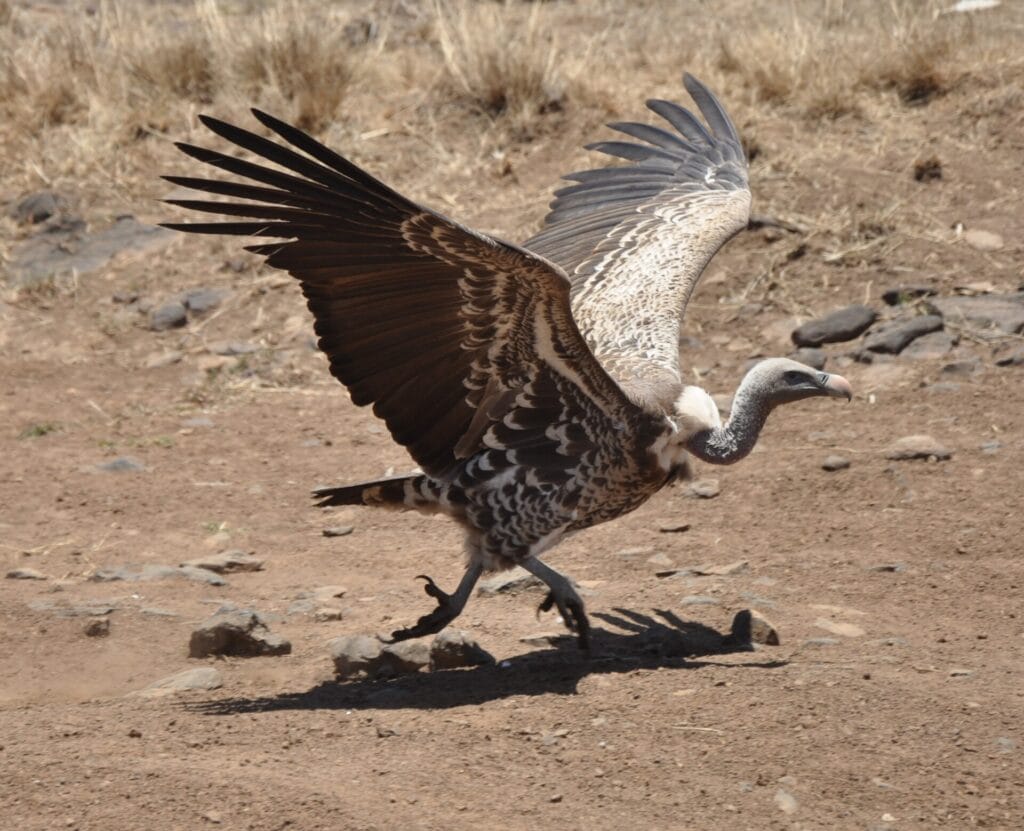
Kenya is East Africa’s most accessible safari country and consistently delivers world-class wildlife viewing at moderate-to-luxury prices. The famous Maasai Mara migration crossings and Amboseli’s Kilimanjaro views are unmatched. Here is what a Kenya trip actually costs.
Kenya trip cost: daily budget at a glance
Short answer: budget on roughly $300–500 per person per day mid-range (excluding international flights).
| Travel style | Per day (per person) | What it covers |
|---|---|---|
| Budget | $120–200 | Hostels/guesthouses, street food, public transport |
| Mid-range | $300–500 | 3-star hotels, restaurants, the odd tour or taxi |
| Luxury | $800+ | 4–5★ hotels, fine dining, private guides & transfers |
Cost tiers — budget / mid / luxury
Cost breakdown by category
- Mid-range safari: US$200-400/person/day all-inclusive (game drives, food, lodging)
- Mara conservancy fee: US$70-100/person/day on top of park fees
- Bush plane Mara-Amboseli: US$280-450 one-way
- Nairobi 3-star hotel: US$60-100/night
- Meals (Nairobi restaurants): US$10-25
Sample 7-day budgets
- Backpacker 7 days: ~US$700-1000 (camping safari + Nairobi cheap eats)
- Mid-range 7 days: ~US$3000-4500 (3-night Mara mid lodge + Amboseli + Nairobi nights)
- Luxury 7 days: ~US$8000-15000+ (Mara Plains + Angama Mara + bush plane)
How to save money in Kenya
- Group safaris (6-8 people) cut per-person costs ~50% vs private
- Stay outside Mara reserve in conservancies (cheaper park fees, same wildlife)
- Travel low season (April-May, November) for 40% off lodge rates
- Take SGR train Nairobi-Mombasa (US$20 economy) vs US$150 flight
- Tipping budget: US$15-25/day for safari guide, US$5-10/day for camp staff
A local planning note
If you want Kenya safari at lowest honest cost, book a 4-day mid-range Maasai Mara stay at a conservancy lodge (US$300-400/day all-inclusive), add 2 days in Amboseli for Kilimanjaro views, and skip the Nairobi extras. Total ~US$2500 for week-long quality safari vs US$5000+ for luxury tented camps. Book direct with operators like Wayo Africa or African Compass for better rates.
The Two-Tier Daily Budget for Kenya (and Where the Money Quietly Leaks)
Strip out the safari and Kenya splits into two clear daily tiers. A genuine shoestring day runs around $25-40: a Nairobi hostel dorm averages about $10-12 a night, street and local-canteen meals land near $8-12, and matatus cross town for roughly KSh 50-200 (under $2). A comfortable day without a lodge sits closer to $90-140, swapping the dorm for a guesthouse or 3-star room and adding sit-down meals and a private driver. Over a 10-day non-safari trip that is about $250-400 shoestring versus $900-1,400 comfortable, before any park days are added.
The leaks travelers miss are the small fixed ones. Kenya’s eTA costs about $30 through the official portal at etakenya.go.ke, and paying by card adds roughly a $9 processing surcharge. Foreign-card ATM withdrawals get hit with about KSh 150-554 (around $1-4) per pull, on top of your home bank’s fee. Three named swaps that actually move the number:
- Take the KBS airport bus from JKIA (around KSh 50-100) instead of a taxi (KSh 2,000-3,500, about $15-25) and save roughly $20 each way.
- Withdraw cash at Co-operative Bank or Ecobank ATMs, which waive the foreign-card fee, saving $1-4 per withdrawal.
- Ride the SGR Nairobi-Mombasa in economy at KSh 1,500 (about $11-12) rather than first class at KSh 4,500 (about $35), saving around $23.
Frequently asked questions
How much is a 7-day Kenya safari?
Mid-range: US$3000-4500 per person. Luxury: US$8000-15000+. Group budget camping: US$1500-2200.
Is Kenya more expensive than Tanzania?
Roughly similar per day. Kenya has slightly cheaper park fees but Tanzania has slightly cheaper internal flights.
When is the wildebeest migration river crossing in Kenya?
July through early October at the Mara River. Exact dates vary by year. Book lodges 8-12 months ahead for peak crossings.
When is the cheapest time to visit Kenya?
April-May (long rains) has 40-50% off lodge prices. Many camps close. November (short rains) is second-cheapest.
Should I tip in Kenya?
Yes — significant tipping culture on safari. US$15-25/day per guest for the safari guide, US$5-10/day for camp staff. Budget US$150-200 per person for week-long safari.
Plan your Kenya trip
What Kenya Wildlife Service charges to enter a national park, park by park
Park entry is the largest single line in most Kenya budgets, and since 2025 it has a new legal basis. The fees sit in the Wildlife Conservation and Management (Access, Entry and Conservation) (Fees) Regulations, 2025, published as Legal Notice No. 160 of 2025 in Kenya Gazette Supplement No. 161 of 22 September 2025. That notice replaced a schedule that had been largely unchanged since the previous decade, which is why older articles understate what you will pay.
Two structural points do more work than any single number.
There are four visitor categories, not two. The notice prices East African Citizens and Kenya Residents in shillings, and African Citizens (from outside the East African Community) and Non-Residents in US dollars. If you hold Kenyan residency, carry the documentation, because the gap between the resident rate and the non-resident rate is several times over.
A daily fee buys 24 hours, not a calendar day. The regulations define a daily fee as the fee payable for a single access to a national park, national reserve or sanctuary, valid for a period not exceeding twenty-four hours. A three-night stay inside a park is three fees per person, and a late exit on the final morning can trigger a fourth.
The notice groups the parks into categories rather than pricing each one individually. Gazetted non-resident adult daily fees include the premium parks, Amboseli and Lake Nakuru, at USD 90; Nairobi National Park and Tsavo East and Tsavo West at USD 80; Meru, Kora and the Aberdares at USD 70, up from USD 52; Mount Kenya at USD 70; Hell’s Gate, Mount Longonot and Mount Elgon at USD 50; and the marine protected areas, including Kisite, Watamu, Malindi, Kiunga and Diani, at USD 25. Children and students are charged a reduced band, for example USD 45 at Amboseli and Lake Nakuru, USD 40 at Nairobi and Tsavo, and USD 35 at Mount Kenya. None of these bands is split by season, so unlike the Maasai Mara a KWS park costs the same in February as in August. Vehicles are charged separately, in shillings, banded by seat capacity and regardless of who is inside.
Now the part that decides what you actually hand over. The new fees took effect on 1 October 2025. On 2 October 2025, the day after, the High Court at Milimani granted conservatory orders in a petition brought by the Kenya Tourism Federation, which argued that the industry had been given two days’ notice, barring Kenya Wildlife Service from enforcing the revised rates until the petition is heard and determined. Reporting through 2026 indicates the litigation was still live and that the position on the ground has been inconsistent, with the older rates quoted in some places and the gazetted figures charged through the official payment platforms in others. So treat each of these figures as the gazetted schedule rather than a guaranteed price, and confirm the amount payable for your specific park and date on the official KWS payment channel before you build a budget on it. Position as stated here is as of 5 September 2026.
The notice also sets exemptions. A Kenyan citizen aged seventy or older, a person with disability, and a child aged five years and younger are exempt from conservation fees.
The notice prices parks band by band and covers more of them than this page names, so read the schedule for the specific park you are visiting rather than assuming a band. It is a statutory instrument, which means it can be amended by a further legal notice, and it is also under legal challenge, so check both the current text on Kenya Law and the amount the official KWS payment channel actually asks for before you finalise a budget. Figures here are as of 5 September 2026.
Why the Maasai Mara costs more than any KWS park, and doubles on 1 July
Because the Maasai Mara National Reserve is not a KWS park. It is a national reserve run by the County Government of Narok, which sets its own entry fees through its Finance Act, entirely outside the Legal Notice No. 160 schedule. That single fact explains most of the confusion in Kenya safari pricing.
The operative instrument is the Narok County Finance Act, 2023 (No. 3 of 2023), assented to on 12 October 2023 and published in Kenya Gazette Supplement No. 7, Narok County Acts No. 3. Its First Schedule, Tourism, Maasai Mara National Reserve Park Fees and Charges, prices non-residents by season, and the Act itself defines the seasons: high season is 1 July to 31 December, low season is 1 January to 30 June.
- Non-resident adult, high season (July to December): USD 200 per person
- Non-resident adult, low season (January to June): USD 100 per person
- Non-resident child aged 9 to 17: USD 50; child of 8 and under: free; student: USD 50
- Kenyan citizen adult: KSh 3,000 high season, KSh 1,500 low season
- East African resident adult: KSh 5,000 high season, KSh 2,500 low season
- Narok resident adult: KSh 2,000 high season
The seasonal split is the most expensive date in the Kenyan calendar. The high-season rate begins on 1 July, which is also when river crossings begin to draw crowds, so the two most powerful cost drivers in the country move on the same day. A late-June arrival and an early-July arrival are the same trip at half the reserve fee.
The reserve also defines what the fee buys, and it is not a day. Narok’s own interpretation clause defines park entry fees as an amount charged for entry into the Maasai Mara from 6.00am to 6.00pm, time of entry notwithstanding. Read that carefully: the window is fixed to the clock, not to your arrival. Entering at 3pm consumes the same fee as entering at 6am, and staying past 6pm starts the next one. If you are driving in from Nairobi, that alone is an argument for arriving early enough to get a game drive out of the fee you have already paid.
Other Narok charges worth knowing, all from the same schedule: a public or special campsite inside the reserve is USD 40 per non-resident adult and USD 20 per child aged 9 to 17; a hot-air balloon single landing fee is USD 80 per person and USD 35 per child, charged on top of whatever the balloon operator quotes; and vehicle entry is charged per vehicle per day at KSh 1,000 for under six seats, KSh 1,500 for six to twelve, KSh 3,500 for thirteen to twenty-four and KSh 4,500 for twenty-five to forty-four.
The Act also prices getting it wrong, and the penalties are heavy enough to be worth reading before a self-drive trip. Non-payment of park entry fees carries KSh 30,000 against the vehicle and KSh 30,000 against the driver. Possession of an invalid ticket is KSh 100,000 per vehicle. Off-road driving is KSh 50,000, rising to KSh 70,000 for a repeat. Entering or leaving through a point that is not a designated payment point is KSh 100,000. These are county penalties, not KWS ones, and they apply inside the reserve.
These figures come from the enacted Finance Act rather than from an operator’s price list. County finance legislation is passed annually, and the county’s later Finance Bill carried the same Maasai Mara figures forward, but the schedule can be varied each year, so confirm the current one with the County Government of Narok before you travel.
National park, national reserve or private conservancy: who is taking your money?
Kenya has three distinct kinds of protected area, each with a different owner and a different fee, and a safari quote often crosses all three without saying so.
A national park is state land managed by Kenya Wildlife Service. Fees come from the national regulations, are payable per person per 24 hours, and are collected through the KWS system rather than in cash at the gate. Nairobi, Amboseli, Tsavo East and Tsavo West sit here.
A national reserve is usually county land. The county government sets and collects the fee. The Maasai Mara belongs to Narok. Samburu, Buffalo Springs and Shaba sit with their own counties. This is why a rate you found for one reserve tells you nothing about the next one, and why a KWS price list will not contain them.
A conservancy is private or community land. Landowners lease their land into a conservancy that limits how many beds and vehicles it permits, and it charges a conservancy fee, usually as a per-person per-night charge that the camp collects and passes on. It is not a gate fee, it is frequently already inside the nightly rate you were quoted, and it is separate from any KWS or county fee.
The practical difference is what the money buys. Conservancies cap vehicle numbers and generally permit off-road driving, night drives and guided walks that are not allowed in a national park or the reserve, which is what people are paying the premium for. If a quote is materially more expensive per night than a lodge inside the reserve, the conservancy fee and the vehicle cap are usually the reason.
When you compare two quotes, establish for each night which of the three you are on, and whether entry fees are included or extra. That single question resolves most apparent price differences between Kenyan operators.
Why a Kenyan safari is priced per vehicle, and what that does to your per-person cost
A safari quote is built from a small number of cost blocks, and only some of them scale with the number of people. Understanding which is which is worth more than any daily-spend estimate.
Per vehicle, per day: the 4×4 or minibus itself, the driver-guide’s daily rate and allowance, and fuel, which on a Mara or Amboseli circuit is a serious number because game drives are long and slow. This block is the same whether one person or six is sitting in it.
Per person, per day: park or reserve entry, which does not fall with group size at all, plus full-board accommodation.
Per room, per night: the bed. This is where a solo traveller is punished, because a single supplement applies on a rate built for two sharing.
The consequence is arithmetic rather than opinion. Two people sharing a vehicle carry the whole vehicle cost between them; four people carry the same cost between four. The park fee, however, is charged again for every person added. So group size cuts the transport block fast and does nothing at all to the biggest block, which is why the cost per person of a Kenyan safari falls steeply from one to four travellers and then flattens.
Three further items to check in any quote, because they are commonly excluded: park and reserve entry fees (ask whether they are in or out, and at which rate category), drinks and any premium activity such as a balloon flight or a night drive, and tips for the driver-guide and camp staff, which are customary and are not in the quoted price.
Do not accept a per-day figure that does not itemise these blocks. A quote that lumps everything into one number is impossible to compare against another one, and it hides whether the USD 200 high-season Mara fee is inside it.
What the Kenya eTA costs and how long to leave for it
Kenya requires an Electronic Travel Authorisation, and there is an official fee schedule for it rather than just a headline price. Aeronautical Information Circular AIC 14/25 (White 296), published by the Kenya Civil Aviation Authority on 23 October 2025 and issued under section 59 of the Kenya Citizenship and Immigration Act 2011, sets out the charges levied by the State Department for Immigration and Citizen Services with effect from 1 January 2025:
- Standard eTA application: USD 30
- Transit eTA: USD 20
- East African Tourist eTA: USD 100
- USA five-year multiple entry eTA: USD 185
- One-year multiple entry eTA: USD 300
- Expedited eTA service: an additional USD 100
- Nil fee for East African Community citizens, for nationals of countries with a bilateral eTA-free agreement, and for diplomats on official duty
Standard processing may take up to 72 hours, and the published guidance is that applications are generally processed within three business days but may take longer depending on verification.
The circular also names a charge almost no budget includes. An Advance Passenger Information and Passenger Name Record service fee of USD 4.95 per passenger per international journey segment is added to the ticket as a distinct charge, applying to international arrivals, departures and transits alike, collected at the point of sale through SITA and remitted by the lifting airline. Crew on duty are exempt; every other international passenger, including transit passengers, is not. It is refundable only if the ticket itself is refundable. The same circular also lists an inbound travel health insurance cover, pro-rated, without stating an amount, so ask your carrier what appears on the ticket.
Practical reading: apply at least a week out, and do not pay the expedited surcharge to fix a problem you created by leaving it late. USD 100 is more than a day’s entry to most KWS parks.
The official portal is etakenya.go.ke, operated with the Directorate of Immigration Services, and the circular states these fees excluding payment charges. Commercial sites resell the same application with a markup and no advantage, and some are difficult to distinguish from the real one, so type the address rather than following an advertisement.
Some travellers are exempt. The official guidance exempts passengers in transit who arrive and leave by the same aircraft, or transfer to another aircraft, without leaving the airport precincts, passengers who arrive and leave by the same ship without disembarking, and crew whose names appear on the crew manifest and who continue to a destination outside Kenya. Whether your own nationality or residence status changes the position is a question for the eTA site’s eligibility pages, and the answer changes, so check it as of your travel date rather than relying on any secondary summary. Position stated here is as of 5 September 2026.
One budgeting note that saves confusion later: non-resident park fees in Kenya are denominated in US dollars in both the national regulations and the Narok schedule, so the shilling exchange rate barely touches the largest line in a safari budget. It affects meals, fuel, tips and city spending, not park entry.
At a glance
| Protected area | Who sets the fee | Non-resident adult, as gazetted | Season |
|---|---|---|---|
| Amboseli National Park | Kenya Wildlife Service, Legal Notice No. 160 of 2025 | USD 90 per 24 hours | No seasonal split in the notice |
| Lake Nakuru National Park | Kenya Wildlife Service, Legal Notice No. 160 of 2025 | USD 90 per 24 hours | No seasonal split in the notice |
| Nairobi National Park | Kenya Wildlife Service, Legal Notice No. 160 of 2025 | USD 80 per 24 hours | No seasonal split in the notice |
| Tsavo East and Tsavo West | Kenya Wildlife Service, Legal Notice No. 160 of 2025 | USD 80 per 24 hours | No seasonal split in the notice |
| Mount Kenya National Park | Kenya Wildlife Service, Legal Notice No. 160 of 2025 | USD 70 per 24 hours | No seasonal split in the notice |
| Hell’s Gate, Mount Longonot, Mount Elgon | Kenya Wildlife Service, Legal Notice No. 160 of 2025 | USD 50 per 24 hours | No seasonal split in the notice |
| Maasai Mara National Reserve | County Government of Narok, Finance Act schedule | USD 200 | High season, 1 July to 31 December |
| Maasai Mara National Reserve | County Government of Narok, Finance Act schedule | USD 100 | Low season, 1 January to 30 June |
| Maasai Mara campsite, non-resident adult | County Government of Narok | USD 40 | Not seasonally split in the schedule |
| Maasai Mara balloon single landing fee | County Government of Narok | USD 80 adult, USD 35 child | Charged on top of the operator’s price |
| Meru, Kora, Aberdare National Parks | Kenya Wildlife Service, Legal Notice No. 160 of 2025 | USD 70 per 24 hours, raised from USD 52 | No seasonal split in the notice |
| Marine protected areas: Kisite, Watamu, Malindi, Kiunga, Diani | Kenya Wildlife Service, Legal Notice No. 160 of 2025 | USD 25 per 24 hours | No seasonal split in the notice |
| Vehicle entry, Maasai Mara | Narok County Finance Act, 2023, First Schedule | KSh 1,000 under 6 seats; KSh 1,500 for 6 to 12; KSh 3,500 for 13 to 24; KSh 4,500 for 25 to 44 | Per vehicle per day |
| Electronic Travel Authorisation | State Department for Immigration and Citizen Services, per KCAA circular AIC 14/25 | USD 30 standard; USD 20 transit; USD 100 East African Tourist eTA; USD 185 USA 5-year; USD 300 1-year multiple entry; expedited adds USD 100; nil for EAC citizens, eTA-free bilateral agreement nationals and diplomats on duty | Up to 72 hours standard processing |
| Advance Passenger Information and Passenger Name Record service fee | State Department for Immigration and Citizen Services, per KCAA circular AIC 14/25 | USD 4.95 per passenger per international journey segment | Added to the ticket; arrivals, departures and transits; crew on duty exempt |
Frequently asked questions
How much does it cost to enter a Kenyan national park in 2026?
For a non-resident adult it depends on the park and is set by the Wildlife Conservation and Management (Access, Entry and Conservation) (Fees) Regulations, 2025, Legal Notice No. 160 of 2025. The gazetted adult rates include USD 90 at Amboseli and Lake Nakuru, USD 80 at Nairobi National Park and at Tsavo East and Tsavo West, USD 70 at Meru, Kora, the Aberdares and Mount Kenya, USD 50 at Hell’s Gate, Mount Longonot and Mount Elgon, and USD 25 at the marine protected areas. Each fee covers a single access valid for not more than 24 hours, and vehicles are charged separately in shillings. One important caveat: the new schedule took effect on 1 October 2025 and the High Court granted conservatory orders the next day restraining Kenya Wildlife Service from enforcing it, on a petition by the Kenya Tourism Federation. Confirm the amount actually payable on the official KWS payment channel before you budget.
Is the Maasai Mara included in Kenya Wildlife Service park fees?
No. The Maasai Mara National Reserve is run by the County Government of Narok and prices its own entry through the county Finance Act, so it does not appear on any KWS schedule. The First Schedule to the Narok County Finance Act, 2023 charges a non-resident adult USD 200 per person in high season, 1 July to 31 December, and USD 100 in low season, 1 January to 30 June. Children aged 9 to 17 pay USD 50 and children of 8 and under are free. This is the single biggest reason two Kenya itineraries can differ by hundreds of dollars a person.
When is the Maasai Mara cheapest to visit?
Between 1 January and 30 June, when Narok’s low-season rate of USD 100 per non-resident adult applies instead of the USD 200 high-season rate that runs from 1 July to 31 December. The rate steps up on 1 July, at almost exactly the point demand rises, so late June is the last of the cheap dates. Kenyan citizens and East African residents face the same split in shillings: KSh 1,500 rather than KSh 3,000 for a citizen adult, and KSh 2,500 rather than KSh 5,000 for an East African resident adult.
How long does a Maasai Mara entry fee last?
Narok County’s own definition is unusually specific: park entry fees are charged for entry into the Maasai Mara from 6.00am to 6.00pm, time of entry notwithstanding. The window is tied to the clock rather than to when you arrive, so a mid-afternoon entry uses up a full fee and a stay past 6pm begins the next one. That is different from Kenya Wildlife Service parks, where the national regulations define a daily fee as a single access valid for a period not exceeding twenty-four hours.
What is the difference between a national park and a conservancy in Kenya?
Ownership, and therefore who charges you. A national park is state land managed by Kenya Wildlife Service under the national fee regulations. A national reserve is normally county land, priced by that county, as with the Maasai Mara and Narok. A conservancy is private or community land where landowners lease their land into a scheme that caps beds and vehicles and levies a per-person per-night conservancy fee, usually collected by the camp and often already inside the nightly rate. Conservancies commonly permit off-road driving, night drives and guided walks that parks and reserves do not, which is what the higher rate buys.
Does a bigger group make a Kenyan safari cheaper per person?
Up to a point, and only for part of the cost. The vehicle, the driver-guide and the fuel are charged per vehicle per day, so those costs divide across everyone in the car and the per-person figure falls sharply from one traveller to four. Park and reserve entry is charged per person per 24 hours and does not fall at all, and accommodation is priced per room, which is why solo travellers meet a single supplement. Once the vehicle is reasonably full, adding people stops saving money.
How much is the Kenya eTA and when should I apply?
A standard Kenya eTA is USD 30, excluding payment charges, and expedited processing costs an additional USD 100. Kenya Civil Aviation Authority circular AIC 14/25 of 23 October 2025 gives the full schedule levied from 1 January 2025: USD 30 standard, USD 20 transit, USD 100 East African Tourist eTA, USD 185 USA five-year multiple entry, USD 300 one-year multiple entry, and nil for East African Community citizens, nationals of eTA-free bilateral agreement countries and diplomats on official duty. Standard processing may take up to 72 hours and is generally three business days, so apply at least a week ahead. The same circular adds an Advance Passenger Information and Passenger Name Record fee of USD 4.95 per passenger per international journey segment to the ticket, including for transit passengers. Use etakenya.go.ke directly.
You Might Also Love


Written by
John Morrison is the founder and lead travel writer at Packzup. Over the past decade he has explored destinations across Africa, the Americas, Asia, Europe, the Middle East, and Oceania — always self-funded, never on a press trip.
Working out the money? Check whether your destination is a cash or card country, how much to bring, and how to dodge ATM fees and the DCC trap.
