
Last updated September 3, 2026 · Editorial policy
Based on the Packzup Cost Index (Pricey tier), typical on-the-ground totals per person, excluding international flights:
| Travel style | 7 days | 14 days |
|---|---|---|
| Budget | $385 - $700 | $770 - $1,400 |
| Mid-range | $1,260 - $2,100 | $2,520 - $4,200 |
| Luxury | $3,150 - $4,900 | $6,300 - $9,800 |
- Belgium trip cost: daily budget at a glance
- How much does a trip to Belgium cost?
- Cost breakdown by category
- Total trip costs (Belgium)
- Money-saving tips for Belgium
- What to do in Belgium
- Does it matter which Belgian city you sleep in?
- Which Belgian costs catch visitors out?
- Which money-saving swaps hold up in Belgium?
- Frequently asked questions
- The Honest Two-Tier Budget (and the Costs People Forget)
A trip to Belgium costs roughly $55-100/day on a budget, $180-300/day mid-range, and $450-700/day for luxury (per person, excluding flights). A comfortable week runs about $1,300-2,100 mid-range.

Belgium trip cost: daily budget at a glance
Short answer: budget on roughly $160–280 per person per day mid-range (excluding international flights).
| Travel style | Per day (per person) | What it covers |
|---|---|---|
| Budget | $85–130 | Hostels/guesthouses, street food, public transport |
| Mid-range | $160–280 | 3-star hotels, restaurants, the odd tour or taxi |
| Luxury | $420+ | 4–5★ hotels, fine dining, private guides & transfers |
How much does a trip to Belgium cost?
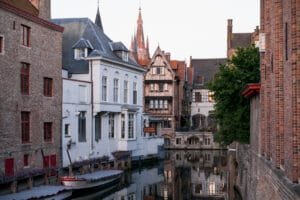
Belgium is a Pricey-tier European destination: stays and sit-down dining are the big costs, while its compact, walkable cities (Bruges, Ghent, Brussels) and cheap, fast trains keep transport low. Beer, frites and waffles are the affordable joys.
Cost breakdown by category
| Category | Typical cost |
|---|---|
| Accommodation | Hostel $25-40 / 3-star $100-160 / 4-5 star $220+ |
| Food | Frites $4-6, casual meal $15-25, mid restaurant $35-55, a Belgian beer $4-6 |
| Local transport | City trams/metro $2-3 a ride; Brussels-Bruges train ~$16 |
| Activities | Most churches free; museums $10-15; a brewery tour $12-20 |
Total trip costs (Belgium)
| Style | Per day | 1 week |
|---|---|---|
| Budget | $55-100/day | ~$400-700 |
| Mid-range | $180-300/day | ~$1,300-2,100 |
| Luxury | $450-700/day | ~$3,100-4,900 |
Per person, flights excluded. Compare 200 countries in our Travel Cost Index.
Money-saving tips for Belgium
- Eat like a local: frites, waffles and a bakery lunch cost a fraction of restaurant meals
- Belgium is tiny — base in one city and day-trip by train rather than changing hotels
- Many of Bruges and Ghent’s best sights (canals, squares, churches) are free to wander
- Travel in shoulder season (spring/autumn) for lower hotel rates

What to do in Belgium
Wander Bruges and Ghent’s medieval centres, tour a Trappist or lambic brewery, eat your weight in chocolate and frites, and use Brussels as a rail hub for the whole country.
Plan more: Travel Cost Index · Trip Cost Calculator · Compare destinations
Does it matter which Belgian city you sleep in?
Yes, and it is the biggest single lever on a Belgian budget once flights are booked: sleeping in Ghent instead of Bruges saves more per night than any transit pass saves per day. Hotels in the centre of Bruges carry a clear premium in high season, and rooms of a similar standard in Ghent commonly cost around a quarter less. Over a four-night stay that gap can cover every train fare of the trip.
The geography makes the swap painless. From Brussels, Ghent is about 30 minutes by IC train, Antwerp about 40 minutes and Bruges about 55 minutes to an hour. Ghent to Bruges is roughly 20 to 25 minutes, with trains every 15 minutes or so, so the canals are still a short morning ride away. Domestic Belgian trains need no seat reservation, and IC services to Bruges run twice an hour from Brussels-Midi.
Ghent’s large student population also changes what dinner costs. It supports a wider spread of budget restaurants than Bruges, where the centre leans toward tourist-facing menus. Brussels sits between the two on hotel prices and has the widest choice at every price point.
The trade-off is atmosphere after dark. Bruges empties of day-trippers in the evening, and that quiet is exactly what the premium buys. If an evening in a near-empty medieval square matters more than the nightly premium, pay it knowingly and trim elsewhere.
Which Belgian costs catch visitors out?
The costs that surprise visitors most are the small fixed ones that never appear in a daily-budget table: airport rail supplements, water at the table and the gap between lunch and dinner prices.
- Brussels Airport rail supplement. Every train ticket to or from Brussels Airport-Zaventem carries a mandatory airport supplement of about 7 EUR on top of the fare, in each direction. A couple pays it four times over a return trip.
- The Charleroi transfer. Low-cost flights land at Brussels South Charleroi, roughly 46 to 60 km south of the capital. The shuttle bus into Brussels takes about an hour, so the cheap fare buys two hours of ground time on the round trip plus a bus ticket each way.
- Water is a line item. Belgian restaurants have traditionally served bottled water rather than tap water, and a table of four can add a bottle or two per meal without noticing. A campaign has pushed several hundred restaurants to offer tap water, but it is still not the default, so ask before the bottle arrives.
- Dinner pricing. Main courses in an ordinary restaurant usually land around 20 to 27 EUR at dinner, and rarely under 15 EUR even at the cheap end. Two table-service meals a day is what turns a comfortable budget into a luxury one.
- The Bruges hotel premium described above, which is easy to accept when booking and painful when the card statement arrives.
None of these is large on its own. Together they are usually the reason a trip runs over a carefully planned figure.
Which money-saving swaps hold up in Belgium?
Four swaps reliably cut the bill without changing what the trip feels like, and the train-ticket timing trick is the one most visitors miss.
- Time day trips for the Weekend Ticket. SNCB’s Weekend Ticket is a standard return fare at half price when the outbound journey starts after 19:00 on Friday, or at any time on Saturday or Sunday, and the return is completed by the end of service on Sunday. A Brussels to Bruges day trip on a Saturday therefore costs about half the weekday return; do the same for Ghent or Antwerp and the saving repeats.
- Book the first Sunday of the month for museums. More than a dozen Brussels museums open free on the first Sunday of each month, among them the Brussels City Museum in the King’s House on the Grand Place and the Sewer Museum. Two adults visiting three of them that day keep the price of six admissions.
- Make lunch the restaurant meal. The plat du jour or dagschotel in cafes and brasseries is typically around 15 EUR and often includes a drink, against 20 to 27 EUR for a main course at dinner. Eat the sit-down meal at midday and pick up frites or a bakery dinner, and the food line drops by around a third.
- Stop tipping. Belgian law requires menu prices to include service, so the 10 to 15 percent that visitors from tipping cultures add out of habit is pure overspend. Rounding a 9.20 EUR bill to 10 EUR is the local gesture.
Frequently asked questions
Is Bruges or Ghent cheaper for a night’s stay?
Ghent, by a clear margin. Central Bruges hotels carry a high-season premium, and comparable Ghent rooms commonly cost around a quarter less; Ghent’s student-driven restaurant scene is cheaper too. The two cities are roughly 20 to 25 minutes apart by train, so Ghent works as a base for Bruges day trips.
Do you need to tip in Belgian restaurants?
No. Service is included in menu prices by law, so nothing extra is expected. Rounding the bill up to the next round figure in cafes and casual places is a polite gesture, but leaving 10 to 15 percent as in North America simply raises the cost of every meal for no local reason.
Is flying into Charleroi really cheaper than Brussels Airport?
Often on the fare, less so all-in. Charleroi sits roughly 46 to 60 km south of Brussels and the shuttle bus takes about an hour each way, so add two bus tickets and two hours of travel. Brussels Airport is on the rail network, but every train ticket to or from it carries a supplement of about 7 EUR.
The Honest Two-Tier Budget (and the Costs People Forget)
Strip away the brochure numbers and Belgium splits into two realistic daily figures. A true shoestring day runs around 70 to 85 EUR: a hostel dorm bed near 40 EUR in Brussels, supermarket and frites-stand meals, and one or two Belgian beers bought from a shop at roughly 1.50 EUR rather than the 4 to 6 EUR a historic bar charges. A comfortable day, with a small private hotel room and table-service dinners, lands closer to 160 to 200 EUR. Over a typical week splitting Brussels, Bruges, and Ghent, that is a ballpark of about 550 to 750 EUR shoestring or roughly 1,300 to 1,600 EUR comfortable, before flights.
The line items travelers underestimate are the quiet ones: the city accommodation tax (around 5 EUR per room per night in Brussels from January 2026), urban transit at about 2.20 EUR per single ride, and the markup on a sit-down brewery beer.
Three swaps that actually move the number:
- A STIB day pass at around 8 EUR pays off after roughly four rides versus singles.
- The Brussels Card (from about 41 EUR for 24 hours) bundles 48 museums plus unlimited transit, undercutting separate tickets fast.
- If you are under 26, the SNCB youth fare cuts any train ticket by around 40 percent.
Planning the trip? Start with best time to visit Belgium.
You Might Also Love


Written by
John Morrison is the founder and lead travel writer at Packzup. Over the past decade he has explored destinations across Africa, the Americas, Asia, Europe, the Middle East, and Oceania — always self-funded, never on a press trip.
Working out the money? Check whether your destination is a cash or card country, how much to bring, and how to dodge ATM fees and the DCC trap.
