Last updated August 13, 2026 · Editorial policy
- 7-Day Greek Island Hopping Itinerary: A Day-by-Day Travel Plan
- Greek Island Hopping Itinerary at a Glance
- Day-by-Day Itinerary
- Where to Stay in Greek Island Hopping
- Budget Breakdown (7 Days)
- What to Pack
- Tips for a 7-Day Greek Island Hopping Trip
- Routing Mistakes That Waste a Day of Your Seven
- Frequently Asked Questions
- Related Articles
7-Day Greek Island Hopping Itinerary: A Day-by-Day Travel Plan
Quick answer: This 7-day Greek Island Hopping itinerary covers the must-see highlights without rushing, with detailed day-by-day plans, restaurant recommendations, and budget guidance.
Best for: First-time visitors who want to maximize sightseeing while still tasting local culture.
Planning a 7-day trip to Greek Island Hopping? This itinerary is built from a first-time-visitor perspective: hit the icons, eat the best food, and finish with one or two memorable experiences locals would recommend. Each day mixes a major sight, food stops, and downtime — no death marches, no missing highlights.
Greek Island Hopping Itinerary at a Glance
| Day | Focus |
|---|---|
| Day 1 | Athens Arrival & Acropolis |
| Day 2 | Sail to Mykonos |
| Day 3 | Delos & Mykonos Nights |
| Day 4 | Ferry to Naxos |
| Day 5 | Naxos Mountain Villages |
| Day 6 | Onward to Santorini |
| Day 7 | Akrotiri & The Journey Home |
Day-by-Day Itinerary
Day 1 — Athens Arrival & Acropolis
Land at Athens International Airport and take the direct Metro Line 3 into the centre — roughly 40 minutes and about €9 (around $10) to Syntagma or Monastiraki, far cheaper than a taxi. Drop your bags in Plaka or Monastiraki, the walkable neighbourhoods below the rock. Spend the afternoon climbing the Acropolis; Acropolis entry runs about €30 (roughly $33) in high season; the old multi-site combo ticket that once bundled the Ancient Agora and Roman Forum was discontinued in April 2025, so those now need their own tickets. Go late, after 4pm, to dodge cruise crowds and the worst heat. Afterwards wander down through Anafiotika, a tiny whitewashed hamlet built by Cycladic stonemasons that feels like an island lane. Insider tip: book Acropolis timed-entry online in advance for summer, as walk-up slots sell out. For dinner, try a proper gyros or grilled octopus with an ouzo in a Plaka taverna before an early night.
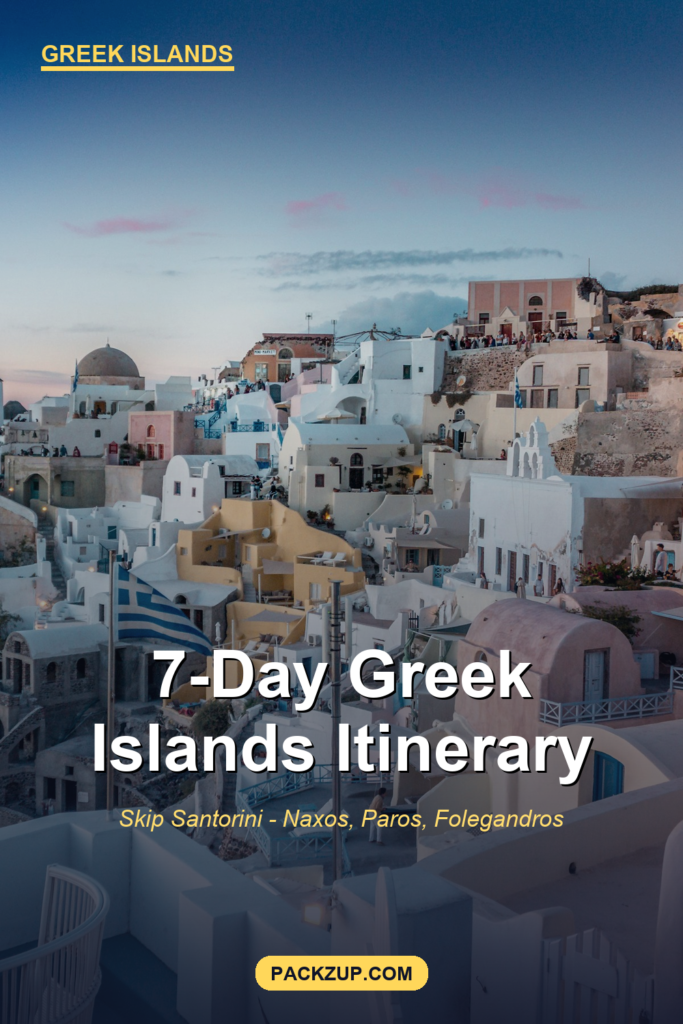
Day 2 — Sail to Mykonos
Head to the port of Piraeus for the morning ferry to Mykonos — take the Metro Line 1 from Monastiraki straight to the harbour. High-speed catamarans (Seajets, Golden Star) cover the crossing in about 2 hours 40 minutes to 3 hours, while conventional Blue Star ferries take closer to 5 hours for less money; expect roughly €55–70 (about $60–77) for a fast seat. Book ahead in July and August, when sailings fill. Arriving into Mykonos Town (Chora), lose yourself in the maze of marble alleys designed to confuse pirates, then follow the waterfront to Little Venice, where old sea-captains’ houses hang over the water. Climb to the Kato Mili windmills for sunset. Insider tip: the maze is intentional — don’t fight it, and note your hotel’s location on a map before wandering, as street signs are scarce.
Day 3 — Delos & Mykonos Nights
Give the morning to Delos, the sacred birthplace of Apollo and one of Greece’s richest archaeological sites. Small boats leave Mykonos Old Port around 9–10am; the round-trip runs about €25 (roughly $28) plus a site ticket near €12 (about $13), and the crossing takes 30–40 minutes. Walk the marble Terrace of the Lions and mosaic-floored merchant houses — bring water and a hat, as there is almost no shade. Note the last return boat is early afternoon, so don’t dawdle. Back on Mykonos, unwind on Agios Ioannis or the calmer Ornos beach. In the evening, sample kopanisti, the island’s peppery aged cheese, and louza cured pork. Insider tip: Delos has no restaurant or accommodation and closes at night, so time your visit around the boat schedule rather than the reverse.
Day 4 — Ferry to Naxos
Catch a ferry south to Naxos, the largest and greenest of the Cyclades — the hop is short, from about 35 minutes to under 1.5 hours depending on the vessel, and typically costs roughly €25–45 (about $28–50). You arrive right in Chora (Naxos Town). Walk the causeway to the Portara, the giant 6th-century-BC marble doorway that is all that remains of an unfinished Temple of Apollo; entry is free and it is open around the clock, so save it for sunset when the frame glows. Then climb the tangled lanes into the Kastro, the Venetian citadel built in 1207 that ruled the Cyclades for three centuries. Insider tip: Naxos is a working agricultural island, not a resort — seek out its famous graviera cheese and local Kitron citron liqueur, both genuinely produced here.
Day 5 — Naxos Mountain Villages
Rent a car or scooter (roughly €35–50, about $40–55 a day) to explore Naxos’s mountainous interior, which most island-hoppers skip. Drive up to the marble-quarry village of Apiranthos, where locals still speak a distinct dialect, then stop in Halki, the old commercial heart, for a tasting at its historic distillery. Energetic walkers can tackle Mount Zas (Zeus) — at 1,004 metres the highest peak in the Cyclades and, by legend, the birthplace of Zeus; the well-marked route from Agia Marina above Filoti takes around 3–4 hours return, so start early and carry plenty of water. Cool off afterwards on the long golden sands of Plaka or Agios Prokopios beach. Insider tip: fuel up on a Naxos potato dish — the island’s PDO potatoes are a genuine local point of pride, not a tourist gimmick.
Day 6 — Onward to Santorini
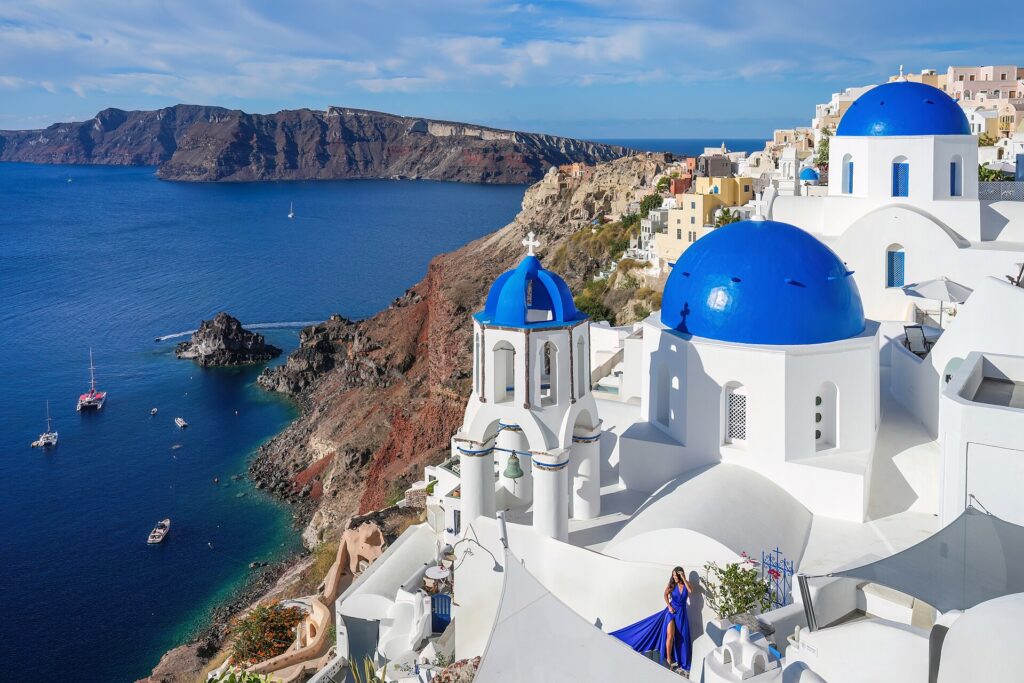
Board a ferry for the most dramatic leg to Santorini — from Naxos the crossing runs roughly 1 to 2.5 hours depending on the boat, usually around €35–60 (about $39–66). Ferries dock at Athinios, the port at the base of the cliff; take the pre-arranged shuttle or a bus up the switchbacks rather than the notorious donkey path. Base yourself in Fira or quieter Firostefani, then walk the caldera-edge path with its plunging volcanic views. In the evening, make your way to Oia for its famous sunset — the local bus is cheap at about €2 (roughly $2), but leaves well over an hour early to claim a spot, as the crowds are intense. Insider tip: skip the packed castle viewpoint and watch instead from the walk down toward Ammoudi Bay, where fresh seafood tavernas line the little harbour.
Day 7 — Akrotiri & The Journey Home
Spend the morning at Akrotiri, the astonishingly preserved Bronze Age town buried by a volcanic eruption around 1600 BC and often called the Aegean’s Pompeii; the covered site costs about €12 (roughly $13) and is far cooler and quieter than the caldera villages. Nearby, the striated cliffs of Red Beach are worth a photo, though swimming access can be restricted by rockfall — check locally first. Round off with a tasting of Santorini’s volcanic Assyrtiko white wine at a winery near Pyrgos, the island’s atmospheric hilltop old capital. For the journey home, decide between a 45-minute flight from Santorini Airport back to Athens or the high-speed ferry to Piraeus, which takes about 5 hours. Insider tip: fly if you have an onward connection — summer ferries run late often, and door-to-door flying is usually faster and only modestly pricier when booked ahead.
Where to Stay in Greek Island Hopping
Choose a central neighborhood within walking distance of major sights — you’ll save hours of commute time over 7 days. Book 6-12 weeks ahead for best rates.
Budget Breakdown (7 Days)
Greece is rated Moderate in our Travel Cost Index 2026. Figures are country-level daily ranges per person and exclude international flights.
| Travel style | Per day | Total 7 days |
|---|---|---|
| Budget | $30-55 | $210-385 |
| Mid-range | $100-180 | $700-1,260 |
| Luxury | $300-500 | $2,100-3,500 |
Source: Packzup Travel Cost Index 2026 — country-level averages; city and peak-season prices run higher. Excludes international flights.
What to Pack
- Clothing: Layers for changing temperatures. Comfortable walking shoes (you’ll do 15,000-25,000 steps/day).
- Tech: Phone with offline maps downloaded, portable battery, universal adapter.
- Documents: Passport (6+ months validity), copies stored separately, travel insurance proof, hotel confirmations.
- Money: ~$200-300 local currency for arrival (taxis, tips, small purchases). Tell your bank you’re traveling.
- Day bag: Small backpack for daily essentials — water, layer, snacks, sunscreen.
Tips for a 7-Day Greek Island Hopping Trip
- Book major attractions ahead: top sights sell out, especially in peak season.
- Build in buffer time: don’t over-schedule. Best experiences often come from wandering.
- Eat where locals eat: avoid restaurants directly adjacent to major sights.
- Travel insurance: $40-100 for 7 days. Covers medical, theft, cancellations.
- Get a local SIM: $10-30 for the trip. Cheaper than international roaming.
Routing Mistakes That Waste a Day of Your Seven
The costliest error on this trip is plotting a route that doubles back. The islands sit on a logical line, so the smart sequence runs Athens to Mykonos, then south through Naxos and Paros to Santorini, since those two islands physically sit between Mykonos and Santorini. Hopping Mykonos to Santorini and back to Naxos burns a sailing day you cannot recover in a week.
Skip the instinct to return to Athens for your flight home. Santorini, Naxos, Paros and Mykonos all run domestic flights to Athens, so book an open-jaw ticket and fly out of your final island instead of giving up a full ferry day to backtrack.
Two port traps catch first-timers:
- Mykonos has two ports about 2 km apart. Nearly all ferries now use the New Port at Tourlos, roughly 3 km north of town, not the Old Port. Confirm which one your boat leaves from.
- Santorini’s ferries dock at Athinios, about 8 km south of Fira down a switchback road, so build in transfer time at both ends.
Pace it too: a Mykonos to Santorini high-speed crossing runs around 2 to 2.5 hours, short enough to sail mid-morning and still have an afternoon on arrival rather than losing the day in transit.
Frequently Asked Questions
Is 7 days enough for Greek Island Hopping?
For first-time visitors, 7 days in Greek Island Hopping covers the main highlights without rushing. If you want to add day trips, slower pace, or hidden gems, plan 2-3 more days. 7 days is the minimum to feel you’ve truly seen Greek Island Hopping — anything less is a sampler.
How much will a 7-day Greek Island Hopping trip cost?
Using the Budget Breakdown table above, drawn from our Travel Cost Index 2026: Budget $30-55/day ($210-385 for 7 days), Mid-range $100-180/day ($700-1,260 for 7 days), Luxury $300-500/day ($2,100-3,500 for 7 days). Country-level averages, excluding international flights.
What’s the best time to do a 7-day Greek Island Hopping itinerary?
Shoulder seasons (just before/after peak) offer the best balance of weather, crowds, and price for Greek Island Hopping. Check the destination’s specific best-time guide for exact months. Avoid major local holidays which spike prices and crowd attractions.
How do I get around Greek Island Hopping?
Most major destinations have reliable public transit (metro, bus, train). Buy a multi-day transit pass on arrival. For day trips, look into trains or organized day tours. Rideshare apps (Uber, Lyft, Grab, Bolt) work in most major cities — generally safer and cheaper than taxis.
What should I pack for 7 days in Greek Island Hopping?
Pack for the season and climate. Layers help in spring/fall. Essentials: comfortable walking shoes (you’ll do 15,000+ steps/day), versatile outfit pieces (mix and match), small day backpack, portable charger, travel insurance documents, copies of passport, local currency for first day.
Should I book hotels or use Airbnb in Greek Island Hopping?
For 7-day trips, hotels are usually better: easier check-in, daily housekeeping, no laundry expectations, included breakfast often. Airbnb/apartments make sense for stays of 5+ nights, families, or kitchen-focused travelers. Book central locations to save commute time.
Related Articles
📖 Read our Complete Travel Guide to Greece for the full picture.
You Might Also Love





Written by
John Morrison is the founder and lead travel writer at Packzup. Over the past decade he has explored destinations across Africa, the Americas, Asia, Europe, the Middle East, and Oceania — always self-funded, never on a press trip.
Trip prep: before you travel, plan what to wear, check the tap water, sort your mobile data, and see if it is a cash or card country, and skim local etiquette.