
Last updated August 27, 2026 · Editorial policy
Cozumel vs Cancun sounds like a trivial choice until you actually have to book something. They sit barely a dozen miles apart on the same stretch of Caribbean and get lumped together in every Mexico beach search you will ever run. But they are genuinely different trips. Cancun is a purpose-built resort city with arguably the best beaches in Mexico and the party infrastructure to match. Cozumel is an island that happens to have hotels on it: a laid-back dive town wrapped around some of the healthiest reef in the Western Hemisphere.
Having done both more than once, my honest take is that most people pick wrong because they assume the two are interchangeable. They are not. One is built for beach days, big resorts and bigger nights out. The other is built around what happens under the water and the slow evenings that follow. Here is the full breakdown: real costs, beaches, the diving gap (it is enormous), nightlife, crowds, weather and the logistics of actually reaching each one.
| Category | Cozumel | Cancun | Winner |
|---|---|---|---|
| Beaches | Calm west coast, rocky entries, sandy pockets | Wide, powdery, postcard-perfect | Cancun |
| Snorkeling & diving | World-class reef, drift dives, huge visibility | Decent, but boat-trip dependent | Cozumel |
| Nightlife | Low-key bars, done by midnight | Megaclubs and a genuine party strip | Cancun |
| Resorts & hotels | Small hotels, dive resorts, a few all-inclusives | Enormous all-inclusive selection | Cancun |
| Food | Cheap, excellent local eating in San Miguel | Everything from taco carts to fine dining | Tie |
| Crowds & vibe | Quiet except cruise-port hours | Busy year-round, spring break in March | Cozumel |
| Day trips | Limited; everything starts with a ferry | Chichen Itza, Tulum, cenotes, Isla Mujeres | Cancun |
| Value for money | Cheaper on the ground, pricier to reach | Cheap flights, fierce hotel competition | Cancun (barely) |
Cost comparison: what a day actually costs
Neither destination will hurt you the way the Caribbean islands further east do, and both work at wildly different price points. Mexico remains one of the better-value beach countries in the Americas, something we dig into in our Colombia vs Mexico and Argentina vs Mexico comparisons, but these two resorts spend your money in different ways.
In Cancun, a budget traveler staying downtown in El Centro and eating at local spots can get by on roughly $60 to $90 a day. A mid-range Hotel Zone trip with a beachfront hotel, restaurant meals and a tour or two runs more like $150 to $250 a day per person. All-inclusives are their own universe: solid ones start around $200 to $300 a night for a couple, and the famous names climb well past that.
Cozumel runs slightly cheaper on the ground but slightly more expensive to reach. Budget travelers manage on about $70 to $100 a day, mid-range visitors on $130 to $220. The big line item is diving: a two-tank boat dive typically lands somewhere in the $90 to $130 range with gear, and most divers book several days of it. Food and drink in San Miguel, the island’s only real town, cost noticeably less than anything in Cancun’s Hotel Zone. A great taco dinner with a couple of beers can still come in under $15.
Flights usually decide the math. Cancun’s airport is one of the busiest in Latin America, and fare competition keeps prices low from most US and European hubs. Cozumel has its own international airport with some direct US routes, but fares often run $100 to $200 higher, which is why plenty of visitors fly into Cancun and take the bus-and-ferry route instead. The ferry from Playa del Carmen costs around $12 to $15 each way.
Beaches: Cancun’s are simply better
No point dancing around it. Cancun’s beaches are the reason the city exists: wide, white, powder-soft sand facing open Caribbean blue, running the whole length of the Hotel Zone’s long barrier island. Playa Delfines, the big public beach at the southern end, genuinely looks like the postcard. The trade-off is surf. Much of the Hotel Zone faces open sea, so waves and currents are real, flag warnings matter, and calm-water swimming is mostly limited to the sheltered northern stretch near Punta Cancun.
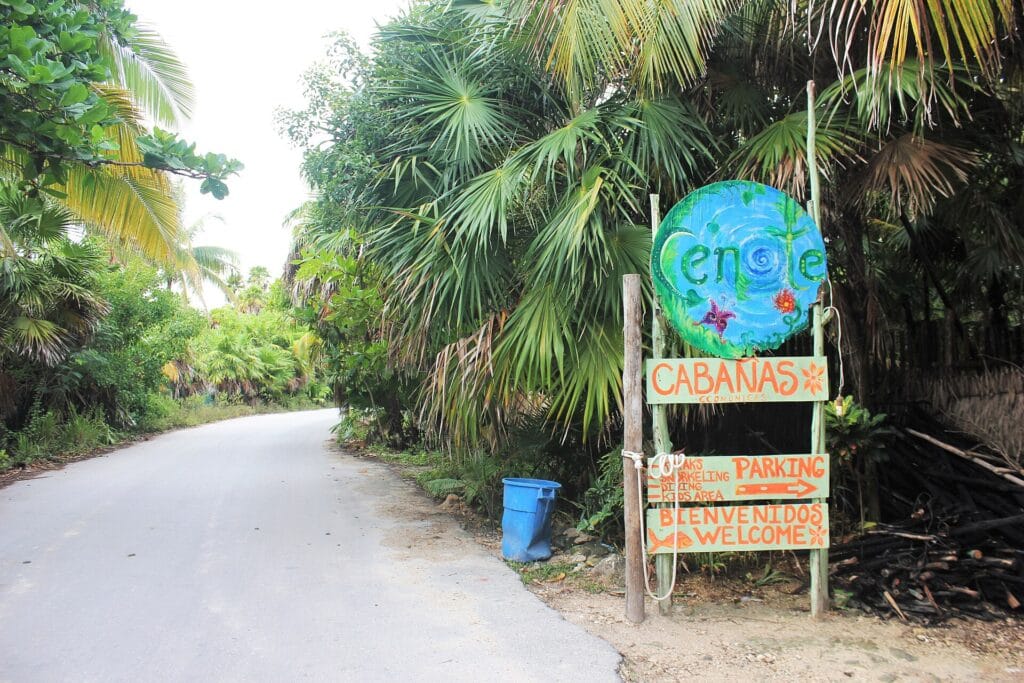
Cozumel’s beaches are good rather than great. The west coast, where all the hotels are, has calm, glassy, absurdly clear water that is wonderful for swimming and lazy snorkeling, but much of the shoreline is rocky ironshore with sandy pockets rather than endless sand. Playa Palancar and the beach clubs south of town are the classic spots: lovely, just smaller than the mainland’s. The east coast is the island’s secret: wild, windswept, mostly unswimmable and nearly empty. Looping it with stops at deserted beach bars is one of the best days in the region, just not a swimming day.
Snorkeling and diving: a different league entirely
Here is where the comparison stops being close. Cozumel sits on the Mesoamerican Reef, and the strip of protected marine park along its southwest coast holds some of the best diving in the hemisphere. The island’s reputation goes back to Jacques Cousteau, and it has held up: Palancar and Columbia reefs are sprawling coral architecture, Santa Rosa Wall drops into serious blue, and nearly all of it is done as drift diving, where the current does the work and you simply fly along the reef. Visibility on a normal day is the kind other destinations advertise on their best day.
Snorkelers are not left out. Beach clubs along the west coast offer easy entries over healthy patch reef, and boat trips run to El Cielo, a shallow sandbar famous for its starfish and ridiculous shades of blue. Even a mediocre snorkel day in Cozumel beats a good one in most places.
Cancun’s underwater scene is fine, not special. The signature trip is MUSA, the underwater sculpture museum, fun exactly once, and boats run toward Isla Mujeres for respectable snorkeling. But from the beach itself you are looking at sand and surf, not coral. If being in the water is the point of your trip rather than a thing you do twice, this category alone should settle the argument.
Resorts, hotels and where to stay
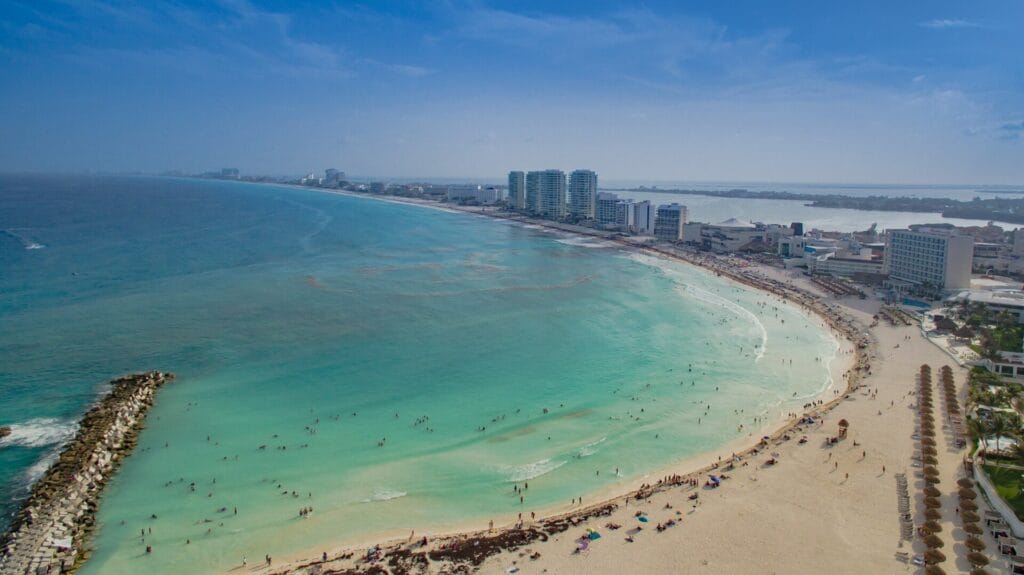
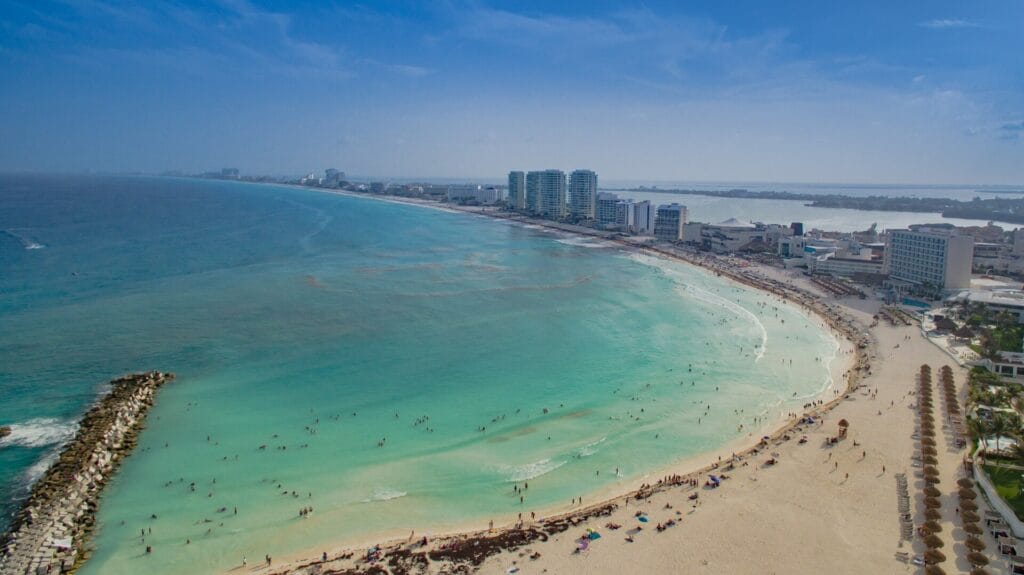
Cancun’s Hotel Zone is a long strip of high-rise resorts with the Caribbean on one side and a lagoon on the other, and it does exactly what it promises: swim-up bars, buffets, kids’ clubs, spas. If you want a big all-inclusive with every amenity known to hospitality, nowhere in Mexico does it at this scale. Downtown El Centro, fifteen minutes inland, is where budget hotels and hostels live, along with most of the city’s actual personality.
Cozumel’s hotel scene is smaller and more personal. San Miguel has walkable boutique hotels and guesthouses where you can step out the door to taco stands and the waterfront malecon. The resorts, including a handful of all-inclusives, string along the west coast south of town, and several dive-focused hotels run boats from their own piers, which divers quickly learn to love. What you give up is choice and glitz; what you gain is the feeling of staying on an island rather than in a resort corridor.
Food and nightlife
Cancun wins the night, no contest. The Hotel Zone’s club row, anchored by names like Coco Bongo, is a full-blown production line of neon, foam and 4am decisions, and if that is your idea of a vacation night, nothing on Cozumel comes within a mile of it. The food story is better than critics admit: Hotel Zone dining is international and overpriced, but downtown Cancun eats very well. The stalls around Parque de las Palapas and the food section of Mercado 28 serve the kind of cheap, honest Yucatecan cooking most resort guests never discover.
Cozumel’s evenings are a different animal. San Miguel has terrific taquerias, cheap seafood spots and a handful of genuinely good restaurants, most of them better value than their Cancun equivalents. Nightlife means beach bars at sunset and unhurried bar-hopping downtown, heavy on dive-trip war stories, and most of it wraps up around midnight because everyone is on a boat at 8am. Whether that sounds like a downgrade or a relief tells you which destination you should book.
Crowds, vibe and day trips
Both places get crowded, just on different schedules. Cozumel is one of the busiest cruise ports in the Caribbean, and on multi-ship days the blocks near the piers turn into a jewelry-store gauntlet from mid-morning to early evening. The saving grace is that cruise crowds are tidal: by 6pm the ships leave, the town exhales, and evenings feel local again. Sundays, with few ships in, are the island at its best.
Cancun does not have tides, it just has volume: the Hotel Zone is busy year-round and shifts into full spring-break mode in March. What Cancun offers in exchange is reach. Chichen Itza, Tulum, Valladolid, a string of swimmable cenotes and the lovely Playa Norte on Isla Mujeres are all realistic day trips. From Cozumel, every one of those starts with a ferry ride, which turns day trips into logistics projects. And if your Mexico curiosity runs beyond the coast entirely, a few days in the capital pairs well with either beach; see our guide to things to do in Mexico City.
Weather and when to go
A dozen miles of water does not buy you different weather, so the calendar logic is identical. December through April is the dry season: warm, breezy, low humidity and peak prices. May through October is hot, humid and punctuated by short, violent afternoon storms. Hurricane season officially runs June through November, with the riskiest stretch from late August into October; travel insurance is cheap peace of mind if you book those months.
The one real difference is sargassum, the seasonal seaweed that can blanket east-facing mainland beaches from roughly spring through early fall. Cancun gets hit in bad years. Cozumel’s west coast, where all the swimming and diving happens, faces away from the drift and usually stays clear, which is a genuinely underrated point in the island’s favor if you are traveling in summer. For value, aim for late November into early December, or May, when the water is warm, crowds thin and rates drop.
Getting there and around
Cancun is one of the easiest airports in the hemisphere to reach, with nonstop flights from a huge range of US, Canadian and European cities. Cozumel’s airport has a shorter list of direct routes, so many travelers either connect through a hub or land in Cancun and go overland: an ADO bus or private transfer to Playa del Carmen takes about an hour, then the ferry crossing runs roughly 45 minutes. It is painless in daylight and tedious with luggage at night; if you land late, overnight in Playa del Carmen and cross in the morning.
Getting around Cancun is straightforward: the R1 and R2 buses rattle along the Hotel Zone constantly for pocket change, while taxis are famously expensive and worth agreeing on a price before you sit down. On Cozumel, San Miguel is walkable, taxis work on set-ish zone rates, and the move everyone should make at least once is renting a scooter or Jeep for a day to circle the east coast. Ride-hailing coverage is patchy across the whole region either way, so plan on buses, taxis and your own two feet.
Cozumel or Cancun: the honest verdict
Divers and snorkelers: Cozumel, and it is not remotely close. This is one of the world’s great underwater destinations, and everything about the island, from dive-shop density to boat logistics, is built around that fact.
Budget travelers: Cancun by a nose. Cheaper flights, hostels and guesthouses in El Centro, free public beaches and brutal competition among hotels make it the easier place to do inexpensively, even though Cozumel’s street food is cheaper once you land.
Foodies: Cozumel if you measure by memorable meals per dollar in a walkable town; Cancun if you want range, from market stalls to genuine fine dining. Forced to choose one, I would take an evening in San Miguel over the Hotel Zone every time.
Beach purists and first-timers: Cancun. The sand is better, the resorts are better, the day-trip menu is unbeatable, and the whole machine is designed to make a first Mexico trip effortless.
Couples and slow travelers: Cozumel. Calm water, quiet evenings, one small town you get to know by name. If either-or agonizing is how you plan every trip, our Croatia vs Portugal matchup is the European version of this argument.
FAQ
Is Cozumel cheaper than Cancun?
Can you visit Cozumel as a day trip from Cancun?
Which is better for snorkeling, Cozumel or Cancun?
Does Cozumel get sargassum seaweed like Cancun?
Planning the trip? Go deeper with things to do in Cancun.
You Might Also Love
More side-by-side comparisons





Written by
John Morrison is the founder and lead travel writer at Packzup. Over the past decade he has explored destinations across Africa, the Americas, Asia, Europe, the Middle East, and Oceania — always self-funded, never on a press trip.
