Honest verdict · Updated 2026 · No sponsorships
Is Santorini Worth Visiting? An Honest Verdict
“Yes-but: worth two or three nights for the caldera landscape, volcanic wine and Akrotiri, and a weak fit if you came to Greece for beaches, value or quiet.”
The short answer: Santorini is the rim of a collapsed volcano, and that single fact explains both the appeal and the disappointment. The caldera view is the island's distinguishing feature and has few close equivalents. Beaches, food value, space and quiet are generally better served elsewhere in Greece. In season the rim towns also function as a cruise stop, and from mid-morning to late afternoon that job dominates. Plan it as a short, deliberate leg of a wider trip, not a week-long base.
Who Santorini is for — and who it is not
Worth it if you are
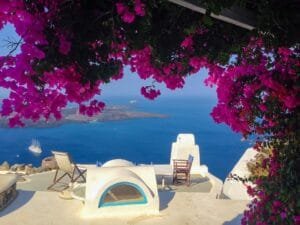
- The caldera view is the actual point of the trip and you will pay for a rim-facing room and spend real time on the terrace. No other Greek island offers the same inhabited cliff-rim caldera view, with villages standing on cliffs that rise roughly 150 to 300 metres above the flooded crater.
- You can travel in May and early June, or from late September into October, when prices and crowds ease and most hotels, restaurants and ferries are operating. The very start and end of that window can be patchy for openings and weather.
- You have one island slot inside a longer Greece or Cyclades trip and want a single high-contrast stop after Athens rather than a base for day trips.
- Geology, archaeology or wine interest you more than swimming. Akrotiri, Ancient Thera on Mesa Vouno above Kamari (check current opening days before planning around it) and basket-trained Assyrtiko on volcanic soil are the parts short cruise stops most often miss.
- You walk, and you will base in Imerovigli or Firostefani rather than Oia, using the bus instead of relying on taxis. The rim path follows the caldera edge for most of its length, and cruise and day-trip visitors rarely have time for it.
Think twice if you are
- Beaches are why you are going to Greece. Santorini has no large soft-sand resort beach of the kind found on Naxos, Paros or Crete, the main swimming beaches are black sand and pebble on the opposite side of the island from the caldera towns, and there is no sand beach below the cliffs at all.
- Anyone in the group has mobility limits, or you are travelling with a pushchair. The rim villages are built on steep, stepped, stone-paved lanes with limited vehicle access, and many cliff hotels are reached only by stairs with no lift. Step-free access is limited; check specific properties and routes before booking. Steeply shelving water and hot dark sand also make it harder work with small children than a flat sandy-beach island.
- You are cost-sensitive. The caldera view is what the premium is charged for, and skipping it removes the island's main distinguishing feature while island costs still apply. For comparable standards, Naxos, Paros and Crete generally price lower and tend to give more space for the money.
- You want quiet and can only travel in July or August. Peak heat, peak crowds and peak room rates arrive together, and the midday cruise pattern and the Oia sunset peak are structural. Timing helps at the margins, but they are hard to avoid entirely.
- You are planning a week on one island, or your itinerary has no slack. Santorini is small and the sight list is short, so longer stays tend to revisit the same places at peak rates. High-speed ferries can also be cancelled in strong summer winds, which may cost you a day at either end.
The reality check
What it costs
Editorial planning estimate, not surveyed prices: budget roughly EUR 150 to EUR 350 per person per day in high season, excluding flights. That assumes a mid-range room shared by two, meals out, buses or a rented scooter or ATV (which needs an appropriate driving licence) and a paid activity or two. A caldera-view room sits at or above the top of that band; an inland, Kamari or Perissa base in shoulder season brings the daily figure down materially, mainly through the room rate. Convert to USD or GBP at current rates.
Crowds
Heavy from May to October, worst in July and August, and concentrated by time of day rather than constant. Cruise ships anchor in the caldera and tender passengers ashore, so Fira and Oia fill through the middle of the day. Oia's western edge starts filling well before sunset, and departing traffic and buses are commonly reported as congested straight afterwards. Early morning is the quietest window, and the rim empties again once the sunset crowd disperses. Greek cruise-passenger charges and arrival limits have been changing, so check current arrangements.
Time needed
Two to three nights covers the essentials for most itineraries: the rim villages, a sunset, Akrotiri and a winery. Allow an extra night or two for the Fira to Oia rim walk, Ancient Thera, a beach day and a caldera boat trip. Beyond about five nights there is less new ground to cover, and journeys take longer than the distances suggest in season.
When to go
Roughly May to mid-June, and late September into October, when prices and crowds ease and most hotels, ferries and restaurants are operating. Cruise traffic is lighter than midsummer but does not stop. Sea temperatures are generally comfortable for swimming from early summer onwards, so late-April swimming is optimistic. July and August are hottest, busiest and most expensive, and meltemi winds can cancel ferries at short notice. From November to March a significant share of hotels and restaurants, particularly in Oia, close for the season, and weather-related ferry cancellations are more frequent; check opening dates directly, as they vary by year and by business.
What actually justifies the trip
The Fira to Oia caldera rim walk
Roughly 9 to 11 km depending on the route, commonly walked in three to four hours, passing Firostefani and Imerovigli with the caldera edge alongside for most of its length. It is the best way to see the caldera as one continuous shape rather than a series of viewpoints, and it costs nothing. The path is largely exposed, so start at first light, carry water and take the bus back from Oia.
Akrotiri archaeological site
A Bronze Age town buried by the eruption that created the caldera and excavated under a modern roof: paved streets, drainage and walls still standing more than one storey high, preserved over 1,500 years before Pompeii. Virtually no human remains have been found in the excavated area, which archaeologists generally read as evidence the town was evacuated. Being roofed, it is the obvious move in August heat or spring rain.
Imerovigli and Firostefani as a base, and Skaros Rock
The rim villages between Fira and Oia, with a comparable caldera outlook, fewer crowds and often lower nightly rates than Oia, though both also have high-end hotels, so compare on your own dates. Both are walkable to Fira. Skaros Rock below Imerovigli is a steep, uneven walk out onto a rocky promontory and an alternative sunset viewpoint, no longer a secret but usually quieter than Oia. Where you stay has an outsized effect on how the trip feels.
The volcanic vineyards and Assyrtiko
Vines trained into low ground-level baskets, kouloura, to survive wind and drought in pumice, ash and lava soil, a method rarely seen outside Santorini. The wine is typically described as high-acid with a saline, mineral character. Most wineries cluster inland around Pyrgos and Megalochori, close enough together to visit several in a day, and tastings inland tend to be better value than caldera-rim dining. Pyrgos has a Venetian castle with wide views over much of the island.
Nea Kameni and the caldera from sea level
A short boat crossing to the volcanic cone in the middle of the bay, usually combined with the warm sulphurous water off Palea Kameni. Seeing the cliffs from below gives a far better sense of the caldera's scale than looking down from the rim, and it is the one common activity that puts the island's geology, rather than its villages, in front of you.
The honest downsides
- You are paying for the location, not the room. Caldera-facing rooms and sunset-terrace tables typically carry a large premium over comparable places elsewhere in the Greek islands, and small rooms, ordinary food and high bills come up repeatedly in traveller reviews. Cave-style rooms can be small and dim away from the terrace, so check floor plans and window positions before booking.
- Cruise days compress everything. When ships are anchored in the caldera, Fira and Oia fill through the middle of the day: the cable car can build long queues, the lanes bottleneck and restaurants fill up. The Oia sunset is the most crowded moment of a typical day, with people staking out the castle ruins and western lanes long beforehand, and the exodus straight afterwards is commonly reported as congested.
- The beaches are not what most people picture. The main swimming beaches are black volcanic sand and pebble on the east and south coasts, roughly 15 to 30 minutes by car from the caldera villages, often wind-exposed, with the seabed shelving steeply close to shore. Dark sand absorbs heat and visitors routinely advise sandals in summer. There is effectively no beach on the caldera side, which is cliff for almost its entire length. Red Beach lies beneath cliffs with a documented rockfall risk and access has been restricted at times, so check locally.
- Getting around is slow and step-heavy. Much of central Fira and Oia is stepped, stone-paved and pedestrian-only, so luggage frequently has to be carried or portered for the final stretch, and many hotels arrange this. Buses funnel through Fira, parking in both towns fills up in high season, and the old stepped path down to the Old Port is steep and slippery underfoot, with the donkey and mule rides on it drawing sustained criticism from animal-welfare organisations.
Is Santorini worth it? FAQ
Is Santorini overrated?
It is over-marketed rather than overrated. The caldera view is not a photographic exaggeration, and Akrotiri, Ancient Thera and the volcanic wine are substantial. What is oversold is everything around them. Reading traveller reviews, the overrated verdict tends to come from people who expected a relaxed beach island in midsummer; those who booked a short caldera-view stay and expected crowds tend to be happier.
How many days do you need in Santorini?
Two to three nights covers the essentials: the rim villages, one sunset, Akrotiri and a winery. Allow a fourth for a caldera boat trip and a beach day without rushing. Beyond about four or five nights the main sights are largely covered, and in high season those extra nights are charged at peak rates. Many travellers get more out of moving on to another island.
Santorini or Naxos, which should I add to my Greece trip?
Different products. Naxos and Paros generally offer long sandy beaches and lower typical prices; Milos has more unusual volcanic coastline, though it has got busier in recent years. None of them offer Santorini's inhabited cliff-top caldera rim. If your trip has two island slots, pair Santorini with one of them and keep the Santorini leg short. Ferry connections are frequent on the summer timetable, though schedules change season to season.
Can you swim in Santorini?
Yes, but not from a beach below the caldera villages. That side is cliff for almost its entire length, so swimming there means rock entries at Ammoudi or Armeni below Oia, or a boat trip. The main swimming beaches sit on the east and south coasts at Kamari, Perissa, Perivolos and Vlychada, black sand or dark pebble, roughly 15 to 30 minutes away by car. Water shoes help.
Decided? Plan it properly
browse things to do, see how it fits a wider Greece trip. Before any trip: etiquette, ATM fees and what to wear.