Frequently asked questions
Prague at a glance: best around Jul–Sep (15–25°C days, rainy season) · Plugs C,E (230 V) · drives right · ERA5 climate data
More: When to visit Prague · Prague travel guide
More: When to visit Prague · Prague travel guide
Prague travel FAQ: everything first-time visitors ask
Prague is one of Europe's most photogenic capitals and one of its better-value destinations. First-time visitors usually arrive with consistent questions about beer culture, walking distances, and safety. Here are direct answers.
Is Prague safe for travelers?
Yes — Prague is among Europe's safer capitals. Violent crime against tourists is very rare. The main concerns are pickpocketing in Old Town Square and on the Charles Bridge, taxi-meter scams (use Bolt or hotel-arranged taxis instead of street taxis), and currency-exchange scams (only use ATMs from major banks). Solo female travel is broadly safe.
How much does a trip to Prague cost?
Prague is one of Europe's best value destinations. Budget travelers manage on $50-80/day. Mid-range travelers spend $110-170/day with central hotels, restaurant meals, and museum entries. Luxury travelers spend $350+/day at Four Seasons or Mandarin Oriental Prague. Beer is exceptionally cheap (1-2 EUR for excellent Czech pilsner).
What's the best time to visit Prague?
April to early June and September to October are the sweet spots — pleasant temperatures, lower rainfall, manageable crowds. July-August is warm (25-28C) and tourist-dense. Winter (November-March) is cold (-2 to 5C) but magical with snow and Christmas markets — a real Prague experience.
How many days do I need in Prague?
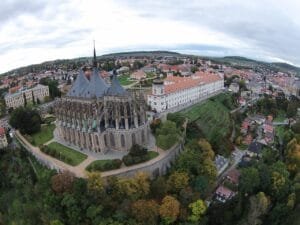
Three days is the right minimum — one for Old Town + Astronomical Clock + Charles Bridge, one for Prague Castle + Mala Strana + Petrin Hill, and one for Jewish Quarter + Wenceslas Square + a museum or two. Four to five days lets you do a day-trip to Kutna Hora or Karlovy Vary.
Do I need a visa to visit Prague?
EU citizens enter freely. US, UK, Canadian, Australian, and most other Western passport holders get 90 days visa-free in the Schengen area. From mid-2025, all visa-free visitors require ETIAS before flight — apply online, around 7 EUR.
Can you drink the tap water in Prague?
Yes — Prague tap water is safe and high-quality. Restaurants don't typically serve it free; you usually need to order bottled water if you don't want beer.
What language is spoken in Prague and is English common?
Czech is the native language. English is widely spoken in tourist areas, hotels, and among younger Czechs. Outside central Prague, English drops off quickly. German is also common as a second language. Learning 'dekuji' (thank you) and 'prosim' (please) is appreciated.
What's the food culture like in Prague?
Czech food is hearty and meat-heavy: svickova (beef in cream sauce), gulas (Czech goulash), roast duck, dumplings (knedliky), and trdelnik (yes, but more authentic at fewer places). Beer culture is exceptional — pilsner was invented here. Don't miss: U Modre Kachnicky, Kantyna (modern Czech), and a beer at U Fleku or Pivovarsky Klub.
Is Prague a good destination for first-time international travelers?
Yes — exceptionally beginner-friendly. The historic center is walkable, English is common in tourist areas, prices are moderate, and the city is genuinely safe. The main learning curve is the Czech crown currency (note that many places quote prices in EUR but charge in CZK at unfavorable rates — use ATM withdrawals).
What should I avoid doing in Prague?
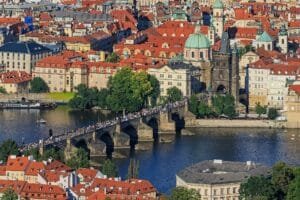
Don't change money at street currency-exchange booths (terrible rates, often scams). Don't take street taxis (use Bolt or hotel-arranged). Don't drink the 'absinthe' marketed at bars (mostly inauthentic). Don't visit Charles Bridge at midday in summer (crushed); go at 6am or after 10pm.