
Last updated September 11, 2026 · Editorial policy
Zion and Bryce Canyon sit less than two hours apart in southern Utah, and nearly everyone planning a trip out there hits the same wall: if I only have time for one, which should it be? On a map they look interchangeable, two red-rock national parks in the same corner of the same state. In reality they could hardly be more different. Zion is a colossal canyon you stand at the bottom of, craning your neck at 2,000-foot sandstone walls. Bryce is a high-altitude amphitheater of hoodoos you look down into, like someone melted a cathedral made of orange candle wax. One is about adrenaline, river hikes and sheer scale; the other is about otherworldly views, quiet trails and some of the darkest night skies in the country.
I’ve done both parks in multiple seasons, paid for every mile of it myself, and I still get asked which one wins. This is the same either-or agony we’ve refereed for pairs like Croatia vs Portugal, and the honest answer is the same: it depends entirely on who’s asking. Below is the full breakdown, from real daily costs to hikes, crowds, lodging, seasons and a verdict by traveler type. No fence-sitting at the end, promise.
| Category | Zion | Bryce Canyon | Winner |
|---|---|---|---|
| Scenery | Towering canyon walls, river gorges | Surreal hoodoo amphitheaters | Tie — different planets |
| Hiking | World-famous, high-adrenaline routes | Shorter, gentler, still gorgeous | Zion |
| Crowds | Heavy, shuttle queues in peak season | Busy at viewpoints, quiet on trails | Bryce Canyon |
| Lodging & base town | Springdale, walkable and well fed | Ruby’s Inn area and tiny Tropic | Zion |
| Family friendliness | Great, but big hikes are serious | Short loops, cooler summers | Bryce Canyon |
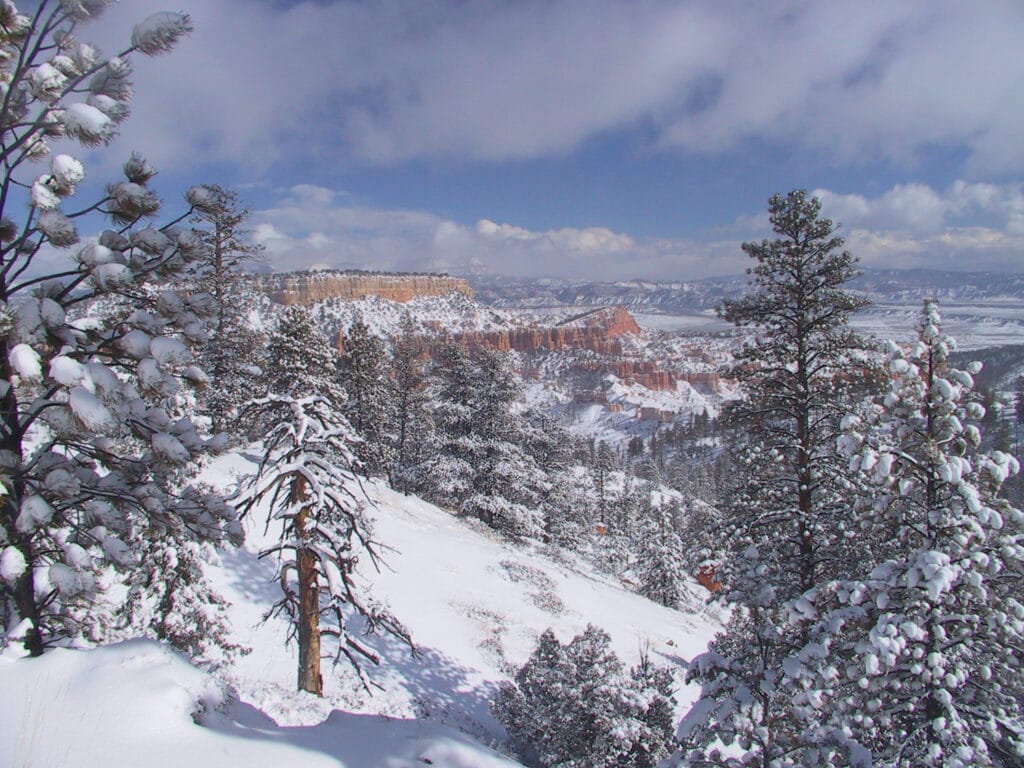
| Winter visits | Mild, quiet, some closures | Snow-dusted hoodoos, magical | Bryce Canyon |
| Photography | Epic, but you earn the best shots | Postcard views steps from parking | Bryce Canyon |
| Value for money | Pricey gateway town | Cheaper beds, same entry fee | Bryce Canyon |
Cost comparison
Entry is identical: each park charges around $35 per vehicle for a seven-day pass, and if you’re doing both (you should), the $80 America the Beautiful annual pass covers every U.S. national park and pays for itself on a Utah road trip. Where the budgets diverge is lodging. Springdale, the town at Zion’s mouth, is one of the most expensive gateway towns in the national park system. In peak season, expect roughly $200–$350 a night for a mid-range hotel, and more for anything with a view. Around Bryce, the Ruby’s Inn complex and the little town of Tropic typically run $120–$250 for comparable rooms, and deals are easier to find.
Food follows the same pattern. Springdale has genuinely good restaurants, and you’ll pay for them: think $15–$25 for a casual dinner main. The Bryce area has far fewer options, mostly functional lodge and diner food, which is a downside for your taste buds but an upside for your wallet. Campers do well at both: park campgrounds at each run in the $20–$30-a-night range and are the single best money-saving move in either place.
Realistic daily budgets, per couple, excluding the drive to get there: a camping trip with groceries can be done for roughly $80–$130 a day at either park. Mid-range, Zion works out to around $300–$450 a day, while Bryce lands closer to $220–$350. Add $30–$60 per person at Zion if you rent canyoneering boots and a pole for the Narrows, which most people should. Over a four-day trip, Bryce is comfortably 20–30% cheaper.
The hikes: adrenaline vs. fairy tale
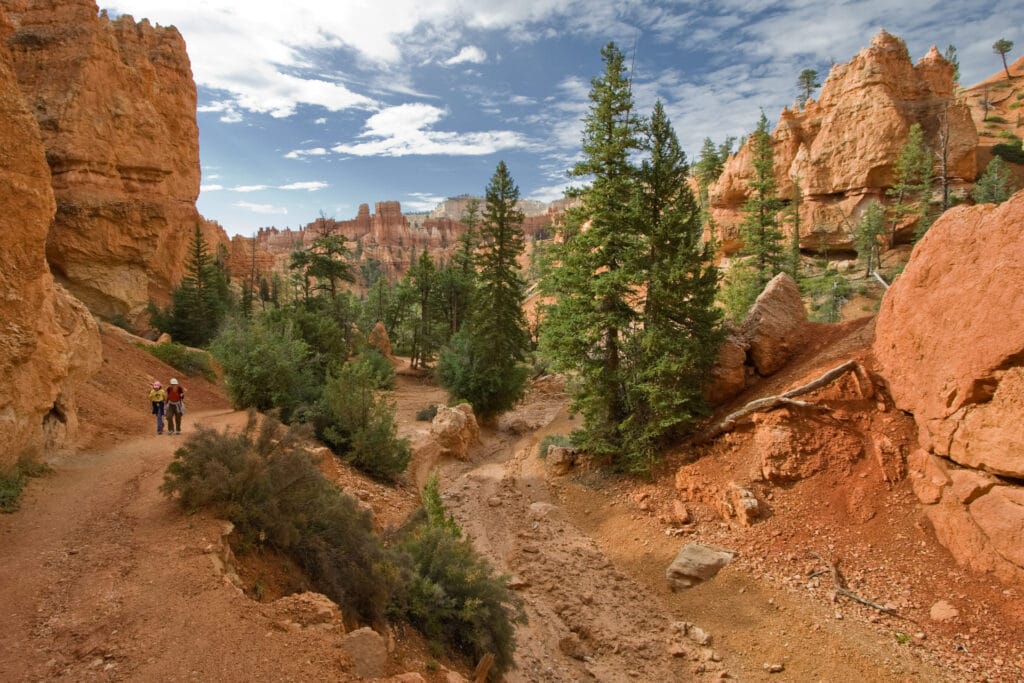
This is Zion’s kingdom. Angels Landing is one of the most famous trails in North America, a chain-assisted scramble along a knife-edge ridge with vertigo-inducing drops on both sides. It now requires winning a permit lottery, which is mildly annoying and completely worth it. The Narrows is arguably even better: you hike upstream through the Virgin River itself, wading between thousand-foot walls that squeeze to a slot canyon. Add Observation Point, Canyon Overlook and the Emerald Pools, and Zion simply has more marquee hikes than you can fit in one trip.
Bryce plays a different game. Its signature route, the Queen’s Garden and Navajo Loop combination, is about three miles of descending among the hoodoos, weaving through slot-like corridors like Wall Street and past formations such as Thor’s Hammer. It’s frequently called one of the best short hikes anywhere, and I won’t argue. The Peekaboo Loop and the quieter Fairyland Loop give you longer days below the rim with a fraction of Zion’s foot traffic. One warning: Bryce sits at 8,000–9,000 feet, so every climb back to the rim feels harder than the mileage suggests.
If hiking is the core of your trip, Zion wins on ambition and variety. But if your ideal day is two or three unhurried hours inside scenery that doesn’t look real, Bryce delivers more wonder per step, with far less planning and no lotteries.
Scenery and photography
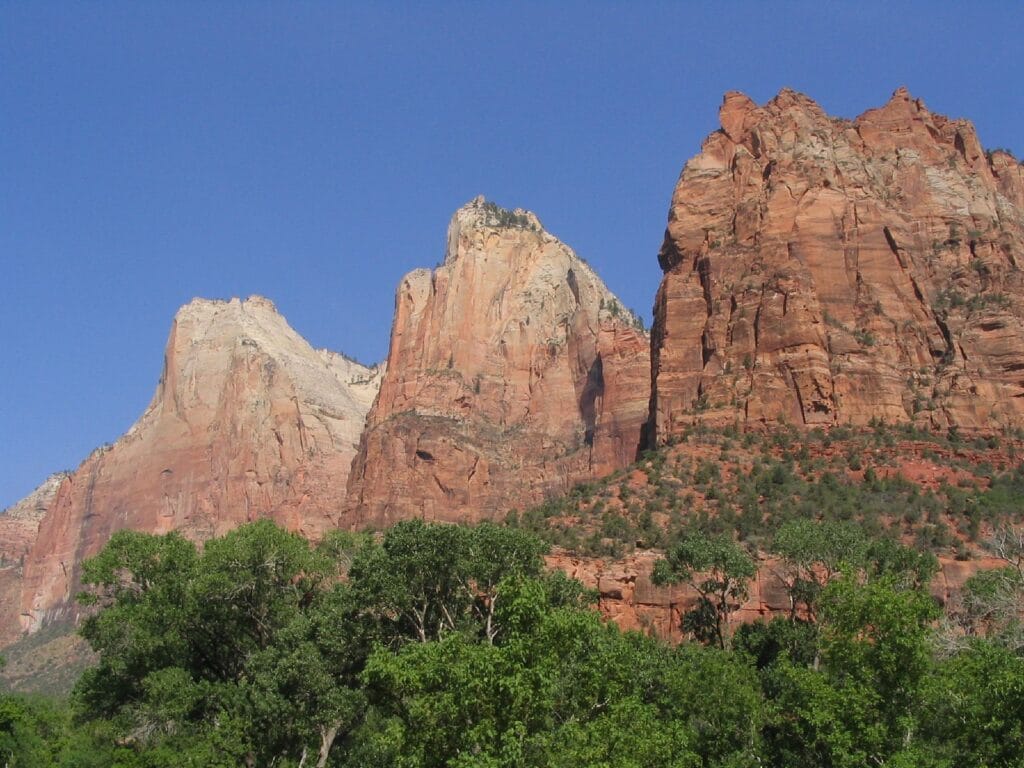
Zion’s scale is what stays with you. The canyon walls are so tall that photos flatten them; you have to stand under them to get it. The best images take work: the Watchman glowing at sunset from the Canyon Junction bridge, light beams in the Narrows at midday, the valley from halfway up a steep trail. Zion rewards photographers who hike.
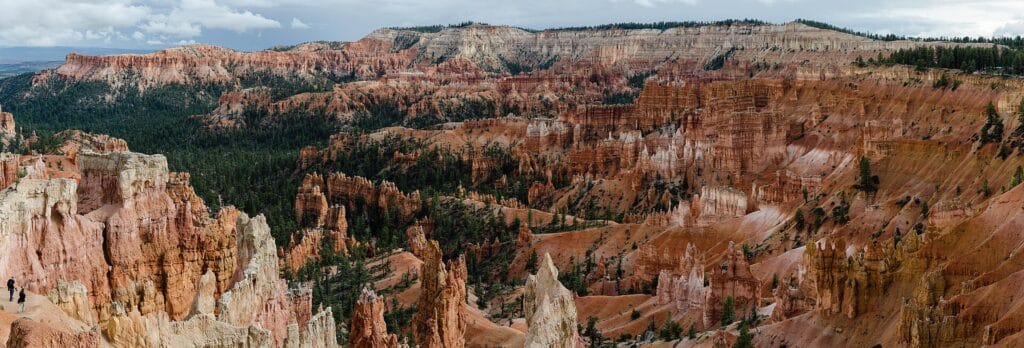
Bryce is the opposite: the postcard shots are practically drive-up. Sunrise Point, Sunset Point and Inspiration Point all sit steps from parking, and dawn at the rim, when the amphitheater ignites in orange and pink, is one of the easiest world-class photographs you’ll ever take. In winter, snow on the hoodoos turns the whole thing into a fantasy painting. For pure effortless visual payoff, Bryce takes this category, and it’s also the better park for travelers with limited mobility, since the rim viewpoints deliver the full spectacle without descending a single switchback.
Crowds, shuttles and timing
Zion is one of the most visited national parks in the country, drawing roughly twice the visitors Bryce does, and all of them funnel into one narrow canyon. From spring through fall, private cars are banned from the scenic drive and everyone rides the free shuttle, which works well but means dawn queues in peak months and packed trailheads at the famous hikes. Go at sunrise or in the last hours of the day and the park softens considerably; show up at 10 a.m. in July and you’ll feel like you’re at a theme park with better geology.
Bryce gets busy too, but the crowding is concentrated at the rim viewpoints in the middle of the day. Walk ten minutes below the rim on any trail and the numbers thin dramatically; do the Fairyland Loop and you may see a couple dozen people all morning. Bryce’s shuttle is optional rather than mandatory, and parking, while tight at midday in summer, is a solvable problem. If crowds genuinely ruin a place for you, this category alone might settle the debate.
Lodging, camping and base towns
Springdale is a real town and a real advantage. It sits directly at Zion’s south entrance, with a free shuttle running its length, outfitters for Narrows gear, coffee shops, breweries and some of the best gateway-town dining in the park system. You can walk from your hotel to the park entrance, which is a rare luxury. The price is the price, though, and rooms book out months ahead for spring and fall.
Bryce’s base options are thinner. Bryce Canyon City is essentially the sprawling Ruby’s Inn operation, functional and well located but charmless, while Tropic, about fifteen minutes east, offers small motels and B&Bs at better rates. Inside the parks, Zion Lodge and the Lodge at Bryce Canyon are both worth the splurge if you can snag them, and the campgrounds, Watchman and South at Zion, North and Sunset at Bryce, are excellent and highly contested in season. Book everything early for either park; wing it in July and you’ll be sleeping an hour away.
Beyond the trails: dark skies and scenic drives
Bryce’s secret weapon comes out after dark. It’s a certified International Dark Sky Park at high elevation with dry air, and on a moonless night the Milky Way is genuinely arresting; the park runs astronomy programs in season, and stargazing at the rim is free entertainment no hotel can match. Daytime extras include the 18-mile scenic drive out to Rainbow Point and horseback rides down among the hoodoos.
Zion counters with the Zion–Mount Carmel Highway, a spectacular drive through switchbacks and a historic tunnel to slickrock country on the east side, plus the overlooked Kolob Canyons section in the park’s northwest corner, which most visitors skip entirely and shouldn’t. Springdale adds bike rentals and river tubing in summer, and for the technically inclined, Zion is one of America’s canyoneering capitals, with permit-based routes like the Subway for those with the skills or a guide.
Can you do both in one trip?
Yes, and unlike far-flung pairs such as Argentina vs Brazil, combining these two is trivial. The parks are about 72 miles apart, a 1.5-to-2-hour drive through Mount Carmel and along the start of Scenic Byway 12, which is a destination in itself. The classic route exits Zion’s east entrance through the tunnel, and the drive is so good it doesn’t feel like a transfer day.
The ideal split, having tried several: two full days in Zion, then one full day plus a sunrise at Bryce. Bryce is genuinely doable in a day because its highlights are compact; Zion needs more time because its best hikes each eat most of a day. Five days covers both parks without rushing, and that’s the itinerary I’d hand a friend.
Weather and when to go
Elevation is everything here, and it’s the most misunderstood part of planning this trip. Zion’s canyon floor sits around 4,000 feet and roasts in summer, with July highs regularly in the 95–105°F range; the Narrows exists partly because wading a cold river is the only sane afternoon activity. Bryce’s rim sits at 8,000–9,000 feet, so the same July day is a pleasant 75–80°F, with nights that can dip near freezing even in summer. Pack for two climates.
The sweet spots for both parks are May, September and early October: warm days, manageable crowds, everything open. Watch for spring snowmelt, which can close the Narrows for weeks, and for the July–August monsoon, when afternoon storms bring real flash-flood danger in slot canyons. Winter flips the script: Zion goes quiet and mild, while Bryce buries itself in snow and becomes its most beautiful self, with snowshoeing along the rim and almost nobody around.
Getting there and around
Las Vegas is the standard gateway, roughly a 2.5-to-3-hour drive to Zion and another couple of hours to Bryce; Salt Lake City works from the north at around four hours to Bryce. St. George, Utah, has a small regional airport 45 minutes from Zion if you’d rather skip the Vegas circus. Either way, you need a car; there is no practical public transport to these parks.
Inside the parks, the logistics differ. For most of the year, Zion’s scenic drive is shuttle-only: you park in Springdale or at the visitor center and ride in, which is efficient but means planning around shuttle hours. Bryce lets you drive yourself everywhere, with an optional shuttle in the busy months. One quirk worth knowing: oversized vehicles and RVs need an escort with a small fee to pass through the Zion–Mount Carmel Tunnel, so check the size limits before routing your campervan through the east entrance.
Zion or Bryce Canyon: the honest verdict
For first-timers: Zion. As with France vs Italy, when in doubt, the famous one is famous for a reason. The scale of the canyon and the sheer drama of hikes like the Narrows deliver a once-in-a-lifetime feeling Bryce can’t quite match.
For serious hikers and adrenaline seekers: Zion, and it isn’t close. Angels Landing, the Narrows and Observation Point are a trail resume nowhere else in Utah can offer in one place.
For photographers, families with young kids, and anyone short on time or mobility: Bryce Canyon. Its greatest views require no hiking at all, its best loop is three gentle-ish miles, summer temperatures are humane, and the night sky is a bonus attraction in itself.
For budget travelers and crowd-haters: Bryce Canyon. Cheaper beds, no permit lotteries, no mandatory shuttles, and trails that empty out minutes below the rim.
The real answer: these parks are neighbors and complements, not rivals. If there’s any way to spare five days, do both, Zion first for the drama, Bryce second for the wonder, and let Scenic Byway 12 stitch them together. Nobody has ever regretted that itinerary.
FAQ
How far apart are Zion and Bryce Canyon?
Can you visit Zion and Bryce Canyon in one day?
Do I need permits or reservations for Zion or Bryce?
Is Bryce Canyon worth visiting if I’ve already been to Zion?
Planning the trip? Go deeper with our Things to Do Zion National Park guide and our Top Rated 8 Best Campgrounds Near Bryce Canyon National Park guide.
You Might Also Love

Written by
John Morrison is the founder and lead travel writer at Packzup. Over the past decade he has explored destinations across Africa, the Americas, Asia, Europe, the Middle East, and Oceania — always self-funded, never on a press trip.
