
Last updated September 1, 2026 · Editorial policy
- 7-Day Portugal Itinerary: A Day-by-Day Travel Plan
- Portugal Itinerary at a Glance
- Day-by-Day Itinerary
- Where to Stay in Portugal
- Budget Breakdown (7 Days)
- What to Pack
- Tips for a 7-Day Portugal Trip
- Portugal in 7 days: logistics, budget & pro tips
- Routing Traps That Quietly Eat a Day of This Trip
- 7 Day Portugal Itinerary FAQ
- Frequently Asked Questions
- Related Portugal Travel Guides
Portugal itineraries by trip length
Still deciding? Compare: Croatia vs Portugal · Greece vs Portugal
7-Day Portugal Itinerary: A Day-by-Day Travel Plan
Quick answer: This 7-day Portugal itinerary covers the must-see highlights without rushing, with detailed day-by-day plans, restaurant recommendations, and budget guidance.

Best for: first-time visitors who want a relaxed two-city pace, mixing Lisbon and Porto food, tile-lined old towns, and an easy Sintra or Douro day trip.
Planning a 7-day trip to Portugal? This itinerary is built from a first-time-visitor perspective: hit the icons, eat the best food, and finish with one or two memorable experiences locals would recommend. Each day mixes a major sight, food stops, and downtime — no death marches, no missing highlights.
Portugal Itinerary at a Glance
| Day | Focus |
|---|---|
| Day 1 | Lisbon’s Old Heart |
| Day 2 | Belém and the Trams |
| Day 3 | Sintra Palace Day |
| Day 4 | Coast to Óbidos |
| Day 5 | North to Porto |
| Day 6 | Douro Valley by Rail |
| Day 7 | Gaia Cellars & Farewell |
Day-by-Day Itinerary
Day 1 — Lisbon’s Old Heart
Start in Alfama, Lisbon’s tangle of Moorish lanes below the castle. Walk up to Castelo de São Jorge for the city’s best rampart views over the Tejo — buy the ticket online (about €15 / roughly $16) to skip the midday queue, and aim for opening at 9am before tour groups arrive. Wind down through the Sé Cathedral and catch the iconic yellow Tram 28 as it grinds past Graça and the Miradouro da Senhora do Monte. Board at an early stop like Martim Moniz rather than mid-route, where it fills instantly. For lunch, seek out a tasca serving grilled sardines or bacalhau à brás. End the day at the Time Out Market in Cais do Sodré, where regional chefs share stalls. Planning note: pastéis de nata are everywhere, but a genuinely warm one, dusted with cinnamon at the counter, beats any takeaway box.
Day 2 — Belém and the Trams
Head west to Belém, Lisbon’s monumental riverside quarter, reachable in about 20 minutes on Tram 15E from Praça da Figueira (a single fare is roughly €3 / about $3.20 onboard, cheaper on a rechargeable Viva Viagem card). Tour the fantastical Jerónimos Monastery, a Manueline masterpiece — entry is about €18 (roughly $19), and pre-booking a timed slot saves an hour in line. Walk the waterfront to the Torre de Belém and the Padrão dos Descobrimentos monument. The unmissable stop is Pastéis de Belém, the 1837 bakery whose secret-recipe custard tarts (about €1.40 each) draw a queue; sit inside the tiled back rooms where locals go, rather than joining the takeaway crush. Afternoon: the modern MAAT museum along the river, or the Coach Museum. Return for sunset drinks at a Bairro Alto rooftop.
Day 3 — Sintra Palace Day
Take an early train from Rossio station to Sintra, leaving roughly every 20 minutes and costing about €2.45 (around $2.60) each way for the 40-minute ride. This UNESCO-listed hill town of palaces demands a full day. From Sintra station, hop the 434 tourist bus (about €4.10 one-way, or a €13.50 day pass covering both loops) up to the candy-colored Pena Palace, Portugal’s most photographed Romanticist folly — book a timed palace-and-park ticket online (roughly €20 / about $21) as it sells out on summer mornings. Wander the exotic gardens, then descend to the Quinta da Regaleira to climb down its spiral Initiation Well. Planning note: go straight to Pena at opening, before the buses clog; the earliest slot is the calmest. Try a travesseiro, Sintra’s flaky almond-cream pastry, at a Praça da República café before catching the train back.
Day 4 — Coast to Óbidos
Collect a rental car this morning and drive north up the coast toward Porto, breaking the roughly 3-hour journey into a scenic day. First stop: Óbidos, a whitewashed medieval village encircled by intact walls — walk the ramparts (free, but no railings, so mind your footing) and sip ginjinha, sour-cherry liqueur served in an edible chocolate cup, from a hole-in-the-wall stall for about €1.50. Continue to Nazaré, the fishing town famous for the giant winter waves at Praia do Norte; ride the funicular (about €3 / roughly $3.20) up to the Sítio clifftop and the lighthouse-fort surf museum. Lunch on grilled fish at a seafront restaurant. If time allows, detour inland to the vast Gothic Monastery of Alcobaça. Planning note: Portugal’s toll motorways use electronic gantries, so ask the rental desk to fit a transponder to avoid fine-generating confusion.
Day 5 — North to Porto
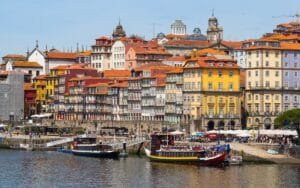
Continue north, returning the car in Porto or dropping it before the tight old-town streets. Base yourself near the riverside and dive into Ribeira, Porto’s UNESCO-listed waterfront of stacked, tile-fronted houses along the Douro. Cross the double-deck Dom Luís I Bridge on foot for a vertiginous view. Climb to the Clérigos Tower, then queue for Livraria Lello, the neo-Gothic bookshop with its crimson staircase — the ticket (about €10 / roughly $11) is redeemable against a book, and pre-booking a slot spares you a 30-to-60-minute wait. See the blue-and-white azulejo panels inside São Bento railway station, free and just a five-minute walk away. Planning note: order a francesinha, Porto’s decadent layered meat sandwich drowned in beer-and-tomato sauce, at a traditional spot rather than a tourist café — it is a proper meal, so arrive hungry. Finish at a Ribeira terrace watching the rabelo boats.
Day 6 — Douro Valley by Rail
Give the Douro Valley a full day by rail — one of Europe’s great scenic train rides. Catch the direct morning Inter-Regional from São Bento (around 09:25) to Pinhão, roughly a 2.5-hour trip; the return fare is about €20 (roughly $21), seats are unreserved, and you buy at the counter, so there is no need to book ahead. Sit on the right-hand side leaving Porto: after Régua the terraced vineyards tumble to the water’s edge and the river is sometimes just meters below the tracks. In Pinhão, admire the azulejo-tiled station, then book ahead for a tasting at a riverside quinta such as Quinta do Bomfim or Croft (tours with two tastings typically run about €15–25 / roughly $16–27). Lunch riverside on local fare. Planning note: a short Douro river cruise from Pinhão’s quay frames the valley from the water. Return to Porto by the late-afternoon train.
Day 7 — Gaia Cellars & Farewell
On your final morning, cross to Vila Nova de Gaia, the south bank where the great port-wine lodges age their barrels. Ride the Teleférico de Gaia cable car (about €7 / roughly $7.50 one-way) down from the upper bridge deck for river views, then tour a historic cellar — houses like Graham’s, Taylor’s, or Sandeman offer guided visits with tastings for roughly €20–30 (about $22–32). Learn how tawny, ruby, and vintage differ before a final glass on a terrace overlooking Porto’s skyline. If time remains, browse the design shops and street art of the WOW cultural district built into the old warehouses. Planning note: buy any bottles you love here at the source, and check your airline’s liquid-baggage limits before packing. Toast the trip with a chilled white port and tonic, the locals’ summer aperitif, before heading to the airport for departure.
Where to Stay in Portugal
Choose a central neighborhood within walking distance of major sights — you’ll save hours of commute time over 7 days. Book 6-12 weeks ahead for best rates.
Budget Breakdown (7 Days)
Portugal is rated Moderate in our Travel Cost Index 2026. Figures are country-level daily ranges per person and exclude international flights.
| Travel style | Per day | Total 7 days |
|---|---|---|
| Budget | $30-55 | $210-385 |
| Mid-range | $100-180 | $700-1,260 |
| Luxury | $300-500 | $2,100-3,500 |
Source: Packzup Travel Cost Index 2026 — country-level averages; city and peak-season prices run higher. Excludes international flights.
What to Pack
- Clothing: Layers for Atlantic swings — Lisbon and Porto can be hot at midday yet breezy along the river after dark, and Sintra often sits cooler under mist. Grippy walking shoes are essential on the steep cobbled hills; add sun protection in summer.
- Tech: Portugal uses type F plugs at 230V, so US travelers need an adapter; download Bolt for rides, CP for trains, and Moovit for Lisbon and Porto transit.
- Documents: Portugal is in the Schengen area — US, UK, Canadian, and many other visitors enter visa-free for short stays, but check current rules and ETIAS status for your nationality. Passports should be valid three months beyond departure; bring your driving license for the rental-car leg.
- Money: Portugal uses the euro, and cards are accepted almost everywhere, though small tascas, kiosks, and ginjinha stalls may prefer cash — keep a few small notes handy. Tipping is optional; rounding up or leaving 5–10% for good service is plenty.
- Day bag: Pack sunscreen, a refillable bottle since tap water is safe, and a layer that covers shoulders for churches; grippy shoes handle Lisbon’s steep, slick cobblestones.
Tips for a 7-Day Portugal Trip
- Book Pena Palace ahead: Sintra timed entries sell out days in advance in summer, and Porto’s Livraria Lello and Belem’s Jeronimos Monastery also need online tickets a day or two out.
- Build in buffer time: Pena Palace, Jeronimos, and Livraria Lello use timed entry slots that can sell out, Rossio–Sintra trains run only every 20–30 minutes, and the Douro rail day is five hours of travel — pad every transition.
- Eat where locals do: order the prato do dia at a neighborhood tasca at lunch, and know the couvert bread and olives are charged unless you send them back.
- Travel insurance: $40-100 for 7 days. Covers medical, theft, cancellations.
- Get connected: Skip pricey Lisbon airport SIM kiosks; a MEO or Vodafone prepaid in town runs about 15-20 euros, or load an Airalo eSIM before you land. EU plans roam free.
Portugal in 7 days: logistics, budget & pro tips
Getting around
Lisbon (3 days, including a Sintra day) → train to Porto (3h, 2–3 days) with a Douro Valley day. Trains are easy and cheap; no car needed for this route.
Budget (2026)
Among Western Europe’s best value: €70–110/day mid-range.
What to skip / common mistakes
Wear good shoes — Lisbon’s hills and cobbles are relentless. Go to Sintra early (it gets mobbed). If you want the Algarve beaches, drop Porto — 7 days can’t do Lisbon + Porto + Algarve well.
Best time
April–June and September–October; summer is hot and busy on the coast.

Routing Traps That Quietly Eat a Day of This Trip
The sequencing errors on this route cost you hours, not euros. The first one happens the moment you reach Porto: Alfa Pendular trains from Lisbon (about 2h40, not the rounded three hours people quote) terminate at Campanha, on the edge of the city, while almost every hotel sits near central Sao Bento. Do not grab a taxi in a panic. Your mainline ticket already covers a free suburban transfer to Sao Bento, with shuttles every few minutes and a ride of roughly five minutes, valid for an hour after you land.
In Sintra, the standard advice is to rush Pena Palace at opening, but its state-room tickets are timed in 30-minute slots that sell out in high season, and you are turned away if you miss yours. Smarter sequencing: take bus 434’s one-way loop up to the Moorish Castle first, then visit Pena in the afternoon when the slots thin out. Block two hours for Pena alone.
- Skip a Douro day trip by train from Porto. The Pinhao line runs about 2.5 hours each way from Sao Bento, leaving a thin sliver for wineries.
- Add the Sao Bento connection time into your Sintra plan instead, since the Rossio train runs only every 20 to 30 minutes.
7 Day Portugal Itinerary FAQ
Is 7 days enough for Portugal?
Yes — Lisbon (with Sintra) and Porto (with the Douro), by train.
Lisbon, Porto, or the Algarve in a week?
Lisbon + Porto by train; add the Algarve only if you drop one of the cities.
Frequently Asked Questions
Is 7 days enough for Portugal?
For first-time visitors, 7 days in Portugal covers the main highlights without rushing. If you want to add day trips, slower pace, or hidden gems, plan 2-3 more days. 7 days is the minimum to feel you’ve truly seen Portugal — anything less is a sampler.
How much will a 7-day Portugal trip cost?
Using the Budget Breakdown table above, drawn from our Travel Cost Index 2026: Budget $30-55/day ($210-385 for 7 days), Mid-range $100-180/day ($700-1,260 for 7 days), Luxury $300-500/day ($2,100-3,500 for 7 days). Country-level averages, excluding international flights.
What’s the best time to do a 7-day Portugal itinerary?
Shoulder seasons (just before/after peak) offer the best balance of weather, crowds, and price for Portugal. Check the destination’s specific best-time guide for exact months. Avoid major local holidays which spike prices and crowd attractions.
How do I get around Portugal?
In Lisbon, load a rechargeable navegante card for the metro, trams, and the Tagus ferries; Porto uses the similar Andante card. CP trains link Lisbon and Porto in about three hours, and booking early on cp.pt earns big discounts. Uber and Bolt are cheap and everywhere, and the Sintra train leaves from Rossio station.
What should I pack for 7 days in Portugal?
Bring breathable layers plus a light jacket, since Atlantic evenings turn breezy even in August. Grippy walking shoes are essential on the polished, hilly cobblestones of Lisbon and Porto. Add sunscreen, swimwear for beach days, and a shoulder cover for churches and monasteries.
Should I book hotels or use Airbnb in Portugal?
For 7-day trips, hotels are usually better: easier check-in, daily housekeeping, no laundry expectations, included breakfast often. Airbnb/apartments make sense for stays of 5+ nights, families, or kitchen-focused travelers. Book central locations to save commute time.
Related Portugal Travel Guides
- Best Things to Do in Portugal
- Where to Stay in Portugal
- Best Food in Portugal
- Best Time to Visit Portugal
- Portugal Trip Cost Breakdown
Best time to visit Portugal (real climate data)
Best months: March, April, May, June, July, August, September, October, November.
Portugal’s warmest month is July (avg 28°C / 83°F), the coolest is January (low 8°C / 47°F). The wettest is November (134 mm) and the driest is July.
Source: Open-Meteo / WMO climate normals (WMO 1991–2020, or ERA5 2019–2023 where unavailable). See the full month-by-month weather →
You Might Also Love




Written by
John Morrison is the founder and lead travel writer at Packzup. Over the past decade he has explored destinations across Africa, the Americas, Asia, Europe, the Middle East, and Oceania — always self-funded, never on a press trip.
Trip prep: before you travel, plan what to wear, check the tap water, sort your mobile data, and see if it is a cash or card country, and skim local etiquette.
