
Last updated September 1, 2026 · Editorial policy
- 7-Day Morocco Itinerary: A Day-by-Day Travel Plan
- Morocco Itinerary at a Glance
- Day-by-Day Itinerary
- Where to Stay in Morocco
- Budget Breakdown (7 Days)
- What to Pack
- Tips for a 7-Day Morocco Trip
- Morocco in 7 days: logistics, budget & pro tips
- The Routing Mistake That Wrecks This Loop (and How to Fix It)
- 7 Day Morocco Itinerary FAQ
- Frequently Asked Questions
- Related Morocco Travel Guides
Morocco itineraries by trip length
Still deciding? Compare: Morocco vs Egypt · Morocco vs South Africa
7-Day Morocco Itinerary: A Day-by-Day Travel Plan
Quick answer: This 7-day Morocco itinerary covers the must-see highlights without rushing, with detailed day-by-day plans, restaurant recommendations, and budget guidance.
Best for: first-timers happy with a brisk pace, mixing Marrakech souks, Fes medina history, and one Sahara or Atlas excursion without long slow-travel stays.
Planning a 7-day trip to Morocco? This itinerary is built from a first-time-visitor perspective: hit the icons, eat the best food, and finish with one or two memorable experiences locals would recommend. Each day mixes a major sight, food stops, and downtime — no death marches, no missing highlights.
Morocco Itinerary at a Glance
| Day | Focus |
|---|---|
| Day 1 | Arrive in Marrakech |
| Day 2 | Marrakech Palaces & Souks |
| Day 3 | Over the Atlas |
| Day 4 | Gorges to the Dunes |
| Day 5 | Sahara Sunrise Return |
| Day 6 | Gardens & Atlas Escape |
| Day 7 | Essaouira & Departure |
Day-by-Day Itinerary
Day 1 — Arrive in Marrakech
Fly into Marrakech Menara Airport (RAK), a 15-minute taxi from the walled medina — agree the fare first or use the airport rank, roughly 100–150 MAD (about $10–15). No visa is needed for most visitors on stays under 90 days; pick up a data eSIM from Maroc Telecom or Orange for around 100 MAD (about $10). Settle into a riad inside the medina, then ease in with an evening walk to Jemaa el-Fnaa, the great open square that has no entry fee and comes alive after dark with grill smoke, Gnawa drummers, and orange-juice carts. Climb to a rooftop café overlooking the Koutoubia Mosque minaret, the city’s 12th-century landmark, and settle in with a glass of mint tea. Planning note: eat where locals queue at the food stalls — a bowl of harira soup or grilled brochettes — and keep small notes handy, as tipping a few dirhams is expected everywhere.
Day 2 — Marrakech Palaces & Souks
Give the Red City a full day. Begin early at the Bahia Palace, a 19th-century showpiece of painted cedar ceilings and tiled courtyards (entry roughly 70 MAD, about $7; open daily 8am–5pm). Walk to the nearby Saadian Tombs and the ruined ramparts of El Badi Palace, where storks nest on the walls. By afternoon, plunge into the labyrinthine souks north of Jemaa el-Fnaa, bargaining for lanterns, leather babouches, and argan oil — haggling is expected, so counter at roughly half the opening price. Duck into the tranquil Le Jardin Secret off the busy Rue Mouassine for a shaded break among Islamic-garden fountains. Planning note: hire a licensed guide for a half-day (roughly 300–400 MAD, about $30–40) if the medina’s twisting lanes feel overwhelming. For dinner, seek out a tangia, the slow-cooked Marrakchi lamb pot traditionally cooked in the hammam embers. Overnight in Marrakech.
Day 3 — Over the Atlas
Start the classic three-day desert loop by private driver or shared 4×4, booked in advance (a shared seat runs roughly 900–1,300 MAD, about $90–130; private tours cost more, split among your group). Climb south over the High Atlas via the Tizi n’Tichka, at about 2,260 meters the highest road pass in North Africa, with Berber villages clinging to the slopes. Pause in Ouarzazate, Morocco’s film-studio town, then reach the day’s showpiece, Aït Benhaddou — the UNESCO-listed earthen ksar of stacked kasbahs used in films from Gladiator to Game of Thrones. Cross the streambed and climb to the old granary at the top (free) for sweeping valley views. Planning note: linger on the ksar’s far side for sunset, when the mud-brick glows amber and the tour buses have gone. Overnight near Ouarzazate or in the Dades Valley; try a hearty tagine at your guesthouse.
Day 4 — Gorges to the Dunes
This is the long, spectacular driving day east across the pre-Sahara. Follow the road through the Valley of the Roses near Kelaâ M’Gouna, then walk the floor of Todra Gorge, where sheer 300-meter walls close to a narrow slot with a shallow river running through (free to wander) as rock climbers work the faces above. The landscape opens into palm-lined oases and bare red rock along the way to the desert’s edge. Reach Merzouga in the afternoon and swap the vehicle for a camel at the foot of Erg Chebbi, the towering apricot-colored dunes that live up to the postcards. Ride into the sand to a Berber-style camp for sunset, tagine dinner, and drumming under a startlingly clear sky. Planning note: nights turn cold even in summer, so pack a fleece, and try madfouna, the stuffed flatbread locals nickname Berber pizza.
Day 5 — Sahara Sunrise Return
Wake before dawn to climb the nearest dune and watch sunrise wash Erg Chebbi gold — the quietest, most memorable half hour of the trip. After breakfast at camp, begin the long return drive west toward Marrakech, this time detouring through the switchbacking Dades Gorge and its serpentine road carved into rust-red rock. Stop for lunch in the palm oasis around Skoura or in Ouarzazate before recrossing the High Atlas. It is a full day on the road — roughly 8–10 hours with stops — so settle in and enjoy the shifting scenery from cedar forest to snow-dusted peaks. Planning note: sit on the right side of the vehicle heading west for the best gorge and mountain views, and keep water and a few snacks within reach. Arrive back in Marrakech in the evening; overnight in a medina riad.
Day 6 — Gardens & Atlas Escape
Slow the pace with a gentler day around Marrakech. Open with the Jardin Majorelle, the cobalt-blue garden Yves Saint Laurent rescued and restored, a serene grove of bamboo, cactus, and lily ponds (garden roughly 170 MAD, about $17, or 230 MAD, about $23, with the Berber Museum; opens 8:30am, and lines build fast). In the afternoon, escape the city heat with a half-day drive to the Ourika Valley in the foothills of the High Atlas, about an hour southeast, where the river runs cool past Berber villages and a short walk leads to the Setti Fatma waterfalls. A grand taxi or arranged driver makes the round trip easy (roughly 300–500 MAD, about $30–50, split among your group). Planning note: buy locally pressed culinary argan oil from a women’s cooperative along the valley road rather than a souk stall. Return for a final rooftop dinner overlooking the medina.
Day 7 — Essaouira & Departure
On your last day, take the coast. Supratours and CTM buses run frequently from Marrakech to breezy Essaouira, the former Portuguese port on the Atlantic (roughly 100–140 MAD, about $10–14, about 2.5–3 hours each way). Walk the Skala de la Ville sea bastion with its row of bronze cannons, then wander the relaxed, walkable medina, a UNESCO site far mellower than Marrakech’s. At the working harbor, blue wooden fishing boats unload the catch and grills sizzle with whatever came in — point to your fish and pay by weight (roughly 80–150 MAD, about $8–15). Planning note: Essaouira is windy year-round, a kitesurf mecca, so bring a layer even in summer. Time your bus back for a flight out of Marrakech Menara Airport, or, if pressed, swap this for a quieter last morning in the medina before you go. Bslama — Morocco has a way of pulling travelers back.
Where to Stay in Morocco
Choose a central neighborhood within walking distance of major sights — you’ll save hours of commute time over 7 days. Book 6-12 weeks ahead for best rates.

Budget Breakdown (7 Days)
Morocco is rated Budget-friendly in our Travel Cost Index 2026. Figures are country-level daily ranges per person and exclude international flights.
| Travel style | Per day | Total 7 days |
|---|---|---|
| Budget | $12-25 | $84-175 |
| Mid-range | $45-90 | $315-630 |
| Luxury | $180-350 | $1,260-2,450 |
Source: Packzup Travel Cost Index 2026 — country-level averages; city and peak-season prices run higher. Excludes international flights.
What to Pack
- Clothing: Light, loose layers that cover shoulders and knees for medinas and rural villages, plus a sun hat; pack a warm fleece for Sahara camp nights, which turn cold even in summer, and a windproof layer for breezy Essaouira.
- Tech: Type C/E plugs, 220V, so bring an adapter; download Organic Maps offline for medina alleys plus the ONCF Voyages app for booking Moroccan trains.
- Documents: Most Western nationalities enter Morocco visa-free for stays under 90 days, but check current rules for your nationality. A passport valid six months beyond arrival is commonly advised, and desert-tour drivers may request passport details for routine road checkpoints.
- Money: The Moroccan dirham is a closed currency, so withdraw cash after arrival; souks, taxis, and desert stops generally run on cash and small notes, with cards accepted mainly at riads and larger restaurants. Tipping a few dirhams is customary almost everywhere.
- Day bag: Pack a scarf or light layer for mosque visits, sunscreen, a filtered or refillable bottled-water setup (tap water is risky), and small dirham notes for medina purchases.
Tips for a 7-Day Morocco Trip
- Book Jardin Majorelle and the YSL Museum ahead: timed online tickets often sell out 2-3 days in advance in high season, and Hassan II Mosque tours run at fixed hours worth reserving.
- Build in buffer time: the desert legs swallow whole days — roughly 9–10 hours Marrakech to Merzouga over the Tizi n’Tichka pass — and mountain weather or roadworks can slow the drive, so keep Day 7’s Essaouira trip loose before any flight.
- Eat like a local: Follow locals to Mechoui Alley off Jemaa el-Fnaa in Marrakech for slow-roasted lamb, order tanjia, the city’s clay-pot specialty, and note Friday is couscous day.
- Travel insurance: $40-100 for 7 days. Covers medical, theft, cancellations.
- Get connected: Grab a Maroc Telecom or Orange SIM at the airport, around 50 dirhams (roughly 5 USD) for a chunky data pack, or preload an Airalo eSIM; cafe wifi is common but slow.
Morocco in 7 days: logistics, budget & pro tips
The route
The classic loop: Marrakech (2 days) → over the Atlas to the Sahara (a desert-camp night near Merzouga — long drive) → Fez (2 days). A guided multi-day tour handles the long desert legs.
Where to stay
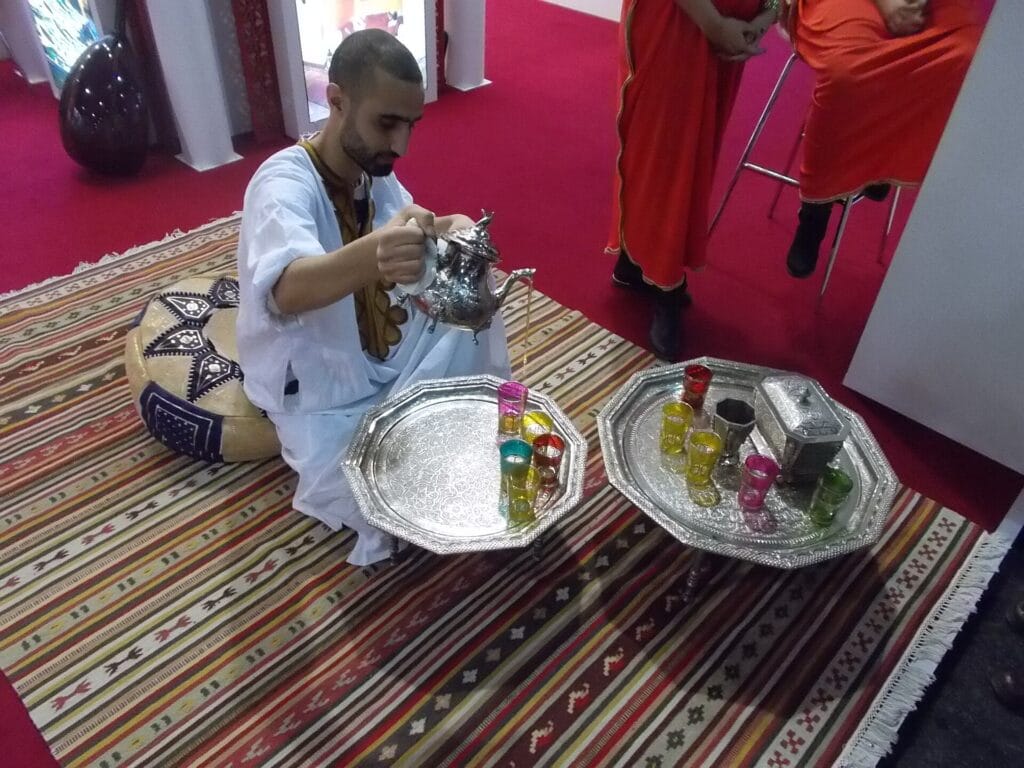
Traditional riads in Marrakech and Fez; a desert camp under the stars.
Budget (2026)
Mid-range $50–80/day (desert tours add cost but are worth it).
What to skip / common mistakes
The Sahara is a long drive from Marrakech (don’t underestimate it). Carry dirham cash (closed currency — get it on arrival), bargain in the souks, hire a guide for the Fez medina (a maze), and dress modestly.
Best time
March–May and September–November; desert nights are cold in winter.
The Routing Mistake That Wrecks This Loop (and How to Fix It)
The single biggest error on this route is booking a round-trip flight into Marrakech. The loop ends in Chefchaouen, which sits about 580 km north of Marrakech, so a return ticket forces a brutal backtrack on Day 7 or 8. Book an open-jaw instead: fly into Marrakech and out of Fes. From Chefchaouen, Fes airport (FEZ) is only around 208 km, roughly a 3.5-hour transfer, which slots neatly after your blue-city morning. If you can find a cheap exit from Tangier, it is closer still at about 115 km and near two hours from Chefchaouen.
Two more traps catch first-timers:
- Treating the Sahara as a day trip. Marrakech to Merzouga is roughly 560 km over 9 to 10 hours, and there is no train (the Tizi n’Tichka pass at 2,260 m blocks any rail line), so you must overnight at Boumalne Dades or Tinghir on the way out, exactly as the day-by-day plan has it.
- Detouring to Zagora for the dunes. Zagora’s Erg Chigaga is a six-hour haul from Marrakech and better suits a slower trip; on a tight week, commit to Merzouga’s Erg Chebbi for the bigger dunes and easier camps.
Skip the rushed Casablanca stopover many tours bolt on, and add the Ait Benhaddou kasbah and Todra Gorge, which you pass anyway on the drive south.
7 Day Morocco Itinerary FAQ
Is 7 days enough for Morocco?
Yes — Marrakech, the Sahara and Fez, though the desert legs are long drives.
How do I get to the Sahara from Marrakech?
A 1–2 day drive over the Atlas; most do it on a guided desert tour.
Frequently Asked Questions
Is 7 days enough for Morocco?
For first-time visitors, 7 days in Morocco covers the main highlights without rushing. If you want to add day trips, slower pace, or hidden gems, plan 2-3 more days. 7 days is the minimum to feel you’ve truly seen Morocco — anything less is a sampler.
How much will a 7-day Morocco trip cost?
Using the Budget Breakdown table above, drawn from our Travel Cost Index 2026: Budget $12-25/day ($84-175 for 7 days), Mid-range $45-90/day ($315-630 for 7 days), Luxury $180-350/day ($1,260-2,450 for 7 days). Country-level averages, excluding international flights.
What’s the best time to do a 7-day Morocco itinerary?
Shoulder seasons (just before/after peak) offer the best balance of weather, crowds, and price for Morocco. Check the destination’s specific best-time guide for exact months. Avoid major local holidays which spike prices and crowd attractions.
How do I get around Morocco?
Between cities, use ONCF trains, booked via the ONCF Voyages app, including the Al Boraq high-speed line linking Tangier and Casablanca; CTM and Supratours buses cover routes the rails miss. In town, hail metered petit taxis or use ride apps like inDrive and Heetch in the larger cities. Casablanca and Rabat run modern tramways, and shared grand taxis handle fixed intercity hops cheaply.
What should I pack for 7 days in Morocco?
Pack breathable layers: light long-sleeve shirts and trousers respect local dress norms and beat the sun, while a warm layer covers chilly desert and Atlas evenings. Add sturdy walking shoes for uneven medina lanes, a scarf, sunscreen, and a refillable bottle with a filter since tap water is best avoided.
Should I book hotels or use Airbnb in Morocco?
For 7-day trips, hotels are usually better: easier check-in, daily housekeeping, no laundry expectations, included breakfast often. Airbnb/apartments make sense for stays of 5+ nights, families, or kitchen-focused travelers. Book central locations to save commute time.
Related Morocco Travel Guides
- Best Things to Do in Morocco
- Where to Stay in Morocco
- Best Food in Morocco
- Best Time to Visit Morocco
- Morocco Trip Cost Breakdown
Best time to visit Morocco (real climate data)
Best months: March, April, November.
Morocco’s warmest month is July (avg 39°C / 103°F), the coolest is January (low 5°C / 42°F). The wettest is March (35 mm) and the driest is July.
Source: Open-Meteo / WMO climate normals (WMO 1991–2020, or ERA5 2019–2023 where unavailable). See the full month-by-month weather →
You Might Also Love


Written by
John Morrison is the founder and lead travel writer at Packzup. Over the past decade he has explored destinations across Africa, the Americas, Asia, Europe, the Middle East, and Oceania — always self-funded, never on a press trip.
Trip prep: before you travel, plan what to wear, check the tap water, sort your mobile data, and see if it is a cash or card country, and skim local etiquette.
