
Last updated September 11, 2026 · Editorial policy
Aspen or Vail is the closest thing American skiing has to a national argument. The two towns sit about a hundred road miles apart in the Colorado Rockies, both charge eye-watering prices, and both deliver skiing good enough to ruin ordinary mountains for you. I’ve done multiple trips to each, in winter and in summer, and I still get the same message from friends every November: we can only afford one, so which one do we book?
Here’s the short version up front. Vail is the bigger single mountain, the easier place to reach, and the simpler trip to plan. Aspen is a real town with four separate mountains, the best food in ski country, and more character per block than anywhere else in the Rockies. Neither is cheap, and anyone who tells you otherwise is selling something. But one of them is clearly better for you depending on how you travel, and that’s what this comparison is for. It’s the same agonizing either-or we usually write about with country pairs like Croatia vs Portugal, just compressed into two zip codes.
| Category | Aspen | Vail | Winner |
|---|---|---|---|
| Skiing overall | Four varied mountains on one ticket | One huge interconnected resort | Tie |
| Expert terrain | Highland Bowl, Ajax steeps | Back Bowls, Blue Sky Basin | Aspen |
| Beginners & families | Buttermilk and Snowmass are superb | Good learning zones, overwhelming scale | Aspen |
| Town & atmosphere | Real 1880s mining town | Purpose-built Bavarian-style village | Aspen |
| Food & nightlife | Best scene in American skiing | Solid but sleepy after 10pm | Aspen |
| Ease of access | 4-hour drive or a weather-fussy airport | 2 hours from Denver on I-70 | Vail |
| Summer trip | Maroon Bells, Independence Pass, music | Pleasant hiking and biking | Aspen |
| Value for money | Painful at every tier | Slightly less painful, more mid-range beds nearby | Vail |
Cost comparison: what a day actually costs
Let’s kill the suspense: these are two of the most expensive ski destinations in North America, and the sticker shock is real at both. Walk-up lift tickets at either resort regularly run well past $250 a day in peak weeks, which is why almost nobody pays window rates anymore. If you’re skiing more than two or three days, a pass product is essentially mandatory. Vail is the flagship of the Epic Pass and Aspen Snowmass lives on the Ikon Pass, with options ranging from a few hundred dollars for restricted versions to comfortably over a thousand for the full ones. Buy in spring for the following winter and the math improves a lot.
Lodging is where the two towns separate. In Aspen proper, a mid-range winter hotel room typically lands somewhere around $400 to $700 a night, and the top end has no ceiling I’ve ever found. Vail Village is similar, but Vail has something Aspen mostly doesn’t: a string of ordinary towns within 20 to 40 minutes, like Avon, Edwards and Frisco, where $200 to $350 gets you a decent bed. Aspen’s down-valley options exist in Basalt and Carbondale, but they’re further away and thinner on the ground.
For daily budgets per person, assuming your pass is already bought: a genuinely careful trip runs $200 to $300 a day at Vail if you sleep down-valley and self-cater some meals, and that’s honestly hard to pull off in Aspen at all. Mid-range travelers should budget $450 to $700 a day at either. Luxury has no upper limit; $1,000-plus days happen without trying. For the price of a big week at either, you could ski nearly two weeks in the Alps, a comparison worth taking seriously if you’ve read our France vs Italy matchup and felt tempted.
The skiing: one giant vs four characters
Vail’s pitch is simplicity at massive scale. It’s one interconnected resort of roughly 5,300 skiable acres, among the largest in North America, and the famous Back Bowls are the reason it got famous: a chain of wide, mostly treeless bowls that on a powder morning feel like skiing across another planet. Blue Sky Basin behind them adds gladed, more adventurous terrain, and the front side is a groomer factory in the best sense. You can ski Vail hard for five days and barely repeat a run, all without moving your car once.
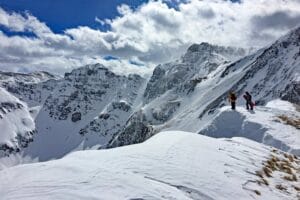
Aspen’s pitch is variety with personality. Your ticket covers four separate mountains, and they genuinely are separate characters. Aspen Mountain, which locals call Ajax, rises straight out of town and has no beginner runs at all, just moguls, steeps and fast cruisers. Aspen Highlands is the expert’s hill, crowned by Highland Bowl, a bootpack hike above 12,000 feet that delivers the best inbounds powder pitch I’ve skied in Colorado. Buttermilk is gentle, quiet and hosts the Winter X Games. Snowmass is the giant of the family, a full-size resort in its own right with true ski-in ski-out lodging and terrain for every level. Combined, the four roughly match Vail’s acreage, but you’ll ride a bus between them.
Snow quality is a wash. Both sit in the same continental snowpack and both average somewhere around 300 inches in a normal winter: classic dry Colorado snow, better than almost anything in Europe. If truly bottomless powder is the actual goal, Japan is its own conversation, one we touch on in Japan vs China.
Town vibe: real history vs built for purpose
This is the category where the two stop being comparable. Aspen is a real town, founded in the 1880s silver boom, with Victorian buildings, a year-round population, a proper main street and a strange, entertaining social mix of ranchers, ski bums, artists and billionaires. Yes, the celebrity factor is real, and yes, some shop windows will make you laugh out loud. But walk two blocks off the core and it still feels like a living community rather than a stage set.
Vail was built from a sheep pasture starting in 1962, styled loosely on a Bavarian village, and it doesn’t pretend otherwise. The pedestrian core of Vail Village and Lionshead is genuinely pleasant: cobbled lanes, heated walkways, everything a two-minute walk from a gondola. It’s also unmistakably a resort; almost everyone you meet is either a visitor or serving one. If convenience matters more than authenticity, Vail’s layout beats Aspen’s. If a town’s soul matters to you, Aspen wins this by a mile.
Food, apres-ski and nightlife
Aspen has, without much competition, the best eating and drinking scene in American skiing. Slope-side apres at the base of Ajax rolls straight into cocktail bars and some genuinely serious restaurants, and Belly Up pulls touring music acts that have no business playing a room in a town this small. The catch is the bill: dinner mains from $30 to $60 are normal, and the famous rooms cost far more. Reserve ahead in peak weeks or you’re eating pizza standing up, which, to be fair, is also available and also expensive.

Vail’s apres scene is loud and fun at the base bars when the lifts close, and there are more solid mid-range restaurants than people give it credit for. But the town quiets down noticeably by 10pm, and much of the dining feels competent rather than memorable. Families tend to love this; night owls don’t. If eating well is a core part of why you travel, this category alone might settle the debate.
Beginners, families and mixed groups
Counterintuitively, glitzy Aspen is the better learning destination. Buttermilk is a dedicated progression mountain: gentle, uncrowded and low-stress, with wide runs where nobody comes barreling through at speed. Snowmass adds an enormous intermediate playground plus genuine ski-in ski-out lodging, which is worth its weight in gold with kids. The one warning: don’t book a novice onto Aspen Mountain itself, because there is literally no easy way down.
Vail handles beginners fine, with good learning zones and a well-oiled ski school, but the sheer scale cuts both ways. New skiers can find the trail map overwhelming, and a wrong turn on a mountain this size means a long, tired afternoon. For mixed groups where some people rip and some are learning, both work; Snowmass is my pick if everyone wants to stay on one hill together.
Summer: the sleeper season
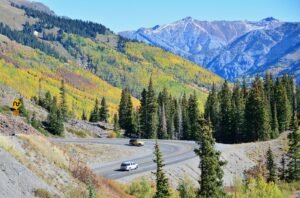
Both towns flip into hiking-and-biking mode from June through September at roughly half the winter prices, and this is where Aspen quietly runs away with it. The Maroon Bells, arguably the most photographed mountains in North America, sit 20 minutes from town; go early and expect to use the shuttle system in peak season. Independence Pass reopens for one of the great high-alpine drives anywhere, and the summer music festival fills the town with concerts for weeks.
Vail’s summer is pleasant rather than spectacular: the Betty Ford Alpine Gardens, the hike up to Booth Falls, lift-served mountain biking and a steady calendar of small events. It’s a lovely, easy family week. It just isn’t the Maroon Bells. Choosing purely for a summer trip? Pick Aspen and don’t overthink it.
Weather and when to go
The two share a climate, so the timing logic is identical. The snowpack usually gets properly deep by mid-January, and February through mid-March is the sweet spot: reliable snow, longer days, everything open. Early January is the quiet-and-cheaper window after the holiday crowds leave, at the price of some brutally cold mornings. Christmas through New Year and the February holiday weeks bring maximum crowds and maximum prices at both towns; avoid them unless those are truly your only dates. Spring skiing runs into April with soft snow and sunshine, and both mountains usually wrap up around mid-April.
Summer means warm days, cool nights and afternoon thunderstorms you should plan hikes around. Late September brings the aspen trees turning gold, which is worth a trip on its own. And if your only vacation window is August but your heart says skiing, look south: Bariloche and the Andes run their winter then, something we cover in our things to do in Argentina guide.
Getting there and around
Vail wins access, and it isn’t close. From Denver’s airport it’s roughly two hours west on I-70, straight to the base, with frequent shuttle vans if you’d rather not drive. The caveat is I-70 itself: on winter weekends and during storms the corridor can jam badly, so build slack around Saturday arrivals. Eagle County’s regional airport sits about 35 minutes further west with direct winter flights from a surprising number of cities.
Aspen is a commitment. The drive from Denver runs closer to four hours in winter, because the Independence Pass shortcut is closed for the season. Aspen’s own airport is 10 minutes from town and magical when it works, but it’s a small, weather-fussy field where winter cancellations are common enough that regulars build in a buffer day or route through Eagle instead. Once you’ve arrived, neither town needs a car: Vail runs free buses around town, and Aspen’s valley bus system connects all four mountains and the down-valley towns cheaply and often.
And if all this Rockies logistics talk wears you out, remember that Whistler, the other giant of North American skiing, is a direct flight and a gorgeous drive away via Vancouver; our things to do in Vancouver guide covers that gateway.
Aspen or Vail: the honest verdict
Skiers who want maximum mountain for minimum fuss: Vail. One huge resort, one base area, two hours from a major airport, with real mid-range lodging 20 minutes away. It’s the easier great ski trip, and the Back Bowls on a storm day justify the hype.
Advanced skiers chasing a badge: Aspen. Highland Bowl is the single best reason to choose either town, and the four-mountain variety keeps a long trip interesting in a way even a mega-resort can’t quite match.
Beginners and families: Aspen, specifically Buttermilk and Snowmass. Calmer slopes, true ski-in ski-out, and a mountain purpose-built for learning. Just keep first-timers off Ajax.
Foodies, nightlife and non-skiers: Aspen, easily. The restaurant and music scene has no equal in the American mountains, and the town is worth wandering even if you never click into a binding.
Budget travelers: Vail, with an asterisk. Neither is a budget destination, but down-valley lodging plus Epic Pass economics make Vail the one you can actually do carefully. Aspen on a tight budget mostly means suffering.
If I could only ski one of them for the rest of my life, I’d take Vail’s terrain. If I could only take one more trip, I’d book Aspen and not think twice. Take from that what you will.
FAQ
Is Aspen or Vail more expensive?
Can you ski Aspen and Vail on the same trip?
Which is better for beginners, Aspen or Vail?
Do you need a car in Aspen or Vail?
Planning the trip? Go deeper with best time to visit Aspen Colorado.
You Might Also Love
More side-by-side comparisons



Written by
John Morrison is the founder and lead travel writer at Packzup. Over the past decade he has explored destinations across Africa, the Americas, Asia, Europe, the Middle East, and Oceania — always self-funded, never on a press trip.
