
Quick verdict: 3 days in Bangkok hits Grand Palace + Wat Arun + Chatuchak + Khao San + Thai cuisine. This itinerary balances ancient temples + modern shopping + street food culture. Built across 4 personal Bangkok trips.
The day-by-day plan
Day 1: Grand Palace + Wat Arun
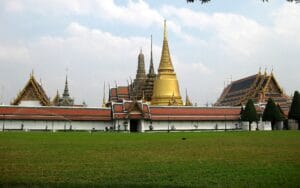
Morning: 8:30am Grand Palace + Wat Phra Kaew (Emerald Buddha temple). Lunch at riverside restaurant. Afternoon: Wat Pho reclining Buddha + traditional Thai massage at Wat Pho school ($10 for 60-min). River boat to Wat Arun for sunset. Evening: Khao San Road street food + nightlife.
Day 2: Markets + Modern Bangkok
Morning: Chatuchak Weekend Market (if Saturday/Sunday) or Jim Thompson House + Lumpini Park. Lunch: Or Tor Kor Market food stalls. Afternoon: Sukhumvit shopping (Terminal 21 mall) + Sukhumvit Soi 11 area. Evening: rooftop bar at Banyan Tree (Vertigo) + dinner Asiatique.
Day 3: Day Trip + Departure
Morning: Day trip to Ayutthaya ruins (90 min train) OR Damnoen Saduak floating market + Maeklong Railway Market combo. Lunch en route. Afternoon: Return to Bangkok. Last shopping in Pratunam or Siam Square. Evening: farewell Thai food + depart Suvarnabhumi or Don Mueang.
What to book ahead + practical tips
Compare Bangkok tours and tickets →
Helpful Packzup guides
How should three Bangkok days be paced around the heat?
Split every Bangkok day into two outdoor blocks, roughly 07:00 to 11:00 and 16:00 to sunset, and keep the middle of the day indoors. The climate numbers explain the split: April is the hottest month with an average high around 35C, March and April heat indices can climb past 40C, and even the cool season from November to February runs around 32C by early afternoon. Sunset arrives early all year, between about 17:50 in November and 18:50 in July, so the evening block is short and needs to be planned rather than improvised.
First-timers should spend the morning block on the Old City temples, because stone courtyards and marble floors hold heat and there is little shade. Food-focused travelers can flip the plan: sleep later, take a long lunch in an air-conditioned food court, then start walking at 16:00 when markets and street stalls are opening. Families do best with a break indoors from about 12:00 to 15:30 and a single sight per block.
In the rainy season, which begins with the southwest monsoon around mid-May and lasts to October, storms usually land in the afternoon and clear in under an hour, so the midday indoor block also absorbs the rain. September is the wettest month of the year. Do not cancel an afternoon plan for rain; shift it by an hour.
Where do lunch and dinner fall on each of the three days?
Eat where the day ends, not where it starts, because crossing Bangkok by road between 17:00 and 19:00 can take longer than the meal. Day one belongs to the riverside Old City in Phra Nakhon district: take lunch near Tha Tien, the pier beside Wat Pho, where the cross-river ferry to Wat Arun runs about every ten minutes, then ride the MRT Blue Line to Wat Mangkon station, opened in 2019, for dinner on Yaowarat Road in Chinatown. Day two sits east of the river: lunch in a Sukhumvit or Siam mall food court during the hot hours, dinner in Silom, in Bang Rak district, or back along Sukhumvit. Day three is the departure day: a proper breakfast, an early lunch near the hotel, and nothing that depends on a boat or a taxi in the last three hours.
Fix the eating rhythm to the same two blocks. Breakfast is early and easy, because morning markets and shophouse kitchens open alongside the first outdoor block, so eat before the temples rather than after them. The midday block belongs to the air-conditioned mall food courts in Siam and Sukhumvit, the cheap and reliable option in the hot hours, which lets the walking stop without the day stopping. The evening block is the street-food block: the Yaowarat kitchens set up after dark and Silom eats late, so dinner is the meal that needs its district chosen in advance and lunch is the one that can be improvised.
First-timer mistakes in a 3-day Bangkok plan, and what to skip
The most common three-day mistake is treating the arrival afternoon as a full day. Airport formalities, the transfer and check-in put most visitors at their hotel late in the afternoon, so the first evening should be a food-and-river evening in Chinatown or on the riverside, and the Grand Palace belongs to the first full morning.
- Visiting the Grand Palace after 11:00. The courtyards are unshaded and the midday block is the hottest part of the day. Arrive for opening and be walking to Wat Pho, immediately south of the palace, by mid-morning.
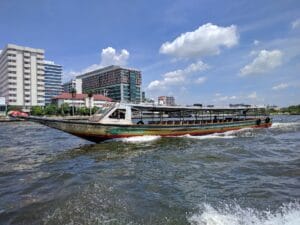
- Crossing the city by road at rush hour. Old City to Sukhumvit by taxi between 16:00 and 19:00 can absorb an entire evening block. Use the river boat to the central pier at Sathorn and the BTS from Saphan Taksin instead.
- Booking a full-day trip on day three without checking the flight time. A day trip out of the city only works with an evening or night departure; with an afternoon flight, a morning walk in one district is the safer plan.
- Skipping the meter. Taxis are metered; if the driver will not start it, take the next one. Agree tuk-tuk fares before boarding.
- Eating the main meal at midday. The hot hours are for a light air-conditioned lunch; the appetite and the street kitchens both arrive after dark.
What to skip on three days: a second night market, a second shopping mall, and any activity that puts you outdoors between 12:00 and 15:00 in March or April.
| Season | Months | Typical conditions | Pacing effect |
|---|---|---|---|
| Cool | November to February | Around 32C by day, about 23C at night, mostly dry | Two outdoor blocks possible; midday still hot |
| Hot | March to mid-May | April average high around 35C; heat index can pass 40C | Outdoor time before 10:30 and after 16:30 only |
| Rainy | Mid-May to October | Afternoon storms, usually under an hour; September is the wettest month | Indoor midday block absorbs the rain |
| Sunset | All year | Between about 17:50 (November) and 18:50 (July) | Evening block is short; fix the dinner district in advance |
Frequently asked questions
Is 3 days enough for Bangkok?
Best Bangkok area to stay 3 days?
Bangkok 3-day budget?
Day trip from Bangkok in 3 days?
Bangkok 2026 – what’s new?
Updated 2026. Some links on Packzup are affiliate links.
Best time to visit Bangkok (real climate data)
Best months: December, January, February.
Bangkok’s warmest month is April (avg 34°C / 93°F), the coolest is December (low 22°C / 72°F). The wettest is September (336 mm) and the driest is December.
Source: Open-Meteo / WMO climate normals (WMO 1991–2020, or ERA5 2019–2023 where unavailable). See the full month-by-month weather →
You Might Also Love
Trip prep: before you travel, plan what to wear, check the tap water, sort your mobile data, and see if it is a cash or card country, and skim local etiquette.
