
Last updated August 29, 2026 · Editorial policy
- Best time to visit Madrid: at a glance
- Best Time to Visit Madrid: Month-by-Month Guide
- Best Months to Visit Madrid
- Madrid Travel Seasons at a Glance
- Festivals & Events in Madrid
- When to Visit by Travel Goal
- What to Avoid
- Booking Tips
- May vs Autumn: Picking the Right Shoulder Month (and Skipping August)
- Frequently Asked Questions
- Related Madrid Travel Guides
Best time to visit Madrid: at a glance
Short answer: April–June and September–October (summers are very hot).
| Season | Months | What to expect |
|---|---|---|
| Peak | Jul–Aug | Very hot; many locals leave |
| Shoulder (best value) | Apr–Jun, Sep–Oct | Warm, ideal, lively |
| Low | Nov–Mar | Cool, crisp, quiet |
Best Time to Visit Madrid: Month-by-Month Guide
Quick take: Madrid — But timing matters more than most guides admit. Here’s the real breakdown by month, based on weather data, crowd patterns, and local festivals.
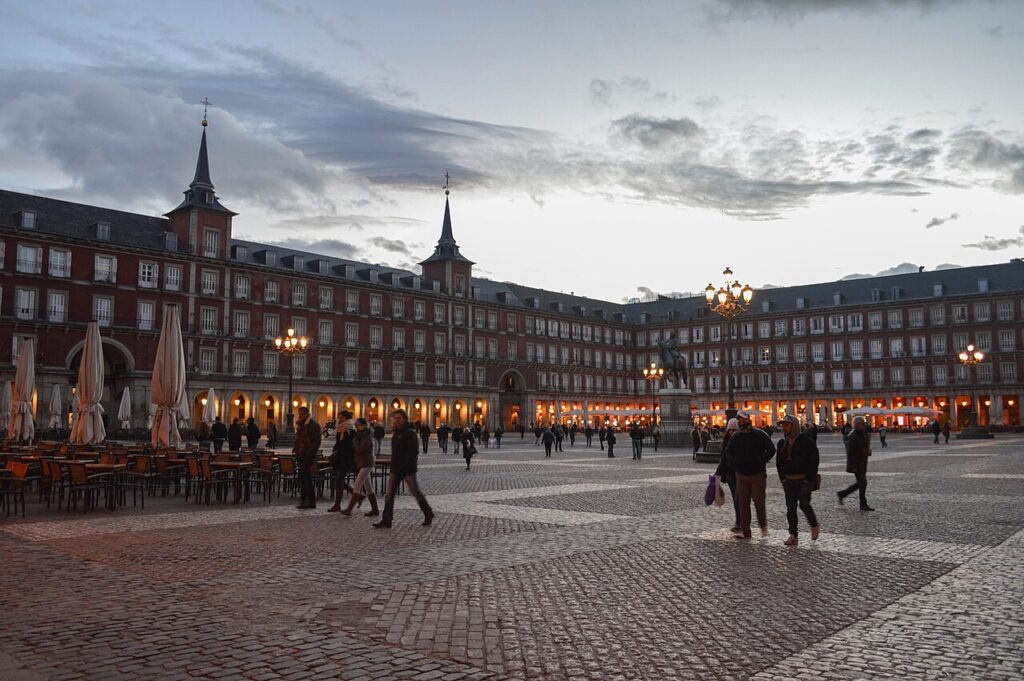
Peak: summer (June-August) · Off-season: winter (December-February)
Knowing the best time to visit Madrid can transform your trip — saving you hundreds on flights and hotels while putting you in better weather with fewer crowds. This guide breaks down each season, key events, and what to expect month by month so you can pick the right travel dates.
Best Months to Visit Madrid
Top pick: Aim for May or mid-September to mid-October, when Madrid sits around 20-27C with little rain and long terrace evenings. July and August routinely push past 35C and much of the city empties out; rates dip then but the heat is punishing. Late spring and early fall balance comfort, crowds, and price best.
Madrid Travel Seasons at a Glance
| Season | Months | What to Expect |
|---|---|---|
| Peak | summer (June-August) | Best weather (for that region), highest prices, biggest crowds. Book hotels 3-6 months ahead. |
| Shoulder | shoulder seasons (typically April-May and September-October) | Sweet spot: good weather, moderate crowds, 15-30% lower prices than peak. |
| Off-season | winter (December-February) | Cheapest, quietest. Some sights may be closed. Best for budget travelers and shoulder-month flexibility. |

Festivals & Events in Madrid
The single window to book earliest is Madrid Pride (MADO) in late June and early July, when central hotels around Chueca and Gran Via often sell out well ahead. San Isidro week in mid-May is the second crunch; secure rooms a few months out for either.
- San Isidro Festival (May)
- Madrid Pride (MADO) (late Jun-early Jul)
- Día de la Almudena (Nov)
- Veranos de la Villa (Jul-Aug)
- Carnival (Feb)
When to Visit by Travel Goal
- Best weather: April, May, late September and October hold highs near 18-25C, the easiest stretch for walking Retiro, the Prado district and Madrid de los Austrias; May and October are the rainiest months, though totals stay modest.
- Lowest prices: winter (December-February). Hotels and flights cut 30-50%. Trade weather for savings.
- Fewest crowds: Mid-January through February and most of November are Madrid’s quietest stretches: cool, crisp weather but thin museum queues and easy restaurant tables. Skip the first week of November around the Almudena holiday and the early-December puente long weekends, which pull in domestic visitors.
- Festivals & culture: San Isidro, around May 15, fills Plaza Mayor and Las Vistillas with free concerts and traditional chulapo dress; it is Madrid’s signature fiesta. Madrid Pride (MADO), late June into early July, is among Europe’s biggest, and Veranos de la Villa runs cultural events all summer.
- Outdoor activities: Walk Casa de Campo in April, May, late September and October; from June through August head up to the Sierra de Guadarrama, near 22-25C at Navacerrada, and avoid high trails while snow lingers December to April.
- Budget travelers: Madrid’s cheapest stretch is deep winter, roughly mid-January through February once the Three Kings holiday ends. Hotels and flights typically drop well below shoulder-season rates, days are often crisp and sunny, and museum queues shrink. Mid-week arrivals usually price lower than weekends.
What to Avoid
- Peak crowds: summer (June-August) brings 2-3x the visitors. Major sites require ticket reservations weeks ahead.
- Major holidays: Semana Santa (Holy Week, March or April) and the early-December puente around Constitution Day drive Spain’s biggest domestic travel surges. Locally, San Isidro on May 15 and Almudena Day on November 9 are Madrid city holidays, and the January 6 Three Kings parade packs the center.
- Closures: Madrid’s real closure season is August, not winter: many neighborhood restaurants and small shops shutter for weeks while locals head to the coast. The Prado, Royal Palace, and other major sights stay open year-round, closing only on holidays like January 1, May 1, and December 25.
Booking Tips
- Madrid fares typically peak for the June-August summer window, so book those dates around two to three months out. Shoulder-season April-May and September-October seats are usually easier to find, but tighten around San Isidro in mid-May and Madrid Pride in late June-early July.
- Madrid’s shoulder sweet spots are late April to early June and mid-September to October. May brings terrace weather and the San Isidro fiesta but busier hotels; September keeps summer warmth with thinner crowds, while October cools and typically brings the first reliable rain after the dry summer.
- Spanish school calendars matter most here: the long summer break, typically late June through early September, plus Semana Santa and the Christmas-to-Three-Kings stretch, all move domestic crowds. UK and wider European school summer holidays add city-break traffic in July and August, when Madrid is at its hottest.
- Madrid has no hurricane, monsoon, or altitude risk, so standard medical and cancellation cover is typically enough. The bigger concerns are July and August heat waves, when highs push into the mid-30s C, and rare winter storms; cancellation cover matters most if you book around festival dates.
May vs Autumn: Picking the Right Shoulder Month (and Skipping August)
Both shoulder windows beat the summer peak, but they are not interchangeable, and the month you choose changes the trip. May runs warm and dry, with highs around 24C and the San Isidro celebrations around May 15 filling Plaza Mayor and Las Vistillas with free concerts and picnics in chulapo dress. It is the liveliest of the calm months, so book a few weeks out. September is the quieter twin: highs still around 25 to 29C carry summer warmth into thinner crowds, while October cools to roughly 18 to 21C and brings the first reliable rain after a bone-dry summer.

If your priority is the lowest prices and emptiest streets, lean autumn. If you want terrace weather plus a real fiesta, take mid-to-late May.
The period to skip is August. July is the hottest month at highs near 33C, but August (around 31C) is worse for a different reason: many Madrilenos leave for the coast, so neighbourhood restaurants and small shops shutter for weeks. Major museums and the city-wide Veranos de la Villa cultural program stay open, yet the residential districts feel hollowed out.
Frequently Asked Questions
Are there major festivals in Madrid?
Yes — Madrid hosts notable events including: San Isidro Festival (May), Madrid Pride (MADO) (late Jun-early Jul), Día de la Almudena (Nov), Veranos de la Villa (Jul-Aug), Carnival (Feb). Major festivals can spike hotel prices 50-200% — book 3-6 months ahead if attending.
What should I pack for Madrid?
Pack for the season you’re visiting and the climate zone. Summer in Madrid: lightweight breathable clothes, sunscreen, hat, comfortable walking shoes. Winter: layers, waterproof jacket, warm accessories. Check the 10-day forecast 1-2 weeks before departure and adjust.
Related Madrid Travel Guides
- Best Things to Do in Madrid
- Where to Stay in Madrid
- Best Food in Madrid
- How Much Does a Trip to Madrid Cost?
- Madrid Itinerary Guide
Torn between destinations? See our honest, first-hand comparisons: Madrid vs Lisbon, Barcelona vs Madrid.
Madrid weather & climate by month
Best months to visit: May, June, September, October. Madrid’s warmest month is July (avg 35°C / 95°F), the coolest is January (low 1°C / 33°F). The wettest is October (64 mm) and the driest is July.
| Month | Avg high | Avg low | Rainfall | Rainy days |
|---|---|---|---|---|
| January | 10°C / 50°F | 1°C / 33°F | 32 mm | 6 |
| February | 15°C / 59°F | 3°C / 37°F | 34 mm | 5 |
| March | 17°C / 62°F | 5°C / 42°F | 35 mm | 5 |
| April | 19°C / 66°F | 8°C / 46°F | 46 mm | 7 |
| May | 25°C / 77°F | 12°C / 54°F | 48 mm | 7 |
| June | 30°C / 85°F | 16°C / 62°F | 20 mm | 3 |
| July | 35°C / 95°F | 21°C / 69°F | 9 mm | 2 |
| August | 34°C / 92°F | 20°C / 67°F | 10 mm | 2 |
| September | 26°C / 79°F | 15°C / 59°F | 24 mm | 4 |
| October | 22°C / 71°F | 11°C / 51°F | 64 mm | 7 |
| November | 14°C / 58°F | 6°C / 43°F | 52 mm | 7 |
| December | 12°C / 53°F | 4°C / 39°F | 42 mm | 6 |
Climate source: Open-Meteo / WMO climate normals (WMO 1991–2020, or ERA5 2019–2023 where unavailable). Compare destinations in the Best Time to Visit Index.
You Might Also Love


Written by
John Morrison is the founder and lead travel writer at Packzup. Over the past decade he has explored destinations across Africa, the Americas, Asia, Europe, the Middle East, and Oceania — always self-funded, never on a press trip.
