Quick answer: For trips spanning grandparents to grandkids, the best picks are Hawaii, Costa Rica, Italy, a cruise, or an all-inclusive resort.
A great multi-gen trip has something for every age and an easy base everyone can enjoy. These ten work for the whole family.
The 10 best multi-generational destinations
Hawaii
Best months: Jun–Aug · 23–29°C days · some rain (climate data)
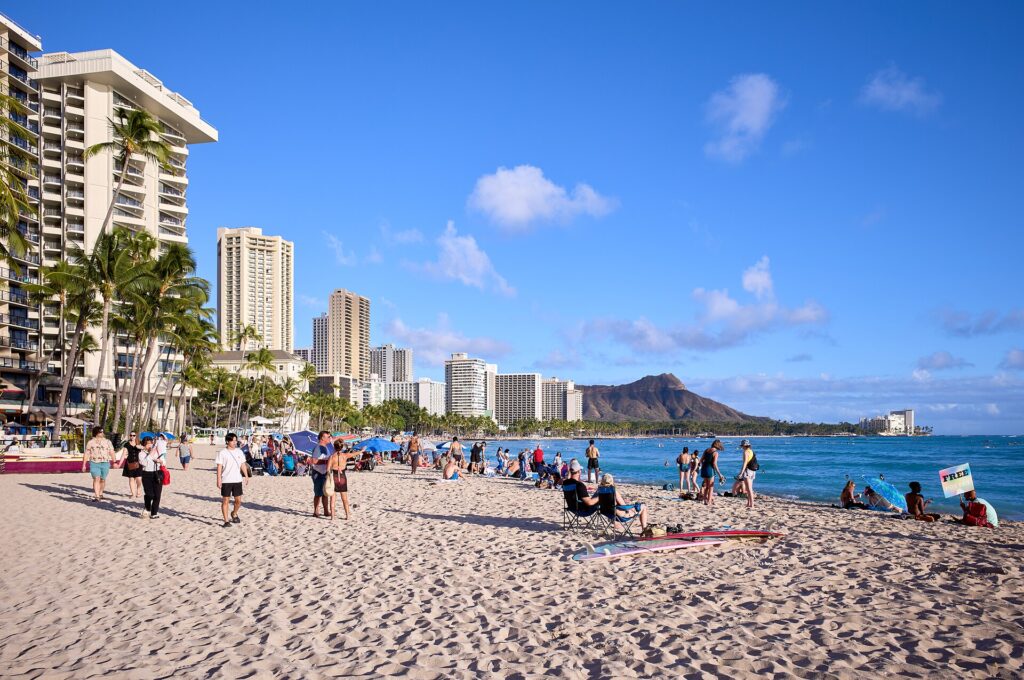
Beaches, gentle nature and culture, all within the US.
Costa Rica
Best months: Jan–Mar · 16–26°C days · dry (climate data)
Wildlife and soft adventure with options for every energy level.
Italy
Best months: Apr–Jun · 13–23°C days · rainy (climate data)
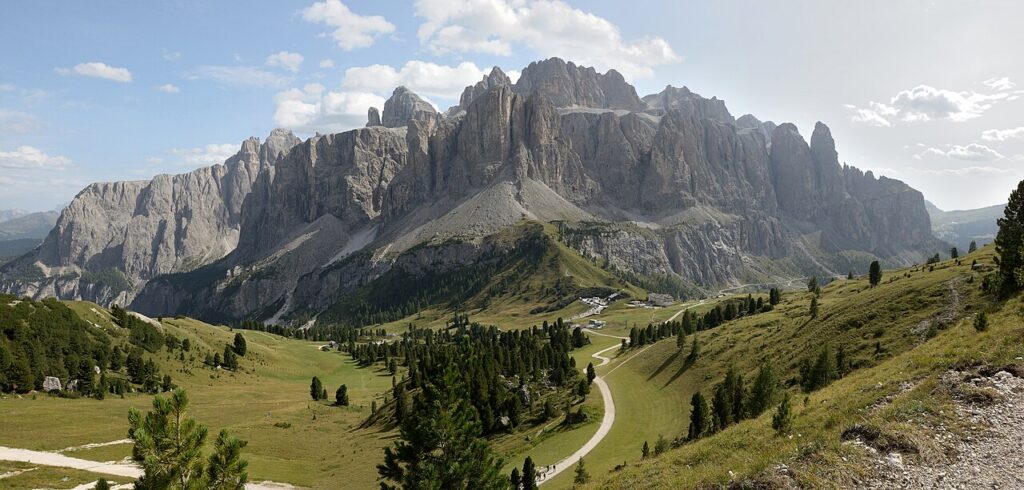
Food, history and beaches that span the generations.
A cruise
One floating base with activities for kids, adults and grandparents.
Caribbean all-inclusive
Kids’ clubs, pools and relaxation in one place.
Orlando, USA
Theme parks plus easy family logistics.
Portugal
Best months: Jun–Aug · 18–28°C days · dry (climate data)

Affordable, safe and varied, with beaches and cities.
US National Parks
Big outdoors with accessible options and lodges.
Japan
Best months: Sep–Nov · 14–22°C days · rainy (climate data)
Safe, fascinating and easy to get around together.
Mexico (Riviera Maya)
Best months: Dec–Feb · 7–23°C days · dry (climate data)
All-inclusive comfort plus ruins and cenotes.
How to choose
Choose one shared base (a villa, resort or cruise) to reduce logistics, mix easy and active options each day, and build in downtime. All-inclusives and cruises are the simplest for big groups with varied ages.
Related travel guides
Plan your trip to these destinations
Every destination here is chosen from independent research — Packzup runs no sponsorships or paid placements.
Which cities publish proof that a pushchair and a walking frame can cross them?
Two of the most-booked ones publish it as a countable figure rather than an adjective, and the two figures say opposite things. Transport for London states that 94 Tube stations, more than a third of the network, have step-free access, that all 41 Elizabeth line stations and more than 60 London Overground stations are step-free, and that all DLR stations and tram stops are step-free, with all buses and the majority of bus stops wheelchair-accessible. Singapore’s Ministry of Transport states flatly that all MRT and LRT stations are barrier-free and that 98 per cent of bus stops are, apart from some with site constraints such as those on five-foot ways. That page carried a last-updated date of 25 August 2026.
Read the London figure as written. More than a third step-free means most Tube stations still are not, so the map a three-generation group needs is the step-free one, and a route that works outbound can fail on the return where only one platform has a lift. TfL also says it has cut the extra journey time on accessible routes by 40 per cent since 2016, which concedes that those routes are longer.
The test for any destination is whether the operator publishes station-level evidence. A network that names which stations have lifts can be planned around. A tourist board page calling the city wheelchair friendly, with no station list and no date, proves nothing. Where the operator publishes nothing, build the days around taxis and short distances rather than assuming the metro will work.
How much notice does a station or an airport legally need before it will help someone board?
In the European Union the two numbers are 24 hours for rail and 48 hours for a flight, and both sit in law rather than in an operator’s policy.
For rail, Regulation (EU) 2021/782, applying since 7 June 2023, says at Article 24 that assistance is provided on condition that the railway undertaking, the station manager, the ticket vendor or tour operator the ticket was bought from, or the Single Point of Contact, is notified at least 24 hours before the assistance is needed. Where no notification is made, that same provision obliges the railway undertaking and station manager to make all reasonable efforts so the person can still travel. Reasonable efforts is not a guarantee, and on a busy morning it is not a plan.
For flights, Regulation (EC) No 1107/2006 sets the request at at least 48 hours before the published time of departure under Article 7(1), and requires the carrier to pass it to the airport managing body at least 36 hours before that published time under Article 6(2). Article 7(3) again falls back to all reasonable efforts if nobody was told.
Two details decide whether you have met the deadline. The clock runs to the published departure time, not to check-in, and a retimed or rebooked flight can lose the request, so re-confirm after any change. Article 21 of the rail regulation also bars an operator from refusing a booking or insisting the passenger be accompanied unless strictly necessary under its published access rules, and Article 23 lets a personal assistant recognised under national practice travel on a special tariff and, where applicable, free. Where an operator does require an accompanying person, that person travels free of charge and, where practicable, is seated next to the passenger, and an assistance dog is permitted in accordance with relevant national law. Outside the EU there is no common figure, so ask the operator and get the answer written onto the booking.
Who counts as a child and who counts as a senior, and on which date is the age judged?
There is no international age band, and the date the age is measured on differs even between products sold by the same railway.
Japan publishes the clearest set. JR-West states them as adult aged 12 years or older, child aged 6 to 11, infant aged 1 to 5 and baby under 1 year old, with the age taken on the day the ticket is purchased. The free-travel rule is the part that catches groups out: an adult may be accompanied by up to two infants at no charge within basic fare ticket coverage areas and on non-reserved seat tickets, so a child ticket is required from the third infant onward, whether the accompanying passenger is an adult or a child, and a child ticket is required for a reserved seat in any case. JR-West’s own fare FAQ also carries the question of why children’s tickets cost the same as adults’ for green, GranClass and sleeper tickets, which is the warning that a child discount attaches to the basic fare and not to every supplement. The Japan Rail Pass uses the same 6 to 11 band for its child pass but judges the age on the online purchase date, or the date the exchange voucher is issued at an agency, so a child who turns 12 between booking and arrival still travels on the child pass.
London splits the rule by mode. Transport for London lets a fare-paying adult travel with up to four children under 11 free of charge, and a 5-10 Zip Oyster photocard gives free travel on the Tube, DLR, London Overground and Elizabeth line. On buses and trams no photocard is needed unless the child looks older than 10.
At the other end of the group, the Senior Railcard in Britain is for everyone aged 60 and over, costs 35 pounds for one year or 80 pounds for three and gives a third off, but is not valid in the morning peak when travelling between two stations inside the Network Railcard area, a restriction lifted on public holidays. Local peak times vary, so check them for the route rather than assuming one national hour. So write down each traveller’s age on the date of travel and on the date of purchase, because at least one operator will care about the second one.
What documents do grandparents need to take a grandchild abroad?
The answer turns on the country you leave from as much as the one you fly to, and the three most-quoted authorities set three different bars.
The United Kingdom makes it a legal requirement. GOV.UK states that permission is needed from everyone with parental responsibility for the child, or from a court, and puts the consequence in one sentence: taking a child abroad without permission is child abduction. The single exception it publishes is that a child may be taken abroad for 28 days without permission where a child arrangements order says the child must live with you, unless a court order says otherwise. It also advises carrying a divorce or marriage certificate where your family name differs from the child’s.
Canada treats it as strongly advised rather than compulsory. The Government of Canada states that a consent letter is not legally required in Canada, then recommends that children travelling without one or both parents or legal guardians carry a signed one, and covers exactly this case: a child in the care of friends or other family members. On witnessing, it says any adult may witness the signing, but that it is strongly recommended a notary public witness it.
South Africa is the one most round-ups get backwards, and the mistake costs a family weeks of pointless paperwork. The Department of Home Affairs advisory on children travelling through South African ports of entry, dated 2 April 2019 and revised in November 2019, sets the requirements out by category rather than as one list. A South African child travelling with an adult who is not a parent needs a valid passport, a copy of the birth certificate or equivalent document, a parental consent letter from each parent or guardian, copies of their identity documents and their contact details. A child in alternative care needs a letter from the Provincial Head of the Department of Social Development authorising departure.
Then come the exemptions, and they are wider than the reputation suggests. A foreign child who does not need a visa for South Africa needs a valid passport and nothing else, whether travelling with one parent or with an adult who is not a parent. The detailed stack applies to South African children and to foreign children who do require a visa. Two further exemptions cut the paperwork again: a child presenting a passport that contains the details of a parent or parents is not required to produce a birth certificate or equivalent document, and children holding valid South African visas are not required to produce documents already submitted with the visa application. Direct airport transit and school tour groups have their own reliefs.
That advisory is several years old and only the Department of Home Affairs can change it, so confirm your own combination of nationality, passport and visa status with that department before you fly, rather than assembling a stack you may not need or skipping one you do.
Prepare the letter before you leave, carry the original on the adult travelling with the child, and add the parents’ live phone numbers. The Government of Canada prefers the original signed document and warns that border officials may question the authenticity of a photocopy or an electronic version, so a photograph on a phone is not a substitute.
Does high altitude or summer heat rule out the oldest travellers?
Altitude does not, and the assumption that it does is backwards. The CDC Yellow Book states that people aged over 50 have slightly less risk of altitude illness than younger travellers, and that children are as susceptible as adults. Age is not the filter. Existing disease is: the same chapter tells travellers with coronary artery disease, chronic pulmonary disease or preexisting hypoxemia to consult a physician familiar with high-altitude medicine first.
The numbers to plan around are these. Risk begins for any unacclimatised traveller reaching a sleeping altitude of 2,450 m (8,000 ft), and sometimes lower. The Wilderness Medical Society recommendations quoted by the Yellow Book are to avoid ascending to a sleeping altitude of 2,750 m (9,000 ft) in a single day, to gain no more than 500 m (1,650 ft) of sleeping altitude per night once above 3,000 m (9,800 ft), and to add an acclimatisation night for every 1,000 m (3,300 ft) gained. Acute mountain sickness usually starts 2 to 12 hours after arrival and generally clears in 12 to 48 hours if you do not climb higher. Read that as an itinerary instruction: the fix for a high city is a spare night lower down, not a cancelled trip.
Heat is the risk that does track with age. The World Health Organization names people over 65 years old, and people with heart, lung or kidney conditions, people with a disability and people living alone, among those most at risk, and gives the mechanism: the strain of trying to cool itself stresses the heart and the kidneys, and heat can worsen cardiovascular disease, diabetes, asthma and mental health conditions. For a group spanning seventy years that puts heat above altitude on the planning list. Move the hot destination into its cooler months and keep the hottest hours indoors.
Where should you check all of this, and which sources are worthless?
Four registers answer nearly every question a three-generation trip raises, and none of them is a review site.
- The transport operator itself for step-free stations, lift outages and the assistance booking deadline. Ask two questions: is there a lift between every level on this exact route, and how far ahead must assistance be booked.
- The destination’s immigration or home affairs department for what a child must carry on arrival, and your own foreign ministry for what leaving requires. These two can disagree, and you must satisfy both.
- The attraction’s own accessibility page for lifts, seating and whether a companion is admitted free. Historic sites often publish a step count, which is worth more than any rating.
- A national public health authority for altitude and heat guidance, rather than an article summarising one.
One number belongs in every phone before the trip starts. The European Commission states that 112 is the European emergency phone number, available everywhere in the EU, free of charge, callable from fixed and mobile phones to reach an ambulance, the fire brigade or the police, and that it functions alongside existing national emergency numbers, eight EU countries having made it their only one. Outside the EU, take the emergency number from your own foreign ministry’s country page rather than from a hotel leaflet.
Discard anything that gives a station count without a date, any wheelchair-friendly badge awarded by a booking platform, and any accessibility tag written by other travellers rather than the operator. Lifts go out of service for months, and only the operator publishes that.
Every figure quoted here was current with its own authority on 5 September 2026. Assistance deadlines, step-free counts and child documentation rules all change, so re-check the operator page and the immigration page when you book, and once more the day before you set off.
At a glance
| What you are checking | The rule as published | Authority |
|---|---|---|
| Assistance at a railway station in the EU | Request at least 24 hours before the assistance is needed; all reasonable efforts if less notice | Regulation (EU) 2021/782, Article 24 |
| Assistance at an airport in the EU | Request at least 48 hours before the published departure time | Regulation (EC) No 1107/2006, Article 7(1) |
| Step-free access in London | 94 Tube stations, all 41 Elizabeth line stations, all DLR stations and tram stops | Transport for London |
| Barrier-free access in Singapore | All MRT and LRT stations barrier-free; 98 per cent of bus stops | Singapore Ministry of Transport, updated 25 August 2026 |
| Rail fare age bands in Japan | Adult 12 and over, child 6 to 11, infant 1 to 5, baby under 1, judged on the purchase day; up to two infants free per adult | JR-West |
| Free child travel in London | Up to four children under 11 free with one fare-paying adult | Transport for London |
| Senior rail discount in Britain | Age 60 and over, one third off, 35 pounds for one year or 80 for three, not valid in the morning peak in the Network Railcard area except on public holidays | Senior Railcard |
| Taking a child out of the UK | Permission from everyone with parental responsibility or a court; 28 days under a child arrangements order | GOV.UK |
| Child travelling to or from South Africa | A foreign visa-exempt child needs a valid passport and nothing else. A South African child with a non-parent adult needs passport, birth certificate or equivalent, a parental consent letter from each parent or guardian, their ID copies and contact details. A passport showing the parents’ details replaces the birth certificate; a valid SA visa replaces documents already submitted with it | Department of Home Affairs advisory, 2 April 2019, revised November 2019 |
| Altitude at which risk starts | Sleeping altitude of 2,450 m (8,000 ft), and sometimes lower, when unacclimatised | CDC Yellow Book |
| Emergency call in the EU | 112 reaches an ambulance, fire brigade or police everywhere in the EU, free, from fixed and mobile phones, alongside national numbers | European Commission |
Frequently asked questions
Is a consent letter legally required for a grandparent to travel with a grandchild?
It depends where the trip starts. GOV.UK states that permission from everyone with parental responsibility, or from a court, is required to take a child abroad from the UK, and that doing so without it is child abduction. The Government of Canada takes the opposite position, that a consent letter is not legally required in Canada, while recommending one and strongly recommending a notary public witness the signature. Because the destination can impose its own rule anyway, carry a signed letter whenever a child travels without both parents.
How far ahead do I have to book wheelchair assistance for a flight?
At least 48 hours before the published departure time for a flight covered by Regulation (EC) No 1107/2006. The carrier then has to pass the request to the airport at least 36 hours before that same published time. If nobody is told, the airport must make all reasonable efforts anyway, which is not a guarantee of a wheelchair at the gate. Book the assistance in the same session as the ticket and re-confirm after any schedule change.
Can a grandparent in their eighties handle a city at 3,000 m?
Age by itself is not the deciding factor. The CDC Yellow Book states that people aged over 50 have slightly less risk of altitude illness than younger travellers, and that children are as susceptible as adults. What does decide it is existing heart or lung disease, and the Yellow Book directs travellers with coronary artery disease, chronic pulmonary disease or preexisting hypoxemia to see a doctor familiar with high-altitude medicine first. Build in an acclimatisation night rather than guessing.
Do children always travel free on public transport?
No, and the bands differ by operator. Transport for London allows up to four children under 11 to travel free with one fare-paying adult. JR-West classifies a passenger as an adult from age 12, a child from 6 to 11, an infant from 1 to 5 and a baby below 1, and allows an adult to bring up to two infants at no charge within basic fare ticket coverage areas on non-reserved seats, with a child ticket needed from the third infant onward and for reserved seating. Check each city’s operator rather than assuming a common rule.
Does an older traveller need a companion ticket, and is it free?
On EU rail, an operator may not refuse a booking or insist on a companion unless that is strictly necessary under its published access rules, under Article 21 of Regulation (EU) 2021/782. Where a personal assistant is recognised under national practice, Article 23 provides that they may travel on a special tariff and, where applicable, free of charge. What counts as recognition is set nationally, so ask the operator which document it accepts before buying two tickets.
Is heat a bigger problem than altitude for older travellers?
For most groups, yes. The World Health Organization names people over 65 and people with heart, lung or kidney conditions among those most at risk from heat, and describes how the effort of cooling itself stresses the heart and kidneys and can worsen cardiovascular disease, diabetes, asthma and mental health conditions. Altitude illness, by contrast, is not more common with age and usually resolves in 12 to 48 hours once you stop climbing.
What documents does a grandchild need to enter South Africa?
Less than most articles claim, if the child is visa-exempt. The Department of Home Affairs advisory on children travelling through South African ports of entry, dated 2 April 2019 and revised in November 2019, requires a foreign visa-exempt child to hold a valid passport and nothing else, whether travelling with one parent or with an adult who is not a parent. The detailed set, meaning birth certificate or equivalent, parental consent letters, parent identity copies and contact details, applies to South African children and to foreign children who need a visa. A passport that carries the parents’ details replaces the birth certificate, and a valid South African visa replaces the documents already submitted with it. Confirm your own combination with the department, because the advisory is several years old.