
Quick answer: The top yoga-retreat destinations are Bali (Ubud), India (Rishikesh & Kerala), Costa Rica, Thailand and Portugal.
Whether you want spiritual depth or a sunny reset, these destinations are home to the world’s best yoga retreats.
The 10 best yoga-retreat destinations
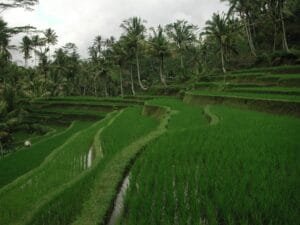
Ubud, Bali
Best months: May–Jul · 24–28°C days · rainy (climate data)
The global hub for yoga retreats — jungle studios, healthy food and a deep wellness scene.
Rishikesh, India
Best months: Nov–Jan · 9–21°C days · dry (climate data)
The “yoga capital of the world” on the Ganges, and the home of authentic practice.
Kerala, India
Best months: Nov–Jan · 9–21°C days · dry (climate data)
Ayurveda and yoga combined in backwater and beach retreats.
Costa Rica (Nosara)
Best months: Jan–Mar · 16–26°C days · dry (climate data)
Surf-and-yoga towns in a Blue Zone of longevity.
Thailand (Koh Samui & Chiang Mai)
Best months: Nov–Jan · 17–28°C days · dry (climate data)
Detox-and-yoga retreats and affordable luxury.
Portugal (Algarve & Ericeira)
Best months: Jun–Aug · 18–28°C days · dry (climate data)
Sunny coastal retreats, often combined with surfing.
Sri Lanka
Best months: Dec–Feb · 23–30°C days · some rain (climate data)
Quiet beach and jungle retreats with Ayurveda.
Tulum, Mexico
Best months: Dec–Feb · 7–23°C days · dry (climate data)
Beachfront yoga and a buzzy wellness community.
Greece
Best months: Sep–Nov · 15–24°C days · dry (climate data)
Island retreats combining yoga with Mediterranean calm.
Spain (Andalusia & Ibiza)
Best months: Apr–Jun · 12–25°C days · some rain (climate data)
Rural fincas and island retreats for every style.
How to choose
For authenticity and teacher training, choose India; for comfort and community, Bali, Costa Rica or Thailand; for an easy European escape, Portugal, Greece or Spain. Match the style of yoga taught to what you practise.
Related travel guides
Plan your trip to these destinations
Every destination here is chosen from independent research — Packzup runs no sponsorships or paid placements.
How long can you legally stay for a retreat, and does a tourist visa cover the training?
In India it does, and the portal says so in writing. India’s official e-Visa page lists the permitted purposes of the e-Tourist visa as recreation, sight seeing, casual visit to meet friends and relatives, and attending a short term yoga programme. A separate item on the same list covers short courses in local languages, music, dance, arts and crafts, cooking and medicine, and it is that item which carries the qualifier: the course must not be a formal or structured programme, must not exceed six months, and must not be issued with a qualifying certificate or diploma.
Read the qualifier carefully, because it is easy to attach to the wrong item. The portal runs the permitted purposes together in one continuous list, and the six-month and no-qualifying-certificate wording follows the short-courses item rather than the yoga one. That is a reading of the grammar, not a ruling by a visa officer. If your training awards a recognised certificate or diploma, put the question to an Indian mission in writing before booking rather than assuming either reading settles it.
The lengths are set by the variant you hold, and the shortest is counted differently from the rest. The one-month e-Tourist visa gives 30 days from the date of first arrival in India, with multiple entries, and is non-extendable and non-convertible; first arrival must fall between the date the electronic travel authorisation is issued and the date it expires. The one-year and five-year variants run 365 days and five years from the date the authorisation is granted, both multiple entry, both capped at a maximum stay of 180 days per calendar year. A six-month multiple-entry variant also exists. The trap is the 30-day one: it cannot be stretched, so a course that overruns by three days is a visa problem, not an admin problem.
For Portugal, or any Schengen retreat, the ceiling is European rather than national. The European Commission states it as entering as often as you like but staying a total of 90 days in every 180, with longer stays subject to national procedures. Two consecutive one-month retreats plus travel around them will fit; a season of teaching will not.
Which countries are changing their entry rules, and what does that do to a fixed course date?
Thailand cut its visa exemption with effect from 15 September 2026, and the gazetted numbers are not the numbers the Cabinet announced in May. The Cabinet approved the revision on 19 May 2026, and the Ministry of Foreign Affairs summarised it as granting only one exemption scheme per country or territory, revoking the 60-day exemption for all 93 countries and territories, revising the 30-day tourism exemption down from 57 to 54, adding a 15-day tourism exemption for 3, and cutting Visa on Arrival from 31 countries and territories to 4. Those were Cabinet figures. The Ministry of Interior announcements that actually do the work were published in the Royal Gazette on 31 August 2026 and take effect 15 days after publication, which is 15 September 2026. The Tourism Authority of Thailand states the gazetted lists as 60 countries and territories at 30 days, Seychelles and Mauritius at 15 days, and Visa on Arrival for Azerbaijan, Belarus and Serbia. Quote the gazetted announcement, not the Cabinet summary.
Two things in the gazetted version bear directly on a course booking. The 30-day exemption is framed for tourism purposes only, and the Tourism Authority notes it does not carry over the short-term work and business wording the 60-day scheme had. And entry under it through a land border is capped at twice per calendar year, a limit that does not apply to nationals of Malaysia, Brunei Darussalam, Indonesia and Singapore, or to others the Minister designates. An overland visa run is a countable resource now, not a routine.
The two governments’ own pages did not agree on 5 September 2026, so plan on the shorter number. The FCDO’s Thailand entry requirements page still stated that you can visit for 60 days, extendable by a further period not exceeding 30 days. The Thai instruments end that on 15 September 2026. Build a course that fits inside 30 days, or hold a visa, and put your own nationality to a Royal Thai Embassy before you pay a deposit.
Everyone entering Thailand must also file an arrival card online before travelling. GOV.UK states that from 1 May 2025 all foreign nationals entering by air, land or sea must complete a digital arrival card before arrival, and that travellers can register within 3 days before they arrive. The portal it names is tdac.immigration.go.th, run by the Immigration Bureau. Use that address rather than a search result.
Thailand also runs a long-stay route built for this kind of trip, the Destination Thailand Visa. The Royal Thai Embassy in London sets it out in three categories: DTV1 workcation, for digital nomads, remote workers, foreign talent and freelancers; DTV2 Thai soft power activities, whose published examples are Muaythai, Thai culinary training and medical treatment; and DTV3, for a holder’s spouse and children under 20. It is multiple entry with five years of validity and 180 days per entry, extendable once by a further period not exceeding 180 days, after which the holder must leave and re-enter. Financial evidence of not less than 500,000 Thai baht is required. Note what the published categories do not name: yoga. Ask the embassy whether a teacher training falls inside DTV2 rather than reasoning by analogy from Muaythai.
Indonesia publishes two numbers that are easy to confuse, and only one of them is your stay. The official e-Visa site states that the Visitor Visa is valid for 90 days while the stay it grants is 30 days from the arrival date. The validity is the window in which you must land; the stay is what you get once you have. It is single entry, and the listed purposes are tourism, government visits, business meetings, goods purchasing and transit. The same site says you may extend for another 30 days at an immigration office and that you cannot convert this visa to another visa or stay permit. So the working ceiling on that route is 30 days, or 60 with a granted extension, and a residential course that runs past day 30 depends on an application you have not yet made.
Costa Rica gives a ceiling, not a guarantee. GOV.UK records the entitlement as a visit without a visa of up to 180 days under a tourist visa waiver, with the exact period at the discretion of the immigration officer on arrival. That discretion is the part that matters: the number in your passport can be well under 180, and it is set after you have already flown. It also warns that immigration authorities can fine you 100 US dollars for each month of overstay and refuse future applications to enter, and that your passport must have an expiry date at least one day after the day you plan to leave. Costa Rica’s own Dirección General de Migración y Extranjería publishes the governing visa directives in the official gazette, so ask it, or a Costa Rican consulate, what your nationality is currently granted.
Two questions cover every country here, and they are not the same question: how many days are granted on entry, and whether that permission can be extended in country, by how long and how many times. The rule that saves people follows from both. Book the course dates inside the visa you can actually get, not the visa you hope to extend. Extension is nowhere automatic on this list, and a refusal lands in the middle of your course.
What is actually inside a 200-hour teacher training?
Four educational categories with fixed minimum hours, if the school is a Yoga Alliance Registered Yoga School at the 200 level. The published breakdown is Techniques, Training and Practice 75 hours; Anatomy and Physiology 30 hours; Yoga Humanities 30 hours; Professional Essentials 50 hours. Those four account for 185 of the 200, and the remaining 15 are not separately published, so ask the school what it does with them.
The four-category structure is newer than most brochures suggest. Yoga Alliance states that the standards underlying the RYS 200 credential took effect for newly registered schools on 27 February 2020, and that they condensed the educational categories from five to four to create a shared core curriculum. Alongside the categories sit 12 competencies with sub-competencies, and the application system requires a minimum of half an hour per sub-competency.
The categories are more specific than the names suggest. Anatomy and Physiology is split across anatomy, physiology and biomechanics, its biomechanics competencies being types of joint movement, joint stabilisation, safe movement in relation to balancing, stretching, awareness and physical limitations, and contraindications, misalignments and adaptations. Professional Essentials merges the old teaching methodology and practicum categories.
Two structural facts decide the quality of the room you will actually sit in:
- The standards table gives the RYS 200 row as a minimum of 150 of the 200 hours taught by Lead Trainers, with 1 to 5 Lead Trainers, all of whom must hold the E-RYT 500 credential and be active members of Yoga Alliance in good standing.
- Distance learning is permitted in full, and the floor is participation rather than presence: programmes may be 100 per cent in person, 100 per cent distance or a mix, with a minimum of 15 per cent of programme hours delivered synchronously, which Yoga Alliance sets at 30 synchronous hours at the RYS 200 level.
On assessment the standards are unusually plain. They say each RYS programme should assess the knowledge, skills and experiences of its trainees before issuing a 200-hour certificate, and that if students cannot demonstrate proficiency in the material taught, programmes should not graduate them simply because they completed the training. That is a standard rather than a guarantee, so ask any retreat how it assesses and what happens to a trainee who does not meet the bar.
Ask a prospective course three things in writing: who the Lead Trainers are and which credential each holds, how many of the 200 hours each will personally teach, and how the practicum and assessment work.
What does Yoga Alliance registration certify, and what does it not?
It records that a school’s curriculum meets a published standard, and that an individual completed a course at such a school. It is a membership registry maintained by annual dues, not a licence to practise, and Yoga Alliance frames the credential in those terms rather than as an inspection or an accreditation. Nobody is watching a class as it happens, and the letters after a teacher’s name are a membership status that lapses when dues stop. Registration also says nothing about the venue, the accommodation, the food safety or the insurance of the retreat you are attending. Whether teaching yoga is a regulated occupation where you live is a question for that jurisdiction, not for the registry.
Where the registry is genuinely useful is verification, and that is a check you can make before you pay. Yoga Alliance requires a training certificate to carry the name of the school as it is registered with Yoga Alliance in English characters, the handwritten signature of an authorised signatory who is not the person being registered, since self-signed certificates are not accepted, that signatory’s legal name in English characters, the track designation such as 200-hour or prenatal, the programme completion date in day, month and year, and the trainee’s legal name in English characters. It compares the certificate submitted against a sample certificate it holds for that school and follows up with the school where the two do not match. So a certificate missing the school’s registered name, or signed by the graduate, will not register.
The school side carries a cost worth knowing. The Standards for Registered Yoga Schools set a one-time, non-refundable application fee of USD 400 and annual membership dues of USD 240, a first-year total of USD 640, priced per credential where a school holds more than one. That is the school’s cost of being listed, not a measure of teaching quality, and it should not be presented to a student as an accreditation fee.
The useful question to a retreat is not "are you Yoga Alliance registered". It is "which credential is the school registered for, under what school name, and will the certificate carry that name".
Which half of the year is wrong for the retreat you are booking?
Every established retreat region has a wrong half, and it is not always the rainy half. Three different mechanisms close a season, and each needs a different check.
Rain that moves the roads, not just the weather. In monsoon regions the problem is rarely rain falling on the shala. It is river levels, landslides on mountain approaches and transfer routes that stop being reliable. A hillside retreat in northern India and a coastal one in the south do not share a wet season, so a national rule of thumb is useless.
Heat that makes a two-session day unrealistic. Practice at dawn and again in late afternoon is standard on residential courses, and in the hot months it is the afternoon session that breaks, in halls that are commonly not air-conditioned. Check the monthly mean maximum for the district from the national met service, not the seasonal label a brochure uses. Altitude is the opposite trap: Himalayan foothill towns run cold, unheated rooms in winter, which catches people who assumed India is warm all year.
The checks, in order. Ask the retreat which months it operates and which it closes, because a genuine seasonal operator publishes both. Cross-check the dates against the relevant national meteorological service: the India Meteorological Department for India, BMKG for Indonesia, the Thai Meteorological Department for Thailand, the Instituto Meteorológico Nacional for Costa Rica and IPMA for Portugal. Then ask what happens to the schedule if the weather closes the road, which is the answer that separates an operator with a plan from one without.
What does a retreat fee leave out, and what should you settle before the deposit?
Ask for the inclusion list in writing, item by item. Accommodation for the stated nights, the taught programme and a set number of meals a day are usually in. These are the predictable omissions, and each needs its own question:
- Airport transfers, and if included, from which airport and on which days. A transfer covering only the official arrival day constrains your flights.
- Course materials, the manual and the certificate, which is sometimes billed on its own.
- Treatments and one-to-one sessions, presented alongside the programme and charged apart from it.
- Single occupancy, the largest variable in the final figure where shared rooms are the default.
- Local taxes, card fees, and whether the balance is due in cash on arrival, which decides how much currency you carry.
The terms matter more than the list. Get the cancellation policy in days and percentages, ask whether the deposit follows different rules, ask what happens if the retreat cancels and whether a refund is cash or credit, and ask what minimum number of participants the course needs to run. A course that quietly needs eight bookings can be cancelled on you weeks out. Get it by email.
Four health questions belong in the same email rather than on a form you first see at arrival. Does your insurer cover a residential teacher training as an activity, for the whole stay, and at what medical excess? Does a qualified person read your health form before you arrive, given that injury, pregnancy, recent surgery, cardiovascular and eye conditions and medication affecting blood pressure or balance all bear on inversions and breath retention? Which hospital is nearest, how long does it take, and will your insurer deal with it? And how are allergies handled in a shared kitchen, plus whether anything you take regularly is restricted at the destination, which is a question for its customs or health authority. Discuss the practice itself with your own doctor, not with the retreat, and ask whether the course assumes a standard of practice on arrival, because a 200-hour training is not a beginners’ course in most traditions.
Visa rules, immigration practice and course standards described here reflect the position each named authority set out on 5 September 2026. Put every one of them back to that authority in the month you pay a deposit, then again before you fly.
At a glance
| Destination | Route usually used | Published length of stay | Confirm with |
|---|---|---|---|
| India | e-Tourist visa; the portal lists attending a short term yoga programme among permitted purposes | 30-day variant: 30 days from first arrival, multiple entry, non-extendable and non-convertible. One-year and five-year variants: multiple entry from the date the authorisation is granted, maximum 180 days per calendar year. A six-month variant also exists | indianvisaonline.gov.in and the Indian mission for your nationality |
| Portugal | Schengen short stay | 90 days in every 180; stays beyond 90 days go through national procedures | European Commission Schengen visa policy pages and the Portuguese consulate |
| Indonesia | Visitor Visa / e-VOA, single entry | Visa valid 90 days, but the stay is 30 days from the arrival date; extendable by a further 30 days at an immigration office; cannot be converted to another visa or stay permit | evisa.imigrasi.go.id, Directorate General of Immigration |
| Thailand | Visa exemption, or the Destination Thailand Visa for a longer stay | Ministry of Interior announcements gazetted 31 August 2026 take effect 15 September 2026, ending the 60-day exemption. The Tourism Authority of Thailand states the gazetted lists as 60 countries and territories at 30 days for tourism only, Seychelles and Mauritius at 15 days, and Visa on Arrival for Azerbaijan, Belarus and Serbia; land-border entry on the 30-day exemption is capped at twice a calendar year with named exceptions. GOV.UK still described a 60-day exemption on 5 September 2026. The DTV allows 180 days per entry, extendable once by up to 180 days, on a 5-year multiple-entry visa | A Royal Thai Embassy, for the announcement that applies to your passport |
| Costa Rica | Tourist visa waiver | Up to 180 days, with the exact period set at the discretion of the immigration officer on arrival; overstay fined at USD 100 per month; passport must be valid at least one day beyond the planned departure | Direccion General de Migracion y Extranjeria, or a Costa Rican consulate |
Frequently asked questions
Can you do a yoga teacher training on a tourist visa?
In India the official e-Visa page lists attending a short term yoga programme among the permitted purposes of the e-Tourist visa. The six-month limit and the no-qualifying-certificate wording on that page attach to a separate item covering short courses in languages, music, dance, arts and crafts, cooking and medicine, so where a yoga course awards a recognised certificate or diploma, ask an Indian mission which visa applies rather than assuming. In other countries the position varies and should be confirmed with that country’s own immigration authority rather than with the retreat.
How long is the Indian e-Tourist visa valid for?
There are several variants and they are counted differently. The 30-day version gives 30 days from the date of first arrival in India, permits multiple entries, and is non-extendable and non-convertible; first arrival must fall between the issue and expiry dates of the electronic travel authorisation. The one-year and five-year versions run from the date the authorisation is granted, permit multiple entries and cap the stay at 180 days per calendar year. A six-month multiple-entry version also exists. Book a course that finishes inside the variant you hold.
How many hours of a 200-hour training are taught by the lead teacher?
The Yoga Alliance standards table sets 150 of the 200 as the minimum taught by Lead Trainers, and states that all Lead Trainers for RYS 200 programmes must hold the E-RYT 500 credential. A school may employ up to five Lead Trainers. Ask which of them will teach your dates, and how many hours each will personally deliver.
Is Yoga Alliance a certification or an accreditation?
Neither. It is a membership registry maintained by annual dues. It records that a school’s curriculum meets a published standard and that an individual completed a course at such a school, and it checks submitted certificates against a sample certificate it holds for that school. It is not a licence to teach, and it says nothing about a retreat’s accommodation, food safety or insurance.
Can a 200-hour training be done online?
Yes. Yoga Alliance permits programmes that are 100 per cent in person, 100 per cent distance or a mix, with a minimum of 15 per cent of programme hours delivered synchronously, which it sets at 30 synchronous hours at the RYS 200 level. Synchronous means teachers and students gather online at the same time, so ask what share of your specific course is live rather than recorded.
How long can I stay in Thailand for a yoga teacher training?
Thirty days for most nationalities from 15 September 2026, and you have to check your own. The Ministry of Interior announcements gazetted on 31 August 2026 take effect 15 days after publication, ending the 60-day visa exemption. The Tourism Authority of Thailand states the gazetted lists as 60 countries and territories at 30 days for tourism only, Seychelles and Mauritius at 15 days, and Visa on Arrival for Azerbaijan, Belarus and Serbia, with land-border entry on the 30-day exemption capped at twice a calendar year except for Malaysian, Bruneian, Indonesian and Singaporean nationals. Those gazetted figures differ from the Cabinet decision of 19 May 2026, which gave 54, 3 and 4. On 5 September 2026 the FCDO page still described a 60-day exemption, so treat 30 days as the planning number and confirm with a Royal Thai Embassy. The Destination Thailand Visa gives 180 days per entry, extendable once by up to 180 days, but its published categories name Muaythai, Thai culinary training and medical treatment rather than yoga.
How long does an Indonesian visa on arrival let you stay?
Thirty days from the arrival date, not ninety. The official e-Visa site gives the Visitor Visa a 90-day validity, which is the window in which you must arrive, while the stay it grants is 30 days. It is single entry, and it can be extended by a further 30 days at an immigration office but cannot be converted to another visa or stay permit. A residential course longer than a month therefore rests on an extension you have not yet been granted, so check the current position with the Directorate General of Immigration before you commit to dates.
Do I need to fill in a Thailand arrival card before I fly?
Yes. GOV.UK states that from 1 May 2025 all foreign nationals entering Thailand by air, land or sea must complete a digital arrival card online before arrival, and that travellers can register within 3 days before they arrive. The portal it names is tdac.immigration.go.th, operated by the Immigration Bureau. Use that address directly rather than a search result.
You Might Also Love


Bali dominates this list for a reason
The dedicated island guide goes far deeper:
