
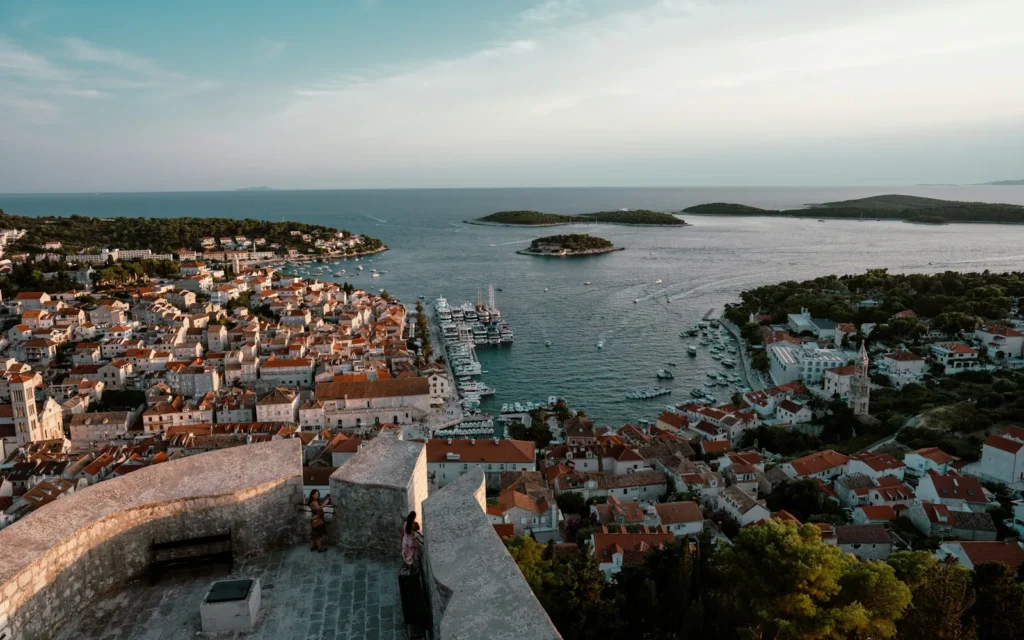
July is Croatia at full volume: coast at about 31°C, a 25°C Adriatic, every ferry running and every island open. It is also the most crowded and most expensive month, and the one where the difference between a well-planned trip and a badly-planned one is largest.
The weather, precisely
Hot and dry on the coast, with almost no rain and long, reliable sunshine. Inland Zagreb is cooler on paper but more humid and less pleasant – the continental summer is heavy rather than crisp.
The saving grace on the coast is the maestral – the afternoon sea breeze that builds most summer days from late morning, blowing onshore and taking the edge off the heat. It is the opposite number to winter’s bura: gentle, predictable, and the reason the Adriatic is one of the best sailing grounds in Europe. It also drops away in the evening, which is when the heat returns.
Dubrovnik Summer Festival
Unusually for this cluster, the dates are fixed rather than announced annually. The Dubrovnik Summer Festival runs 10 July to 25 August every year – forty-seven days of theatre, classical music, opera and dance staged in the Old Town itself: on Lovrijenac fortress, in palace courtyards, on the city walls and in the squares.
It is a serious arts festival rather than a tourist show, it has run since 1950, and performing Hamlet on the battlements of a sixteenth-century fortress above the sea is not something other cities can offer. Book tickets and accommodation well ahead.
Handling the crowds
Croatia’s problem in July is concentration: everyone wants the same handful of places at the same hours.
- Dubrovnik Old Town – walk the walls at opening (they open early for exactly this reason) or in the last two hours. Midday on the walls in July, with no shade and 31°C, is genuinely unpleasant and occasionally dangerous.
- Check the cruise schedule. Dubrovnik caps daily cruise arrivals, but on a heavy day the Old Town is unwalkable between 10:00 and 16:00.
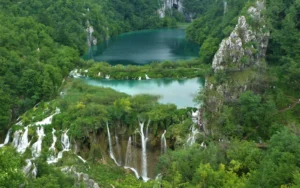
- Plitvice – book timed entry weeks ahead and take the first slot. Water levels are at their lowest now, so the falls are far less impressive than in spring.
- Hvar and Korčula – day-trippers arrive mid-morning and leave late afternoon. Staying overnight gives you the towns either side of that.
- Go to the less obvious islands. Vis, Lastovo, Šolta, Silba and the Kornati are all reachable and none are crushed.
Ferries and island-hopping
July is the one month everything runs. Full Jadrolinija timetables, extra catamarans, and the seasonal international routes. Two practical notes: foot-passenger catamarans sell out in July and should be booked in advance, and car ferries have long queues in peak season – arriving an hour early is not over-cautious. Many islands are better without a car anyway.
Heat and fire
Dalmatia is dry, rocky and windy in summer, and wildfire is a real seasonal risk. Open fires are banned in the coastal zone in summer, restrictions on access to some forested areas can appear at short notice, and the emergency number across Croatia and the EU is 112.
Prices and crowds
Peak on both. Accommodation on the coast is at its annual maximum, and Dubrovnik is among the most expensive cities in the Mediterranean in July. Zagreb, by contrast, is cheap – the capital empties in summer while the coast fills. See what a trip to Croatia costs.
What to pack
Light clothing, a hat, strong sunscreen and sunglasses. Water shoes – most Croatian beaches are pebble or rock, not sand, and sea urchins are common. A refillable bottle; tap water is excellent. A light layer for evening ferries and boats.
The July 2027 calendar
- From 10 July – the Dubrovnik Summer Festival begins, running to 25 August. Fixed dates every year.
- Through July – full ferry and catamaran timetables; catamarans sell out, car ferries queue.
- Most afternoons – the maestral sea breeze builds, easing the coastal heat and dropping away in the evening.
- Through July – Adriatic at about 25°C; Plitvice at its lowest water of the year.
- Through July – wildfire season on the Dalmatian coast; open fires banned. Emergency number 112.
- No national public holidays fall in July in Croatia.
Read alongside
- Croatia in June – warm sea, far fewer people.
- Croatia in August – hotter, busier, and the warmest sea.
- Croatia in September – the month to go instead.
- Best time to visit Croatia – all twelve months compared.
- Croatia in 10 days – how the regions connect.
- Things to do in Dubrovnik – and when to do it.
- Trip to Croatia cost – peak-season numbers.
Frequently asked
How hot is Croatia in July?
About 31°C by day on the Dalmatian coast and 27°C in Zagreb, with a 25°C Adriatic. The afternoon maestral sea breeze makes the coast more comfortable than the numbers suggest.
What is the maestral?
The onshore afternoon sea breeze that builds most summer days on the Adriatic, easing the heat and making the coast one of Europe’s best sailing grounds. It drops away in the evening.
When is the Dubrovnik Summer Festival?
10 July to 25 August every year – fixed dates. Theatre, opera, classical music and dance staged on Lovrijenac fortress, in palace courtyards and on the city walls. Running since 1950.
When should I walk the Dubrovnik walls?
At opening or in the final two hours. There is no shade, and the walls at midday in 31°C are genuinely punishing. Check the cruise-ship schedule too.
Is Plitvice good in July?
It is at its lowest water of the year and its most crowded. March and April are far better for the falls. If you must go in July, book timed entry weeks ahead and take the first slot.
Do I need to book Croatian ferries in July?
Foot-passenger catamarans, yes – they sell out. Car ferries do not always take bookings but queue badly, so arrive an hour early. Many islands are easier without a car.
Are Croatian beaches sandy?
Mostly not – they are pebble or rock. Water shoes are genuinely useful, and sea urchins are common on rocky entries.
Is Zagreb worth visiting in July?
Yes, and it is cheap – the capital empties in summer while the coast fills. It is more humid than the coast, though, and has no sea breeze.
You Might Also Love

Written by
John Morrison is the founder and lead travel writer at Packzup. Over the past decade he has explored destinations across Africa, the Americas, Asia, Europe, the Middle East, and Oceania — always self-funded, never on a press trip.
