
Last updated September 3, 2026 · Editorial policy
- 7-Day Croatia Itinerary: A Day-by-Day Travel Plan
- Croatia Itinerary at a Glance
- Day-by-Day Itinerary
- Where to Stay in Croatia
- Budget Breakdown (7 Days)
- What to Pack
- Tips for a 7-Day Croatia Trip
- Flying in From the US: How to Sequence This Trip So You Don't Cross the Coast Twice
- Frequently Asked Questions
- Related Croatia Travel Guides
Croatia itineraries by trip length
Still deciding? Compare: Croatia vs Portugal · Croatia vs Spain
7-Day Croatia Itinerary: A Day-by-Day Travel Plan
Best for: first-time visitors who move at a brisk pace, happy to split a week between Split, Hvar, and Dubrovnik with a Plitvice or Krka day trip.
Planning a 7-day trip to Croatia? This itinerary is built from a first-time-visitor perspective: hit the icons, eat the best food, and finish with one or two memorable experiences locals would recommend. Each day mixes a major sight, food stops, and downtime — no death marches, no missing highlights.
Croatia Itinerary at a Glance
| Day | Focus |
|---|---|
| Day 1 | Land in Dubrovnik |
| Day 2 | Walls & Islands |
| Day 3 | Oysters on Pelješac |
| Day 4 | Sail North to Split |
| Day 5 | Diocletian’s Palace |
| Day 6 | Hvar Island Escape |
| Day 7 | Plitvice to Zagreb |
Day-by-Day Itinerary
Day 1 — Land in Dubrovnik
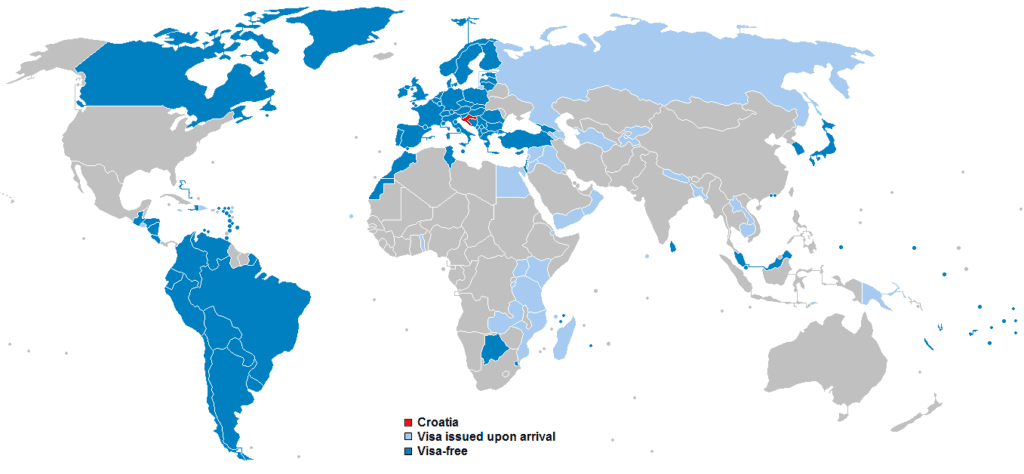
Most US travelers connect through Frankfurt, Munich, or Zurich into Dubrovnik Airport (DBV) at Čilipi, about 12 miles southeast of the walled city. The airport shuttle bus to the Pile Gate runs roughly every 30–45 minutes after arrivals and costs about €10 (around $11) one way; a taxi is closer to €35–40. Croatia uses the euro (adopted 2023) and is in the Schengen zone, so no separate visa is needed for a short US tourist stay. Settle into the Old Town or the leafy Ploče district just east of it, then walk the marble Stradun as the day-trippers thin out toward evening. Grab a first dinner of black risotto (crni rižot, squid-ink) at a konoba in the back lanes. Planning note: buy a local eSIM before you fly — airport data plans are pricey, and you will want offline maps for the stepped alleys.
Day 2 — Walls & Islands
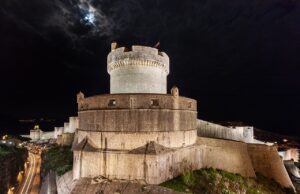
Beat the cruise-ship crowds by walking the City Walls at opening (around 8:00 in summer); the circuit is roughly 1.2 miles of ramparts with knockout views over terracotta roofs and the Adriatic. Tickets run about €35–40 (around $38–44) and include Fort Lovrijenac; a 1-day Dubrovnik Pass (about €45) adds the Rector’s Palace and Maritime Museum plus buses. Afterward, ride the Dubrovnik Cable Car up Mount Srđ (about €27 return) for the panorama, or hike the switchbacks if you are fit. In the afternoon, catch a small boat from the Old Port to Lokrum, a car-free island nature reserve with a saltwater swimming lake and roaming peacocks (ferry about €27 round trip, 15 minutes). Planning note: skip midday wall-walking entirely — the exposed stone bakes and shade is scarce. Cash tips of 10–15% are appreciated at restaurants but not obligatory.
Day 3 — Oysters on Pelješac
Rent a car for a day trip up the Pelješac Peninsula, about an hour’s drive north along the coast, or join a small-group tour (roughly €90–110, around $100–120, often with lunch). First stop Ston and Mali Ston, twin medieval towns linked by Europe’s longest defensive wall after China’s — a 3.4-mile fortification that once guarded the Republic’s salt pans. Mali Ston’s sheltered channel produces prized oysters and mussels; a plate of just-shucked European flat oysters with a squeeze of lemon runs about €2 apiece at a waterside spot. Continue to the vineyards around Dingač and Postup, where the steep seaside slopes yield robust Plavac Mali reds. Planning note: taste before you drive, and designate a driver — Croatia enforces a strict blood-alcohol limit. If self-driving, book the return before dusk; the coastal road’s curves are unlit and demanding after dark.
Day 4 — Sail North to Split
Return the car and board a morning Krilo (Kapetan Luka) or TP Line catamaran from Dubrovnik’s Gruž port up the Dalmatian coast to Split. The fast ferry calls at Mljet, Korčula, and Brač along the way, taking roughly 4.5 to 5 hours; fares are about €40–55 (around $44–60) and this scenic route runs seasonally, April through October. Book online in advance for summer sailings, which sell out. Grab a window seat on the port (left) side for island views. In Split, walk 10 minutes from the ferry terminal to the seafront Riva promenade and check into a room inside or beside Diocletian’s Palace. Ease in with an evening stroll and a scoop of gelato along the palm-lined waterfront. Planning note: the catamaran is far more pleasant than the parallel coastal bus — you get sea air, no traffic, and a moving postcard for the price of a cramped road trip.
Day 5 — Diocletian’s Palace
Spend the morning inside Diocletian’s Palace, the sprawling 4th-century Roman retirement complex that still forms the living core of Split — not a ruin behind ropes but a warren of cafes, apartments, and shops. Descend into the atmospheric substructures (basement halls, small entry fee about €7), then climb the Cathedral of St. Domnius bell tower (about €7) for rooftop views; the cathedral itself was Diocletian’s mausoleum. Stand on the Peristyle square where street performers gather, and find the black granite Egyptian sphinx the emperor shipped from Luxor. In the afternoon, hike or bike the pine-forested Marjan hill for bay panoramas, then swim off Bačvice beach where locals play the paddle game picigin in shallow water. Planning note: try peka (meat or octopus slow-baked under a bell-shaped lid) — most konobas require you to order it a few hours ahead.
Day 6 — Hvar Island Escape
Take an early Jadrolinija or Krilo catamaran from Split across to Hvar Town, roughly a one-hour crossing with up to a dozen or more summer departures; fares are about €10–20 (around $11–22) each way. Book the return seat too in peak season. Climb to the Fortica (Španjola) fortress above town (small entry fee, around €10) for a sweeping view over the harbor and the offshore Pakleni Islands, then wander the marble main square anchored by St. Stephen’s Cathedral. In the afternoon, hop a taxi boat to the Pakleni Islands for clear-water swimming and a lavender-scented lunch, or detour inland to Stari Grad and its UNESCO-listed ancient Greek field, the Stari Grad Plain. Planning note: Hvar is one of Croatia’s sunniest islands and pricier than the mainland — refill a water bottle and time the last catamaran back to Split carefully, as evening sailings fill fast.
Day 7 — Plitvice to Zagreb
Pick up a rental car or join a transfer and drive inland about 2.5 to 3 hours to Plitvice Lakes National Park, Croatia’s UNESCO-listed cascade of 16 turquoise terraced lakes linked by wooden boardwalks and waterfalls. In high season (June–September) adult entry is about €40 (around $44) and includes the electric boat and panorama shuttle; buy a timed ticket online in advance, as daily entries are capped. Walk one of the marked lettered routes — the lower-lakes loop delivers the tallest falls, Veliki Slap, in a couple of hours. From Plitvice it is roughly a 2-hour drive on to Zagreb, Croatia’s capital, to wrap the trip; return the car and stroll the Upper Town (Gornji Grad), the tiled St. Mark’s Church roof, and the cafe-lined Tkalčićeva street. Planning note: from Zagreb Airport most US travelers connect home via a European hub — wear grippy shoes at Plitvice, as the boardwalks have no railings and turn slick.
Where to Stay in Croatia
Choose a central neighborhood within walking distance of major sights — you’ll save hours of commute time over 7 days. Book 6-12 weeks ahead for best rates.
Budget Breakdown (7 Days)
Croatia is rated Moderate in our Travel Cost Index 2026. Figures are country-level daily ranges per person and exclude international flights.
| Travel style | Per day | Total 7 days |
|---|---|---|
| Budget | $30-55 | $210-385 |
| Mid-range | $100-180 | $700-1,260 |
| Luxury | $300-500 | $2,100-3,500 |
Source: Packzup Travel Cost Index 2026 — country-level averages; city and peak-season prices run higher. Excludes international flights.
What to Pack
- Clothing: Dalmatian summers mean strong sun, so pack a hat, swimwear, and a light layer for breezy ferry decks. Shoes with grip handle Dubrovnik’s polished stone lanes and Plitvice’s boardwalks; cover shoulders and knees for cathedral visits.
- Tech: Croatia uses type C/F plugs at 230V; US dual-voltage chargers only need an adapter. Download Bolt for taxis, GetByBus for coaches, and offline Google Maps for old-town alleys.
- Documents: Croatia is in the Schengen zone, so US passport holders currently enter visa-free for short tourist stays — check whether ETIAS pre-authorization has launched before booking. Schengen rules require a passport valid at least three months past departure; keep ferry and Plitvice confirmations offline.
- Money: Croatia switched to the euro in 2023 and cards are widely accepted, but carry some cash for konoba meals, market stalls, and Hvar taxi boats. Tipping is modest — rounding up or about 10% for good restaurant service.
- Day bag: Pack a refillable bottle (tap water is safe), water shoes for pebble beaches and sea urchins, sunscreen, and a shoulder cover for church visits.
Tips for a 7-Day Croatia Trip
- Book Plitvice Lakes ahead: timed-entry tickets sell out days in advance in July and August. Blue Cave boat trips from Split fill fast too, so reserve 2-3 days out.
- Build in buffer time: Adriatic catamarans run seasonal timetables and can be canceled when the bura wind kicks up, and Plitvice caps timed entries — leave slack around the Dubrovnik–Split crossing, the Hvar return sailing, and a jet-lagged Day 1.
- Eat like a local: Eat at konobas (family taverns) off the waterfront and pre-order peka, meat or octopus roasted under an iron bell, a few hours ahead.
- Travel insurance: $40-100 for 7 days. Covers medical, theft, cancellations.
- Get connected: Install an eSIM (Airalo or Saily) before landing, roughly 10-15 USD for a week of data; otherwise Hrvatski Telekom tourist SIMs sell at Tisak kiosks.
Flying in From the US: How to Sequence This Trip So You Don’t Cross the Coast Twice
United is the only carrier with a nonstop link between the US and Croatia, and Newark (EWR) is the hub. The seasonal nonstop to Dubrovnik runs roughly nine hours and operates only in the warm months, so most Americans land mid-afternoon Croatia time after an overnight flight. Treat day 1 as a soft landing: walk the Dubrovnik walls in the late-day light, eat early, and resist the urge to book a 7am Elaphiti boat trip while your body still thinks it’s the middle of the night.
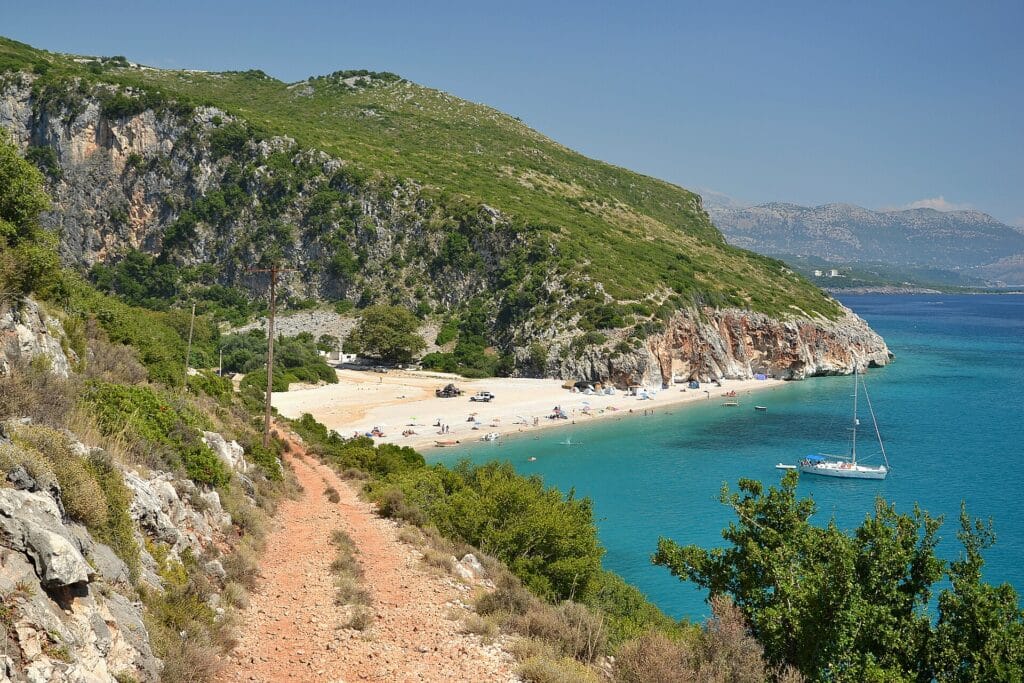
The routing mistake to avoid is treating Dubrovnik as both the start and the finish. Backtracking the full ~220 km between Dubrovnik and Split eats most of a day each way. For summer 2026 United adds a second nonstop, Newark to Split on a Boeing 767-300ER three times a week starting late April, which makes an open-jaw far smarter: fly into one city, out of the other.
A few sequencing calls that save real time:
- Drive the Split-Dubrovnik leg via the Peljesac Bridge (open since July 2022), not the old Neum corridor through Bosnia, which still triggers passport queues in peak season.
- For Hvar, take the roughly one-hour catamaran that docks in Hvar Town center, not the slower car ferry to Stari Grad several kilometers from town.
Frequently Asked Questions
Is 7 days enough for Croatia?
For first-time visitors, 7 days in Croatia covers the main highlights without rushing. If you want to add day trips, slower pace, or hidden gems, plan 2-3 more days. 7 days is the minimum to feel you’ve truly seen Croatia — anything less is a sampler.
How much will a 7-day Croatia trip cost?
Using the Budget Breakdown table above, drawn from our Travel Cost Index 2026: Budget $30-55/day ($210-385 for 7 days), Mid-range $100-180/day ($700-1,260 for 7 days), Luxury $300-500/day ($2,100-3,500 for 7 days). Country-level averages, excluding international flights.
What’s the best time to do a 7-day Croatia itinerary?
Shoulder seasons (just before/after peak) offer the best balance of weather, crowds, and price for Croatia. Check the destination’s specific best-time guide for exact months. Avoid major local holidays which spike prices and crowd attractions.
How do I get around Croatia?
Croatia has no coastal rail, so intercity buses (FlixBus, Arriva, booked via GetByBus) do the heavy lifting between Zagreb, Split, and Dubrovnik. Along the coast, Jadrolinija ferries and Krilo catamarans link Split, Hvar, and Korcula; book catamarans a few days ahead in summer. In cities, Uber and Bolt both work, and Zagreb runs ZET trams.
What should I pack for 7 days in Croatia?
Adriatic summers run hot and dry, so pack breathable clothing, a swimsuit, strong sunscreen, and a light layer for evening ferry rides. Croatian beaches are pebbles, not sand, so bring water shoes, plus grippy walking shoes for polished stone streets and Plitvice boardwalks. A scarf or sleeved top covers shoulders in churches.
Should I book hotels or use Airbnb in Croatia?
For 7-day trips, hotels are usually better: easier check-in, daily housekeeping, no laundry expectations, included breakfast often. Airbnb/apartments make sense for stays of 5+ nights, families, or kitchen-focused travelers. Book central locations to save commute time.
Related Croatia Travel Guides
- Best Things to Do in Croatia
- Where to Stay in Croatia
- Best Food in Croatia
- Best Time to Visit Croatia
- Croatia Trip Cost Breakdown
You Might Also Love

Written by
John Morrison is the founder and lead travel writer at Packzup. Over the past decade he has explored destinations across Africa, the Americas, Asia, Europe, the Middle East, and Oceania — always self-funded, never on a press trip.
