
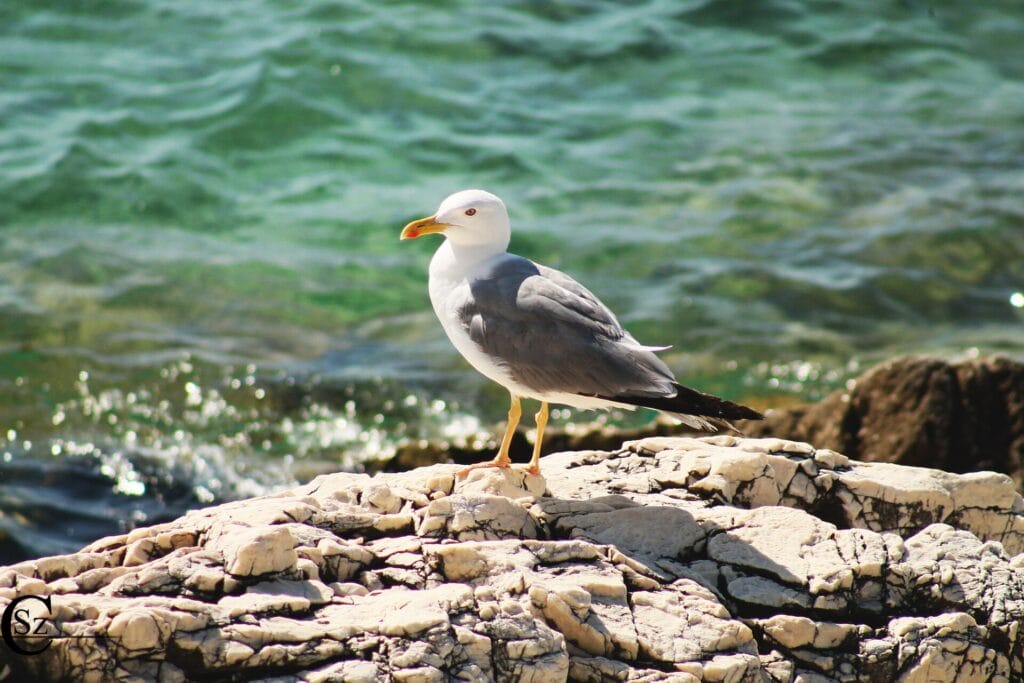
August is the warmest sea of the year at about 26°C, the absolute peak of the season, and the most expensive month in Croatia. Two national holidays fall inside it – 5 and 15 August – and the 15th coincides with the peak of the European holiday season. If you are coming for the water, this is the month. If you are coming for anything else, it is the wrong one.
The weather, precisely
Marginally cooler than July on paper and warmer in the water, because the sea lags the air. At 26°C the Adriatic is genuinely bath-warm and swimmable from dawn to midnight – the reason people put up with everything else August brings.
The maestral still builds most afternoons. Heatwaves push the coast past 35°C, and the karst has no shade.
Two holidays
- Thursday 5 August – Victory and Homeland Thanksgiving Day, marking the 1995 Operation Storm. A national public holiday with official commemorations, particularly in Knin. It is a politically significant day rather than a festive one; banks and offices close.
- Sunday 15 August – Assumption, a national public holiday and one of the biggest religious days of the Croatian year. Pilgrimages to Marija Bistrica inland and to Sinj draw large crowds. It is also the single busiest weekend of the Adriatic summer, with Italian, German and Austrian holidays all overlapping.
The Sinjska Alka
Worth planning around if you want something that is not a beach. The Sinjska Alka is held at Sinj, inland from Split, on the first Sunday of August – 1 August in 2027. It is a knights’ tournament first run in 1715 to mark the town’s defence against an Ottoman siege, in which riders at full gallop try to lance a small iron ring.
It is on the UNESCO Intangible Cultural Heritage list, competitors must be from the Sinj region, and it is a genuine local institution rather than a re-enactment for visitors. Tickets for the stands sell out.
What else is on
- The Dubrovnik Summer Festival runs to 25 August, its fixed annual end date.
- Špancirfest in Varáždin, the baroque town north of Zagreb, usually runs in late August – street performers, music and crafts across the old centre for ten days. It is one of the best inland events of the Croatian year and almost entirely missed by coastal visitors.
- Village fjere and saints’ days across the islands through the month, which are the real local August.
The practical reality
- Book everything, months ahead. Accommodation, catamarans, Plitvice entry, restaurant tables in Hvar and Dubrovnik.
- The week around 15 August is the hardest – avoid arriving or moving islands on it.
- Jellyfish appear on the Adriatic some Augusts, usually briefly and locally. Ask locally rather than assuming.
- Wildfire risk is at its annual peak. Open fires are banned on the coast, access restrictions can appear at short notice, and the emergency number is 112.
- Zagreb is the cheap, empty alternative – the capital is at its quietest while the coast is at its fullest.
Prices and crowds
The annual maximum on both. Coastal accommodation is two to three times its May rate, and Dubrovnik in mid-August is one of the most expensive places in the Mediterranean. See what a trip to Croatia costs.
What to pack
Light clothing, hat, high-factor sunscreen and sunglasses. Water shoes for the pebble and rock beaches. A refillable bottle. A light layer for evening boats. Something modest for churches, particularly around 15 August.
The August 2027 calendar
- Sunday 1 August – the Sinjska Alka at Sinj; UNESCO-listed, stand tickets sell out.
- Thursday 5 August – Victory and Homeland Thanksgiving Day, a national public holiday.
- Sunday 15 August – Assumption, a national public holiday and the single busiest weekend of the Adriatic summer.
- To 25 August – the Dubrovnik Summer Festival concludes.
- Late August – Špancirfest in Varáždin.
- Through August – the Adriatic at its annual warmest, about 26°C; peak wildfire risk; emergency number 112.
Read alongside
- Croatia in July – slightly cooler water, same crowds.
- Croatia in September – nearly the same sea, half the people.
- Croatia in June – warm enough, far cheaper.
- Best time to visit Croatia – all twelve months compared.
- Croatia in 10 days – how the regions connect.
- Things to do in Dubrovnik – and when to do it.
- Trip to Croatia cost – peak-season numbers.
Frequently asked
How warm is the sea in Croatia in August?
About 26°C – the warmest of the year, because the Adriatic lags the air by roughly two months. It is comfortable from dawn until late at night.
What is the Sinjska Alka?
A knights’ tournament held at Sinj on the first Sunday of August – 1 August in 2027 – first run in 1715, in which riders at full gallop lance a small iron ring. It is UNESCO-listed and competitors must be from the Sinj region.
What public holidays fall in August in Croatia?
Victory and Homeland Thanksgiving Day on 5 August, marking Operation Storm in 1995, and Assumption on the 15th. Both are national holidays; the 15th is the busiest weekend of the coastal summer.
Is August too crowded in Croatia?
It is the peak. The week around 15 August is the hardest of all, with Italian, German and Austrian holidays overlapping. Book everything months ahead.
Are there jellyfish in Croatia in August?
Sometimes, usually briefly and in particular bays rather than along the whole coast. Ask locally rather than assuming either way.
Is there a wildfire risk in August?
Yes, at its annual peak on the Dalmatian coast. Open fires are banned, access restrictions can appear at short notice, and the emergency number is 112.
What is Špancirfest?
A ten-day street festival in Varáždin, the baroque town north of Zagreb, usually in late August – performers, music and crafts across the old centre. One of the best inland events of the year.
Where is cheapest in Croatia in August?
Zagreb. The capital empties in summer while the coast fills, so it is both quiet and comparatively cheap.
You Might Also Love

Written by
John Morrison is the founder and lead travel writer at Packzup. Over the past decade he has explored destinations across Africa, the Americas, Asia, Europe, the Middle East, and Oceania — always self-funded, never on a press trip.
