
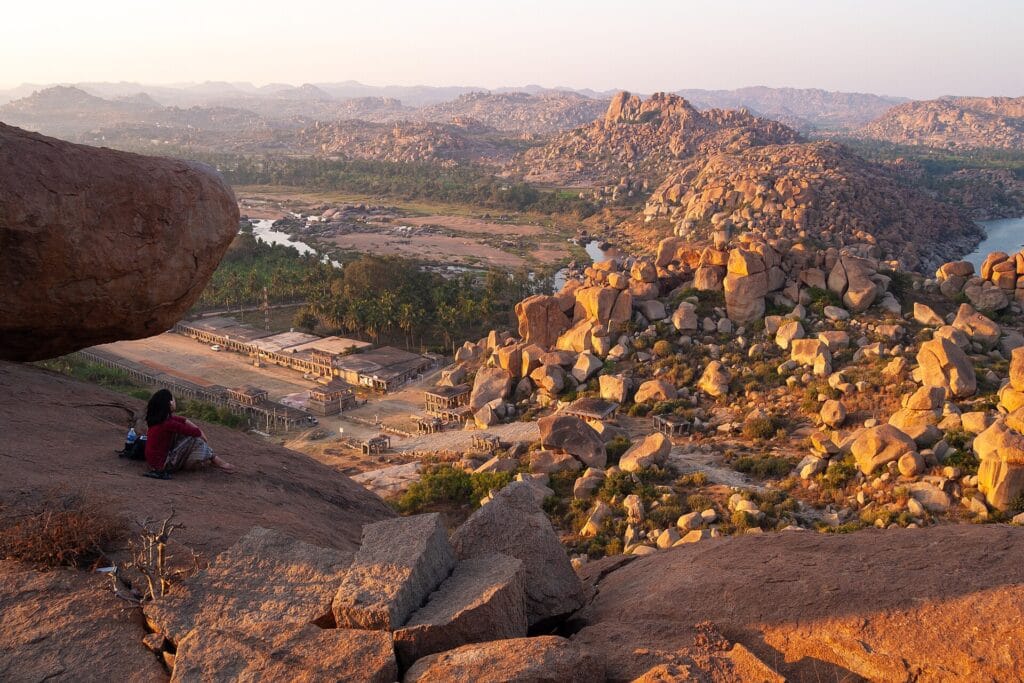
By July the monsoon covers the whole country – normally by about the 8th – and India becomes green, cheap and dramatic. Delhi drops from 38°C to about 34°C with 196 mm of rain, the Western Ghats are at their most spectacular, and the Himalayan trekking season is in full swing in the rain shadow. It is also the month the Nashik Simhastha Kumbh Mela formally begins, with the flag hoisting on 24 July 2027.
The Kumbh Mela at Nashik, 2027
The Simhastha Kumbh Mela at Nashik and Trimbakeshwar in Maharashtra is one of the four Kumbh sites and its cycle comes round in 2027–28. The published schedule has the flag hoisting ceremony on 24 July 2027 and the first Shahi Snan – the royal bathing day – on 2 August 2027, with the wider mela period running into 2028.
What this means practically:
- Nashik will be extraordinarily crowded on the bathing dates – Kumbh gatherings are among the largest human assemblies on earth.
- Accommodation across Nashik and Trimbakeshwar should be booked far in advance, and many visitors stay in Mumbai or Pune and travel in.
- Crowd safety is a genuine consideration. Follow official routing, avoid the peak hours at the ghats if you are not bathing, and treat the administration’s instructions as binding.
- Dates are set by the astrological calendar and have been revised before – confirm against the Maharashtra government and the mela administration before booking.

Weather by region
- Delhi and the north – about 34°C by day and 27°C at night, with roughly 196 mm of rain. Cooler than June but far more humid.
- Mumbai and the west coast – the heart of the monsoon, with very heavy rainfall and periodic urban flooding.
- Kerala and the Western Ghats – green, waterfalls everywhere, and at their most beautiful. Munnar and Wayanad are extraordinary now.
- Rajasthan – the monsoon reaches it; the desert greens briefly and the temperature drops from its May extreme.
- Ladakh, Spiti and Zanskar – in the rain shadow, dry and clear; peak trekking season.
- The north-east – extremely wet; Meghalaya at the height of its record-setting rainfall.
The Himalayan season
Continue planning your India trip
July and August are the core of the high-altitude summer:
- Ladakh – all the passes open, Nubra and Pangong accessible, and the Hemis festival usually in June or July.
- Spiti – both approach roads open, making the Manali–Spiti–Kinnaur circuit possible.
- The Valley of Flowers, Uttarakhand – the bloom peaks from mid-July into August, and it is the single best reason to walk in the Indian Himalaya in monsoon season.
- Kashmir – the Great Lakes trek and the Amarnath Yatra pilgrimage both run in this window.
The caveat is the approach: getting to these places means crossing monsoon-affected roads in Himachal and Uttarakhand, where landslides are common and can close highways for a day or more. Build slack into the plan.
Prices and crowds
The annual low across most of the country. Kerala, Goa, Rajasthan and the Golden Triangle are all heavily discounted with few foreign visitors. Ladakh is the exception and is in peak season, as is Nashik around the Kumbh dates.
See the cost of travelling India.
What to pack
Quick-drying clothing, shoes that cope with standing water, a light rain shell or umbrella, a dry bag for electronics, and strong insect repellent – dengue and malaria rise through the monsoon. For the Himalaya: warm layers, a proper waterproof and severe-sun protection at altitude. See what to pack for India.
The July 2027 calendar
- About 8 July – the monsoon normally covers the whole country.
- From mid July – the Valley of Flowers bloom peaks in Uttarakhand.
- Saturday 24 July – the flag hoisting ceremony opens the Nashik Simhastha Kumbh Mela.
- Through July – peak Himalayan trekking season in Ladakh, Spiti and Kashmir.
- Through July – the lowest prices of the Indian year across the plains and the south.
- Monday 2 August – the first Shahi Snan at Nashik; confirm dates with the mela administration.
- Late July or August – the Jagannath Rath Yatra at Puri, depending on the lunar calendar.
Read alongside
- India in June – the monsoon advancing, and Ladakh opening.
- India in August – Independence Day and the wettest weeks.
- Best time to visit India – all twelve months compared.
- Best Hindu temples in India – context for the Kumbh sites.
- Cost of travelling India – the cheapest months.
- Getting around India – and monsoon disruption.
- What to pack for India – the monsoon list.
Frequently asked
When is the Kumbh Mela in 2027?
The Nashik–Trimbakeshwar Simhastha opens with a flag hoisting ceremony on 24 July 2027, with the first Shahi Snan on 2 August 2027 and the wider mela period running into 2028. Dates are set astrologically and have been revised before, so confirm with the mela administration.
Is July a good time to visit India?
For the Himalaya and for value, yes. Ladakh, Spiti and the Valley of Flowers are at their best, and the plains and the south are at their cheapest. For the Golden Triangle and the beaches it is the wrong month.
How much does it rain in India in July?
Delhi gets around 196 mm and the west coast far more; Mumbai and the Western Ghats are at the heart of the monsoon. Rain comes in heavy bursts rather than continuously, and mornings are often bright.
Is Ladakh dry in July?
Yes. Ladakh, Spiti and Zanskar sit in the Himalayan rain shadow and stay clear through the monsoon, which is why July and August are their peak trekking months.
When is the Valley of Flowers at its best?
From mid-July into August, when the bloom peaks. The park in Uttarakhand usually opens on 1 June and closes in October, and the approach walk starts from Govindghat.
Are roads reliable in the Himalaya in July?
Not entirely. Landslides in Himachal and Uttarakhand can close highways for a day or more during the monsoon, so build slack into any itinerary crossing them, particularly if you have an onward flight.
Is India cheap in July?
It is at its annual low across the plains and the south, with Kerala, Goa, Rajasthan and the Golden Triangle all heavily discounted. Ladakh is the exception, in peak season.
Should I worry about mosquitoes in July?
Yes. Dengue and malaria rise through the monsoon, so use repellent, cover up in the evenings and use a net where one is provided, particularly in the lowlands and cities.
You Might Also Love

Written by
John Morrison is the founder and lead travel writer at Packzup. Over the past decade he has explored destinations across Africa, the Americas, Asia, Europe, the Middle East, and Oceania — always self-funded, never on a press trip.
