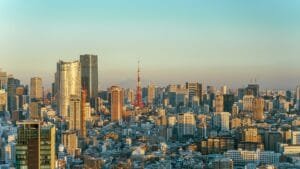
Quick verdict: Tokyo’s Shinkansen + JR trains reach Mt. Fuji + temples + samurai castles + onsen towns within 60-90 minutes. This guide ranks 10 day trips with timing + pricing.
More: When to visit Tokyo · Tokyo travel guide
The 10 best day trips from Tokyo
Hakone (Mt. Fuji)
Lake Ashi + Mt. Fuji views + onsen + cable car. 2-day Hakone Freepass (7,100 yen from Shinjuku) covers the railway, cable car, ropeway, boat and buses, but the Romancecar needs a separate 1,200 yen limited express ticket on top. Most popular Tokyo day trip.
Kamakura
Coastal town with Great Buddha + temples + beaches. Walk Hokokuji bamboo grove. Picturesque day trip.
Nikko
Tokugawa shogun mausoleum + UNESCO temples + waterfalls + Lake Chuzenji. Best for fall foliage November.
Yokohama
Largest Chinatown + cup noodle museum + bay area. Less touristy than Tokyo. Premier alternative to central Tokyo for a day.
Mt. Fuji 5th Station
Drive to 5th station of Mt. Fuji (around 2300m elevation). Mountain shrines + views. July-August only for higher access.
Tokyo Disneyland or DisneySea
Disney parks – DisneySea is unique to Japan. Most-visited theme park in Asia. Book FastPass app.
Nokogiriyama
“Saw Mountain” with cliff + Buddha sculptures + ropeway + temple. Less touristy than Hakone/Nikko. Adventurous travelers.
Hitachi Seaside Park
Nemophila blue flowers in spring (1 million flowers in April-May). Kochia red bushes in autumn. Most photogenic seasonal day trip.
Mt. Takao
Shinto pilgrimage mountain with views + ramen stalls + ropeway. Family-friendly. Great hiking. Crowded weekends.
Karuizawa
Mountain resort town favored by Tokyo elite for summer. Outlets + temples + onsen + nature. Cool escape from Tokyo summer heat.
Compare Tokyo day trips →
Helpful Packzup guides for Japan
How to choose between them by trip length and season
On a first trip of five nights or fewer, take one day trip at most and make it a short one, because a destination inside an hour can be abandoned early without wasting the day.
Trip length sets the ceiling:
- Three to four nights – no day trip. Tokyo’s own districts will absorb the time.
- Five to seven nights – one day trip, ideally under 90 minutes each way.
- Eight nights or more – two, spaced apart, with a slower day in the city between them.
Season narrows the list again. The Kanto rainy season runs from roughly early June to mid-July, which undercuts any trip whose point is a view. August into October is typhoon season with the peak risk in September, so a mountain or ferry route booked in that window needs a city fallback ready. Late November is the dependable stretch for autumn colour in the hills west of Tokyo, while cherry blossom in early April turns a 60-minute train into a standing one.
Traveller type matters as much as the calendar. Walkers get more from Mount Takao than from another temple town. Anyone travelling with small children should weight journey time heavily, since two hours each way removes four hours from a day that is only usefully about eight hours long. Repeat visitors who have already done Hakone and Kamakura are the right audience for Kawagoe or Atami, neither of which is trying to be a highlight reel.
The mechanics: which station, which train, and when to book
Tokyo has no single day-trip hub, so the departure station effectively picks the destination: Shinjuku, Ikebukuro, Shibuya, Asakusa and Tokyo Station each serve a different direction.
- Shinjuku – Keio line to Takaosanguchi for Mount Takao, about 50 minutes on a limited express, and Odakyu to Katase-Enoshima in about 65 to 70 minutes on the Romancecar, which runs only a few times a day.
- Ikebukuro – Tobu Tojo line express to Kawagoe in about 30 minutes.
- Shibuya – Tokyu Toyoko line to Yokohama in about 25 to 30 minutes.
- Tokyo Station – Tokaido Shinkansen to Atami in roughly 35 to 50 minutes. The all-stops Kodama is the service that runs frequently there; only a handful of Hikari a day stop at Atami.
Ordinary commuter lines need no reservation at all; tap in with an IC card and board whatever arrives. The exceptions are limited expresses and the Shinkansen. Odakyu’s Romancecar is reserved-only, so an IC card alone will not get you aboard, and the limited express supplement is paid on top of the base fare. Shinkansen seats open for booking one month before departure, and across Golden Week, Obon and the new year period the Tokaido line’s Nozomi services run with no non-reserved cars at all. Outside those peaks a non-reserved seat is usually fine for a short hop.
Check the regional day passes before buying singles. The Enoshima-Kamakura Freepass bundles the Odakyu round trip from Shinjuku with unlimited Enoden travel inside the free area for one calendar day, although the Romancecar supplement is still extra.
Which day trips repay the journey, and which to skip
The short trips repay the journey most reliably, because a slow start does not wreck them and they still work when the weather turns.
What each is actually for:
- Yokohama – the shortest real day trip out of Tokyo and the easiest half-day, built around waterfront walking and Chinatown, with time to be back for dinner.
- Kamakura – temples plus a coastline, joined to Enoshima by the largely single-track Enoden, which covers its 10 km route in about 30 to 37 minutes and is half the reason to go.
- Kawagoe – a preserved merchant quarter of clay-walled warehouses about 30 minutes from Ikebukuro, and the strongest pick when time is short and the sky is grey.
- Mount Takao – a real walk within an hour of Shinjuku, best on a weekday, since weekend cable-car queues cancel out an early start.
- Atami – a coastal hot-spring town reachable by Shinkansen, suited to a slow day rather than a sightseeing one.
Skip whatever eats the day in transit unless the trip is long. Two hours each way leaves roughly five usable hours on the ground, and the arithmetic worsens in winter when Tokyo’s daylight fades in the late afternoon. Skip a summit day outright if the forecast is poor, since the view is the entire product. Two day trips on consecutive days is also a common misjudgement; the second one usually gets endured rather than enjoyed.
| Destination | Leaves from | Typical one way | Seat reservation |
|---|---|---|---|
| Yokohama | Shibuya, Tokyu Toyoko line | 25 to 30 min | Not needed |
| Katase-Enoshima | Shinjuku, Odakyu Romancecar | 65 to 70 min | Reserved only on the Romancecar |
| Kawagoe | Ikebukuro, Tobu Tojo express | About 30 min | Not needed |
| Mount Takao | Shinjuku, Keio limited express | About 50 min | Not needed |
| Atami | Tokyo Station, Tokaido Shinkansen | 35 to 50 min | Optional outside peaks |
Frequently asked questions
Best Tokyo day trip for first-timer?
Can I see Mt. Fuji from Tokyo?
Best Tokyo day trip in cherry blossom season?
Most photogenic Tokyo day trip?
Tokyo to Mt. Fuji feasibility?
Updated 2026. Some links on Packzup are affiliate links.
Mount Fuji 5th Station: what the season rules actually close
The Fuji Subaru Line 5th Station sits at about 2,305 metres on the Yamanashi side of the mountain, at the top of the toll road that climbs from Fujiyoshida, near Lake Kawaguchi. It holds a car park, shops, restaurants and a shrine, and it is open to visitors for most of the year, snow permitting. Yamanashi’s official tourism site states that the 5th Station is accessible almost all year round and that there is no climbing fee for sightseeing outside the gate, so treat it as a year-round destination rather than a summer-only one.
What is seasonal is going above it. The Yoshida Trail is open from 1 July to 10 September 2026, with the opening liable to slip if snow lingers, and the official Mt. Fuji climbing site sets out what happens at the gate:
- A fee of 4,000 yen per person per climb. You can reserve and pay online beforehand, or register and pay in yen on the day at the gate.
- A cap of 4,000 climbers a day on the Yoshida Trail. Once the day is full, anyone without an advance booking is turned away, which is the real argument for reserving.
- The gate shuts from 14:00 until 03:00 the following morning. Both the cap and the curfew exclude anyone holding a mountain hut booking.
- Conditions you accept when you register, covering equipment and preparation. Staff can refuse the descending trail to anyone without proper mountain gear, so rainwear, warm layers and real footwear are not optional.
If you only want the view, the bus from Kawaguchiko Station takes about 50 minutes and costs 2,000 yen one way or 3,400 yen return, with five to seven departures a day outside the climbing season and roughly hourly service during it. The direct highway bus from Shinjuku runs about two and a half hours for 4,800 yen one way. Private cars are barred from the Fuji Subaru Line from 18:00 on 3 July to 18:00 on 10 September 2026, and a shuttle from the Fuji-Hokuroku parking area covers the road instead.
The other three approaches behave differently. The Fuji Azami Line up to Subashiri, at 1,950 metres, the Fujisan Skyline up to Fujinomiya and the Fuji Park-Tarobo Line up to Gotemba all shut for winter, usually from late November to late April. The Subaru Line is the exception, which is why it is the one worth planning around outside summer. In heavy snow it can still close at short notice or open only partway, so check the road status the night before.
Hakone from Shinjuku: one journey time, and what the ticket covers
Use one figure: about 85 minutes from Shinjuku to Hakone-Yumoto on the Odakyu Romancecar, with no change. Odakyu’s own English pages quote both about 80 minutes and approximately 1 hour 25 minutes for the same service, and timetabled runs vary by a quarter of an hour by stopping pattern, so 85 minutes is the honest planning number.
Every seat on the Romancecar is reserved, and the ticket comes in two parts: the ordinary fare of 1,270 yen plus a limited express surcharge of 1,200 yen, or 1,150 yen if you buy it digitally. That is 2,470 yen one way on paper and 2,420 yen as an e-ticket. Skip the surcharge and you ride ordinary Odakyu services with a change at Odawara, which takes about two hours for the 1,270 yen base fare. The premium buys you roughly 35 minutes and a guaranteed seat.
The Hakone Freepass from Shinjuku is 7,100 yen for two days and 7,500 yen for three. It covers the Odakyu round trip and unlimited use of eight modes of transport inside Hakone, but the Romancecar surcharge sits outside it and is paid separately in each direction.
Budget the loop honestly before you commit to a single day. The standard round course is 35 minutes on the Tozan railway from Hakone-Yumoto to Gora, 10 minutes on the cable car up to Sounzan, 30 minutes on the ropeway over Owakudani to Togendai, 30 minutes on the boat across Lake Ashi to Hakone-machi, a 20 to 30 minute walk on to Moto-Hakone, and 35 minutes on the bus back. That is about 2 hours 45 minutes of movement before you have stopped for anything, on top of 85 minutes in each direction.
When a regional pass actually pays
A regional pass only repays you if you use the whole chain it covers, and every one of these leaves the limited express surcharge outside.
- Hakone Freepass, 7,100 yen for two days from Shinjuku. The Odakyu round trip alone is 2,540 yen at the base fare, and the railway, cable car, ropeway, boat and buses are all separate tickets on top, so the pass wins as soon as you ride most of the loop.
- Nikko Pass World Heritage Area, 3,000 yen adult and 1,500 yen child, valid two days. One round trip between Asakusa and Shimo-Imaichi plus Tobu buses inside the shrine area. This is the pass for a day that begins and ends around Tosho-gu.
- Nikko Pass All Area, 8,000 yen adult and 4,000 yen child, valid four days. It adds the buses up to Lake Chuzenji and Yumoto plus the lake cruise, which runs from mid-April to 30 November. It only earns out if you genuinely go up to Kegon Falls and the lake.
The trap is identical in both places. Tobu and Odakyu each sell the pass and the reserved-seat train as separate products, so a family of four holding passes still buys four limited express tickets in each direction. Price that in before you decide the pass has saved you anything. The fastest Tobu limited express from Asakusa to Nikko takes about 1 hour 50 minutes, and its surcharge sits on top of any pass.