
Last updated September 1, 2026 · Editorial policy
Dolomites Itinerary: 5-Day Day-by-Day Travel Plan
Quick answer: Five summer days in the Dolomites from a Val Gardena base: Seceda’s ridgeline and Alpe di Siusi, the Tre Cime di Lavaredo loop, dawn at Lago di Braies with an afternoon in Cortina, and the Val di Funes postcard to finish.
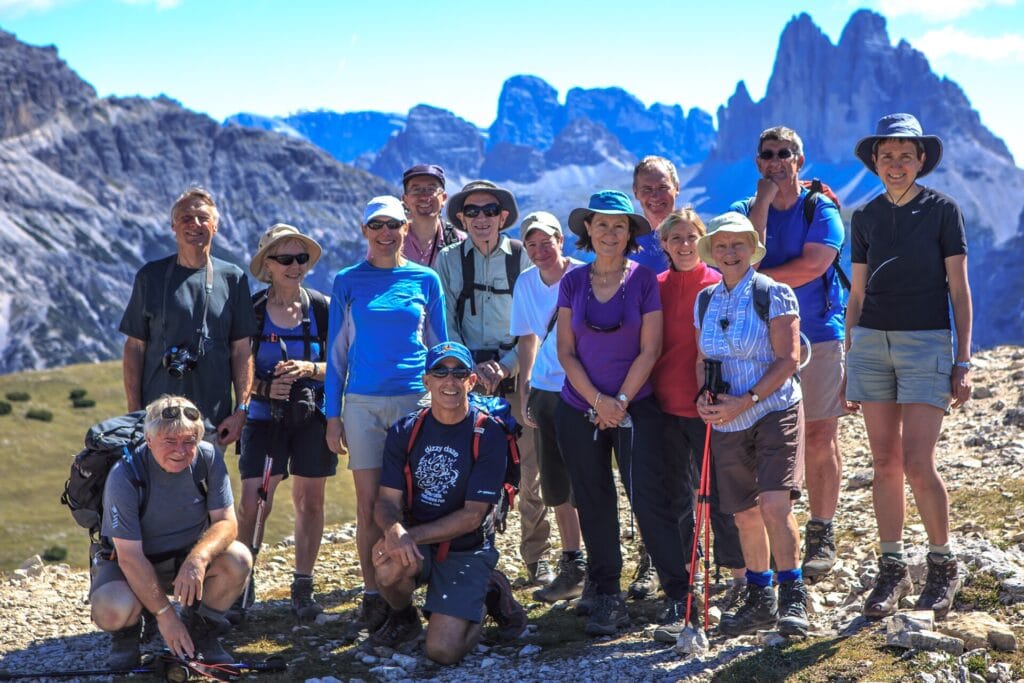
Planning a trip to Dolomites? This itinerary is built from a first-time-visitor perspective: hit the icons, eat the best food, and finish with memorable experiences. Each day mixes a major sight, food stops, and downtime.
Dolomites Itinerary at a Glance
| Day | Focus |
|---|---|
| Day 1 | Bolzano to Val Gardena |
| Day 2 | Seceda & Alpe di Siusi |
| Day 3 | Tre Cime di Lavaredo |
| Day 4 | Lago di Braies & Cortina |
| Day 5 | Val di Funes Farewell |
Day-by-Day Itinerary
Day 1 — Bolzano to Val Gardena
Arrive via Bolzano — if you have a spare hour, the Archaeology Museum’s star resident is Ötzi the Iceman (about €13). Then climb by car or bus into Val Gardena and settle into Ortisei, the best all-around base: pedestrianized center, wood-carving workshops and lifts rising straight out of town. Stretch your legs on the riverside Luis Trenker promenade, then eat like a local: canederli (speck bread dumplings) and a glass of Lagrein. Insider: if you’re staying three days or more, price out the Val Gardena lift card — individual cable-car rides add up fast in these valleys.
Day 2 — Seceda & Alpe di Siusi
Ride the Ortisei–Furnes–Seceda cable car (about €40–45 return) and step onto the most photographed ridgeline in the Alps — the grass tilts up and simply falls away into the Odle spires. Walk the crest, then descend past the Troier hut toward Col Raiser or ride back down. Come late afternoon, switch valleys for golden hour on Alpe di Siusi, Europe’s largest high-alpine meadow — private cars are banned roughly 9am–5pm, so use the Seiser Alm cable car from Siusi (about €20). Huts up here pour excellent après: order kaiserschmarrn and watch the Sassolungo catch fire at sunset.
Day 3 — Tre Cime di Lavaredo
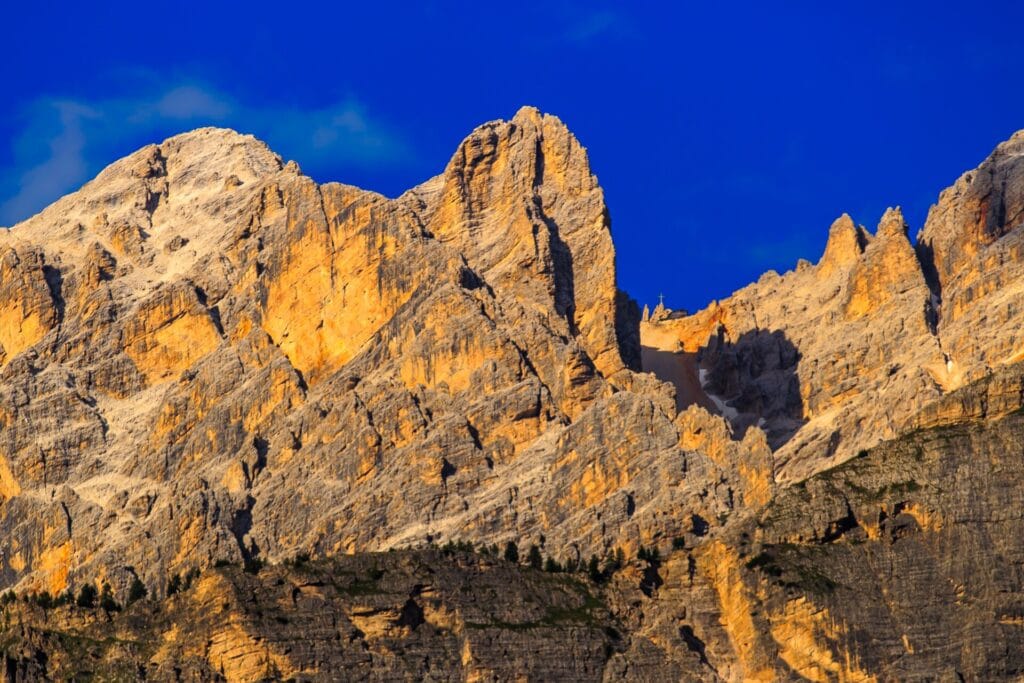
The big one: Tre Cime di Lavaredo. Drive about two hours east and take the toll road up to Rifugio Auronzo (about €30–40 per car; the lot fills early — arrive before 9am or book the shuttle). The classic loop around the three great north faces runs about 10km / 3–4 hours, moderate and endlessly spectacular, past WWI positions and the chapel at Dreizinnenhütte. The mandatory pause is a cappuccino on the Rifugio Locatelli terrace, staring straight at the towers. Bring layers — you’re near 2,400 meters and the weather flips fast even in August.
Day 4 — Lago di Braies & Cortina
Set the alarm: Lago di Braies at dawn is glass-calm and nearly empty, and by 9am it’s a queue. Summer access is regulated — reserve parking or the shuttle online — and the wooden rowboats (about €35–40 an hour) on that milky emerald water are worth every cent. Spend the afternoon in Cortina d’Ampezzo, the glamorous Olympic town: a passeggiata down Corso Italia, or the Faloria cable car for a balcony over the valley. Drive home over Passo Falzarego, where the Lagazuoi cable car and WWI tunnel galleries make a sobering, spectacular detour if daylight allows.
Day 5 — Val di Funes Farewell
Save the gentlest postcard for last: Val di Funes, about 45 minutes from Val Gardena. The tiny church of Santa Maddalena set against the sawtooth Odle wall is the Dolomites’ defining image — walk the easy Panoramaweg loop (1–2 hours) between the classic viewpoints, no lifts or fees required, just cowbells. Then book a table at a farmhouse hut for the farewell lunch: speck, mountain cheese, schüttelbrot crispbread and warm apple strudel with cream. Roll back down to Bolzano in the afternoon — and if the trip has one lesson, it’s that five days here only scratches the pale-pink surface; the passes will still be here next summer.
Where to Stay in Dolomites
Choose a central neighborhood within walking distance of major sights — you’ll save hours of commute time over 5 days. Book 6-12 weeks ahead for best rates.
Budget Breakdown (5 Days)
Italy is rated Pricey in our Travel Cost Index 2026. Figures are country-level daily ranges per person and exclude international flights.
| Travel style | Per day | Total 5 days |
|---|---|---|
| Budget | $55-100 | $275-500 |
| Mid-range | $180-300 | $900-1,500 |
| Luxury | $450-700 | $2,250-3,500 |
Source: Packzup Travel Cost Index 2026 — country-level averages; city and peak-season prices run higher. Excludes international flights.
What to Pack
- Clothing: Pack layers for fast-changing alpine weather: a waterproof shell, warm fleece for chilly evenings even in summer, and sturdy broken-in hiking boots for rocky trails and steep passes.
- Tech: Italy uses Type C, F, and L plugs at 230V. Download offline maps (Komoot or Tabacco) since signal drops on trails; an EU eSIM keeps you connected in towns.
- Documents: Italy is in the Schengen area; many visitors get 90 days visa-free, but check current entry rules. Carry passport copies and travel insurance that covers hiking and mountain rescue.
- Money: Currency is the euro. Cards work in towns and at cable cars, but carry cash for mountain rifugi and small farm shops. ATMs cluster in valley towns; tipping means rounding up.
- Day bag: Rain shell and warm layer for sudden mountain storms, high-SPF sun cream for altitude UV, refillable bottle (valley tap water is safe), and a paper trail map.
Routing the Dolomites: The Sequencing Traps That Eat a Whole Day
The mistake that wrecks most Dolomites trips is treating the range like one compact area. It is two worlds split by geography: the western Ladin valleys around Ortisei and Val Gardena, and the eastern peaks around Cortina d’Ampezzo. Ortisei to Cortina is only 64 km, but on the mountain roads that is about 1 hour 30 minutes with no traffic, and far longer behind summer RVs and cyclists. Base yourself in the west for the first half, then shift east, rather than crossing back and forth each day.
Two day-trip time-traps swallow planners who arrive without bookings:
- Lago di Braies: from July 1 to September 15 the Prags Valley road is closed to private cars between 9:00 and 16:00 unless you pre-book parking or the shuttle, so reserve or arrive before 9:00.
- Tre Cime di Lavaredo: the panoramic toll road to Rifugio Auronzo (around 40 euros per car) needs an online reservation and is usually open only from late May to late October.
Skip the temptation to drive the full Sella Ronda pass loop on a hiking day; it runs 4 to 6 hours of seat time alone. For the Odle peaks, choose one access point per day. Seceda by cable car from Ortisei and the Adolf Munkel Weg from Val di Funes sit on opposite sides of the same massif, so pairing them means a long valley transfer, not a quick hop.
Frequently Asked Questions
Is 5 days enough for Dolomites?
For first-time visitors, 5 days in Dolomites covers the main highlights without rushing. If you want to add day trips, slower pace, or hidden gems, plan 2-3 more days.
How much will a 5-day Dolomites trip cost?
Using the Budget Breakdown table above, drawn from our Travel Cost Index 2026: Budget $55-100/day ($275-500 for 5 days), Mid-range $180-300/day ($900-1,500 for 5 days), Luxury $450-700/day ($2,250-3,500 for 5 days). Country-level averages, excluding international flights.
What’s the best time for this Dolomites itinerary?
Shoulder seasons offer the best balance of weather, crowds, and prices for Dolomites. See destination-specific best-time guide.
How do I get around Dolomites?
A rental car is the most practical option, since trains only reach gateway towns like Bolzano and Dobbiaco. Going car-free works in summer via the Suedtirol Mobil bus network, Dolomiti Bus around Cortina, and cable cars, but cross-valley connections are slow.
What should I pack for 5 days in Dolomites?
Mountain weather turns fast here: summer afternoons bring thunderstorms and the passes sit near 2,000 meters, so pack a waterproof shell, a warm layer even in August, and sturdy boots for the rocky limestone trails.
Should I book hotels in advance?
Book 4 to 6 months out for July, August, and the Christmas and February ski weeks; Ferragosto in mid August sells out first. Popular rifugi on the Alta Via 1 fill even earlier.
Related Dolomites Travel Guides
- Best Things to Do in Dolomites
- Where to Stay in Dolomites
- Best Food in Dolomites
- Best Time to Visit Dolomites
Best time to visit Dolomites (real climate data)
Best months: February, January, March.
Dolomites’s warmest month is July (avg 21°C / 70°F), the coolest is January (low -7°C / 19°F). The wettest is November (173 mm) and the driest is February.
Source: Open-Meteo ERA5 climate normals (2019–2023). See the full month-by-month weather →
You Might Also Love

Written by
Drew Treasury is a contributing travel writer at Packzup, specialising in city culture, food markets, street art, and neighbourhood-level travel.
Trip prep: before you travel, plan what to wear, check the tap water, sort your mobile data, and see if it is a cash or card country, and skim local etiquette.
