
Last updated September 10, 2026 · Editorial policy
Argentina vs Spain: traveler quick facts
Quick facts: Argentina runs about $45-90/day mid-range (Budget-friendly) vs Spain at about $100-180/day (Moderate). Argentina is roughly 52% cheaper per day mid-range.
| Traveler factor | Argentina | Spain |
|---|---|---|
| Daily cost (mid-range) | $45-90 (Budget-friendly) | $100-180 (Moderate) |
| Tourist tax | No specific tourist tax | EUR 12.00 per person per night at 5-star hotels in Barcelona (regional IEET EUR 7.00 + EUR |
| Tipping | Optional / appreciated | Optional / appreciated |
| Plug & voltage | I, C | 230V | C, F | 230V |
| Adapter needed from US | Yes | Yes |
Compiled from Packzup's Travel Cost Index, Tourist Tax Index, Tipping Index and Power Plug Index — updated 2026. Costs are per person, mid-range, excluding flights.
If you have spent this summer anywhere near a television, you already know the 2026 World Cup across the USA, Canada, and Mexico turned the whole planet into one loud, arguing living room, and few sets of fans argue more beautifully than Argentines and Spaniards. Both countries treat football as something closer to religion than sport, and both have spent the past month soaking up the global spotlight that comes with it.
This, however, is not a football article. It is a travel comparison, because somewhere between the group stage and the final, a lot of people started googling flights. I have paid my own way through both countries, nobody is sponsoring this, and the honest answer to which one you should visit depends almost entirely on what kind of traveler you are. Here is the full, occasionally unflattering breakdown.
| Category | Argentina | Spain | Winner |
|---|---|---|---|
| Daily budget | Roughly $35-140 for most travelers | Roughly $60-200 for most travelers | Argentina |
| Food | World-class beef, wine, and ice cream | Astonishing regional depth and variety | Spain |
| Beaches/Nature | Patagonia, Iguazú, the Andes | Some of the best coastline in Europe | Tie: nature vs beaches |
| Cities & culture | Buenos Aires is a giant; thin bench after | Five or six world-class cities | Spain |
| Weather | Reversed seasons, huge range | Reliable Mediterranean sunshine | Spain |
| Ease of travel | Huge distances, flights required | Superb trains, short hops | Spain |
| Nightlife | Dinner at 10pm, clubs until sunrise | Late, social, endless terraces | Argentina |
| Value for money | Strong, though volatile | Good for Western Europe | Argentina |
When to go: Argentina vs Spain
Measured, not guessed — five years of climate normals (WMO 1991–2020, or ERA5 2019–2023 where unavailable). Months are ranked by how close the average high sits to 25°C, penalised by wet days.
Argentina
- Best month
- November
- Then expect
- 25°C · 7 wet days
- Next best
- February, March
- Wettest month
- January (10 wet days)
Spain
- Best month
- May
- Then expect
- 25.1°C · 5 wet days
- Next best
- September, June
- Wettest month
- April (11 wet days)
- Different windows — Argentina peaks in November, Spain in May. If your dates are fixed, that is the deciding factor.
- Spain is the drier bet at its peak — 5 wet days vs 7.
- Biggest split is July — Spain is 20.7°C warmer that month.
Source: climate normals (WMO 1991–2020, or ERA5 2019–2023 where unavailable) via Open-Meteo, CC BY 4.0 — Packzup Travel Climate Dataset (open data).
Cost comparison: what a day actually costs
Argentina is the hardest country in the world to write budget advice for, because its prices refuse to sit still. Years of inflation and currency reform mean that what your dollars buy has swung dramatically from one season to the next, and the days when Argentina was an outrageous bargain for foreigners are, at least for now, mostly over. It is still cheaper than Spain, just not comically so. Realistic ballparks for 2026: budget travelers can get by on roughly 35 to 60 dollars a day with hostel dorms, empanadas, and long-distance buses. A comfortable mid-range trip, with a boutique hotel in Palermo, steak dinners, and a domestic flight or two, runs about 80 to 140 dollars a day. Luxury, think estancia stays and wine-country lodges in Mendoza, starts around 220 dollars and climbs politely from there.

Spain is one of Western Europe’s better values, which surprises people who mentally file it next to France or Switzerland. Budget travelers manage on 60 to 90 dollars a day using hostels, the metro, and the glorious menú del día lunch deals. Mid-range, meaning a well-located three-star or apartment, tapas crawls, and fast trains, lands around 130 to 200 dollars. Luxury starts near 300, with the historic parador hotels being the best-value splurge in the country. August in Barcelona or the Balearics will blow past all of these numbers without apology.
The catch nobody mentions is the flight. Round trips from the US to Buenos Aires usually cost meaningfully more than East Coast fares to Madrid, so on a one-week trip the airfare can eat your daily savings whole. On a two or three week trip, Argentina wins the math comfortably.
Food: two very different kinds of great
Argentine food is deep rather than wide. The asado is not a meal, it is a social institution, and a proper parrilla will serve you a bife de chorizo that permanently recalibrates your understanding of steak, next to a bottle of Malbec that costs less than a beer would back home. The Italian immigrant legacy means the pizza, the pasta, and above all the ice cream are genuinely excellent, and every province argues about whose empanadas are correct. The honest downside: after ten days the menus start to repeat, and vegetarians will work hard outside Buenos Aires.
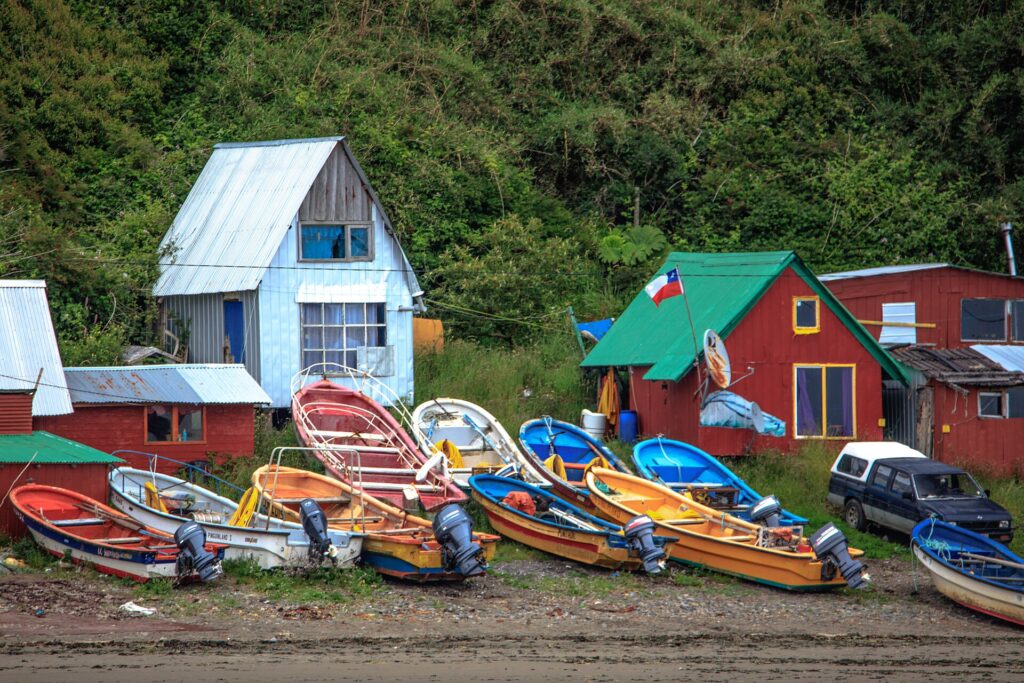
Spain is the opposite, almost absurdly wide. Pintxos counters in San Sebastián, proper paella in Valencia, jamón ibérico that earns its price tag, gazpacho and crisp fried fish in Andalusia, and a different regional obsession every hundred miles, each defended with total confidence. The market halls, from Madrid to Málaga, are worth planning entire mornings around, and a cheap set-lunch menú remains one of the great everyday deals in Europe.
If you want the single best meal of your year, Argentina’s top parrillas are very hard to beat. If you want to eat brilliantly and differently every day for three weeks, Spain wins, the same regional depth that carried it in our Italy vs Spain face-off.
Beaches and nature: coastline versus wilderness
Let us be honest about Argentine beaches: they are not why you go. Mar del Plata is a beloved local institution with chilly Atlantic water, and Argentines with beach money have long preferred to fly to Brazil or Uruguay. If your trip lives and dies on swimming, this category is over quickly.

Spain, meanwhile, has some of the best and most varied coastline in Europe: hidden coves on the Costa Brava, big Atlantic surf beaches near Cádiz, the Balearic Islands doing their expensive thing, and the Canaries delivering swimmable weather essentially year-round. The Mediterranean is warm and calm from June through September, and the beach infrastructure is superb.
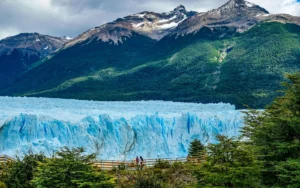
But flip the category to nature and Argentina stops being polite. Patagonia is one of the planet’s last great wildernesses: the Perito Moreno glacier calving into a milky lake, the granite spires of Fitz Roy, whales breaching off Puerto Madryn, the painted valleys of the Quebrada de Humahuaca in the north, and Iguazú Falls thundering away near the Brazilian border. Spain’s Picos de Europa and the Pyrenees are genuinely lovely, but they are not in the same league for scale or remoteness. Our full guide to things to do in Argentina barely scratches it. In short: swim in Spain, be humbled in Argentina.
Cities and culture
Buenos Aires is one of the great cities of the world, full stop. Faded Parisian architecture, hundred-year-old cafés protected by law, the San Telmo Sunday market, milongas where real people still dance tango at 1am, a bookshop inside a converted theatre, and more live music than anyone can keep track of. You could spend two weeks there and leave wanting more. The honest problem is the bench behind it: Córdoba, Salta, and Mendoza are pleasant, characterful cities, but none of them is a destination-defining stop on its own.
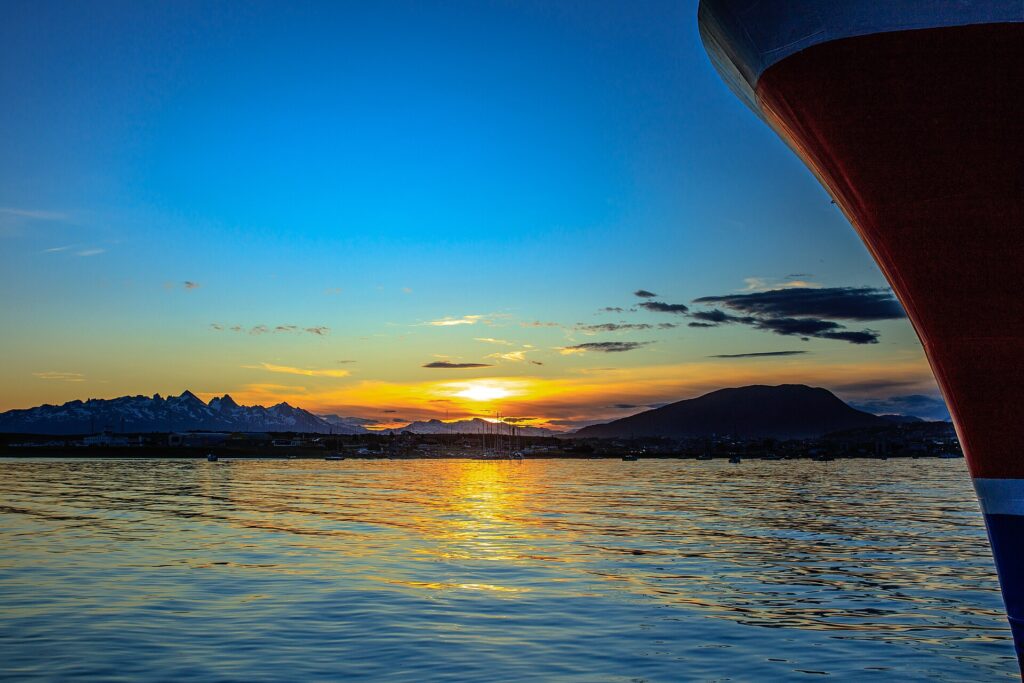
Spain runs five or six deep. Madrid has arguably the best trio of art museums in Europe, Barcelona has Gaudí and the sea, Seville smells of orange blossom and drama, Granada has the Alhambra, which might be the single most beautiful building complex on the continent, and San Sebastián and Bilbao anchor a green northern coast most visitors never even reach. Two thousand years of Roman, Moorish, and Golden Age layers sit underneath all of it. Among its neighbors, only France really pushes Spain on this front, and we called that fight in our Spain vs France comparison. Category to Spain, with the caveat that Buenos Aires beats any single Spanish city for sheer personality.
Weather and when to go
The seasons are reversed, and that matters more than any other logistical fact in this article. Right now, in July, Spain is in peak summer while Argentina is in midwinter: ski season in Bariloche, crisp sunny days in Buenos Aires, and perfectly pleasant conditions at Iguazú. Patagonia trekking season runs roughly December through February, and Buenos Aires is at its best in October and November, when the jacarandas bloom, and again in March and April.
Spain is simpler. May, June, September, and October are close to perfect almost everywhere. July and August are glorious on the northern coast and brutal in Seville and Córdoba, where afternoons regularly push past 100F. The Canaries are a legitimate winter-sun escape. The practical takeaway: Spain fits a classic northern-hemisphere summer holiday, while Argentina is the smarter December to February move, when it is high summer there and grim at home.
Getting around, safety, and visas
Spain is effortless. High-speed AVE trains connect Madrid to Seville in about two and a half hours and to Barcelona in under three, budget airlines cover the rest, and the historic city centers are made for walking. Argentina is the eighth largest country on earth and it travels like it: Buenos Aires to the Patagonian glaciers is a three-hour flight, overnight buses with fully reclining cama seats are a genuine institution, and you should build slack into any itinerary because domestic schedules can wobble.
Safety, honestly: both are broadly safe by big-country standards. Spain’s main issue is world-class pickpocketing in Barcelona and on the Madrid metro. Buenos Aires asks for a bit more street sense: phone snatching is the classic crime, so keep yours off café tables, and downtown protests are frequent but usually announced and easy to avoid. Most of provincial Argentina feels notably relaxed.
Entry, for US passport holders: Argentina currently requires no visa and no fee for tourist stays of up to 90 days. Spain follows the Schengen rules, 90 days in any 180, and the EU’s new ETIAS travel authorization has been rolling out, so check the current requirement shortly before you fly. One underrated Argentina perk: Buenos Aires is a 10 to 11 hour flight from the US East Coast but sits only an hour or two off Eastern Time, so there is effectively no jet lag. Madrid is a shorter flight with a six-hour time change that will quietly steal your first two days.
Nightlife and vibe
Argentina operates on a schedule that breaks visitors for the first week. Dinner starts at 9:30 or 10pm, bars fill after midnight, and the boliches, the clubs, do not get going until 2am and routinely run past sunrise. Add Fernet and Coke, the unofficial national cocktail, and milongas for those whose big night involves tango rather than techno, and you have arguably the deepest late-night culture on the planet.
Spain is hardly an early-to-bed rival: packed terrazas until 2am, tapas crawls that turn into nights out by accident, and Ibiza sitting offshore as the world capital of electronic music. But the everyday rhythm is still a touch earlier than Buenos Aires, which is a sentence that should frighten you. Winner: Argentina for the night itself, Spain for the sheer variety of nights on offer.
Argentina or Spain: the honest verdict
For budget travelers and anyone planning a longer trip: Argentina. Once the airfare is absorbed, your money simply goes further, and a month there can cost what three weeks in Spain does.
For foodies: Spain, and over a multi-week trip it is not especially close. Argentina wins individual meals; Spain wins the whole menu.
For beach lovers: Spain, easily. Argentina is not a beach destination, and pretending otherwise helps nobody.
For first-timers: Spain. The trains, the compact distances, and the forgiving logistics make it one of the easiest great countries on earth to travel. Argentina rewards a little experience and a longer runway.
For nature and adventure travelers: Argentina, emphatically. Patagonia alone settles it. And if South America is calling but you are torn within the continent, our Argentina vs Brazil comparison is the next fight worth reading.
FAQ
Is Argentina cheaper than Spain?
Which is better for a football-fan trip?
Do US citizens need a visa for Argentina or Spain?
Can you combine Argentina and Spain in one trip?
Planning the trip? Go deeper with best time to visit Argentina and best time to visit Spain.
You Might Also Love
More side-by-side comparisons




Written by
John Morrison is the founder and lead travel writer at Packzup. Over the past decade he has explored destinations across Africa, the Americas, Asia, Europe, the Middle East, and Oceania — always self-funded, never on a press trip.
