
Last updated September 11, 2026 · Editorial policy
Amsterdam and Copenhagen get lumped together constantly: flat, bike-obsessed northern European capitals full of water, good design, and eye-watering bar tabs. Spend a few days wandering each, though, and they feel far more different on the ground than the photos suggest. Amsterdam is louder, busier, and more international, a gorgeous 17th-century city that visibly strains under its own popularity. Copenhagen is calmer, sleeker, and easier to breathe in, with the best eating of any city its size in Europe.
This comparison is for anyone trying to pick one of them for a three-to-five-day city break, because cramming both into one short trip shortchanges each. I’ll be straight with you about costs (neither is cheap), about which food scene actually deserves the hype, and about the crowd problem the glossy write-ups skip. The short version: first-timers to Europe usually leave Amsterdam happier, while repeat visitors and food-driven travelers fall harder for Copenhagen. The long version is more useful.
| Category | Amsterdam | Copenhagen | Winner |
|---|---|---|---|
| Food scene | Good, carried by Indonesian and international spots | Exceptional at every price level | Copenhagen |
| Museums & culture | Rijksmuseum, Van Gogh, Anne Frank House | Strong, plus Louisiana up the coast | Amsterdam |
| Nightlife | Big, varied, goes very late | Cool but smaller and pricier | Amsterdam |
| Canal-city beauty | The 17th-century canal ring is unmatched | Nyhavn and the harbor are lovely but limited | Amsterdam |
| Cycling as a visitor | Chaotic; locals won’t slow down for you | Wide calm lanes, genuinely fun | Copenhagen |
| Crowds | Heavy in the center year-round | Busy in summer, manageable otherwise | Copenhagen |
| Day trips | Haarlem, windmills, tulips, Utrecht | Louisiana, Hamlet’s castle, Sweden | Amsterdam |
| Value for money | Steep hotels plus Europe’s highest tourist tax | Painful food prices, but calmer and better rested | Copenhagen, barely |
When to go: Amsterdam vs Copenhagen
Measured, not guessed — five years of climate normals (WMO 1991–2020, or ERA5 2019–2023 where unavailable). Months are ranked by how close the average high sits to 25°C, penalised by wet days.
Amsterdam
- Best month
- June
- Then expect
- 21.4°C · 12 wet days
- Next best
- August, September
- Wettest month
- October (19 wet days)
Copenhagen
- Best month
- June
- Then expect
- 20°C · 8 wet days
- Next best
- August, July
- Wettest month
- October (15 wet days)
- Same window — both Amsterdam and Copenhagen are at their best in June.
- Copenhagen is the drier bet at its peak — 8 wet days vs 12.
- Biggest split is February — Amsterdam is 3.5°C warmer that month.
Source: climate normals (WMO 1991–2020, or ERA5 2019–2023 where unavailable) via Open-Meteo, CC BY 4.0 — Packzup Travel Climate Dataset (open data).
Cost comparison: what you’ll actually spend
Let’s get the painful part out of the way, because both cities will test your budget. The difference is where the money goes.
Sleeping is Amsterdam’s weak spot. Dorm beds run $45-75, decent mid-range doubles sit around $180-300 a night, and the city then adds roughly 12.5 percent tourist tax on top of the room rate, the highest in Europe. Copenhagen dorms are $40-60, solid mid-range doubles more like $150-250, and the add-ons are gentler. Book either city months out for anything resembling a deal.
Eating flips the equation. In Copenhagen a casual lunch is $18-30, a sit-down dinner with one drink lands at $50-80 per person, and a bar beer is $8-10. Amsterdam runs noticeably cheaper: $15-25 lunches, $40-70 dinners, $6-8 beers, and plenty of market snacks under $10.
Realistic daily budgets per person, assuming two people splitting a room: shoestring travelers can manage on $90-130 in Amsterdam and $100-140 in Copenhagen with dorms, market food, and lots of walking. Mid-range is $220-320 in Amsterdam and $230-330 in Copenhagen. If you want boutique hotels and tasting menus, budget $400 and up in either city.
One saver worth knowing: the Copenhagen Card bundles public transport with most major museums and pays off quickly if you sightsee hard. Amsterdam sells a similar pass, but the math works less often, since the city’s best free activity, wandering the canal ring, costs nothing.
Food and drink: this one isn’t close
Copenhagen wins, and it wins at every price level. The New Nordic movement that made the city famous has trickled down to the point where ordinary neighborhood restaurants plate food with real care. The bakery scene, all cardamom buns and dark rye, might be the best in the world, and an open-faced smorrebrod lunch with a beer is one of Europe’s great simple meals. Torvehallerne market near Norreport is an easy first stop, and in warmer months the Reffen street-food market out on the harbor makes a fun, if touristy, evening.
Amsterdam needs honesty here: traditional Dutch food is snack food. Bitterballen, herring from a cart, fries with mayo, and warm stroopwafels are all worth trying, and none of them are why you cross an ocean. The city’s real strength is Indonesian cooking, a legacy of colonial history. A rijsttafel dinner, dozens of small shared dishes, is Amsterdam’s single best meal. Add strong Surinamese and Middle Eastern options, the Foodhallen food hall, and the Albert Cuyp street market, and you’ll eat well. You just won’t eat like you do in Copenhagen.
Drinking is Amsterdam’s counterpunch. Brown cafes, the creaky, candlelit, wood-paneled pubs that have poured beer for centuries, are the Dutch answer to hygge, and rounds cost noticeably less than in Copenhagen’s bars.
Vibe, canals, and neighborhoods
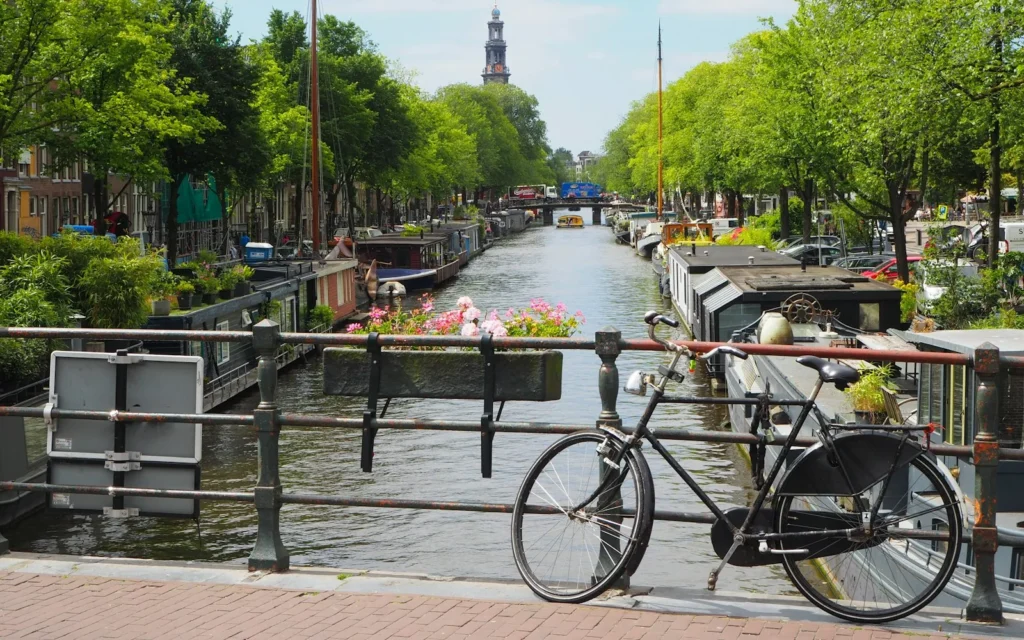
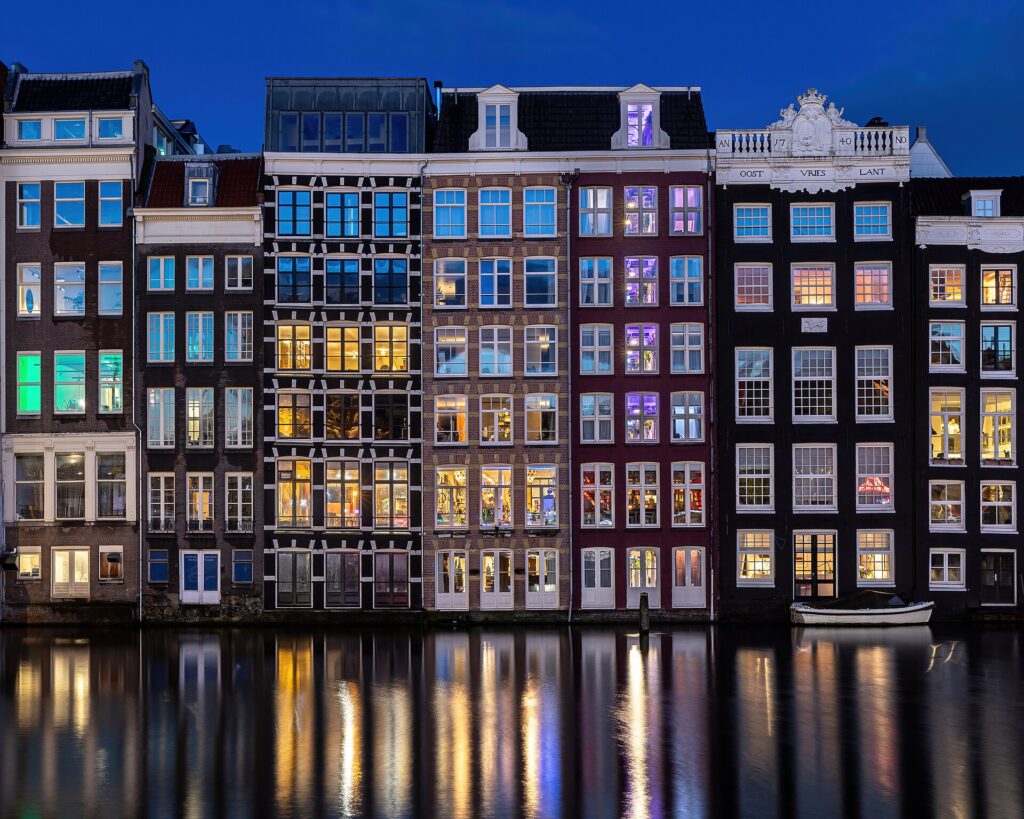
The Amsterdam canal ring at seven in the morning, before the crowds wake up, is one of the most beautiful urban scenes in Europe. Gabled 17th-century houses lean over quiet water for block after block, and nothing in Copenhagen competes with it. The Jordaan’s narrow lanes and De Pijp’s market bustle give you two more neighborhoods worth full afternoons.
The honest caveat: central Amsterdam has a crowd problem. The stretch between the station and the Red Light District can feel like a theme park, all stag parties, weed smoke, and slow-moving tour groups, and it wears on you faster than you’d expect. The fix is to sleep and eat outside the core, which most first-timers only figure out on day two.
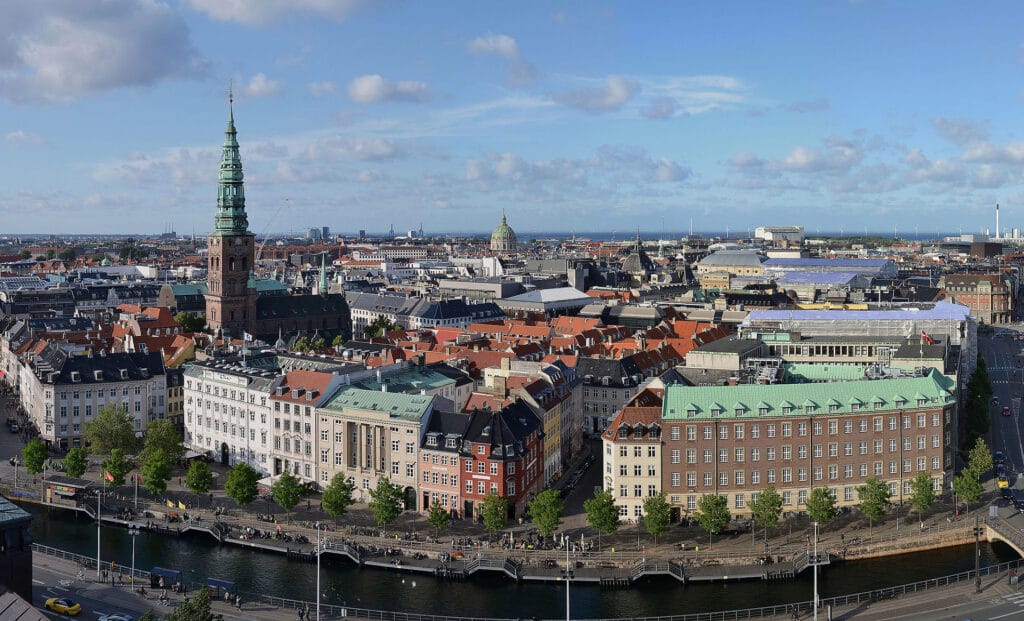
Copenhagen’s postcard, the colorful Nyhavn waterfront, is essentially one street, and it gets mobbed too. But the rest of the city is where Copenhagen quietly wins: Norrebro’s multicultural energy and great bars, Vesterbro’s former red-light grit turned genuinely cool, Christianshavn’s own small canals. The harbor is clean enough that locals swim in it all summer, which tells you a lot about how the city runs. Amsterdam is the more beautiful city; Copenhagen is the one that makes you want to move there.
Museums and culture
Amsterdam is a heavyweight. The Rijksmuseum, home to Rembrandt and Vermeer, and the Van Gogh Museum are both world-class, and the Anne Frank House is one of the most affecting sites in Europe. Tickets for the latter are online-only and released weeks in advance, so plan early or you will not get in. The Stedelijk covers modern art well, and smaller canal-house museums fill any gaps.
Copenhagen holds its own with the National Museum, the sculpture courts of the Ny Carlsberg Glyptotek, and the Designmuseum, and it hides an ace: the Louisiana Museum of Modern Art, 35-40 minutes north by coastal train, where the art, the architecture, and the sea views combine into arguably the best museum outing in Scandinavia. Tivoli Gardens, the amusement park that has sat in the city center since 1843, counts as culture too, and it’s far more charming than it has any right to be. Still, on depth and star power, Amsterdam takes this category.
Nightlife
Amsterdam goes bigger and later. You can build a night from a brown cafe through Paradiso or Melkweg, two legendary music venues (one a converted church), and on to clubs that run into the morning, all within biking distance. The scene is varied enough that the stag-party chaos is easy to route around once you know to avoid the center.
Copenhagen’s nightlife is cooler in tone and smaller in scale. The Kodbyen meatpacking district packs bars, natural-wine spots, and small venues into a few atmospheric blocks, and Norrebro handles the low-key end well. But drinks are expensive, with cocktails commonly hitting $14-18, and the city winds down earlier. If your ideal night ends at a great wine bar around midnight, Copenhagen is lovely. If it starts at midnight, book Amsterdam.
Bikes, walking, and getting around town
Here’s the irony: Amsterdam made bike culture famous, but Copenhagen is where visitors actually enjoy cycling. Copenhagen’s lanes are wide, physically separated, and calm; rent a bike for a day and it’s genuinely the best way to see the city. Amsterdam’s cycling is closer to a contact sport, with narrow lanes shared with scooters, tram tracks everywhere, and locals who have zero patience for wobbling tourists. Ride there if you’re confident; walk if you’re not.
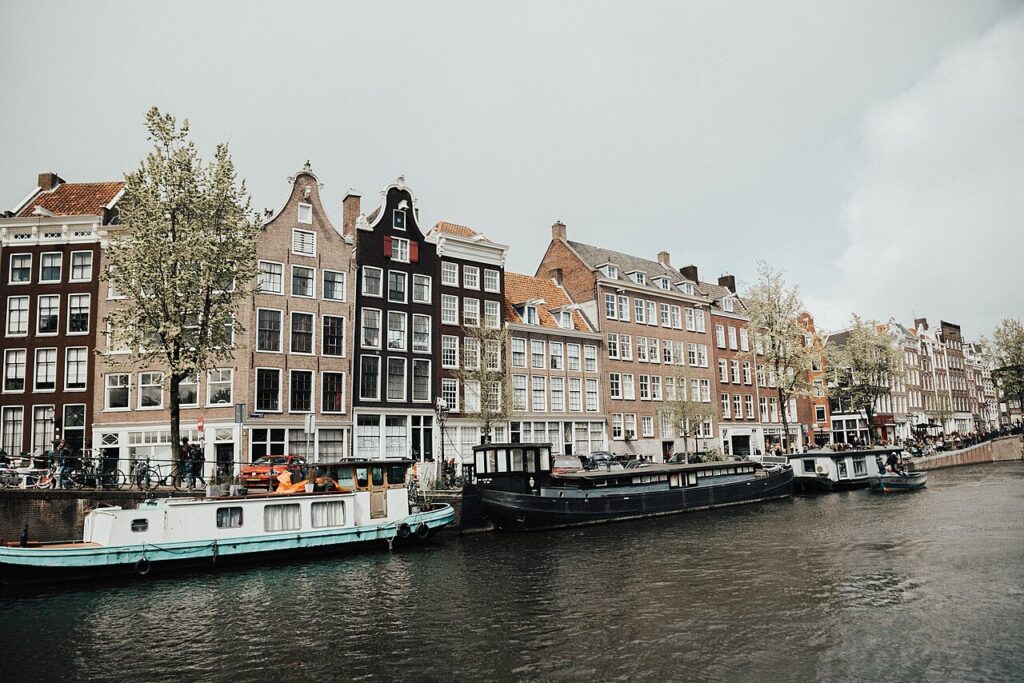
On foot, Amsterdam’s center is more compact, with most sights inside an easily walkable ring. Copenhagen spreads out more, but its driverless metro runs around the clock and the harbor buses double as cheap sightseeing cruises. Both cities make car-free travel completely painless.
Day trips
Amsterdam sits in the middle of a dense little country, and it shows. Haarlem, fifteen minutes by train, is a mini-Amsterdam without the crowds. The Zaanse Schans windmills, Utrecht’s wharf-lined canals, and The Hague or Rotterdam are all under an hour away. In spring, the Keukenhof tulip gardens, open roughly mid-March to mid-May, justify the hype if you arrive early in the day. With more time, the Netherlands also pairs naturally with its neighbor; our Belgium vs Netherlands comparison covers whether Bruges and Brussels deserve the detour.
Copenhagen’s list is shorter but strong: the Louisiana Museum up the coast, Kronborg Castle in Helsingor (Shakespeare’s Elsinore, about 45 minutes away), Roskilde’s Viking Ship Museum, and the fun flex of crossing the Oresund Bridge to Malmo, Sweden in under 40 minutes for two countries in one afternoon. Amsterdam wins on sheer choice; Copenhagen’s options feel less obligatory and more rewarding one by one.
Weather and when to go
Neither city is a weather destination, so calibrate expectations. Both are maritime: grey skies, wind, and drizzle can show up in any month, and winters are short on daylight, Copenhagen especially, where the December sun sets before 4 p.m. Summers are mild rather than hot, usually 65-75F, with gloriously long evenings; Copenhagen stays light until nearly 11 p.m. around midsummer.
May through September is prime time in both. Amsterdam’s best specific window is April to early May, when the tulips peak and the terraces reopen. Copenhagen is at its absolute best in June and July. Winter isn’t a write-off either: Amsterdam’s museums and brown cafes make cold days pleasant, and Copenhagen counters with Tivoli’s Christmas season and full-strength hygge. Pack layers and a rain shell whenever you go, and if guaranteed sunshine is the real priority, you want southern Europe instead; start with Greece vs Portugal.
Getting there and around
Amsterdam’s Schiphol is one of Europe’s biggest hubs, with direct flights from a long list of North American cities and usually the cheaper fares of the two. Copenhagen Airport is Scandinavia’s main hub, with solid direct options from the US East Coast and beyond. Both are absurdly convenient: the train from Schiphol to Amsterdam Centraal takes 15-20 minutes, and Copenhagen’s metro runs from the terminal to the center in about 15.
By rail, Amsterdam is the better springboard, with direct trains to Paris and Brussels, a direct Eurostar to London, and easy runs to Berlin, which makes it a natural stop on a bigger European itinerary. If that’s the trip you’re really planning, our France vs Germany comparison is a useful next read. Copenhagen connects south to Hamburg in about five hours and across the bridge to Sweden in minutes.
Between the two cities, flights take about an hour and a quarter and run many times daily; the train, routed through Hamburg, eats most of a day.
Amsterdam or Copenhagen: the honest verdict
No cop-outs. Here’s who should book what.
First trip to Europe: Amsterdam. The canal ring, the Van Gogh Museum, and the Anne Frank House are bucket-list material, and the city plugs into the rest of the continent effortlessly.
Foodies: Copenhagen, and it is not remotely close. Plan the trip around meals and book the restaurants before the hotel.
Budget travelers: Amsterdam, narrowly, thanks to cheaper flights in, cheaper beer, and more hostel beds, but only if you book months ahead. Last-minute, both cities will hurt you equally.
Nightlife: Amsterdam, easily.
Couples and design lovers: Copenhagen. Calmer streets, better meals, prettier interiors, no stag parties.
Families: Copenhagen. Tivoli, harbor swimming, safe cycling, and a city that genuinely seems to like children.
Repeat Europe visitors: Copenhagen. If you’ve already done the greatest-hits capitals, its quality-of-life magic lands harder than Amsterdam’s icons.
If a friend made me buy them one ticket tomorrow with no other information, I’d send them to Amsterdam first, because it’s the bigger bucket-list city, and I’d tell them Copenhagen is waiting to become their favorite second trip. And if reading this made you realize you’d rather have sun and cheap wine than canals and drizzle, Italy vs Spain is the other great European coin flip.
FAQ
Is Copenhagen more expensive than Amsterdam?
How many days do you need in Amsterdam or Copenhagen?
Can you visit Amsterdam and Copenhagen in one trip?
Which city is better in winter?
Planning the trip? Go deeper with things to do in Amsterdam and our Copenhagen Weekend itinerary.
You Might Also Love
More side-by-side comparisons



Written by
John Morrison is the founder and lead travel writer at Packzup. Over the past decade he has explored destinations across Africa, the Americas, Asia, Europe, the Middle East, and Oceania — always self-funded, never on a press trip.
