
Last updated June 29, 2026 · Editorial policy
- Switzerland Travel Guide: Complete Planning + Itinerary (2026)
- When to Visit Switzerland
- How Long Do You Need in Switzerland?
- Top 6 Regions in Switzerland
- Best Food in Switzerland
- Switzerland Trip Costs
- Is Switzerland Safe?
- Is the Swiss Travel Pass Worth It? (2026 Prices)
- Switzerland's Scenic Train Routes (Real Fares & Times)
- How Much Does Switzerland Cost Per Day?
- Related Packzup Guides
- Switzerland Travel FAQ
| Best month to visit | August — 24.2°C, 12 wet days |
|---|---|
| Warmest month | July, 24.9°C average high |
| Wettest month | May, 17 wet days |
| Plugs & power | Type C,J · 230 V · 50 Hz |
| Driving side | Right |
Climate: normals (WMO 1991–2020, or ERA5 2019–2023 where unavailable) via Open-Meteo. Open data.
Switzerland Travel Guide: Complete Planning + Itinerary (2026)
Switzerland is the Alps perfected — Matterhorn + Jungfrau + Lake Geneva + chocolate + cheese + the world’s best train network winding through impossibly scenic valleys.
When to Visit Switzerland
June-September for hiking + mountain access. December-March for skiing.
How Long Do You Need in Switzerland?
7-10 days. Compact country — train hops fast.
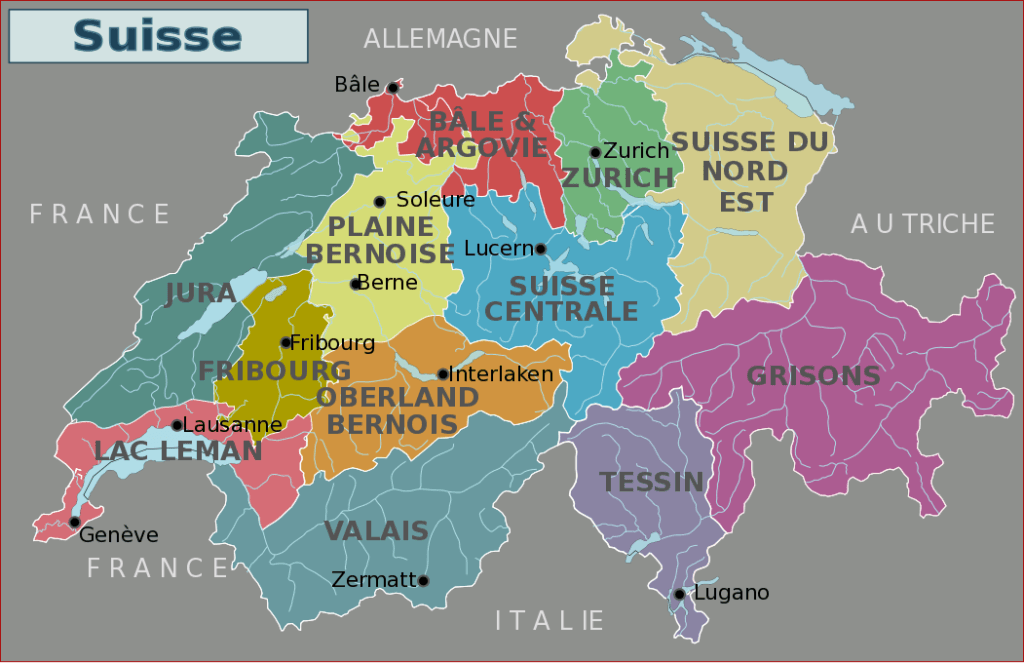
Top 6 Regions in Switzerland
Zurich
Largest city + lake + Old Town + base for east Switzerland.
Lucerne + Mt. Pilatus
Lake Lucerne + Chapel Bridge + Pilatus mountain railway.
Interlaken + Jungfrau
Adventure capital + Top of Europe (Jungfraujoch) + Lauterbrunnen valley.
Zermatt + Matterhorn
Car-free village + iconic mountain + Gornergrat railway.
Geneva + Lake Geneva
French-speaking + Lavaux vineyards + Chillon castle + Montreux.
Italian Switzerland (Ticino)
Lugano + Locarno + Italian charm with Swiss precision.
Best Food in Switzerland
Swiss food is fondue + raclette + chocolate + rosti — comfort food perfected by mountain isolation.
- Fondue + raclette
- Rosti (potato pancake)
- Swiss chocolate (Lindt, Toblerone, artisan)
- Bircher muesli
- Veal Zurich-style
- Älplermagronen (alpine pasta)
Switzerland Trip Costs
Daily spend depends heavily on travel style:
- Budget: 100-150 CHF/day
- Mid-range: 200-350 CHF/day
- Luxury: 500+ CHF/day
Is Switzerland Safe?
Among the safest countries on Earth. Real risks are mountain weather + altitude + alpine sports.
Is the Swiss Travel Pass Worth It? (2026 Prices)
Switzerland runs on rails, and the Swiss Travel Pass is the single decision that shapes your budget more than anything else. For 2026, the consecutive-day pass starts at CHF 254 (about $330) for 3 days in 2nd class and CHF 405 in 1st class, scaling up through 4-, 6-, 8-, and 15-day tiers to CHF 787 for 15 days in 1st class. The Flex version lets you pick your travel days within a one-month window if you’re basing yourself somewhere and taking day trips.
What it actually covers is generous: unlimited trains, postbuses, and lake boats; free entry to 500+ museums; and free city trams. Crucially, it includes the base fare on the scenic panoramic trains (you only pay the seat reservation), and it gives 50% off most mountain railways like Jungfraujoch and Gornergrat.
- Travel free for kids: children 6-15 ride free with the Swiss Family Card when accompanied by a parent holding a pass.
- Youth discount: travelers up to and including age 24 get the Swiss Travel Pass Youth at 30% off.
My rule of thumb: if you’re moving cities most days, the pass pays for itself almost immediately. If you’re parking in one valley, run the numbers against point-to-point tickets first.
Switzerland’s Scenic Train Routes (Real Fares & Times)
The panoramic trains are the experience, not just transport between them. Three are non-negotiable bucket-list rides, and here’s exactly what each costs and takes in 2026:
- Glacier Express (Zermatt to St. Moritz): the famous “slowest express in the world,” roughly 8 hours over 291 bridges, 91 tunnels, and the 2,033 m Oberalp Pass. Full fare is around CHF 170, but with a Swiss Travel Pass you only pay the mandatory seat reservation of CHF 54 (year-round, both classes).
- Bernina Express (Chur to Tirano, Italy): a UNESCO World Heritage line, about 4 hours across 196 bridges and 55 tunnels, over the spiral Brusio viaduct and the Bernina Pass down to palm-lined Tirano. Reservation is CHF 44 in high season (May 2 to Oct 25, 2026), CHF 40 low season.
- GoldenPass Line (Montreux to Interlaken): three connecting segments past eight lakes and vineyard terraces, with no surcharge on the regional legs.
Book reservations weeks ahead in summer for the Glacier and Bernina expresses; the south-facing window seats sell out first. Sit on the right-hand side heading south on the Bernina for the best gorge views.
How Much Does Switzerland Cost Per Day?
Let’s be honest: Switzerland is expensive, but it’s predictable if you plan. Here’s a realistic 2026 daily budget per person, with everything in mind:
- Budget (CHF 120-200 / ~$150-250): hostel dorm bed (CHF 35-65), a supermarket picnic lunch from Coop or Migros, and one modest restaurant dinner.
- Mid-range (CHF 250-350 / ~$310-440): a clean 3-star double (CHF 180-280, breakfast often included), two restaurant meals, and one paid activity or museum.
- Luxury (CHF 650+ / ~$810+): 4-star-plus hotels, fine dining, and premium excursions.
Food is where the shock lands: a restaurant main course runs $25-55, and a 3-course fixed menu hits $60-110. My biggest money-saver is eating Swiss-style: make lunch your main hot meal (cafes post cheaper midday Tagesmenu deals), then assemble dinner from a grocery store, which saves 50-60% over restaurants.
The mountain excursions are the real splurges to budget separately. A summer return to Jungfraujoch from Interlaken Ost runs roughly CHF 240 at full fare, but with a Swiss Travel Pass the lower sections are free and the rest is discounted, bringing it to about CHF 177 return. Build one or two of these into the plan rather than every day.
Related Packzup Guides
Best Time To Visit Switzerland
Dive deeper into this Switzerland topic →
Switzerland 7 Day Itinerary
Dive deeper into this Switzerland topic →
Switzerland vs. Austria
Dive deeper into this Switzerland topic →
Trip To Switzerland Cost
Dive deeper into this Switzerland topic →
the ultimate bucket list, or our
Alpine Europe continent hub for related trips.
Switzerland Travel FAQ
Popular guides: Norway vs Switzerland
More guides: Switzerland itinerary
Best time to visit Switzerland (real climate data)
Best months: June, July, August, September.
Switzerland’s warmest month is July (avg 25°C / 77°F), the coolest is January (low -2°C / 29°F). The wettest is May (128 mm) and the driest is February.
Source: Open-Meteo / WMO climate normals (WMO 1991–2020, or ERA5 2019–2023 where unavailable). See the full month-by-month weather →
You Might Also Love

Written by
John Morrison is the founder and lead travel writer at Packzup. Over the past decade he has explored destinations across Africa, the Americas, Asia, Europe, the Middle East, and Oceania — always self-funded, never on a press trip.
Before you go: see whether they speak English in Switzerland and what to wear, check the tap water, sort your mobile data, and find out if it is a cash or card destination, and brush up on local etiquette.
