
Last updated September 11, 2026 · Editorial policy
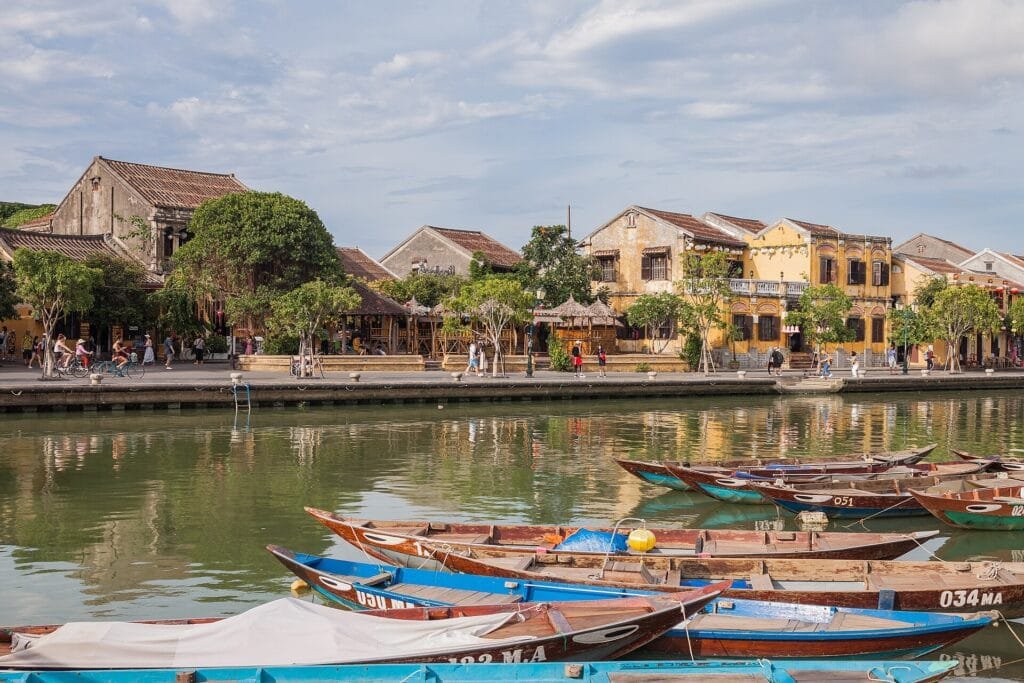
Hoi An is a small town with an enormous food reputation. The ancient trading port absorbed flavours from Chinese, Japanese, and French merchants over centuries, creating dishes found nowhere else in Vietnam. The combination of fresh ingredients from the Thu Bon River, nearby farms, and the sea means everything tastes impossibly fresh. Portions are small and cheap, so the proper approach is to eat constantly — a bowl here, a banh mi there, a white rose dumpling from a market stall. Budget 200,000-400,000 VND per day and eat like royalty.
Cao Lau
The dish that defines Hoi An — thick, chewy rice noodles in a small amount of rich pork broth, topped with sliced pork, herbs, crispy rice crackers, and greens. The noodles must be made with water from a specific ancient well and ash from a particular island. It sounds like legend but the noodles genuinely taste different from anything else in Vietnam. Found at the Central Market and Trung Bac restaurant. About 30,000-40,000 VND.
White Rose Dumplings (Banh Bao Banh Vac)
Translucent rice-paper dumplings shaped like roses, filled with minced shrimp and pork, steamed and topped with crispy shallots and a light dipping sauce. Only one family in Hoi An knows the recipe and supplies every restaurant in town. White Rose Restaurant is the source. About 30,000-50,000 VND for a plate.
Banh Mi
Vietnam’s famous sandwich reaches its peak in Hoi An. Banh Mi Phuong (made famous by Anthony Bourdain) layers pate, cold cuts, pickled vegetables, chilli sauce, and fresh herbs in a perfectly crispy baguette. Madam Khanh (The Banh Mi Queen) is equally excellent. Just 20,000-30,000 VND for the best sandwich in the world.
Com Ga (Chicken Rice)
Hoi An’s version of chicken rice — turmeric-yellow rice cooked in chicken stock, topped with shredded free-range chicken, fresh herbs, pickled onion, and a bowl of clear broth on the side. Simpler than Singapore’s version but arguably more flavourful. Com Ga Ba Buoi is the most famous stall. About 30,000-40,000 VND.
Mi Quang (Turmeric Noodles)
Wide, flat turmeric-stained noodles in a small amount of intensely flavoured broth with shrimp, pork, herbs, crushed peanuts, rice crackers, and a squeeze of lime. It is both a Hoi An and Da Nang speciality, but Hoi An’s version is often better. Found at market stalls and local restaurants. About 25,000-35,000 VND.
Banh Xeo (Crispy Pancake)
A large, crispy rice-flour crepe filled with shrimp, pork, bean sprouts, and herbs. You tear off a piece, wrap it in rice paper with fresh herbs and lettuce, and dip it in nuoc cham sauce. The contrast of crispy, fresh, and tangy is addictive. Banh Xeo stalls near the market are excellent. About 20,000-30,000 VND.
Wonton Soup (Hoanh Thanh)
Another legacy of Chinese traders — delicate pork-and-shrimp wontons in a clear broth, served with crispy wonton chips on top. Simpler than Cantonese versions but beautifully balanced. Found alongside cao lau at most Hoi An noodle stalls. About 25,000-35,000 VND.
Che (Sweet Soup Desserts)
Hoi An’s markets sell dozens of varieties of che — sweet soups and puddings made from beans, coconut milk, tapioca, fruit, and jelly. The colorful layers in a glass of che look like edible art. Point at whichever looks most appealing at the market stalls. About 10,000-20,000 VND per cup.
Eating Tips for Hoi An
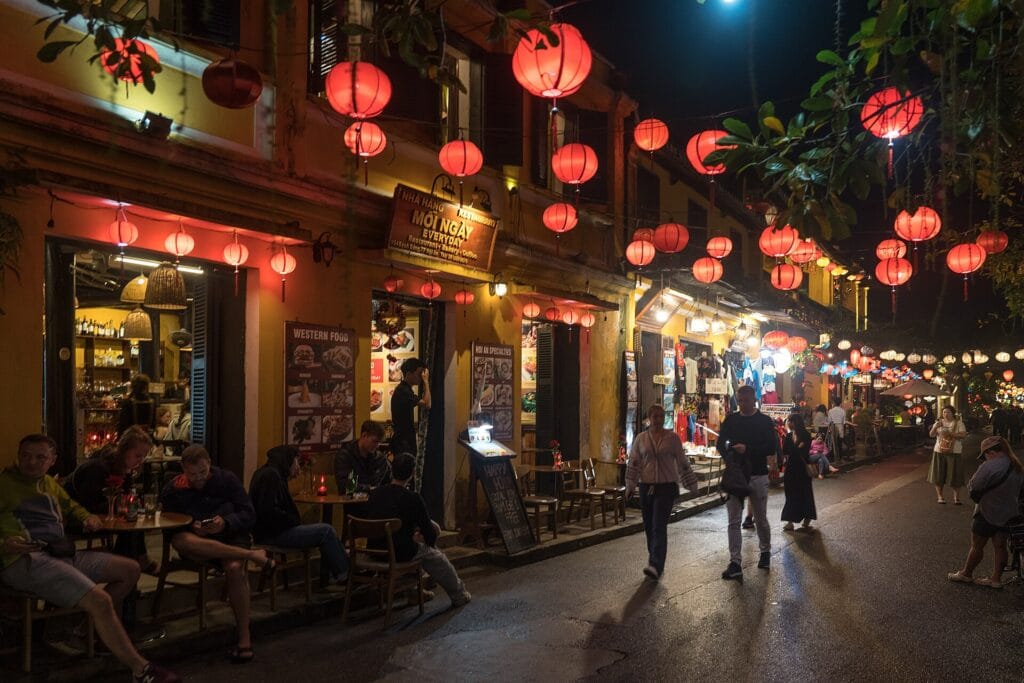
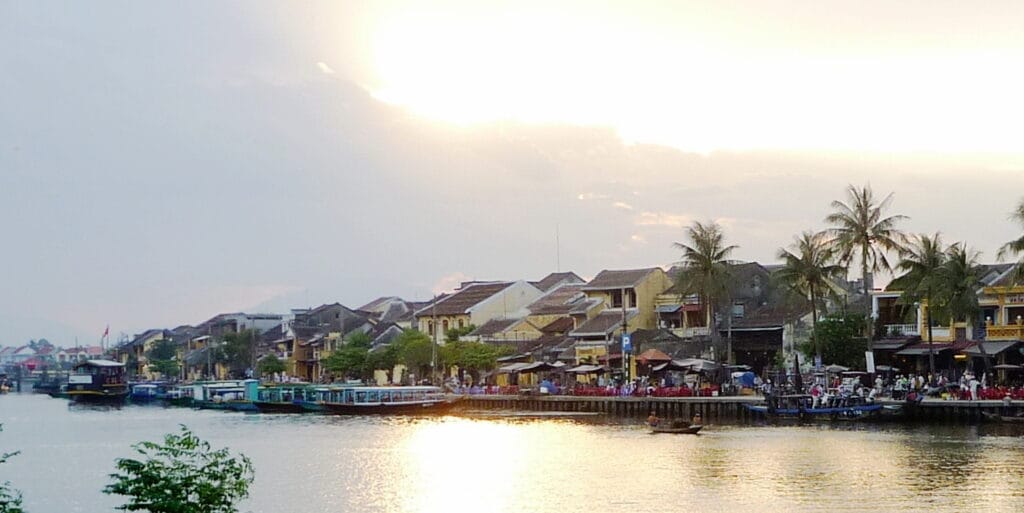
The Central Market is the epicentre of Hoi An food — go early (7-9 AM) for the freshest selection and fewer tourists. Most famous restaurants have queues at lunch; eating at 11 AM or 2 PM avoids the rush. Take a cooking class — Hoi An has the best in Vietnam. Morning Glory and Red Bridge are excellent. Do a food tour on your first day to map out your favourites. Avoid restaurants on the main riverside strip that cater to tourists with inflated prices.
Frequently Asked Questions
What is the must-try food in Hoi An?
The absolute must-try is Cao Lau. Beyond that, White Rose Dumplings (Banh Bao Banh Vac) and Banh Mi are essential for understanding Hoi An’s food culture.
Is street food safe in Hoi An?
Yes, street food in Hoi An is generally safe. Look for stalls with high turnover (long queues mean fresh food), eat where locals eat, and choose stalls where food is cooked to order. Stay hydrated and ease into spicier dishes gradually.
How much should I budget for food in Hoi An?
Budget travelers can eat well for $10-20 per day at street stalls and local restaurants. Mid-range budgets of $30-50 allow a mix of street food and sit-down meals. Fine dining starts around $50-100 per person.
You Might Also Love



Written by
John Morrison is the founder and lead travel writer at Packzup. Over the past decade he has explored destinations across Africa, the Americas, Asia, Europe, the Middle East, and Oceania — always self-funded, never on a press trip.
