Frequently asked questions
Medellin travel FAQ: everything first-time visitors ask
Medellin's transformation from one of the world's most dangerous cities to a digital-nomad haven is one of the great urban turnaround stories. Here are 10 honest, current answers.
Is Medellin safe for travelers?
Medellin has transformed dramatically but isn't risk-free. Touristy neighborhoods (El Poblado, Laureles, Envigado) are broadly safe day and night. Some areas remain unsafe at night. The main risks are scopolamine drink-spiking in El Poblado bars (don't accept drinks from strangers), street muggings in less-touristy areas after dark, and the persistent presence of low-level drug-related crime.
How much does a trip to Medellin cost?
Medellin is excellent value. Budget travelers manage on $40-60/day. Mid-range travelers spend $90-150/day with comfortable El Poblado apartments/hotels, paragliding, coffee farm tours, and great restaurants. Luxury travelers spend $250+/day at Click Clack or Diez Hotel.
What's the best time to visit Medellin?
Year-round 'eternal spring' (18-24C) means there's no bad time. December-March is slightly drier; April-May and September-November bring some rain. Easter week brings local crowds but mostly Colombian tourists.
How many days do I need in Medellin?
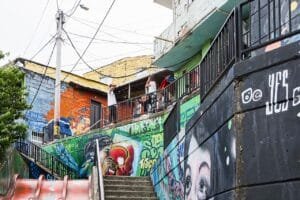
Four to five days covers Medellin well - city walking, Communa 13 graffiti tour, paragliding at Comuna 13/San Felix, coffee farm day-trip, Guatape rock + town day-trip. Six to seven days lets you add a coffee region (Salento) overnight or Tayrona.
Do I need a visa to visit Medellin?
Can you drink the tap water in Medellin?
Yes - Medellin tap water is officially safe and of high quality. Many locals drink it. Restaurants serve free filtered water. This is unusual for Latin America.
What language is spoken in Medellin?
Spanish is the native language. English is common in El Poblado tourist-facing operations and among younger digital nomads but limited elsewhere. Paisa Spanish (the local dialect) is considered one of the clearest in Latin America - easier for learners.
What's the food culture like in Medellin?
Paisa cuisine is hearty: bandeja paisa (rice, beans, plantains, chicharron, fried egg, sausage, arepa), arepas (corn cakes), ajiaco (chicken-and-potato soup). Don't miss: Carmen, La Provincia, and Mercado del Rio food hall. Coffee culture is exceptional - try Pergamino.
Is Medellin good for first-time travelers?
Medellin is increasingly beginner-friendly with growing English presence and good infrastructure in El Poblado. The main learning curves are the safety zone awareness (stick to El Poblado/Laureles/Envigado for first visits), Spanish language learning, and the digital-nomad scene's intensity.
What should I avoid doing in Medellin?
Don't 'dar papaya' (give papaya, local slang for being careless) - don't flash phones/cameras/jewelry. Don't accept drinks from strangers in El Poblado bars. Don't venture into unfamiliar neighborhoods at night. Don't make 'narco tourism' references about Pablo Escobar - it's deeply offensive to locals.