Frequently asked questions
Costa Rica at a glance: best around Jan–Mar (16–26°C days, mostly dry) · one reference point, not the whole country · Plugs A,B (120 V) · drives right · climate data
More: When to visit Costa Rica · Costa Rica travel guide
More: When to visit Costa Rica · Costa Rica travel guide
Costa Rica travel FAQ: everything first-time visitors ask
Costa Rica is Central America's most polished eco-tourism destination - rainforest wildlife, two coasts, and high-quality lodge infrastructure. Here are 10 practical answers.
💰
Compare destinations
See the Travel Cost Index 2026
Daily travel budgets for 200 countries, ranked cheapest to priciest across three travel styles.
Is Costa Rica safe for travelers?
Costa Rica is one of Central America's safest countries. Violent crime against tourists is rare. The main risks are car break-ins at beach/trailhead parking, rip currents at Pacific beaches (multiple drowning incidents annually), and wildlife encounters (snakes, crocodiles in some areas). Solo travel is broadly safe; pure-adventure activities have inherent risks.
How much does a trip to Costa Rica cost?
Costa Rica is the most expensive Central American country. Budget travelers manage on $60-90/day with hostels and bus travel. Mid-range travelers $130-220/day with eco-lodges, rental car, and adventure activities. Luxury travelers $500+/day at Nayara Tented Camp, Andaz Papagayo, or Pacuare Lodge.
What's the best time to visit Costa Rica?
December to April is the dry season and unambiguous sweet spot - sunny days, lower rainfall, optimal wildlife viewing. May-November is the green season with afternoon rain but lower prices and lush landscapes. The Caribbean coast has different rhythm - drier September-October.
How many days do I need in Costa Rica?
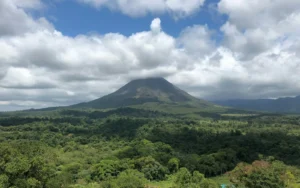
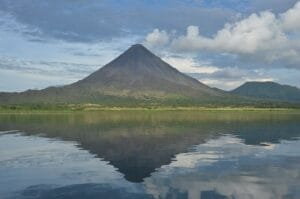
Ten to fourteen days for a complete circuit - 3-4 days Pacific (Manuel Antonio, Nicoya), 2-3 days Arenal volcano + Monteverde cloud forest, 3-4 days Caribbean (Puerto Viejo, Tortuguero), buffer days. Seven days minimum for a serious nature-focused trip.
Do I need a visa to visit Costa Rica?
Can you drink the tap water in Costa Rica?
Yes - tap water in San Jose and most tourist areas is safe to drink. Lodges and hotels provide filtered water. In rural areas (Caribbean coast, indigenous communities), bottled is safer. Most travelers don't have issues with Costa Rica tap water.
What language is spoken in Costa Rica?
Spanish is the official language. English is widely spoken in tourism-focused areas (Manuel Antonio, La Fortuna, Monteverde, Tamarindo) and at eco-lodges. Outside tourist zones, Spanish is essential. Costa Rican Spanish is considered one of the clearest.
What's the food culture like in Costa Rica?
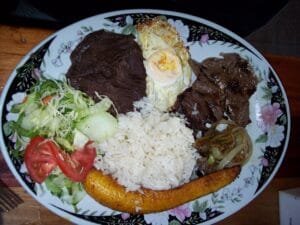
Costa Rican (Tico) food is simple and fresh - gallo pinto (rice and beans for breakfast), casado (rice, beans, plantains, meat, salad for lunch), ceviche, tres leches cake. Don't miss: a beachside ceviche, sopa negra (black bean soup), and Café Britt coffee. International food at eco-lodges is generally excellent.
Is Costa Rica good for first-time travelers?
Costa Rica is exceptionally beginner-friendly Central America. English is common in tourism, eco-lodges are world-class, infrastructure is reliable, and the country is politically stable (no army since 1948). The main learning curves are driving distances (slow, winding roads) and rip-current awareness at Pacific beaches.
What should I avoid doing in Costa Rica?
Don't leave anything in rental cars at beach/trailhead parking. Don't swim at beaches without checking rip-current conditions. Don't approach wildlife or feed monkeys. Don't venture off marked trails in rainforest. Don't underestimate driving times - Costa Rica's mountainous geography makes 200km take 5 hours.