
Last updated September 6, 2026 · Editorial policy
- Where to stay in Medellín: best areas
- El Poblado: the green default
- Laureles: the local favourite
- Envigado & Sabaneta: suburban calm
- Know before you book
- Quick picks by traveler type
- Picking Your Base in Medellin by Traveler Type
- FAQ
- Which metro line and station actually serves each neighbourhood
- What the metro costs in 2026, and the one line priced differently
- The 19 percent IVA exemption on hotel rooms, and what you must show in 2026
- Is there a tourist tax in Medellin, and how do you check a property is registered?
- El Poblado, Provenza and Manila: what the hill costs you
- Laureles and the Metro de la 80: what is being built next door
- Envigado and Belen: two different kinds of cheaper
- What the eternal spring claim means, and what the safety guidance says
- At a glance
- Frequently asked questions
Quick answer: El Poblado is the expat-and-visitor default: leafy, cafe-dense, nightlife-loud near Parque Lleras: Laureles is the flatter, more local alternative with arguably better food-per-peso: pick Poblado for first visits, Laureles for second ones (or remote-work months).
Where to stay in Medellín: best areas
| Area | Best for | The vibe |
|---|---|---|
| El Poblado | First-timers, nightlife | Upscale, leafy |
| Laureles | Local & relaxed | Authentic, value |
| Envigado | Quiet & residential | Calm |
| Centro | Sights & value | Urban |
El Poblado: the green default
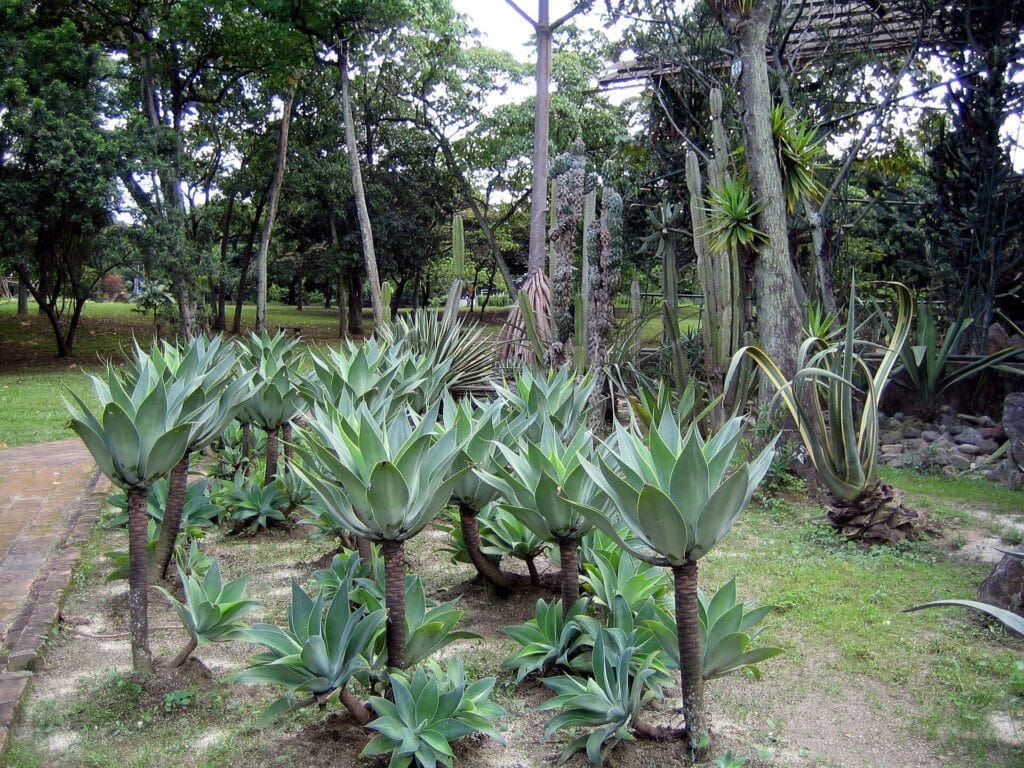
Hills of trees and towers, specialty coffee, rooftop pools and the Provenza restaurant lanes: hostels to design hotels (US$30–120). Nights around Lleras run loud: book a few blocks uphill for sleep.
Laureles: the local favourite
Flat, walkable grid of neighbourhood bars, bakeries and the La 70 strip: real-city living ten metro-minutes from the centre: stays 20–30% under Poblado. Digital-nomad central, increasingly.
Envigado & Sabaneta: suburban calm
Family plazas, menu-del-dia lunches and a slower register on the metro line south: long-stayers’ territory.
Know before you book
Use the Metro with pride (locals do): take the Comuna 13 graffiti tour with guides: and treat late nights around party zones with city sense: pick licensed taxis/apps after dark.
Quick picks by traveler type
First visit: Poblado. Food + value: Laureles. Month-long remote work: Laureles or Envigado apartments. Nightlife: Poblado (Lleras-adjacent, not Lleras-front).
Picking Your Base in Medellin by Traveler Type
The trap in Medellin is treating El Poblado as one place. It splits hard by block. First-timers who want walkability without losing sleep should book Manila, the calmer residential pocket of El Poblado: design cafes and brunch spots, but a real night’s rest, with rooms commonly around US$50 to US$120. Skip basing yourself on Provenza or right on Parque Lleras unless you came to party. The restaurant lanes are genuinely good, but the late-night foot traffic and bar noise make it the most overrated place to actually sleep.
For nightlife with locals rather than tourists, Laureles around the La 70 strip runs roughly 20 to 40 percent under Poblado rates, with hotels averaging about US$55 a night. Families and long-stayers do best in Envigado or neighbouring Sabaneta, the quietest and arguably safest options on the southern metro line, where budget rooms can sit around US$25 to US$60.
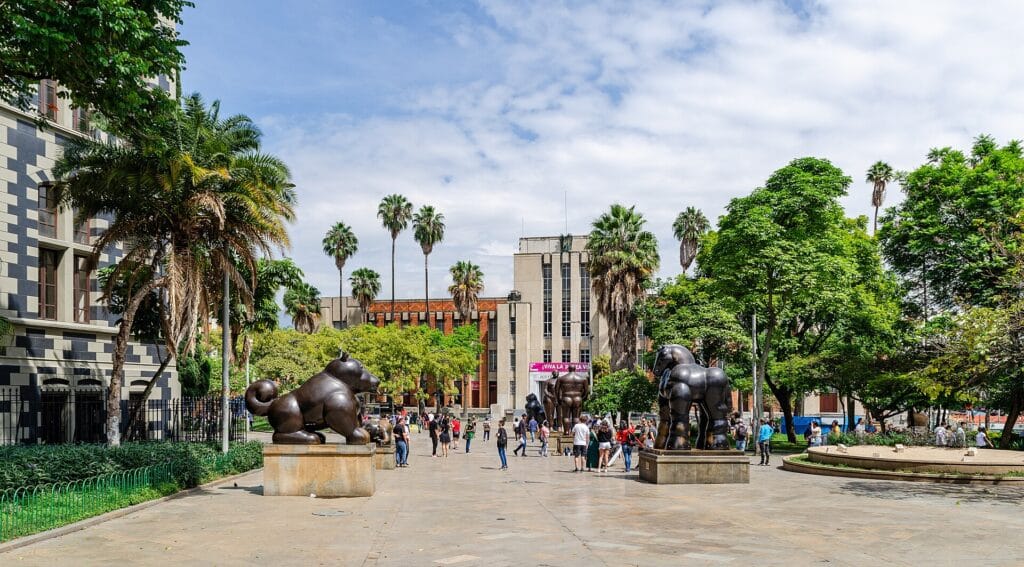
- Avoid as a base: El Centro / La Candelaria. Worth a daytime walking tour for the Botero plaza and museums, but it empties out and turns risky for petty theft after dark, so do not sleep there.
FAQ
Is Medellín safe for tourists?
Poblado or Laureles?
Weather?
How many nights?
Plan the practical side: Cost of Living Medellin.
Which metro line and station actually serves each neighbourhood
Knowing which bases sit on a metro line is the difference between a walkable stay and a daily taxi.
El Poblado is served by El Poblado station on Line A, with Aguacatala the next stop south. Line A runs 25.6 km in about 42 minutes end to end, along the floor of the Aburrá Valley beside the river, from La Estrella to Niquía. That alignment is the catch: Provenza and Manila are barrios up the hillside east of the station, so a listing promising walking distance to the metro usually means downhill out and uphill back.
Laureles is served by Line B at Estadio and Floresta, with Suramericana at its eastern edge. Line B is 5.5 km and 10.5 minutes one way across seven stations, San Javier to San Antonio, a useful measure of how compact this side of the city is.
Envigado has its own Line A station, between Itagüí and Ayurá. It is a separate municipality inside the metropolitan area, not a Medellín neighbourhood.
Belén has no metro station. It is served by the bus Line 1, which runs 12.5 km from Parque Aranjuez to U. de M. in about 45 minutes, calling at Parque Belén, La Palma, Los Alpes, Rosales, Fátima and Nutibara, and interchanging with the metro at Hospital, Cisneros and Industriales. Parque Belén station has a customer service point and Cívica top-up.
Provenza and Manila are not stations. They are barrios inside El Poblado, and no transport map will find them.
What the metro costs in 2026, and the one line priced differently
A single journey costs 3,820 pesos on the frequent profile with a personalised Cívica card, or 4,400 pesos on a bearer or occasional card, for integrations 1 to 4. The Metro de Medellín’s own published tariff table also lists 3,330 pesos for adulto mayor, 2,720 pesos for a person with a disability and 1,600 pesos for the student profile. Checked on the operator’s Spanish-language user pages on 5 September 2026.
One warning about older figures. The English-language pages on the same site still show a previous fare, so a number you find in English may be a year or more out of date. Read the Spanish tariff table.
That fare covers Lines A and B, the tram and Metrocables H, J, K, M and P, so the cable up to Santo Domingo on Line K is an ordinary journey at an ordinary price with no surcharge.
Line L to Arví is not. It is priced separately under Resolución No. 0008 of 9 January 2026, at 26,700 pesos on the published Tarifa Extranjeros y/o General, against 11,900 pesos on the Tarifa Nacionales y/o personalizados and 3,900 pesos for residents of estratos 1, 2 and 3. The operator’s tariff table does not say whether these are one-way or return fares, so budget for the return as well and confirm at the ticket window before you board.
Line L runs to its own clock, and this is the part that ruins plans. It is 4.6 km and about 15 minutes, and it opens at 09:00 Monday and Wednesday to Saturday, 08:30 on Sundays and holidays, closing at 18:00 on every operating day. Crucially, the operator states “No presta servicio los días martes”: Line L does not run on Tuesdays at all. Miss the 18:00 close and you are paying for a car down a mountain road; turn up on a Tuesday and there is no service to miss.
The 19 percent IVA exemption on hotel rooms, and what you must show in 2026
A hotel room sold to a resident abroad is invoiced at a rate of zero, not at 19 percent. Article 481, literal d) of the Estatuto Tributario makes tourism services provided to residents abroad and used in Colombia exempt with a right to refund, where they come from operating agencies or hotels inscribed in the Registro Nacional de Turismo under Ley 300 de 1996.
The test is not nationality, it is intention. Decreto 297 de 2016 defines residents abroad as “los extranjeros y … los nacionales que ingresen al territorio nacional sin el ánimo de establecerse en Colombia”. That matters more here than elsewhere in Colombia, because Medellín’s long-stay apartment market is full of people whose position on that question is genuinely arguable. A Colombian living abroad qualifies; somebody who has settled here does not.
Ignore the stamp codes printed in the decree. Decreto 297 de 2016 names Permiso de Ingreso y Permanencia stamps PIP-3, PIP-5, PIP-6 and PIP-10 and temporary visas TP-7, TP-11 and TP-12. DIAN Concepto 003522 int 413 de 2025, dated 25 March 2025, records that all of them are repealed: the TP visas came from Resolución 5512 de 2015, repealed by Resolución 6045 de 2017 and then by Resolución 5477 de 2022, which replaced the old series with the V, M and R visa classes; the PIP permits came from Resolución 1220 de 2016 and were repealed by Resolución 3167 de 2019. DIAN publishes no code-for-code map between the old and new categories.
What it publishes is a test. A successor norm counts “bien sea por un proceso de modificación, adición o sustitución normativa”, so long as it validates that entry was “sin el ánimo de establecerse”. In practice you present the original passport together with documents showing your entry was not for the purpose of settling.
If you came in through Biomig you will have no entry stamp. DIAN describes Biomig, the iris-recognition channel under article 2 of Resolución 3167 de 2019, as admitting travellers “sin sellar el pasaporte”. The document that fills the gap is the Certificado de Movimientos Migratorios, which under article 2 of Resolución 2061 de 2020 certifies entries and exits. Request it from Migración Colombia.
The paperwork burden is the property’s. Decreto 297 de 2016 states that “el prestador del servicio será responsable de obtener y conservar la copia de los documentos”, and without those copies the exemption does not apply. DIAN Concepto 010454 de 2025 adds that it applies whether the guest or a travel agency pays.
So ask the hotel to apply the exemption at check-in, hand over the passport itself rather than a photograph, keep the passport and your immigration record to hand, and accept that an informal apartment let cannot lawfully zero-rate anything. Rules and resolution numbers move: re-check with DIAN or the property before you travel.
Is there a tourist tax in Medellin, and how do you check a property is registered?
No per-night visitor levy is charged on a hotel bill in Medellín. The national tourism levy exists but the law keeps it off your folio: Ley 1101 de 2006 creates the contribución parafiscal para la promoción del turismo, sets it at 2.5 per mil of operating income liquidated quarterly and payable by tourism providers, and describes it as a contribution “que en ningún caso será trasladada al usuario”. Article 3, which defines who pays it, was modified by article 37 of Ley 2068 de 2020.
Use that carefully. It is a rule about the provider’s own tax, not an instruction to walk out on a bill. If a line described as a tourism contribution appears, ask for the folio to be corrected before you pay, and escalate to the Superintendencia de Industria y Comercio if the property will not explain it.
Check registration instead. The Ministerio de Comercio, Industria y Turismo describes the Registro Nacional de Turismo as the mechanism for identifying and regulating tourism providers. Under Decreto 1836 de 2021, entry is compulsory for seventeen categories, including hotels, hostels, glamping and viviendas turísticas, the category most short-let apartments fall into. It lasts one year, is renewed between 1 January and 31 March, and is processed through the chambers of commerce at rnt.confecamaras.co.
Ask for the RNT number before you pay a deposit. It decides whether your room can be zero-rated, and the ministry states that operating without it exposes the provider to sanction by the Superintendencia de Industria y Comercio and to closure of the establishment by the district or municipal mayor. That is a risk you carry too, if it happens mid-stay.
El Poblado, Provenza and Manila: what the hill costs you
El Poblado’s problem is not price or noise, both of which are widely discussed. It is gradient.
Line A runs along the river at the bottom of the valley, and El Poblado station sits down there with it, between Aguacatala and Industriales. Provenza and Manila are up the hillside to the east, so every metro journey starts with a descent and ends with a climb, in a city where afternoon rain is routine. That is why people who chose El Poblado for the metro end up in cars.
Judge a listing by the walk, not the address. A room four blocks from the station on the flat is a different stay from one four blocks up the hill, though both sit in El Poblado and describe themselves the same way.
It suits short first visits and anyone content to pay for cars. It does not suit anyone planning to live off the metro for a week.
Laureles and the Metro de la 80: what is being built next door
Laureles is the flat, grid-planned counterweight to El Poblado, and its transport case is straightforward: Line B serves it at Estadio and Floresta, with Suramericana at the eastern edge, on a line only 10.5 minutes long end to end. You can reach the centre and come back without ever needing a car.
The live caveat is construction. The Metro de la 80 is being built along the western corridor and the project’s own site states it “tendrá 17 estaciones”, including San Germán, described as the “primera y única estación subterránea de la red Metro”, at 12 metres deep. The project reports that “la obra ya supera el 40 % de ejecución”.
That means diversions, hoardings and noise on parts of the west side, and the project site does not publish a street-by-street map of which blocks are affected at any moment. So ask a property directly how close it sits to the works and which side of the building the bedrooms face, rather than trusting a photograph that may predate the site compound outside.
Weigh it against what you get. A flat grid, short blocks, and a line that puts you in the centre in ten minutes is worth some noise for a week. It is a poorer bet for a month.
Envigado and Belen: two different kinds of cheaper
These two get grouped as the budget options and they are not alike.
Envigado is a separate municipality with its own Line A station, between Itagüí and Ayurá on a line running the length of the valley. You get a rail connection, a municipal centre with its own parks and markets, and a rhythm that has nothing to do with visitors.
You give up spontaneity, and the timetable is specific about it. Lines A and B and the tram run 04:30 to 23:00 Monday to Saturday and 05:00 to 22:00 on Sundays and holidays, and the operator notes that the last trains leave Niquía and La Estrella at 22:40 on the longer days. Central Medellín therefore becomes a planned trip with a hard cut-off, not a decision you make at 23:30.
Belén has no station at all. Its connection is the bus Line 1, a busway with proper stations rather than a street bus, meeting the metro at Industriales, Cisneros and Hospital. That is a good link by most cities’ standards and a second-class one by Medellín’s, because it involves a transfer Envigado does not.
Choose Envigado for a quieter base with a train, Belén for the lowest prices if you do not mind changing, and neither for a two-night stay.
What the eternal spring claim means, and what the safety guidance says
The nickname is about stability, not comfort and certainly not dryness. Medellín sits in the Aburrá Valley, and what keeps its temperature almost flat across the year is elevation close to the equator, where seasons shift rainfall rather than heat. No altitude figure is quoted here because the Alcaldía de Medellín’s own city-facts page returned a server error to every attempt to read it; check it there if you want the official number.
Rain is the variable that should shape a booking. SIATA, the early warning system for Medellín and the Aburrá Valley, describes itself as a science and technology project and risk-management strategy of the Área Metropolitana del Valle de Aburrá and the Alcaldía de Medellín, with contributions from EPM and ISAGEN, monitoring the region’s hydrometeorological conditions minute by minute and warning agencies and the public in real time. IDEAM publishes the monthly normals. For a booking decision, covered outdoor space matters more than air conditioning, and a real-time source matters more than a monthly average.
On safety, the UK Foreign, Commonwealth and Development Office does not advise against travel to Medellín. Its Colombia advice, updated 3 September 2026 and checked here on 5 September 2026, lists “the Urabá and Bajo Cauca regions of Antioquia Department” among the areas it advises against all but essential travel to. The city is not among them.
It does name the city on street crime: “Pickpocketing, mugging and armed robbery are a problem, especially in major cities, including Bogotá, Medellín, Cali and the Caribbean coast.” On dating apps: “Criminals use dating applications and websites to identify and lure foreign nationals who are travelling alone and looking to meet local people.” And on express kidnapping: “Criminals, often posing as taxi drivers, may track and select a target victim, often from around ATMs and often at night.” Re-check the FCDO page before you travel, as it is revised without notice.
At a glance
| Area | Line and nearest station | Single fare, personalised Cívica | Who it suits | The honest trade-off |
|---|---|---|---|---|
| El Poblado (incl. Provenza, Manila) | Line A, El Poblado; Aguacatala to the south | 3,820 COP | Short first visits, travellers happy to pay for cars | Station is at the valley floor; Provenza and Manila are uphill |
| Laureles | Line B, Estadio and Floresta; Suramericana at the eastern edge | 3,820 COP | Walkers, longer stays, eating locally | Metro de la 80 works are live on the western corridor |
| Envigado | Line A, Envigado; between Itagüí and Ayurá | 3,820 COP | Quiet base with a rail link | A separate municipality; last trains from La Estrella and Niquía at 22:40 |
| Belén | No metro station; bus Line 1 at Parque Belén, interchange at Industriales | 3,820 COP | Lowest prices with a real transport link | Every metro journey needs a transfer |
| Santo Domingo (Metrocable K) | Line K from Acevedo | 3,820 COP, no surcharge | Day trips, valley views | Part of the transit network, not a separate ticket |
| Arví (Metrocable L) | Line L from Santo Domingo, 4.6 km, about 15 minutes | 26,700 COP, Tarifa Extranjeros y/o General | A half-day out of the city | Separate tariff under Resolución 0008 of 2026; no service on Tuesdays; closes 18:00; the tariff table does not say if it is one way or return |
Frequently asked questions
Which Medellin neighbourhoods are actually on the metro?
El Poblado and Envigado are on Line A; Laureles is on Line B at Estadio and Floresta. Belén has no metro station and is reached by bus Line 1, which meets the metro at Industriales, Cisneros and Hospital. Provenza and Manila are barrios inside El Poblado, not stations.
How much is a metro journey in Medellin in 2026?
3,820 pesos on the frequent profile with a personalised Cívica card and 4,400 pesos on a bearer or occasional card, for integrations 1 to 4, on the operator’s published Spanish tariff table checked on 5 September 2026. That covers Lines A and B, the tram and Metrocables H, J, K, M and P. The English-language pages on the same site still show an older fare, so read the Spanish table.
Which days does the cable car to Arvi run?
Every day except Tuesday. The Metro de Medellín states ‘No presta servicio los días martes’. It opens at 09:00 on Monday and Wednesday to Saturday, 08:30 on Sundays and holidays, and closes at 18:00 on every operating day. Plan the last cable down well before 18:00, because the alternative is a car on a mountain road.
Why is the cable car to Arvi so much more expensive, and is that price a return?
Line L is priced separately under Resolución No. 0008 of 9 January 2026. The published Tarifa Extranjeros y/o General is 26,700 pesos, against 11,900 for the Tarifa Nacionales y/o personalizados and 3,900 for residents of estratos 1, 2 and 3. The operator’s tariff table does not state whether the fare is one way or return, so budget for the return and confirm at the window. Line K to Santo Domingo is an ordinary journey at the ordinary fare.
Do foreign visitors pay 19 percent IVA on Medellin hotels?
A resident abroad staying in a property inscribed in the Registro Nacional de Turismo is invoiced at a zero rate under Article 481(d) of the Estatuto Tributario. You present the original passport together with documents showing you entered without the intention of settling, and Decreto 297 de 2016 makes the provider responsible for keeping copies. The PIP and TP stamp codes printed in that decree have all been repealed, so if you entered through Biomig and have no stamp, ask Migración Colombia for the Certificado de Movimientos Migratorios.
Should I worry about the Metro de la 80 works when booking in Laureles?
Ask about it. The project’s own site says it will have 17 stations, including San Germán, the first and only underground station in the Metro network at 12 metres deep, and reports that works already exceed 40 percent execution. Diversions and noise are a live condition on parts of the west side, and no street-by-street map is published, so ask a property how close it sits to the works and which way the bedrooms face.
How late does the metro run?
Lines A and B and the tram run 04:30 to 23:00 Monday to Saturday and 05:00 to 22:00 on Sundays and holidays, with the last trains leaving Niquía and La Estrella at 22:40 on the longer days. Metrocable K starts at 08:30 on Sundays and holidays and Metrocables H, J, M and P at 09:00.
You Might Also Love




Written by
John Morrison is the founder and lead travel writer at Packzup. Over the past decade he has explored destinations across Africa, the Americas, Asia, Europe, the Middle East, and Oceania — always self-funded, never on a press trip.
