Last updated August 13, 2026 · Editorial policy
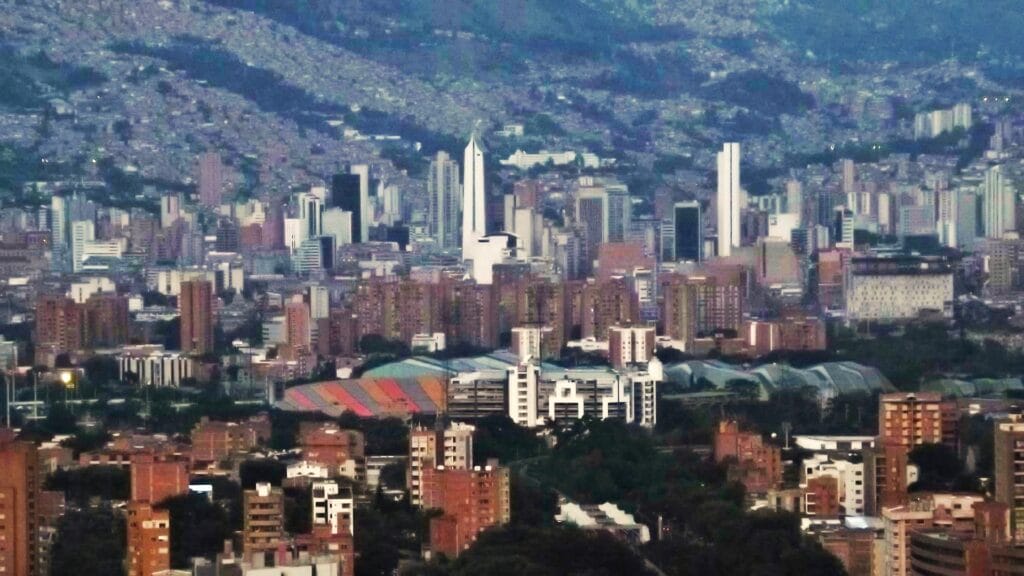
Medellín’s transport story is one of the most inspiring in Latin America — a city that transformed itself through innovative public transit, connecting hillside comunas to the valley floor via Metro, cable cars, and escalators. The Metro de Medellín is clean, efficient, and the backbone of the system. The Metrocable gondolas are both essential transport for hillside residents and a must-do experience for visitors. The city is spread along the Aburrá Valley, making the Metro line the natural north-south corridor. Taxis and Uber are cheap and available for reaching areas the Metro doesn’t cover.
Transport Options:
1. Metro de Medellín
Colombia’s only metro system — a single elevated line running north-south through the valley from Niquía to La Estrella, with Line B branching west to San Javier. Clean, safe, air-conditioned, and the fastest way to traverse the city. Fare is 2,950 COP per ride using a rechargeable Cívica card. Trains run every 4-8 minutes from 4:30 AM to 11 PM. Key stations: Parque Berrío (downtown), Poblado (tourist neighbourhood), Universidad. Connects to Metrocable and bus feeders. Busiest at rush hours — avoid if possible.
2. Metrocable (Gondola Cable Cars)
Medellín’s most innovative transport — aerial gondolas connecting hillside comunas to the Metro system. Line K (Santo Domingo) reaches Parque Arví nature reserve. Line J connects to La Aurora. Line H (soon Line M) connects to the 13 de Noviembre comuna. Same fare as Metro (2,950 COP). The Line K to Santo Domingo was the first public transit cable car in the world and transformed the hillside community. The views over the valley are spectacular. Ride Line K + the Arví extension for the full experience.
3. Uber and InDriver
Both work widely in Medellín with transparent pricing. Uber is the most popular. A ride from Poblado to the airport costs about 40,000-60,000 COP. Cross-city rides cost 10,000-20,000 COP. InDriver lets you propose a fare. Both apps accept credit cards and cash. More reliable and safer than street taxis. Download both before arrival. Drivers occasionally ask you to sit in front — this is normal in Colombia. Surge pricing during rain (which triggers traffic jams in Medellín) and rush hour.
4. Taxis
Yellow taxis are metered and relatively cheap — minimum fare 5,400 COP, typical cross-city ride 12,000-25,000 COP. Taxis are generally safe in Medellín but it is better to call one through your hotel or use an app rather than flagging on the street, especially at night. The airport taxi to Poblado costs about 90,000-120,000 COP (the airport is 30 km from the city in the adjacent valley). Taxis cannot use bus lanes, so in rush hour the Metro is faster.
5. Buses and Colectivos
The bus network is extensive but confusing for visitors — routes are displayed on the windshield with no clear route maps. Fare is about 2,650 COP. Useful for reaching specific neighbourhoods not on the Metro line. The integrated bus feeders (Metroplús) run in dedicated lanes on main avenues and connect to the Metro. Google Maps shows bus routes well. The circular bus routes (Circuito) serve Poblado and Laureles. Buses are safe during the day. Not recommended for first-time visitors without Google Maps.
6. Walking and Escalators
Medellín’s valley floor neighbourhoods — Poblado, Laureles, Centro — are walkable within their boundaries. The city’s famous outdoor escalators in Comuna 13 (Graffiti Tour area) transform what was a 35-minute hillside climb into a 6-minute ride. Parque Lleras and Poblado’s restaurant zone are pleasant walking areas. The Botero Plaza and downtown are walkable but require awareness of surroundings. Medellín’s climate (spring-like year-round, 22-28°C) makes walking comfortable. Hills between neighbourhoods can be steep.
Transport Tips for Medellín
The Cívica card (5,000 COP including 2 rides) works on Metro, Metrocable, Metroplús, and integrated buses — buy at any Metro station. Ride Metrocable Line K to Santo Domingo for the views and community experience. Poblado and Laureles are the safest neighbourhoods for walking at night. Uber/InDriver are safer than street taxis, especially at night. The José María Córdova Airport is 45 minutes from the city — allow extra time. Metro rush hour (6:30-8:30 AM, 5-7 PM) is very crowded. The Graffiti Tour in Comuna 13 (reachable by Metro + escalators) is a must-do.
What is the best way to get around Medellín?
The most practical options are Metro de Medellín and Metrocable (Gondola Cable Cars). Colombia’s only metro system — a single elevated line running north-south through the valley from Ni…
Do I need a car in Medellín?
It depends on your itinerary. For the main areas, public transport and ride-hailing are sufficient. A car is useful for exploring rural or remote areas.
Is public transport safe in Medellín?
Yes, public transport is generally safe and widely used by locals and tourists alike. Take normal precautions with your belongings, especially in crowded areas.
Related Articles
Frequently Asked Questions
You Might Also Love




Written by
John Morrison is the founder and lead travel writer at Packzup. Over the past decade he has explored destinations across Africa, the Americas, Asia, Europe, the Middle East, and Oceania — always self-funded, never on a press trip.