
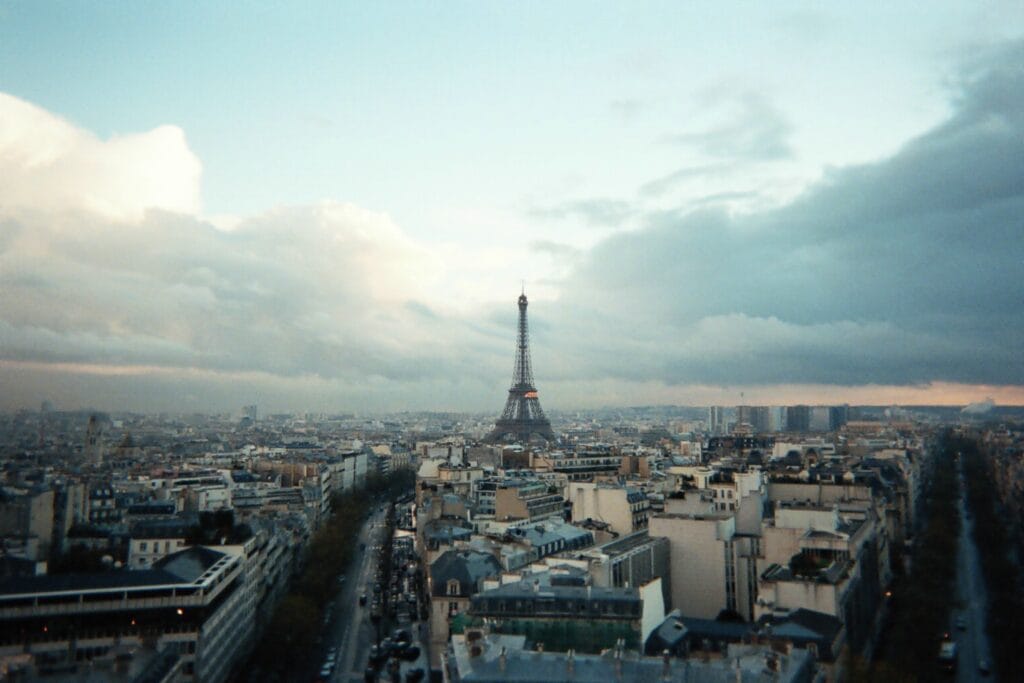
Paris in July is the hottest, longest-day, most event-heavy month of the year: highs around 26°C, daylight from 06:03 to 21:52 on Bastille Day, free swimming in the Seine, the summer sales, a national holiday with fireworks off the Eiffel Tower, and – in 2027 – the finish of the Tour de France. It is also the month Paris is least itself, because from mid-month the people who live there start leaving.
What July actually feels like
Average highs sit near 26°C with lows around 16°C, and roughly eight to ten days of rain – usually short thunderstorms rather than the steady grey of winter. The number that matters more is the extreme: heatwaves that push Paris past 35°C are now a regular July event rather than a rarity, and the city is built for the opposite problem.
Three consequences follow, and all three are bookable decisions:
- Air conditioning is not standard. Plenty of Paris hotels and almost all short-let apartments in Haussmann buildings have none. In a normal July you will not care; in a heatwave it decides your trip. Check the listing explicitly – “fan provided” is not air conditioning.
- The métro is hot. Most lines have no air conditioning and platforms run well above street temperature. On a hot afternoon a 25-minute walk in the shade often beats two changes underground.
- Top-floor rooms cook. The romantic sixth-floor chambre de bonne with the zinc roof outside the window is the hottest room in the building.
Daylight is the compensation. The sun is up from about 06:00 to 21:50 for most of the month, so an evening that starts at 19:00 still has three hours of light in it. Build the day around that rather than around a 09:00 start.
14 July: what happens, and where to stand
In 2027 Bastille Day falls on a Wednesday. The day has a fixed shape:
- Morning – the military parade, traditionally down the Champs-Élysées. Streets around the avenue close early and the good kerbside positions are taken well before the parade starts. In exceptional years the route has been moved, so check the city’s announcement in early July rather than assuming.
- All day – the Louvre is free on 14 July. It is one of only two recurring free-entry arrangements the museum runs, and it is not widely known. It is also, predictably, busy.
- Evening – the Concert de Paris on the Champ de Mars, free and broadcast live, followed by the fireworks from the Eiffel Tower. Because the sun does not set until about 21:50, the fireworks cannot start until roughly 23:00. Plan the evening meal early and the night late.
- 13 and 14 July evenings – the bals des pompiers, dances held in fire stations across the city. Small entry donation, no bookings, and the most purely local thing you can do on the national holiday.
On watching the fireworks: access to the Champ de Mars itself is controlled and has required free tickets in recent years, so check in late June if that is where you want to be. Otherwise the higher ground works better and fills later – Parc de Belleville, the Buttes-Chaumont, the steps below Sacré-Cœur – and any of them means a long walk home, because the métro afterwards is close to unusable.
The Tour de France finishes in Paris on 25 July 2027
The 2027 Tour de France starts in Britain – the first men’s Grand Départ from Scotland, leaving Edinburgh on Friday 2 July – and is scheduled to finish in Paris on Sunday 25 July 2027. The Paris stage route is published with the full course in the autumn before the race, so confirm the closures nearer the time.
Two practical notes if your trip covers that Sunday. Watching is free: there is no ticket, you simply stand at the barriers, and the final stage has traditionally been decided over laps of a city-centre circuit – several passes at the same spot rather than one sprint past. And central Paris shuts to traffic for most of the day, so plan an arrival or departure on the 25th around the closures, not through them.
Swimming in the Seine, for real
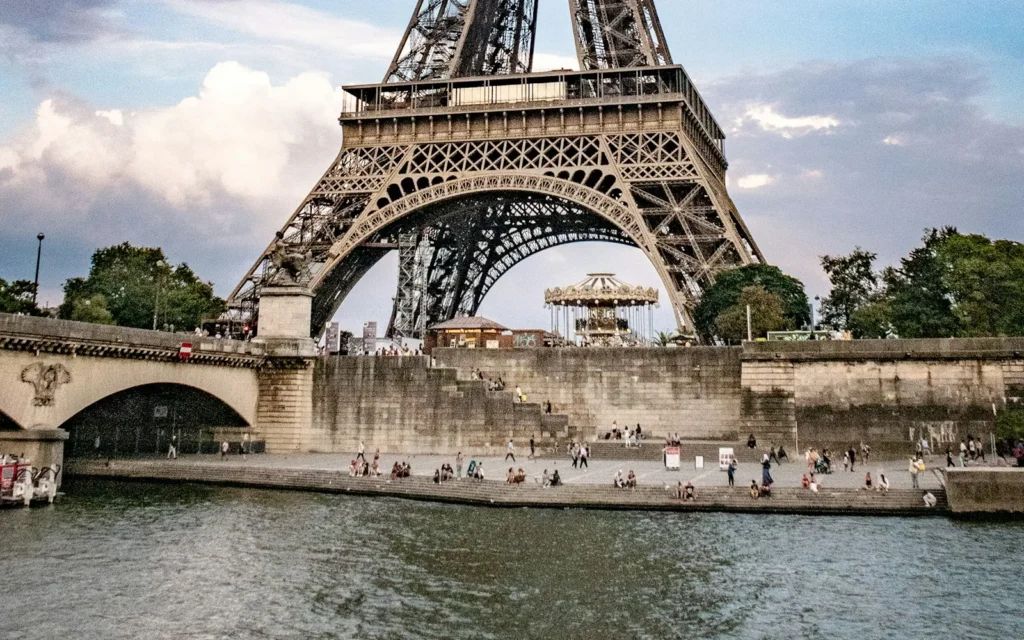
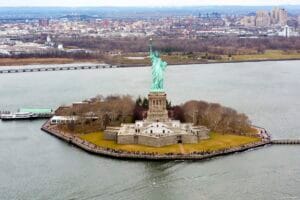
This is the genuinely new thing about a Paris summer. Since 2025, the city has run supervised, free, open-air swimming in the Seine, and in 2026 that meant three river sites: Bercy in the 12th, with two pools and an urban beach opposite the Bibliothèque François-Mitterrand; Louis-Philippe in the 4th, under the bridge of the same name in the historic centre; and Bras de Grenelle in the 15th, opposite the Paris Statue of Liberty and the gentlest of the three for families.
They are free, no booking is needed, lifeguards are on duty seven days a week, and each site has a capacity cap – several hundred at Bercy, a couple of hundred at the smaller two, so midday on a hot Saturday means queueing. Opening depends on daily water-quality testing, current and weather, and a site can close at short notice after heavy rain. In 2026 the season ran from 4 July to 30 August; expect a comparable window in 2027, confirmed by the city in the spring.
Beyond the river there are supervised swimming spots at the Bassin de la Villette and along the canals – eleven across the city in 2026 – which are a better bet with small children than the Seine sites.
Paris Plages
Paris Plages turns the Rives de Seine park, the Bassin de la Villette, the Canal Saint-Martin and the forecourt of the Hôtel de Ville into a free summer programme of deckchairs, sand, concerts and games. In 2026 it ran 4 July to 30 August. It is not a beach holiday and treating it as one leads to disappointment; treat it as a reason to be by the water in the evening and it is one of the best things the city does.
Les soldes d’été: 23 June to 20 July 2027
France’s summer sales are fixed by law and run for four weeks. In 2027 they open on Wednesday 23 June at 08:00 and end on Tuesday 20 July across mainland France, Paris included. Note the shape of that: the sales cover the first three weeks of July and then stop. A trip that starts on 21 July has missed them entirely.
The rule is the last Wednesday of June, brought forward to the previous Wednesday when the last falls after the 28th – which is why 2027 starts on the 23rd rather than the 30th. A handful of departments run different dates (the Alpes-Maritimes, the Pyrénées-Orientales and Corsica start later), but those do not affect Paris.
What closes, and what is not available in July
- The Louvre’s free first-Friday evening does not run in July or August. It operates the other ten months of the year. Aside from 14 July, there is no free evening this month.
- The Louvre still closes on Tuesdays, and the Musée d’Orsay on Mondays. Neither closes for the summer.
- Orsay requires a timed slot for the whole of its entrance-hall rebuild, which runs from March 2026 to summer 2028. The collections are unaffected and the museum stays open, but you cannot turn up and queue.
- Restaurants begin their annual break from mid-July. It is a trickle in July and a flood in August, but by the last week of the month a meaningful share of neighbourhood places have a handwritten note on the door. Check the specific restaurant, not the guidebook.
Planning around the heat
The productive inversion for a hot July day is to stop treating museums as a morning activity. Outdoors early, indoors through the worst of the afternoon, outdoors again from 18:00 when the light is still good for another three hours.
Cool places that cost nothing: the big churches – Saint-Sulpice, Saint-Eustache, Saint-Germain-des-Prés – hold the night’s temperature well into the afternoon. So do the nineteenth-century covered passages in the 2nd arrondissement, which are also the correct answer to a thunderstorm. The Wallace fountains scattered across the city run free drinking water; carry a bottle and refill rather than buying.
During an official heatwave the city opens cooled public rooms and publishes a map of shaded and cool spots. If a canicule is forecast for your dates, look for the current list on the city’s own site before you arrive – it changes each summer.
Crowds, prices and the honest comparison
July is high season and prices behave accordingly, with the sharpest spikes around the 14th and the Tour finish. The trade is real, though: you are paying for sixteen hours of daylight, warm evenings, river swimming and a calendar that is fuller than any other month’s.
If what you want is Paris rather than a Paris summer, the month is a poor choice – the residents are leaving, the queues are long and the heat is a planning constraint rather than a bonus. September keeps the light and the terraces and loses the crowds; October is the better value still. For the twelve months side by side, see the best time to visit Paris.
Where to stay, and what it costs
In July the two things worth paying for are air conditioning and a short walk home. Central is worth more in a month when you will be out until 23:00 and the last thing you want at midnight is a connection at Châtelet. Where to stay in Paris covers the arrondissements by what each is good for, and the Paris travel budget sets out a realistic daily figure for the high season.
The July 2027 calendar
- Friday 2 July – the Tour de France begins in Edinburgh.
- Early July – the Seine swimming sites and Paris Plages open; in 2026 the date was 4 July.
- Tuesday 13 July – first night of the bals des pompiers.
- Wednesday 14 July – Bastille Day: parade in the morning, free entry to the Louvre, Concert de Paris and fireworks from about 23:00.
- Tuesday 20 July – the summer sales end.
- Sunday 25 July – the Tour de France finishes in Paris.
- Late July onwards – the annual restaurant closures build towards the August exodus.
Read alongside
- Paris in August – hotter, emptier, cheaper, and half the neighbourhood shut.
- Paris in September – the month most people should book instead.
- Best time to visit Paris – all twelve months compared.
- Paris travel budget – high-season daily costs.
- 3-day Paris itinerary – easy to re-cut around a hot afternoon.
- Is Paris safe? – pickpocketing peaks in the high season; the specifics are here.
Frequently asked
Is July a good time to visit Paris?
It is the best month for daylight, warm evenings and events, and among the worst for crowds, prices and heat. If you want the Bastille Day fireworks, the Tour de France finish or swimming in the Seine, July is the only month that offers them. If you want Paris at its most liveable, September is the better booking.
How hot does Paris get in July?
Average highs are about 26°C and lows about 16°C, but heatwaves above 35°C now happen most summers. Since air conditioning is far from universal in Paris accommodation, check for it explicitly before you book a July stay.
What happens in Paris on 14 July?
A military parade in the morning, traditionally on the Champs-Élysées; free entry to the Louvre all day; the free Concert de Paris on the Champ de Mars in the evening; and fireworks from the Eiffel Tower at about 23:00, after dark. Fire stations across the city also hold the bals des pompiers on the evenings of the 13th and 14th.
Can you swim in the Seine in Paris?
Yes, at official supervised sites in summer. In 2026 three Seine locations were open – Bercy, Louis-Philippe and the Bras de Grenelle – free, with lifeguards, no booking and daily water-quality testing, from 4 July to 30 August. Sites close at short notice when the water or the current fails the test, usually after heavy rain.
When are the summer sales in Paris in 2027?
From Wednesday 23 June 2027 at 08:00 to Tuesday 20 July 2027 – four weeks, the same dates across mainland France.
Is the Louvre free in July?
Only on 14 July. The museum’s usual free evening on the first Friday of the month is suspended in July and August.
Does Paris shut down in July?
Not in July – that is August. The annual closures start as a trickle from mid-July and become widespread in the first three weeks of August. Museums and major sites stay open throughout; it is neighbourhood restaurants and small shops that close.
How long are the days in Paris in July?
About sixteen hours. On 14 July 2027 the sun is up from 06:03 to 21:52. Sunset stays after 21:30 for the whole month, which is why the fireworks cannot begin before 23:00.
You Might Also Love


Written by
John Morrison is the founder and lead travel writer at Packzup. Over the past decade he has explored destinations across Africa, the Americas, Asia, Europe, the Middle East, and Oceania — always self-funded, never on a press trip.
