
Last updated September 6, 2026 · Editorial policy
- Things to Do in Phuket, Thailand: What Is Actually Worth Your Time
- Related Phuket, Thailand Travel Guides
- When are the Similan and Surin islands closed, and when do they reopen?
- What does a national park cost a foreign visitor from Phuket, and how do you buy the ticket?
- Is Maya Bay open, and how do you get onto the beach?
- Which coast of Thailand is dry when Phuket is wet?
- What do the beach flags mean in Phuket, and when is the sea most dangerous?
- What is actually banned on a Phuket beach?
- At a glance
- Frequently asked questions
Things to Do in Phuket, Thailand: What Is Actually Worth Your Time
Quick answer: This is an honest look at Phuket, Thailand: which popular attraction to think twice about, what to do with that time instead, and the spot most visitors never reach. It also covers the transit and money moves that save the most hassle.
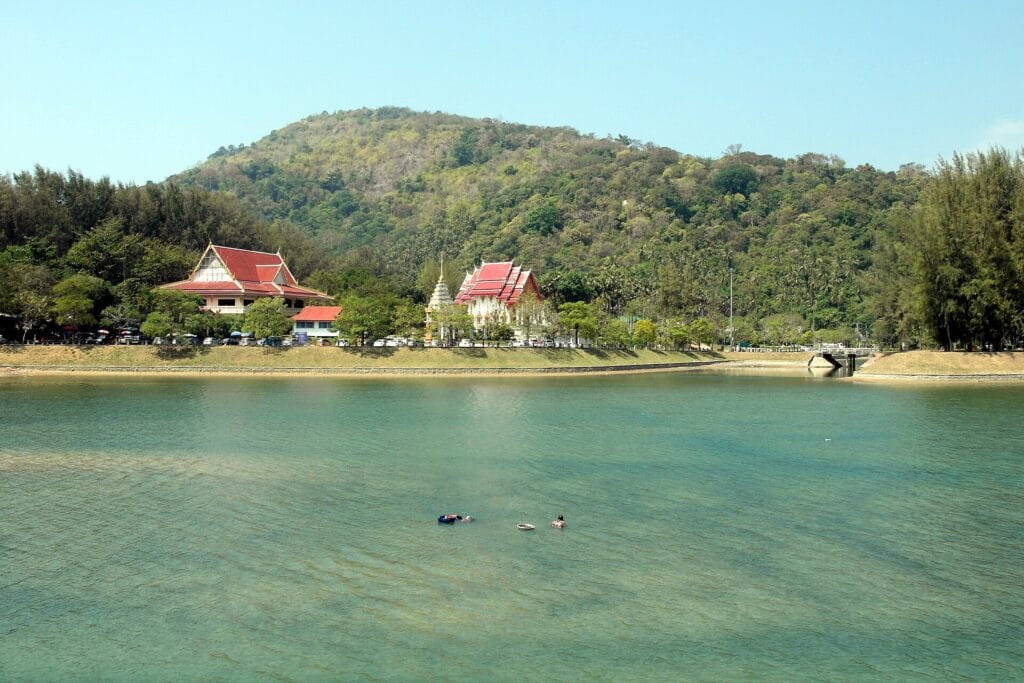
After the boat tours, here is the honest local read on Phuket’s land attractions. Patong and its Bangla Road strip get the headlines, but unless your plan is neon bars and 3am noise, it is the most overrated stop on the island. The beach itself fights with jet skis and touts all day. Trade it for Kata Beach, which has soft sand and reliable beginner surf, or Kamala just up the coast if you want something calmer and family-friendly.
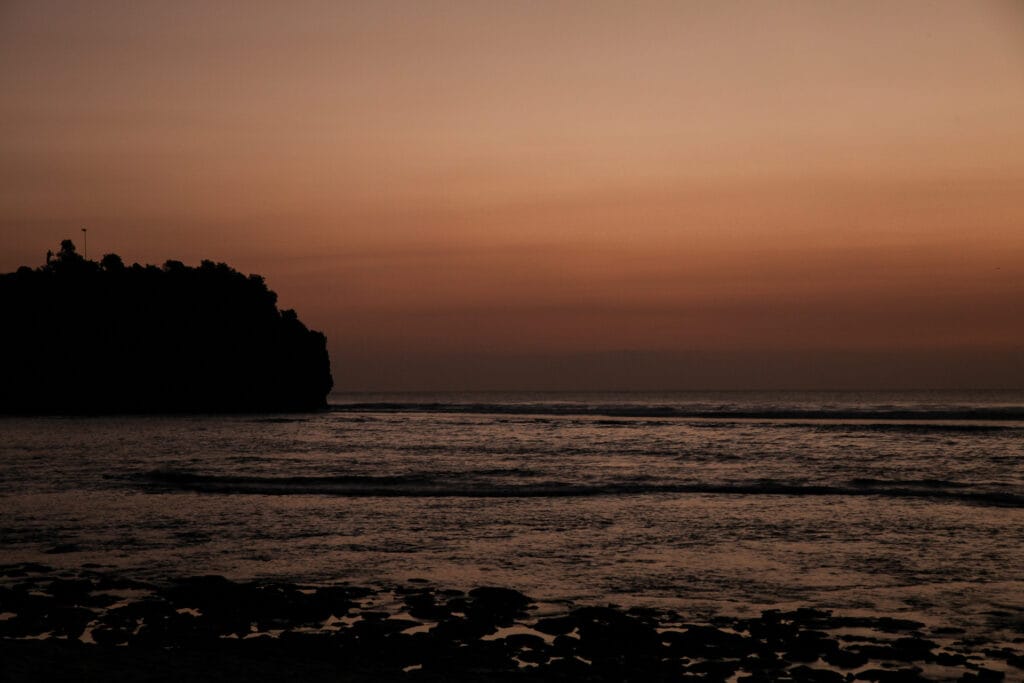
The pick most visitors rush past is the Karon Viewpoint, locally called Khao Saam Haad or Three Beaches Hill, on the road below Nakkerd Hill. It is free, and you see Kata Noi, Kata and Karon bays curving away at once. The Big Buddha sits on nearby Nakkerd Hill, a 15-30 minute drive away; it is free to enter and, since reopening in March 2026 after the 2024 landslide closure, opens at 9am with last entry 5:30pm – go at opening to beat the tour buses.
One smart move that saves money and time:
- Stack the free southern sights in one loop. The Big Buddha (open 9am to 6pm, last entry 5:30pm) and Wat Chalong, Phuket’s largest temple at roughly 8am to 5pm, are both free and close together.
- For evening, skip the bar strip and go to Old Phuket Town. On Sundays from about 4pm, Thalang Road becomes the Lard Yai walking street, and nearby Soi Romanee is the prettiest lane on the island.
Related Phuket, Thailand Travel Guides
- Where to Stay in Phuket
- Bali vs Phuket
- Phuket vs Krabi
- Bangkok vs Phuket
- Koh Samui vs Phuket: Thai Island Pick
When are the Similan and Surin islands closed, and when do they reopen?
Both close for five months a year. The Department of National Parks, Wildlife and Plant Conservation shuts Mu Ko Similan National Park and Mu Ko Surin National Park from 16 May to 14 October, reopening on 15 October. Those are the current season’s dates, not a previous year’s: the 2026 closure ran 16 May to 14 October 2026, with reopening on 15 October 2026, recorded by the Office of Natural Resources and Environmental Policy and Planning and confirmed by the director of Protected Area Regional Office 5. The government’s Public Relations Department published the same dates for 2025, which is why the department describes the measure as annual.
The closure covers tourism activities and overnight stays across both parks, not merely the campsites. Both parks sit in Phang Nga province, north of Phuket, and are reached by boat from the mainland, so this is the rule that decides whether the best-known snorkelling and diving trip out of Phuket exists at all on your dates.
The reason is two-sided. The department cites the balance of the marine ecosystem and the reduction of tourism pressure, and also the weather: the closure sits inside the southwest monsoon, when the Andaman Sea is at its roughest. Facilities are refurbished during the shutdown ready for the October reopening.
The practical consequence is blunt. A Phuket trip in June, July, August or September cannot include the Similans or the Surins, whatever a booking page appears to offer. If a seat is being sold to you for those months, that is the point at which to ask which park it actually enters. Ao Phang Nga and the beaches on Phuket itself stay open through the monsoon, and so does the Phi Phi group apart from Maya Bay and its two neighbouring bays in August and September; those two parks do not.
Dates are set by departmental order rather than by statute, and orders can move. Confirm the current season with the Department of National Parks before booking flights around a specific island.
What does a national park cost a foreign visitor from Phuket, and how do you buy the ticket?
Between 100 and 500 baht for a foreign adult, depending on which park, on a four-band schedule the department set out in an announcement effective 7 June 2022. Children pay half the adult rate in every band, and Thai nationals pay roughly a fifth of the foreign rate.
The bands that matter from Phuket are these. Category 4, at 500 baht for a foreign adult and 250 baht for a child, contains only two parks: Mu Ko Similan and Mu Ko Surin. Category 3, at 300 baht and 150 baht, includes Ao Phang Nga National Park and Than Bok Khorani in Krabi. Category 2, at 200 baht and 100 baht, includes Khao Sok in Surat Thani. Category 1, at 100 baht and 50 baht, includes Khao Lak-Lam Ru in Phang Nga. The corresponding Thai national rates are 100, 60, 40 and 20 baht for adults.
The fee is separate from whatever you paid for the boat. Read the wording on any trip you buy: if it says the park fee is not included, it is a per-person charge collected at the park, and at Category 4 rates it adds 500 baht a head.
Payment has moved online. The department has put six marine parks on an e-ticket system: Hat Noppharat Thara-Mu Ko Phi Phi and Than Bok Khorani in Krabi, Ao Phang Nga, Mu Ko Similan and Mu Ko Surin in Phang Nga, and Mu Ko Lanta in Krabi. Entry is reserved and paid for through the QueQ mobile application or the department’s own website, which issues a QR or verification code to show on arrival. The Public Relations Department’s notice for the Similan reopening said tickets could be bought in advance or on the day of travel before 08:00.
One gap worth naming rather than guessing at. The 2022 category announcement, as published, does not list Hat Noppharat Thara-Mu Ko Phi Phi, which is the park a Phi Phi day trip enters, because that park is charged under a separate departmental special-rate announcement rather than under the four bands. That rate is consistently reported as 400 baht for a foreign adult and 200 baht for a child, and the department’s own advisory committee has previously refused requests from Krabi operators to cut it. No current departmental page carrying the figure could be opened on 6 September 2026, so treat it as reported rather than read, and take the fee from the department’s e-ticket channel for your travel date rather than from any secondary listing.
Is Maya Bay open, and how do you get onto the beach?
Maya Bay is closed every year from 1 August to 30 September, and when it is open you do not arrive in the bay itself. Boats land on the far side of Phi Phi Le at Ao Loh Samah, and visitors walk across the island to the beach.
The annual closure is wider than the beach. The chief of Hat Noppharat Thara-Mu Ko Phi Phi National Park announced the closure of Maya Bay, Loh Samah Bay and Lo Ko Bay, on Mu Ko Phi Phi in tambon Ao Nang of Krabi’s Muang district, from 1 August to 30 September. The stated reason is visitor safety: strong winds and waves during the monsoon make conditions hazardous, and in particular tour boats cannot dock at the Ao Loh Samah pier, which is the only way in.
Swimming in Maya Bay is not permitted and tour boats are not allowed to moor in the bay. Rangers on the beach allow visitors to wade only to about knee depth, and access from the pier is along a boardwalk rather than across the sand. The park built the pier at Loh Samah precisely so that hulls and anchors stay out of the bay while the reef recovers, and it caps visitor numbers rather than letting boats arrive at will.
What this means for a day trip out of Phuket. First, Maya Bay is in Krabi province, not Phuket, and a Phi Phi trip is a full day on the water each way. Second, in August and September the trip still runs but does not land there, so check what the itinerary substitutes. Third, if the sea state closes the Loh Samah pier on the day, the landing is cancelled and the boat carries on; that is a weather call made by the park, not by the operator, and it is the reason a refund is rarely on offer.
Visitor caps and time slots at Maya Bay are set by the park and have been revised more than once since it reopened. The figure most often reported is 380 people on the beach at any one time, but no departmental order stating it could be opened on 6 September 2026, so take the current cap, the current fee and the current landing arrangements from the Department of National Parks e-ticket channel on the day you book.
Which coast of Thailand is dry when Phuket is wet?
The Gulf coast is. Thailand runs on two monsoons that arrive at opposite ends of the year, and Phuket sits on the side that gets the first one.
The meteorological seasons are formally defined. Summer, the pre-monsoon season, runs from mid-February to mid-May. The rainy or southwest monsoon season runs from mid-May to mid-October, when abundant rain falls over the country and the wettest period of the year is August to September. The winter or northeast monsoon season runs from mid-October to mid-February. The Thai Meteorological Department declared the 2026 rainy season under way from 15 May, when the southwest monsoon set in over the Andaman Sea, the mainland and the Gulf of Thailand.
Phuket faces the Andaman Sea and takes the southwest monsoon directly. Almost all of the island’s swimming beaches face west, which is the side the swell arrives on, and the island’s eastern shore facing Phang Nga Bay is largely mangrove and shallow water rather than beach. There is no sheltered coast to move to within Phuket itself.
The islands on the other side of the peninsula, in the Gulf of Thailand, sit out of the southwest monsoon’s direct path and instead take their heaviest weather later in the year under the northeast monsoon from mid-October. The meteorological department said as much when it opened the 2026 season: the rains in upper Thailand run to around mid-October, but the east coast of the south is likely to see rainfall continuing until December. That is the single most useful thing to know when your dates are fixed and your destination is not. A September trip is an argument for the Gulf side; a November or December trip is an argument for the Andaman side.
Two cautions. A monsoon season is not five months of continuous rain, and a wet-season day in Phuket is more often a heavy few hours than a washout. But the sea state, not the rainfall, is what closes the marine parks and the Loh Samah pier, and that is the part you cannot work around.
What do the beach flags mean in Phuket, and when is the sea most dangerous?
A red flag means do not enter the water, and it is the instruction that most often gets ignored with fatal results. The UK Foreign, Commonwealth and Development Office puts it plainly in its Thailand travel advice: Thailand has lifeguards on duty at designated beaches and operates a flag system for safe swimming, and travellers should follow all warning signs, especially red flags. The same advice records that people have drowned in strong riptides.
The danger is seasonal and it lines up with the monsoon. From mid-May to mid-October the southwest monsoon drives swell straight onto Phuket’s west-facing beaches, and rip currents form where that water escapes back out through gaps in the surf. A rip is not a wave you can see coming. It is a moving channel of water that takes a swimmer out, and the standard advice is not to swim against it but across the current, parallel to the shore, until you are out of it.
The flags are placed by lifeguards, not by hotels, and they are not advisory decoration. On a day when a red flag is flying, the sea in front of it is not swimmable for a recreational swimmer, regardless of how calm a gap between sets looks. Beaches without lifeguards fly no flag at all, and an unflagged beach is not the same as a safe one.
Jellyfish are the second hazard and share the season. The FCDO advice notes that jellyfish can swim close to the shore particularly during the rainy season from May to October, and that stings can be fatal. Vinegar is kept at some beach stations in Thailand for exactly this reason.
The practical rule for a Phuket trip in the monsoon months is to treat swimming as conditional. Check the flag on the day, swim where lifeguards are posted, and take the closure of a beach to swimmers as information about the water rather than about the weather.
What is actually banned on a Phuket beach?
Smoking is, on named beaches, under environmental law rather than under any local by-law. A notification issued under Thailand’s Promotion of Marine and Coastal Resources Management Act B.E. 2558 (2015) prohibited smoking on 24 beaches across 15 provinces, on both the Andaman and the Gulf coasts, in force from 1 February 2018. Patong on Phuket is one of the named beaches, and the Royal Thai Embassy notice listing the measure records it as already in force on 31 January 2018.
The trigger was measurable rather than rhetorical. The Department of Marine and Coastal Resources reported finding between 63,000 and 138,000 cigarette butts on a 2.5 kilometre stretch of Patong beach, and it was that survey which moved the department to act.
Penalties reported at the time of the notification run to imprisonment of up to one year, a fine of up to 100,000 baht, or both. Treat that ceiling as reported rather than as something you have read in the instrument, and treat the ban itself as live: the Library of Congress Global Legal Monitor page summarising the measure refused automated requests on 6 September 2026. If the exact penalty matters to you, ask the Department of Marine and Coastal Resources.
Two further rules sit on top of the beach itself. Any beach inside a national park boundary is subject to park regulations as well, including the entry fee, and the park can close it. And a red flag from a lifeguard service is a safety instruction that operates whatever the sand rules say.
None of this is a reason to avoid the beaches. It is a reason to put your cigarette out before you walk onto the sand at Patong, and to accept that a stretch of Thai coastline can be governed by three different authorities at once: the province, the marine resources department and, where a park boundary runs, the Department of National Parks.
At a glance
| Park or site | Province | Foreign adult fee | Foreign child fee | Closed |
|---|---|---|---|---|
| Mu Ko Similan National Park | Phang Nga | 500 baht | 250 baht | 16 May to 14 October |
| Mu Ko Surin National Park | Phang Nga | 500 baht | 250 baht | 16 May to 14 October |
| Ao Phang Nga National Park | Phang Nga | 300 baht | 150 baht | No annual closure announced |
| Than Bok Khorani National Park | Krabi | 300 baht | 150 baht | No annual closure announced |
| Khao Sok National Park | Surat Thani | 200 baht | 100 baht | No annual closure announced |
| Khao Lak-Lam Ru National Park | Phang Nga | 100 baht | 50 baht | No annual closure announced |
| Hat Noppharat Thara-Mu Ko Phi Phi National Park, containing Maya Bay, Loh Samah Bay and Lo Ko Bay | Krabi | Not in the 2022 category announcement; reported at 400 baht, confirm on the e-ticket channel | Reported at 200 baht, confirm on the e-ticket channel | Maya Bay, Loh Samah Bay and Lo Ko Bay: 1 August to 30 September. Rest of the park stays open |
Frequently asked questions
Can I visit the Similan Islands from Phuket in August?
No. Mu Ko Similan National Park is closed from 16 May to 14 October every year by order of the Department of National Parks, Wildlife and Plant Conservation, and it reopens on 15 October. Mu Ko Surin closes on the same dates. The closure covers tourism and overnight stays across both parks, and the department gives both ecosystem recovery and monsoon sea conditions as the reasons. Trips advertised for those months are going somewhere else, so ask which park the boat actually enters.
How much is the national park fee on a Phuket boat trip?
It depends on the park, on a four-band schedule effective 7 June 2022. A foreign adult pays 500 baht at Mu Ko Similan and Mu Ko Surin, 300 baht at Ao Phang Nga and Than Bok Khorani, 200 baht at Khao Sok and 100 baht at Khao Lak-Lam Ru, with children at half those rates. It is charged per person and is often not included in the boat price. Six marine parks now sell entry through an e-ticket system on the QueQ app or the department website, which issues a QR code to show on arrival.
Why can’t you swim at Maya Bay?
Because the park does not allow it, in order to protect the recovering reef, and because boats no longer enter the bay at all. Since the site reopened, tour boats land at a pier on the far side of Phi Phi Le at Ao Loh Samah and visitors walk across to the beach on a boardwalk. Rangers allow wading to about knee depth and no further. The bay, along with Loh Samah Bay and Lo Ko Bay, is also closed outright from 1 August to 30 September each year, which the park chief attributes to monsoon winds and waves making the Loh Samah pier unusable; in 2026 the bays are due to reopen on 1 October.
Is September a bad time to go to Phuket?
It is the wrong side of the country for that month. The southwest monsoon season runs from mid-May to mid-October and the wettest period of the year is August to September, and Phuket faces the Andaman Sea, which takes that monsoon directly. The Similan and Surin parks are shut and Maya Bay is shut. The Gulf of Thailand islands sit out of that monsoon’s direct path and take their heaviest weather later, under the northeast monsoon from mid-October. If your dates are fixed at September, the Gulf side is the better argument.
Can you smoke on the beach in Phuket?
Not on the named beaches. A notification under the Promotion of Marine and Coastal Resources Management Act B.E. 2558 (2015) banned smoking on 24 beaches in 15 provinces from February 2018, and Patong is one of them. The measure followed a Department of Marine and Coastal Resources survey that found between 63,000 and 138,000 cigarette butts on a 2.5 kilometre stretch of Patong beach. Penalties reported at the time reached one year’s imprisonment, a fine of up to 100,000 baht, or both.
You Might Also Love
More things to do in Thailand

Written by
John Morrison is the founder and lead travel writer at Packzup. Over the past decade he has explored destinations across Africa, the Americas, Asia, Europe, the Middle East, and Oceania — always self-funded, never on a press trip.
