Street smarts · Updated 2026 · No fear-mongering
Travel Scams by Country: What to Watch For
The overwhelming majority of trips pass without a single problem. But most tourist scams are local classics that run the same script on thousands of visitors a year – which means knowing the script beats them. Here is what actually gets pulled in 45 countries, how each one works, and the one move that shuts it down.
Six rules that work everywhere
1The meter or the app
Never accept a "special price" ride. If the meter is "broken", take the next cab or use a ride-hailing app.
2Always pay in local currency
When a card terminal offers your home currency, decline it. Dynamic currency conversion adds 3-12 percent for nothing.
3Real police do not inspect wallets
Anyone flashing a badge and asking to check your cash is a scammer. Offer to walk to the police station instead.
4Unsolicited help is a sales pitch
At ATMs and ticket machines, a helpful stranger is the start of most card scams. Decline and shield your PIN.
5Urgency is the script
Every scam needs you to decide fast. Anyone rushing you – a deal, a closed attraction, a sick relative story – is following a script.
6Keep your hands closed
Bracelets, roses, rosemary sprigs, "gifts": anything placed in your hand or on your wrist comes with a demand. Do not take it.
Europe
France
Best months: Jun–Aug · 15–26°C days · some rain (climate data)
The gold ring
Reported along the Seine, around the Louvre and on Pont des Arts in Paris: someone 'finds' a gold ring at your feet, offers it to you as a lucky find, then asks for money for their kindness. The ring is brass and worth nothing.
The counter: Say 'non merci', keep walking, and never take the ring in hand.
The petition clipboard
A classic outside the Louvre, the Eiffel Tower and Musee d'Orsay: you are asked to sign a petition, often presented as a charity for the deaf. While you write, the clipboard hides your bag from view or you are pressured for a cash 'donation'.
The counter: Do not stop or take the pen; keep one hand on your bag as you pass.
The friendship bracelet at Sacre-Coeur
On the steps up to Sacre-Coeur in Montmartre, someone grabs your wrist or finger and quickly knots a string bracelet, then demands 10 to 20 euros for it, sometimes with companions crowding in.
The counter: Keep hands in pockets on the steps and sidestep anyone holding string.
Italy
Best months: Apr–Jun · 13–23°C days · rainy (climate data)
The gladiator photo
A classic at the Colosseum in Rome (officially banned but still reported): costumed 'gladiators' or 'centurions' wave you in for a fun photo, then demand 20 to 50 euros once it is taken.
The counter: Agree on a price out loud before anyone poses, or do not raise your camera at all.
Termini and bus 64 pickpockets
Rome's Termini station, the crowded bus 64 to the Vatican, and the crush around the Trevi Fountain are long-reported pickpocket hotspots, often using a bump, a blocking group, or a jacket draped over the arm as cover.
The counter: Wear bags in front in crowds and keep your phone out of your back pocket.
The unpriced-fish restaurant bill
Reported in tourist-heavy spots in Venice and Rome: menus list fish or truffle dishes 'by weight' with no price, or a 'tourist menu' hides steep cover and service add-ons, and the bill arrives at several times what you expected.
The counter: Ask the exact final price of any by-weight dish before ordering, and check the menu for coperto and servizio lines.
Spain
Best months: Apr–Jun · 12–25°C days · some rain (climate data)
Las Ramblas pickpocket teams
Barcelona's Las Ramblas, La Boqueria market and the metro lines serving the main sights are among Europe's most-reported pickpocket zones; teams use distractions like a dropped item, a flyer thrust at you, or a fake football-fan hug.
The counter: Carry nothing valuable in outer pockets there and treat any sudden touch or flyer as a cue to check your bag.
The bird-poop (mustard) trick
A stranger points out a splash of 'bird droppings' (actually squirted sauce) on your shoulder and helpfully dabs at it while an accomplice lifts your wallet or daypack. Reported around Las Ramblas and Plaza Catalunya.
The counter: If someone starts cleaning you, step back immediately and deal with the stain alone later.
The shell game (trile)
Cup-and-ball crews set up on Las Ramblas and along beachfront promenades; the 'winners' cheering in the crowd are plants, the game is unwinnable, and spotters in the audience mark wallets.
The counter: Never stop to watch; the audience is part of the operation.
Greece
Best months: Sep–Nov · 15–24°C days · dry (climate data)
The friendly bar invite
A classic in central Athens around Syntagma and Plaka: a chatty stranger invites a solo traveler (usually male) for 'one drink', hostesses join the table, and the bill arrives at hundreds of euros with security staff ensuring it gets paid.
The counter: Decline bar invitations from brand-new street acquaintances and pick the venue yourself.
Airport taxi overcharging
Reported on the Athens airport route: drivers quote inflated fares, claim the meter is broken, or take long detours, despite a legally fixed flat fare to the city center (40 euros daytime, 55 at night, tolls included).
The counter: State the official flat fare (40 euros day, 55 night) before getting in, or book through a ride app such as FreeNow or Uber.
Turkey
Best months: Jul–Sep · 22–30°C days · dry (climate data)
The shoe-shine brush drop
A classic around Galata Bridge and Sultanahmet in Istanbul: a shoe-shiner walking ahead 'accidentally' drops his brush; when you return it he insists on a free thank-you shine, then demands steep payment.
The counter: Point out the dropped brush verbally and keep walking.
The Istiklal bar invite
Around Taksim and Istiklal Street, a friendly stranger invites you for a beer, hostesses join and order drinks, and a bill of hundreds of euros is enforced at the door. One of Istanbul's most-documented tourist scams.
The counter: Only drink in places you chose yourself, and check drink prices in writing first.
The taxi note swap
Reported with some Istanbul taxis: you pay with a 50 lira note, the driver swaps it out of sight and shows you a 5, insisting you underpaid. Rigged meters and long detours are also reported.
The counter: Say the denomination out loud as you hand notes over, or pay through the BiTaksi or Uber app.
United Kingdom
Best months: Jun–Aug · 14–23°C days · some rain (climate data)
The cup-and-ball game on Westminster Bridge
Crews run the classic three-cups shuffle on Westminster Bridge and around busy London tourist spots; planted 'winners' draw you in, the game is rigged, and lookouts watch for police.
The counter: Walk past without stopping; nobody outside the crew wins.
Pedicab overcharging in the West End
Long reported in Soho and the West End: pedicabs quote no price, then demand extreme sums after a short ride, sometimes hundreds of pounds. TfL licensing and fare caps under the Pedicabs (London) Act only become mandatory from late October 2026, so the problem persists.
The counter: Skip pedicabs for now; use the Tube, a black cab or a ride app.
Fake ticket touts
Counterfeit or non-existent tickets for West End shows, Premier League matches and concerts are sold on the street and via social media marketplaces, leaving buyers refused at the door.
The counter: Buy only from official box offices or authorized resale platforms.
Netherlands
The fake plainclothes police
Reported in central Amsterdam: someone flashes a fake badge, claims to be checking for counterfeit notes or drugs, and asks to inspect your wallet, palming cards or cash in the process. Real Dutch police do not inspect wallets on the street.
The counter: Do not hand over your wallet; offer to walk to the nearest police station instead.
Street dealers around the Red Light District
People whispering drug offers on the street sell fake or dangerous substances; street dealing is illegal in Amsterdam, and reported robberies often start with these approaches, especially at night along the canals.
The counter: Ignore all street offers completely; licensed coffeeshops are the only legal route.
Portugal
Best months: Jun–Aug · 18–28°C days · dry (climate data)
The fake 'hash' sellers of Baixa
A Lisbon fixture on Rua Augusta and around Praca do Comercio: sellers openly offer 'hashish' or 'coke' that is actually bay leaves and crushed paracetamol; the real risk is the follow-up pickpocketing or intimidation.
The counter: Give a flat 'no' without breaking stride; they rarely persist.
Tram 28 pickpockets
Lisbon's famous tram 28 through Alfama is a well-documented pickpocket route; thieves board with tourists at Martim Moniz and work the crush standing near the doors.
The counter: Ride with your bag zipped and worn in front, or walk the route instead.
The couvert surprise
Not illegal, but a classic trap: bread, olives and cheese appear unasked at the table in tourist-area restaurants and are charged per item if touched, sometimes at inflated prices.
The counter: If you do not want the couvert, ask the waiter to take it away immediately; untouched and returned, it cannot be charged.
Czech Republic
The rip-off currency exchange
Prague's most notorious tourist trap: exchange offices near Old Town Square advertise '0% commission' but pay a rate 20 to 30 percent below market, with the real rate buried in fine print. Street changers may also hand over worthless or foreign notes.
The counter: Pay by card, or check the Czech National Bank rate first; by law you can cancel an exchange of up to 1,000 euros within 3 hours if you keep the receipt.
Euronet ATM markups
The blue standalone ATMs clustered in Prague's tourist core offer poor exchange rates and push 'conversion' screens that add roughly 10 percent or more versus a bank ATM.
The counter: Use bank-branch ATMs and always choose to be charged in Czech koruna, never your home currency.
The overcharging taxi
Historically reported around Wenceslas Square and the main station: hailed taxis with rigged meters or invented surcharges. It has improved, but hailing on the street in the center remains the risky option.
The counter: Book through Bolt, Uber or Liftago instead of hailing.
Hungary
The Vaci utca drink-bill trap
A long-documented Budapest scam that the US embassy has warned about: friendly strangers invite visitors to a bar or club around Vaci utca, order a round, and the bill arrives at hundreds of euros, enforced by security who escort victims to an ATM.
The counter: Do not follow new street acquaintances to a venue of their choosing, and check prices before ordering anything.
The unmetered taxi
Freelance taxis waiting near tourist spots and the train stations quote inflated flat fares or run fast meters; Budapest regulates official tariffs, but hailed unofficial cars are where the reported overcharging happens.
The counter: Order through the Bolt app or the official Fotaxi line rather than hailing.
Forint short-change
Forint notes run from 500 to 20,000 and look unfamiliar to visitors; some tourist-area vendors and exchange booths are reported to count change short, hand back a smaller note than owed, or apply hidden fees to the rate.
The counter: Learn the 1,000 versus 10,000 forint notes and count change at the counter before stepping away.
Germany
Best months: Jul–Sep · 16–25°C days · some rain (climate data)
The shell game (Huetchenspiel)
The classic cup shuffle runs on tourist bridges near Museum Island and along Unter den Linden in Berlin; planted winners lure bets on a rigged game while the crowd gives cover to pickpockets.
The counter: Do not stop or bet, and check your pockets as you pass the crowd.
The deaf-mute donation clipboard
Reported around Brandenburg Gate, Alexanderplatz and Munich's Marienplatz: clipboard carriers present a fake charity sign-up for the deaf and pressure signers for cash donations.
The counter: Decline with a wave and keep moving; legitimate charities do not collect street cash this way.
Croatia
Best months: Sep–Nov · 14–22°C days · some rain (climate data)
The padded restaurant bill
Reported in tourist-heavy Dubrovnik Old Town and along the Split riva: extra items, doubled drinks or an unmentioned 'service' line appear on the bill, and by-weight fish is charged without a stated price.
The counter: Ask the price of by-weight dishes up front and read the itemized bill line by line before paying.
Cruise-port taxi overcharging
Around the Dubrovnik and Split cruise terminals, some drivers quote steep flat fares to the old towns or skip the meter on ship days.
The counter: Insist on the meter or use the Bolt or Uber app, both of which operate in Croatian cities.
Georgia
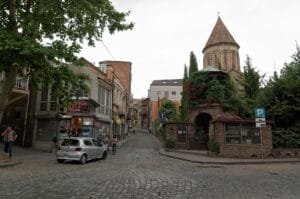
Tbilisi bar bill scam
The one serious scam here, warned about by foreign embassies and the subject of criminal convictions in 2022: friendly strangers approach solo visitors around Rustaveli Avenue and the Old Town and insist on one specific bar of their choosing, where a couple of drinks arrive with a bill running to hundreds of dollars and staff pressure you until you pay.
The counter: Always pick the venue yourself; if new acquaintances will only drink at one specific bar, leave.
Unmetered street taxi
Street cabs in Tbilisi have no meters, and on-the-spot quotes, especially for airport runs, can land at several times the app price for the same ride.
The counter: Use Bolt or another ride-hailing app so the fare is fixed before you get in.
Albania
Best months: Aug–Oct · 17–27°C days · some rain (climate data)
Old lek confusion
Many prices are still quoted in 'old lek', which adds a zero: a 500-lek fare can be announced as 'five thousand'. It is a national habit rather than a con, but it gets leaned on with confused visitors in taxis and markets.
The counter: Ask whether a price is in new or old lek and have the figure written down before you pay.
Unmetered Tirana taxi
Licensed cabs are supposed to use meters but often do not for foreigners, with the airport run into Tirana the usual flashpoint for inflated end-of-ride prices.
The counter: Agree the full fare before getting in, or have your hotel call a licensed cab at the known rate.
Asia
Thailand
Best months: Nov–Jan · 22–31°C days · dry (climate data)
The Grand Palace is closed
Outside Bangkok's Grand Palace and Wat Pho, a friendly stranger or tuk-tuk driver announces the site is closed for a ceremony or Buddhist holiday and offers a tour of 'better' temples instead, a route that always ends at commission-paying gem or tailor shops.
The counter: Walk to the official ticket gate and check for yourself; the palace is open nearly every day of the year.
The 20-baht tuk-tuk gem tour
A suspiciously cheap all-day tuk-tuk ride around Bangkok keeps detouring to gem and suit shops where the driver collects fuel coupons and commission, and staff pressure-sell near-worthless 'export quality' stones as an investment.
The counter: If the price sounds too good or the driver mentions a 'gem promotion', get out and hail another ride or use Grab.
Jet-ski damage claim
Reported for years around Pattaya and Patong Beach in Phuket: when you return a rented jet-ski, the operator points to scratches you supposedly caused and demands hundreds of dollars, sometimes with intimidating back-up while holding your passport as leverage.
The counter: Film a slow walk-around of the machine before launching and never leave your passport as a rental deposit.
Vietnam
Best months: Nov–Jan · 14–22°C days · some rain (climate data)
The turbo taxi meter
Around Hanoi and Ho Chi Minh City, some unlicensed cabs run doctored meters that climb several times faster than normal, and lookalike cars copy the colors and logos of reputable firms like Mai Linh and Vinasun down to a letter or two.
The counter: Book through the Grab app so the fare is fixed on screen before you get in.
The cyclo price switch
A cyclo (pedicab) driver agrees a price for a loop of Hanoi's Old Quarter, then at the end insists the figure was per person, per hour, or in dollars rather than dong.
The counter: Type the total, all-in price into your phone and get a nod on 'total, for everyone' before sitting down.
The shoe repair grab
A classic in Ho Chi Minh City and Hanoi: a street cobbler points at your sandal, whips it off your foot, dabs on glue you never asked for, then demands ten to twenty times a fair price to give it back.
The counter: Keep walking and never let anyone take your shoe off your foot; if it happens, offer a small note and stand your ground calmly.
India
Best months: Nov–Jan · 9–21°C days · dry (climate data)
The ticket office is closed
At New Delhi Railway Station, touts intercept tourists heading for the upstairs International Tourist Bureau, claiming it is closed, moved, or that your ticket is cancelled, then steer you to a private 'government approved' agency selling inflated tours.
The counter: Ignore anyone who approaches you first; the real bureau is on the first floor of the station and your IRCTC e-ticket does not need 'validating'.
The gem export deal
A classic in Jaipur: after days of genuine-feeling hospitality, a shop owner asks you to buy or carry gems home to 'resell to their partner' at a profit, using your customs allowance; the stones turn out to be near-worthless glass.
The counter: Treat any deal that needs your passport or customs allowance as the scam itself and walk away.
The fake tourist office
Around Connaught Place in Delhi, storefronts styled as official tourist information are private agencies; a common script is telling you your booked hotel is closed or overbooked so they can re-book you at commission.
The counter: Book trains only on irctc.co.in and confirm hotel problems by calling the hotel yourself, not through a helpful stranger's phone.
Indonesia (Bali)
Best months: Jun–Aug · 23–32°C days · some rain (climate data)
The money changer count-back
Reported around Kuta and other tourist strips: hole-in-the-wall changers advertise an above-market rate, then fold notes or palm a few bills during a dazzlingly fast count, leaving you 10-20 percent short.
The counter: Use authorized changers or bank counters and recount every note yourself, on the counter, before stepping away.
Arak methanol spiking
Documented poisonings, some fatal, have been traced to cheap cocktails and free-flow drinks made with home-distilled arak contaminated with methanol.
The counter: Stick to sealed beer and spirits from reputable venues and skip suspiciously cheap cocktail buckets.
The scooter damage claim
Some informal scooter renters claim fresh scratches on return and demand large payments, and there are reported cases of bikes 'stolen' using the owner's spare key while the renter is on the hook for the loss.
The counter: Rent from established shops, photograph the bike from every angle at pickup, and use your own lock.
Japan
Best months: Sep–Nov · 14–22°C days · rainy (climate data)
Kabukicho and Roppongi bar touts
Street touts in Tokyo's Kabukicho and Roppongi nightlife districts steer visitors into bars where drinks may be spiked and bills arrive at hundreds of dollars, sometimes with an escorted walk to an ATM; the US Embassy has warned about these districts for years.
The counter: Never follow a street tout into a bar; pick venues yourself and keep your drink in sight.
The fake monk amulet
Around Tokyo tourist spots such as Ueno Park and Asakusa, people dressed as monks press prayer beads or an amulet into your hand or slip a bracelet onto your wrist, then demand a 'donation', sometimes showing a book of large sums supposedly given by others; police have made arrests over the practice.
The counter: Hand the object straight back and walk on; genuine monks stand silently by a donation box and never solicit.
China
The tea ceremony
A classic reported around Shanghai's Nanjing Road and People's Square and Beijing's Wangfujing: friendly 'students' practicing English invite you to a traditional tea tasting, and the bill lands at hundreds of dollars, split between the teahouse and your new friends.
The counter: Decline invitations to a venue chosen by someone who approached you; if you do sit down anywhere, see written prices first.
The art student gallery
Near major tourist sites in Beijing and Xi'an, a self-described art student invites you to a 'graduation exhibition' where mass-produced prints are pressure-sold as original work at inflated prices.
The counter: A brief 'no thank you' and moving on ends it; real galleries do not recruit on the street.
The airport black cab
Touts inside arrivals halls at Beijing and Shanghai airports offer 'taxis' at three to four times the metered fare, or unmetered rides with a surprise total at the end.
The counter: Walk past anyone soliciting inside the terminal and join the official taxi rank queue, or use the DiDi app.
Philippines
Best months: Dec–Feb · 23–29°C days · dry (climate data)
The Ativan gang
Reported around Manila, including Rizal Park and Intramuros: an unusually warm stranger or 'family' befriends a tourist and offers food or drink laced with sedatives; victims wake hours later missing wallets, phones, and cards.
The counter: Politely decline food and drink from brand-new acquaintances, however friendly the invitation.
Laglag-bala (bullet planting)
Documented at Manila's NAIA airport around 2015: airport personnel were accused of planting bullets in passengers' bags, then extorting payments to make the firearms 'offense' go away; a crackdown followed and cases have dropped sharply.
The counter: Lock or wrap checked bags, keep them in sight at the airport, and if accused, insist on a lawyer and your embassy rather than paying on the spot.
The kalesa 'tour' total
Around Intramuros in Manila, a horse-drawn kalesa quoted at a small figure turns out to be per person per 15 minutes, with a demand for thousands of pesos when the loop ends.
The counter: Agree the total, all-in price for the whole group and the full ride before boarding, and confirm it in writing on your phone.
Malaysia
Best months: Jun–Aug · 24–31°C days · rainy (climate data)
The broken taxi meter
Reported around Kuala Lumpur, especially near KLCC and Bukit Bintang: drivers refuse to run the meter and quote several times the going rate, claiming the meter is broken or traffic is bad.
The counter: Use the Grab app, which is cheap and ubiquitous in Malaysian cities.
The friendly card game
A long-documented setup in Kuala Lumpur: a stranger mentions a relative about to move to your country, invites you home for a meal, and a supposedly beatable high-stakes card game against a 'rich player' is staged; the deck is rigged and victims have lost thousands.
The counter: Never go to a private home for cards or 'a quick game' with someone you met that day.
The fake monk donation
Around Bukit Bintang and tourist areas, men dressed as monks press amulets or beads into your hand and then demand a donation, sometimes showing a book of previous 'gifts'; genuine monks do not solicit this way.
The counter: Do not accept the object; hand it back or leave it and walk on.
Sri Lanka
Best months: Dec–Feb · 23–30°C days · some rain (climate data)
The milk powder run
Reported around Colombo's Galle Face, Negombo, and Galle: a friendly local asks you to buy a tin of milk powder for their baby from a specific nearby shop at an inflated price; once you leave, the tin goes back on the shelf and the shop and asker split your money.
The counter: Decline any purchase request that routes you to one particular shop.
The gem shop detour
Tuk-tuk drivers in Colombo and Galle steer rides toward a 'cousin's' gem shop, with resale-profit promises that echo the Jaipur gem script.
The counter: Insist on your original destination, and if you want gems, buy only certified stones from established dealers you chose yourself.
The spice garden hard sell
On the Matale road between Kandy and Sigiriya, 'free' spice garden tours funnel visitors into high-pressure sales of miracle creams and spice packs at many times market price, with drivers earning commission for delivering you.
The counter: Enjoy the walk if you like, but buy your spices at a local supermarket for a fraction of the price.
Cambodia
Best months: Dec–Feb · 22–31°C days · dry (climate data)
The Poipet visa office
On the walk to the Thai-Cambodia border at Poipet, touts and official-looking 'visa service' buildings charge double or triple the real visa fee, or invent health-certificate and stamp charges.
The counter: Walk straight to the actual immigration window, know the fixed visa fee (about 30 USD), or get the e-visa online before you travel.
The milk formula beggar
Reported around Siem Reap's Pub Street: a child asks not for money but for a tin of baby formula from a nearby shop; after you buy it at a marked-up price, the tin is returned and the refund is split.
The counter: Give through vetted local organizations instead of buying goods on the street.
Orphanage tourism
Child-protection groups have documented 'orphanages' in Siem Reap and Phnom Penh that recruit children with living parents to attract visitor donations, keeping conditions poor because poverty drives giving.
The counter: Skip orphanage visits entirely and support ChildSafe-endorsed programs if you want to help.
The Americas
Mexico
Best months: Dec–Feb · 7–23°C days · dry (climate data)
The unmetered taxi overcharge
Street-hailed cabs at Cancun airport and around Mexico City quote a flat fare three to five times the going rate or run a rigged meter, and arrivals halls attract unofficial drivers posing as authorized taxis.
The counter: Buy a ticket at the official taxi booth inside the terminal, or use a ride-hailing app and match the plate before getting in.
Card skimming at ATMs and bars
Tampered standalone ATMs and skimming devices are regularly reported in nightlife zones like Playa del Carmen and Tulum, and a card that leaves your sight at a bar can come back cloned.
The counter: Withdraw only at ATMs inside bank branches during opening hours, cover your PIN, and keep your card in view for every payment.
The free-tour timeshare trap
Greeters at Cancun and Puerto Vallarta airports and on hotel strips offer free breakfasts, tastings, or discounted excursions that turn out to be multi-hour high-pressure timeshare presentations, sometimes with a deposit or ID held as leverage.
The counter: Decline any freebie that requires attending a presentation, and never hand over a credit card or passport to secure an offer.
United States
Best months: Aug–Oct · 16–25°C days · some rain (climate data)
Times Square costumed characters
Costumed characters in New York's Times Square wave you in for a photo, then demand tips of 10 to 20 dollars per character and may crowd you until you pay.
The counter: Agree on a tip amount out loud before anyone poses, or give a firm no thanks and keep walking.
The fake monk bracelet
Around Times Square, the High Line, and San Francisco's Fisherman's Wharf, people dressed as Buddhist monks press a free bracelet or golden card into your hand, then demand a donation and show a ledger of previous gifts; the Buddhist Council of New York has warned these solicitors are not genuine monastics.
The counter: Do not accept anything handed to you on the street; if a bracelet lands on your wrist, hand it back and walk on.
The free mixtape handoff
A Times Square staple: someone hands you a free CD, signs your name on it so it cannot be returned, then demands payment while friends crowd in.
The counter: Do not take the CD; the pressure starts once it is in your hand.
Brazil
Best months: Jun–Aug · 18–25°C days · dry (climate data)
Beach distraction theft
On Rio's Copacabana and Ipanema beaches, a vendor, a spilled drink, or a sudden question occupies your attention while an accomplice lifts the phone or bag sitting on your towel.
The counter: Take only what you can afford to lose, keep it under your body rather than beside you, and never leave items unattended to swim.
Card cloning at the machine
Card cloning is a long-running problem across Brazil, and the risk moment is any time your card is swiped out of sight or on a tampered terminal; restaurants normally bring the portable machine to your table for exactly this reason.
The counter: Insist the card machine comes to you, check the amount on screen before entering your PIN, and monitor statements daily.
The long-way-around taxi
Street cabs around Rio's Galeao airport and Copacabana take scenic multi-tunnel routes or claim a broken meter and invent the fare on arrival.
The counter: Use the prepaid official taxi counters at the airport or a ride-hailing app so the route and price are logged.
Argentina
Best months: Mar–May · 15–21°C days · some rain (climate data)
The mustard (or bird poop) squirt
Around San Telmo, La Boca, and Florida Street in Buenos Aires, someone discreetly squirts mustard or fake bird droppings on you, and a helpful stranger appears with tissues while an accomplice takes your bag or phone during the cleanup.
The counter: If something lands on you, refuse all help, keep both hands on your bag, and walk into a shop to clean up.
The banknote switch
A documented Buenos Aires taxi move: the driver palms your genuine large note and hands back a smaller or counterfeit one, claiming that is what you gave.
The counter: Say the denomination out loud as you hand it over, and pay with the smallest notes you can.
Colombia
Best months: Dec–Feb · 15–26°C days · some rain (climate data)
The spiked drink robbery (scopolamine)
Colombian authorities and the US Embassy have documented cases of visitors being drugged via drinks, food, or cigarettes accepted from new acquaintances, sometimes with scopolamine, then robbed while disoriented; a January 2024 embassy alert flagged dating-app meetups in Medellin specifically. It is a known criminal method rather than an everyday event, but it warrants real precautions.
The counter: Keep drinks in sight and in hand, meet dating-app matches in busy public places, and tell someone where you are going.
The fake plainclothes police check
In Bogota and Cartagena, men flashing police credentials claim they must inspect your cash or cards for counterfeits, then swap or pocket notes during the inspection; real officers do not ask to handle your money on the street.
The counter: Refuse to hand anything over and insist on walking to the nearest police station or flagging a uniformed officer.
The Cartagena surprise bill
Around Cartagena's old town and Playa Blanca, unsolicited gifts, improvised rap performances, beach chairs, or massages that appear without a quoted price end in an inflated bill backed by group pressure.
The counter: Agree the exact price before accepting any item, seat, or service, or decline clearly and keep moving.
Peru
Best months: Apr–Jun · 17–21°C days · dry (climate data)
Fake taxis at Lima airport
Unlicensed drivers solicit arriving passengers in and around Jorge Chavez airport, and Peruvian police have long warned of overcharging and robberies linked to informal airport taxis.
The counter: Book at the official taxi counters inside the terminal or order an app ride from the designated pickup area, and ignore anyone who approaches you first.
Counterfeit soles in your change
Fake banknotes are a documented problem in Peru, and tourists commonly receive them as change from taxis and small shops, then have them refused everywhere else.
The counter: Check the watermark and security thread on any note above 20 soles before pocketing it, and break large bills at supermarkets rather than in taxis.
The Cusco cut-rate tour agency
Storefronts and street sellers in Cusco offer suspiciously cheap Machu Picchu or Rainbow Mountain packages that get downgraded, oversold, or never show, and some copy the names of reputable agencies.
The counter: Book Machu Picchu entry through the official government channel or a registered agency with a verifiable office and recent independent reviews.
Costa Rica
Best months: Jan–Mar · 16–26°C days · dry (climate data)
The rental car insurance ambush
A 15-dollar-a-day online quote can triple at the counter because Costa Rica's mandatory local liability insurance was excluded from the advertised price, and vague damage claims sometimes appear at drop-off.
The counter: Get written confirmation before booking that the quote includes the mandatory insurance, and video the whole car, roof and undercarriage included, at pickup and return.
The flat tire good Samaritan
Documented for years around San Jose and the airport corridor and acknowledged by the US Embassy: criminals puncture a rental car tire, then flag you down and help with the change while an accomplice empties the car of bags.
The counter: If you get a flat soon after leaving the rental lot, keep the doors locked and drive slowly to a busy gas station instead of stopping roadside.
Cuba
Best months: Jan–Mar · 20–29°C days · some rain (climate data)
The street cigar factory discount
In Havana, touts known locally as jineteros claim a one-day-only factory sale on Cohibas at a fraction of shop price; the boxes are counterfeit, often filled with floor sweepings or banana leaf.
The counter: Buy cigars only at official Casa del Habano stores or hotel shops and keep the receipt for customs.
The 'your casa is closed' steer
Around Habana Vieja, someone intercepts you near your booked casa particular or restaurant, insists it is closed, full, or moved, and walks you to an alternative that pays them commission.
The counter: Carry the exact address and phone number of your booking and confirm directly with the owner before believing anyone who says it is closed.
Currency and change confusion
Since Cuba's dual-currency system ended in 2021, visitors still report short-changing, mixed-up notes, and wildly different informal exchange rates quoted on the street.
The counter: Learn the current peso notes before arrival, name the currency out loud when agreeing prices, and count change on the spot.
Dominican Republic
The unsolicited beach service bill
On Punta Cana and Bavaro beaches, hair braiders, masseuses, and photographers sometimes start working on you after a vague smile of consent, then present a steep bill with friends backing them up.
The counter: Say a clear 'no, gracias' before anyone touches you, or fix an exact price in pesos or dollars before any service starts.
The fixed-fare taxi squeeze
Punta Cana taxis run on high zone rates rather than meters, and travelers regularly report quotes doubling on arrival or per-person surcharges invented mid-ride.
The counter: Agree the total fare, the currency, and that it covers all passengers before getting in, or prebook a hotel transfer at a written price.
The vacation club presentation
Resort-area reps offer free excursions or spa credits in exchange for a brief vacation club talk that becomes hours of hard selling, with deposits reportedly difficult to recover afterward.
The counter: Treat any freebie tied to a presentation as costing half a day, and never put a deposit on a card to hold an offer.
Canada
The taxi debit card swap
Toronto and Montreal police have warned about drivers, or strangers asking you to pay a driver, who take your debit card, capture the PIN on a modified terminal, and hand back a similar-looking card before draining the account; Montreal police linked one ring to about 400,000 dollars in losses.
The counter: Insert or tap the card yourself, never hand it over, and check that the card returned is actually yours before leaving the cab.
Parked car smash-and-grab
Break-ins to parked cars with visible bags are well documented in Vancouver, especially around Stanley Park and trailhead parking lots frequented by tourists.
The counter: Leave nothing visible in a parked car, even a jacket, and take valuables with you on hikes.
Middle East & Africa
Egypt
Best months: Nov–Jan · 12–23°C days · dry (climate data)
The Giza camel photo trap
At the Pyramids of Giza, a handler offers a cheap or 'free' camel ride or photo, then demands a much larger fee before he will let you dismount or hand your phone back. The price quoted to get on is never the price to get off.
The counter: Agree the full price out loud, including getting off and getting your camera back, before you touch the camel – or take your photos from the ground.
The papyrus institute detour
Taxi drivers and friendly strangers in Cairo steer you to a 'government papyrus institute' or perfume shop, where banana-leaf fakes and inflated prices fund the driver's commission. A related line is that the museum or pyramid entrance you want is 'closed' – the detour then follows.
The counter: Tell drivers 'no stops' up front, and verify any 'it's closed' claim at the official ticket window yourself.
Baksheesh escalation
Around Luxor and Cairo temples, self-appointed helpers unlock a 'special area', point out a carving you would have seen anyway, or grab your bag, then insistently demand tips – and reject small notes as too little.
The counter: Carry small bills, decline unrequested help with a firm 'la shukran' (no thanks), and never hand anyone your camera or ticket.
Morocco
Best months: Nov–Jan · 7–21°C days · dry (climate data)
Faux guides and the 'closed street'
In the medinas of Fes and Marrakech, unofficial guides insist the road ahead is closed or that you are heading the wrong way, then 'guide' you – usually to a relative's carpet shop – and demand payment when you try to leave.
The counter: Walk with offline maps loaded, say you have been here before, and hire guides only through your riad or the official tourist office.
The henna ambush
A classic on Jemaa el-Fnaa square in Marrakech: an artist grabs your hand and starts a henna design 'as a gift', then demands payment for the unfinished work. Some use so-called black henna containing PPD, which can chemically burn skin.
The counter: Keep your hands close or in your pockets crossing the square, and pull away at the first touch – a firm no ends it.
The carpet co-op tea ceremony
An invitation to mint tea at a 'family cooperative' turns into hours of polished, high-pressure carpet selling, with inflated 'museum quality' claims and shipping promises that do not always materialize.
The counter: Only sit down if you genuinely want a carpet, and if you buy, pay a price you would be happy with even if it is not an heirloom – and carry it out yourself.
United Arab Emirates
The 'you have won a prize' timeshare pitch
Promoters in Dubai malls invite you to fill in a 'free draw' form or hand you a scratch card; a phone call later announces you have won a holiday, claimable only by sitting through a high-pressure timeshare or vacation-club sales presentation that can run for hours.
The counter: Do not give your phone number to mall promoters, and treat any 'prize' that requires attending a presentation as a sales pitch to walk away from.
Unofficial airport 'limousine' touts
Touts in the Dubai airport arrivals hall offer 'limousine' or private car rides at fixed prices two to three times the metered fare, sometimes steering passengers away from the taxi queue and into unmarked luxury cars where the price is revealed on arrival.
The counter: Walk past anyone soliciting inside the terminal and use the marked official taxi rank, or book Careem or Uber for an upfront price.
Jordan
Best months: Apr–Jun · 16–29°C days · dry (climate data)
Petra's 'included' horse and donkey rides
At Petra's entrance, horse handlers say the ride to the Siq is 'included in your ticket', then demand a large 'mandatory' tip at the far end. On the steep Monastery trail, donkey touts quote inflated walking times and a cheap ride, then push hard for much more money at the top.
The counter: Agree a clear price and endpoint out loud before mounting anything – or skip it, since every trail in Petra is walkable.
The broken meter in Amman
Amman taxi drivers claim the meter is broken or simply do not start it, then improvise a tourist price at the destination – a routine reported around Rainbow Street and the downtown sights.
The counter: Say 'meter, please' before the car moves and get out if it stays off, or use Uber or Careem, which both work in Amman.
Tunisia
The 'I work at your hotel' friend
In the Tunis medina and around Sidi Bou Said, a stranger claims to recognize you from your hotel, chats warmly, then steers you to a 'one day only' Berber market or a relative's carpet shop where prices are wildly inflated and the exit pressure is heavy.
The counter: Hotel staff do not roam the medina recruiting guests – smile, decline, and keep walking.
The fast taxi meter
Some Tunis taxis run tampered meters that climb implausibly fast, or drivers quote a flat 'tourist' fare instead of using the meter at all, particularly from the airport.
The counter: Check the meter starts near the base fare and watch it early in the ride, or book a fixed-price ride through a local app like Yassir or inDrive (Bolt no longer operates in Tunisia).
South Africa
Best months: Jul–Sep · 7–21°C days · dry (climate data)
The ATM helper and card skimming
Reported around Johannesburg and Cape Town: a 'helpful' stranger appears when your card jams or the screen confuses you, and while assisting, palms your card or clocks your PIN; jamming devices and skimmers are planted on street machines for exactly this moment.
The counter: Use ATMs inside banks or malls, refuse all assistance, and if a machine keeps your card, cancel it by phone before you leave the spot.
The fake police money check
Plainclothes impersonators flash a badge and ask to inspect your cash or cards for 'counterfeit notes' or 'drug money', then short-count or swap the notes as they hand everything back. Reported in tourist areas of the big cities.
The counter: Ask to see identification, keep hold of your money, and insist on walking to the nearest police station before any 'inspection'.
Kenya
Safari booking fraud
Briefcase operators in Nairobi and slick websites sell cut-price Masai Mara packages, then vanish with the deposit or swap the promised lodge and vehicle for something far worse. Street touts around the CBD sell the same trips on commission.
The counter: Book only with operators listed as KATO (Kenya Association of Tour Operators) members, and pay by traceable methods, never cash to a tout.
The clipboard charity collector
In central Nairobi, people with laminated sponsorship forms collect 'donations' for orphanages, schools, or sports teams that do not exist, often showing pages of previous signatures to build pressure.
The counter: Give through registered charities you have looked up yourself, never to street collectors with clipboards.
Tanzania
The too-cheap Kilimanjaro climb
In Moshi and Arusha, street touts known locally as flycatchers and rock-bottom online operators sell budget Kilimanjaro climbs, then cut corners on porter wages, food, gear, and safety – or take the deposit and disappear before the trek.
The counter: Book a licensed operator that partners with KPAP (the porter welfare project), and treat any full climb quoted far below the roughly 1,700 USD floor as a red flag.
Zanzibar's papasi touts
At the Stone Town ferry terminal, self-appointed guides nicknamed papasi (ticks) latch on, insist your hotel is full or closed, and steer you to commission-paying guesthouses and tours.
The counter: Pre-book your first night and a hotel pickup, and give a firm, polite no without stopping to negotiate.
The ferry ticket middleman
Around the Dar es Salaam port, touts sell Zanzibar ferry tickets that turn out to be fake, overpriced, or resident-rate tickets that get foreigners stopped at boarding.
The counter: Buy only at the official Azam Marine counter or on the operator's own website, and ignore anyone selling tickets outside the office.
Oceania
Australia
Fake rental listing / bond scam
Fake apartment and room listings on Facebook Marketplace and Gumtree target arriving backpackers and students in Sydney and Melbourne: the supposed landlord collects the bond plus the first weeks of rent before any viewing, then disappears. The ACCC's Scamwatch logs thousands of rental scam reports every year.
The counter: Never transfer a bond or deposit for a place you have not inspected in person.
Farm-work job fee scam
Fake fruit-picking and regional job ads aimed at working-holiday visitors chasing their 88 days of regional work charge an upfront placement fee, accommodation deposit, or transport cost for a job that never existed; WA ScamNet and backpacker job boards have warned about this for years.
The counter: Refuse any job that requires payment before you start; verify the farm has a real ABN and address before traveling.
Backpacker van deposit scam
Cheap used campervans and cars listed on Gumtree or Marketplace come with a seller who is conveniently interstate and asks for a deposit or shipping fee to hold the vehicle, which does not exist.
The counter: Never pay a holding deposit for a vehicle you have not inspected in person, and run a PPSR check on the registration before handing over money.
New Zealand
Fake bach and campervan listings
Netsafe, NZ's online safety body, logs fake holiday-home and used-campervan ads that ask for a deposit by bank transfer to hold the property or vehicle sight-unseen; backpackers buying vans on arrival via Facebook Marketplace are a common target.
The counter: Reverse-image-search the listing photos and never wire a deposit for a vehicle or bach you have not seen in person.
Trailhead car break-ins
Not a con, but the classic way visitors actually lose money here: rental cars parked at trailheads and scenic lookouts, long reported around spots like Piha and the West Coast glacier towns, get windows smashed for bags left in view.
The counter: Take valuables with you and leave the car visibly empty with the glovebox open.
Fiji
Best months: Jun–Aug · 21–28°C days · rainy (climate data)
The sword seller
A classic reported around Suva and Nadi for decades, and one Tourism Fiji itself warns about: a friendly stranger asks your name, quickly carves it into a wooden sword or mask, then demands payment because the item is now personalized and cannot be sold to anyone else.
The counter: Do not give your name to street sellers; if a carving appears anyway, walk away – you owe nothing.
Meterless taxi quote
Taxis in Nadi and Suva are required to run meters, but drivers commonly quote visitors a flat rate at several times the metered fare, especially around the airport strip and hotel zones.
The counter: Say 'meter, please' before you get in, and take the next cab if the answer is no.
The 'Bula' shop steer
A friendly greeter in Nadi or Suva town strikes up a chat, then steers you into a particular handicraft or souvenir shop where staff apply heavy pressure until you buy overpriced goods; visitors report feeling unable to leave without purchasing.
The counter: Decline invitations into a specific shop from someone you just met, and buy souvenirs at fixed-price stores or the municipal handicraft markets.
Travel scam FAQ
What is the most common travel scam?
Taxi overcharging and distraction-based pickpocketing are the two most widespread scams worldwide. Both rely on you being new, rushed, or distracted – not on force – which is why knowing the local pattern in advance defuses most of them.
What should I do if I get scammed abroad?
Freeze the affected card in your banking app immediately, then file a local police report – you will need it for a travel-insurance claim. Keep receipts and photos. If your passport was taken, contact your embassy or consulate the same day.
Are tourist scams dangerous?
They are overwhelmingly financial, not violent. Most operators walk away the moment they meet confident resistance, because a scene attracts police. Even pushy setups like forced bracelets rely on social pressure rather than force.
How can I avoid taxi scams anywhere?
Use a ride-hailing app where legal, or insist the meter runs before the car moves. Learn the official airport flat fare before you land, carry small notes, and say the denomination out loud as you hand it over.
Is it rude to firmly say no to street sellers and helpers?
No. A short, polite, firm refusal while continuing to walk is normal and locally expected. Extended politeness is exactly what scam scripts are built to exploit.
Go deeper
City-level deep dives: Paris scams, Rome scams and Bangkok scams. The money side: ATM fees and the DCC trap and whether to carry cash or card. Blend in rather than stand out with travel etiquette by country and what to wear. And the general playbook: common travel scams plus the ones experienced travelers still fall for. Checking a specific city? Start with our honest safety checks: Bangkok, Paris, Barcelona, Rome, Istanbul, Tokyo, Lisbon, Athens, Medellin and Cartagena.