
Last updated September 6, 2026 · Editorial policy
Based on the Packzup Cost Index (Moderate tier), typical on-the-ground totals per person, excluding international flights:
| Travel style | 7 days | 14 days |
|---|---|---|
| Budget | $210 - $385 | $420 - $770 |
| Mid-range | $700 - $1,260 | $1,400 - $2,520 |
| Luxury | $2,100 - $3,500 | $4,200 - $7,000 |
- Belize trip cost: daily budget at a glance
- Cost tiers — budget / mid / luxury
- Cost breakdown by category
- Sample 7-day budgets
- How to save money in Belize
- A local planning note
- The Honest Two-Tier Belize Budget (and Where the Money Quietly Leaks)
- Frequently asked questions
- Plan your Belize trip
- What it costs to leave Belize by air and by land
- Two dollars to one: the peg, and the pricing confusion it creates
- The 9 per cent and the 12.5 per cent already in your Belize bill
- Reef and marine reserve fees: the line that is missing from most tour prices
- Cayes or mainland: the decision that sets your Belize budget
- At a glance
- Frequently asked questions
Quick answer: A trip to Belize typically costs US$60-100/day backpacker, US$180-300/day mid-range, US$500+/day luxury. Currency: Belize Dollar (BZ$) pegged 2:1 to US Dollar — USD widely accepted.
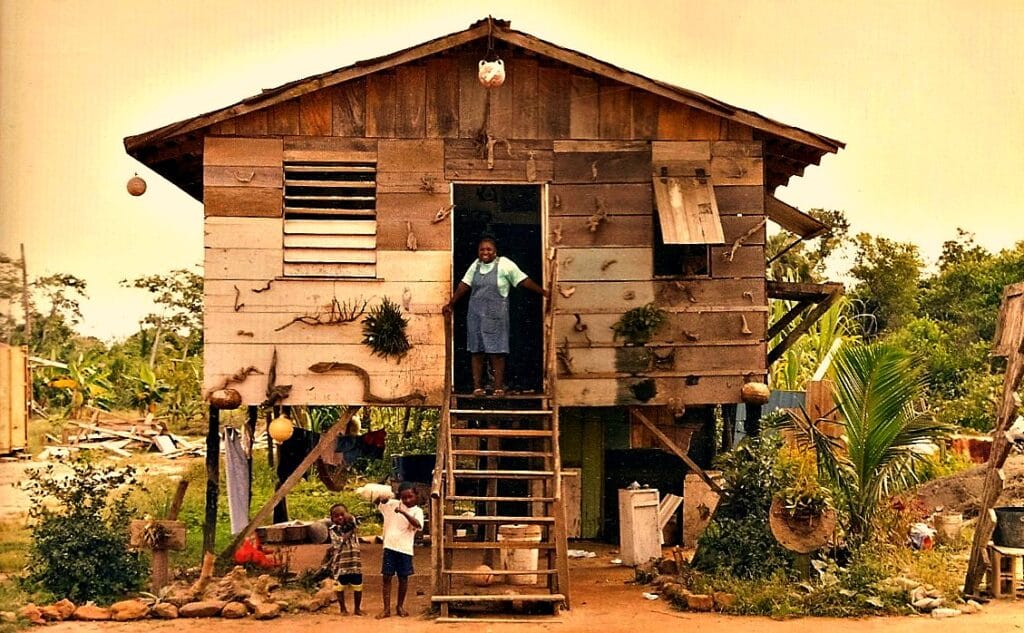
Belize is expensive by Central American standards — pegged to the USD and small enough that imports drive prices up. But the value is real: world’s second-largest barrier reef, Maya ruins fewer tourists know, English everywhere. Here is what it costs.
Belize trip cost: daily budget at a glance
Short answer: budget on roughly $120–240 per person per day mid-range (excluding international flights).
| Travel style | Per day (per person) | What it covers |
|---|---|---|
| Budget | $50–90 | Hostels/guesthouses, street food, public transport |
| Mid-range | $120–240 | 3-star hotels, restaurants, the odd tour or taxi |
| Luxury | $450+ | 4–5★ hotels, fine dining, private guides & transfers |
Cost tiers — budget / mid / luxury
Cost breakdown by category
- Accommodation: US$30 guesthouse → US$150 mid-cabin → US$600+ private island
- Meals: US$5 stew + rice, US$15-25 mid restaurant, US$40+ fine dining
- Diving Blue Hole: US$300-450 day trip including transport + 3 tank dives
- Water taxi: US$15-30 Belize City to Caye Caulker or San Pedro
- Caracol Mayan ruins: US$120-150 day tour from San Ignacio with transport
Sample 7-day budgets
- Backpacker 7 days: ~US$650 (guesthouses + bus + local food + 1 dive)
- Mid-range 7 days: ~US$2000 (Caye Caulker + Cayo District combo, mid-tier accommodations + diving)
- Luxury 7 days: ~US$5500+ (private island resort + multi-day diving + ATM cave + spa)
How to save money in Belize
- Stay on Caye Caulker (not Ambergris/San Pedro) — 40% cheaper for similar reef access
- Travel July-September (off-season + hurricane risk) for 40-50% off resorts
- Take the bus (not flights) — Belize City-Placencia US$10 vs US$120 flight
- Book Blue Hole as 3-tank day trip (US$300) not multi-day live-aboard (US$2000+)
- Cook at AirBnB cabins (Caye Caulker has groceries) — restaurant meals add up fast
A local planning note
If you want Belize at lowest honest cost, base in San Ignacio (Cayo District) for 3 nights, doing ATM cave + Caracol + Tikal day trip (across border to Guatemala). Then 3 nights on Caye Caulker for snorkel/dive. Total: ~US$1200 for 6 days including everything. Most package tours charge US$3000+ for the same experiences.
The Honest Two-Tier Belize Budget (and Where the Money Quietly Leaks)
Strip away the brochure ranges and Belize sorts into two realistic tiers. A genuine shoestring runs around USD 55-80 a day: a guesthouse or hostel bed at roughly USD 20-40, market and stew-shop meals, and chicken buses between towns. A comfortable mid-range day sits closer to USD 150-230, covering a USD 50-100 hotel room, sit-down dinners, and one paid activity. For a typical 7-night trip that means a backpacker lands near USD 400-560 and a mid-range traveler near USD 1,050-1,600, before flights.
The leaks are predictable and worth budgeting up front. US, UK, EU and Canadian visitors get 30 days visa-free, so there is no entry fee, but leaving costs money: airport departure and conservation fees total roughly USD 55-73 per person (often baked into your airfare, so check before paying twice), while land or water crossings to Guatemala or Mexico run about BZD 40 (around USD 20). ATMs typically charge about USD 3.50 plus 1 percent per withdrawal, so frequent small pulls add up. The Belize dollar is fixed at 2:1 to the US dollar, which makes mental math easy and means you rarely need to exchange cash. Tipping sits at 10-15 percent in restaurants, though some venues already add a 10 percent service charge.
- Base inland in San Ignacio instead of Caye Caulker or San Pedro to cut lodging by roughly USD 30-50 a night.
- Take the express bus over the domestic flight between regions and save around USD 100 per leg.
- Withdraw larger lump sums to dodge the per-transaction ATM fee, saving USD 10-20 over a week.
Frequently asked questions
How much for a week of diving in Belize?
3 days of diving including Blue Hole: ~US$1000 (US$330/day average). Add accommodation: total 7-day diving trip ~US$2500-3000.
Is Belize more expensive than Mexico?
Yes — 30-50% more expensive than Yucatán Peninsula for similar quality. Pegged USD pricing makes Belize relatively pricey.
When is the cheapest time to visit Belize?
Mid-August through October (hurricane peak risk + low season) has 40-50% off. June-July is rainy but workable with lower prices.
Can I visit Caracol on a budget?
Day tour from San Ignacio US$120-150. Self-drive (rental US$60/day) + Caracol entrance US$15: total ~US$80. Roads are rough; only 4WD recommended.
How much for the ATM cave?
Required guided tour US$95-110. Caves Branch is the main operator. No cameras allowed since 2012.
Plan your Belize trip
What it costs to leave Belize by air and by land
Belize charges more to leave than to arrive, and the charge is different at an airport and at a land border. Both are regulated, published amounts rather than local improvisation.
Flying out of Philip S.W. Goldson International Airport. The airport states that Passenger Service Fees are US$53.50 and PACT Fees are US$20.00, giving US$73.50 in total. Its refund policy sets out the components: passenger service US$15.00, airport development US$36.00, security US$1.25, hold baggage US$1.25 and PACT US$20.00. PACT is the Protected Areas Conservation Trust, and that portion is a conservation levy rather than an aviation charge.
For most travellers these fees are collected inside the airline ticket, which is why they are invisible until you look for them. Check your fare breakdown before you assume it, because a fare that does not include them has to be settled before you fly. The airport’s refund policy also states that Belizeans who bought an international ticket and were charged the regulated fees can claim a refund on the airport development fee and PACT, and that those who did not pay the airport development fee, or who presented valid Belizean residency or citizenship at the pre-board desk, cannot. A passenger boarded by an airline and then refused entry by immigration at the airport is not entitled to a refund either, and claims must be made within six months of travel and within the same fiscal year.
Crossing out by land. The Belize Tourism Board lists three separate charges at the land border: a Departure Processing Fee of BZ$30.00, a Border Development Fee of BZ$2.50, and a PACT Conservation Fee of BZ$7.50, which is BZ$40 in total for a traveller paying all three.
The exemptions at that border are geographic and unusually specific. The Board states that residents of Othon P. Blanco, Quintana Roo are exempt from all charges related to departure fees regardless of length of stay; that travellers from Campeche, Yucatan, Tabasco, Chiapas and other areas of Quintana Roo pay nothing for stays under seven days and BZ$40 for longer; and that Mexicans from other regions pay a minimum of BZ$2.50 for visits under two days, or BZ$40 for extended stays.
Carry the land border fee in cash and know which currency you are handing over. These amounts are quoted in Belize dollars, and at the border that distinction is worth exactly half your money. Figures as of 5 September 2026; confirm with the airport or the Board before travelling, since regulated fees are periodically revised.
Two dollars to one: the peg, and the pricing confusion it creates
The Belize dollar is fixed to the US dollar, not floating against it. The Central Bank of Belize describes the rate as BZ$2.00 to US$1.00, adopted on 11 May 1976, and calls the fixed rate policy a stable monetary anchor for trade, investment, pricing and financial planning. Under regulation 32 of the Exchange Control Regulations, 2003 it has separately fixed the buying rate of the United States dollar at BZ$2.00 to US$1.00 for all United States monetary instruments, including currency notes, commencing 1 June 2023. On 4 September 2026 its published rates were a buying rate of BZ$2.0000 and a selling rate of BZ$2.0175 per US dollar.
Three practical effects.
Conversion is halving, and you should do it on every price. BZ$100 is US$50. There is no rate risk to manage and no reason to shop around for a better one, because the rate does not move.
Always ask which dollar. The single most expensive misunderstanding in Belize is a price quoted in one currency and assumed to be the other. A menu, a tour price or a taxi fare stated as fifty dollars is either US$50 or US$25 depending on which dollar is meant, and the sign is often just a dollar symbol. Ask, every time, and ask before you agree rather than at the moment of paying.
US notes are widely accepted, and your change will not be. Pay in US dollars and you should expect change in Belize dollars at two to one. That is a fair exchange, but it means you accumulate a currency you cannot spend at home, so run your Belize dollars down before the last day. Anyone offering you a rate worse than two to one is charging you a spread the Central Bank does not.
Cash machines dispense Belize dollars. As with any card transaction abroad, decline any offer to bill you in your home currency and take the local amount.
The 9 per cent and the 12.5 per cent already in your Belize bill
Two separate taxes sit on a Belize trip and they are frequently confused with each other.
Budget for a hotel accommodation tax of 9 per cent, and know that the two official sources do not read the same. The Belize Tourism Board, which collects the tax, states on its own hotels page that “hotels and tourist accommodations are required to collect this 9% tax from each guest, on behalf of the Government of Belize”. The consolidated Hotels and Tourist Accommodation Act, Chapter 285, in both the 2003 and 2011 revised editions hosted on the Board’s own site, still prints section 22(1) as a tax “at the rate of seven per centum of all the accommodation charges in regards to lodging”. Section 22(4) of the same Act is what reconciles them: it allows the Minister to vary the rate by Order published in the Gazette, so the rate can move without the printed Act changing. Budget on the 9 per cent the collecting authority publishes, and check the line on your invoice.
The rest of the machinery is in the Act and is unambiguous. Under section 23 the proprietor must furnish a monthly statement, with copies of the register of guests, not later than the fourteenth day of the following month, together with the tax due. Under section 25 an unpaid tax attracts a penalty of ten per centum, and a further five per centum for each further period of thirty days it remains in default. The Act also defines a “tourist” as a visitor to Belize for a period not exceeding six months.
That is a tax on the guest, collected by the property. It is why an advertised nightly rate and the figure on your final bill can differ, and why the question to ask before booking is whether the quoted rate includes the 9 per cent accommodation tax and any service charge the property adds.
General Sales Tax is 12.5 per cent. The Belize Tax Service applies GST at a standard rate of 12.5 per cent on standard-rated supplies and imports, with certain goods zero-rated. GST is the tax you meet on meals, shop purchases and most services.
The two are not alternatives and they are not the same thing. Accommodation carries the 9 per cent tourism levy; the rest of your spending carries GST. Any quote that describes a single blended tax rate for Belize is wrong, and any accommodation quote that shows neither is probably showing you a pre-tax rate.
Reef and marine reserve fees: the line that is missing from most tour prices
Snorkelling and diving on the Belize Barrier Reef almost always means entering a declared marine reserve, and reserve entry is charged separately from the boat trip. The reserves are managed by the Belize Fisheries Department, and each has its own legal instrument and its own fee.
The two most visited sit off the northern cayes. Hol Chan Marine Reserve was established in July 1987 as Belize’s first marine protected area. Caye Caulker Marine Reserve was established in April 1998, with its rules and regulations gazetted on 6 December 2008 as Statutory Instrument No. 127 of 2008. Others, including South Water Caye, Bacalar Chico and Glover’s Reef, are managed under their own management plans by the same department.
The fee is in the reserve’s own regulations, not in the tour price. For Caye Caulker the amount is prescribed rather than negotiated: the reserve regulations, reproduced in full in the Fisheries Department’s Caye Caulker Marine Reserve Management Plan 2021-2026, provide at regulation 19 that the fees payable by foreign visitors for all water recreational activities, excluding sport and recreational fishing, are BZ$10.00 per person per day or BZ$30.00 per person per week, and that no fees are payable by Belizeans or by children below twelve years of age. The same regulations open the reserve office to the public daily from 8.00am to 5.00pm, charge a boat operator BZ$10.00 to register a vessel for diving and snorkelling in the reserve, with registration expiring on the following 31 December, and set a fishing licence at BZ$25.00 and a research licence at BZ$500.00.
Note the weekly rate. Three or more days of water activity off Caye Caulker costs less bought as a week. Note also that the management plan lists a review of the visitor entrance and user fee structure among its own actions, so confirm the current amount with the Fisheries Department before you rely on it. Position as of 5 September 2026.
Every reserve sets its own fee under its own instrument, so do not carry the Caye Caulker figure to Hol Chan or anywhere else, and do not take a reserve fee figure from a booking site. The amount that circulates online is frequently the operator’s bundled price rather than the reserve’s own charge. Ask the operator three questions before you pay:
- Is the marine reserve entry fee included in the price you have quoted me? If it is not, it is normally collected on the dock or on the boat.
- Which reserves does this trip actually enter? A single day can cross more than one, and each charges separately.
- Which currency is the fee, and can I pay it by card? Reserve fees are commonly cash, and commonly in Belize dollars.
For the current amount, the Fisheries Department publishes contact details for each reserve on its own site. That is the source to use, and it is worth a single email before a trip that could otherwise deliver a surprise on the dock. Position as of 5 September 2026.
Cayes or mainland: the decision that sets your Belize budget
The largest swing in a Belize budget is not how you travel or where you eat, it is whether you spend your nights on an island or on the mainland. The two are priced by different logic.
On Ambergris Caye and Caye Caulker, almost everything arrives by boat or plane. Food, fuel, building materials and staff all cross water to get there, and that cost is inside every price on the island. The transport you use once there is different too: Ambergris Caye runs on golf carts rather than cars, hired by the day or the week, and that is a daily line item rather than a one-off taxi. Getting to the cayes is either a water taxi from Belize City or a short domestic flight, and the flight is materially quicker and materially dearer.
Marine activity is the caye cost multiplier. Reef trips, dive packages and reserve entry fees stack up quickly, and a week on the cayes with daily water activity looks nothing like a week on the mainland.
On the mainland the money moves into ground transport and site entry. Distances between Cayo, the south and the north are driven or bussed rather than flown, and the recurring charge is entry to archaeological reserves, which are administered by the Institute of Archaeology within the National Institute of Culture and History. Fees are set per site, so confirm the current amounts with the Institute rather than from a listing.
What does not change between the two is tax. The 9 per cent accommodation tax and the 12.5 per cent GST apply nationally, so the difference between an island and an inland budget is base prices and transport, not a different tax treatment. If you are trying to bring a Belize trip down, the effective lever is nights on the mainland, not shopping for a cheaper island room.
At a glance
| Belize charge | Amount as of 5 September 2026 | Who publishes it |
|---|---|---|
| Airport passenger service fee | US$15.00 | Philip S.W. Goldson International Airport |
| Airport development fee | US$36.00 | Philip S.W. Goldson International Airport |
| Airport security fee | US$1.25 | Philip S.W. Goldson International Airport |
| Hold baggage fee | US$1.25 | Philip S.W. Goldson International Airport |
| PACT conservation fee, by air | US$20.00 | Philip S.W. Goldson International Airport |
| Total regulated departure fees, by air | US$73.50 (passenger service fees US$53.50 plus PACT US$20.00) | Philip S.W. Goldson International Airport |
| Land border departure processing fee | BZ$30.00 | Belize Tourism Board |
| Land border development fee | BZ$2.50 | Belize Tourism Board |
| PACT conservation fee, by land | BZ$7.50 | Belize Tourism Board |
| Exchange rate | Fixed at BZ$2.00 to US$1.00, adopted 11 May 1976; published rates on 4 September 2026 were buy BZ$2.0000 and sell BZ$2.0175 | Central Bank of Belize |
| Hotel accommodation tax | 9 per cent, per the collecting authority; the consolidated Act still prints seven per centum at section 22(1), which section 22(4) lets the Minister vary by Gazette Order | Belize Tourism Board; Hotels and Tourist Accommodation Act, Chapter 285 |
| General Sales Tax | 12.5 per cent standard rate, with certain goods zero-rated | Belize Tax Service |
| Caye Caulker Marine Reserve, foreign visitor, water recreational activities excluding sport and recreational fishing | BZ$10.00 per person per day or BZ$30.00 per person per week; nil for Belizeans and children under 12 | Caye Caulker Marine Reserve Regulations, reg. 19, as reproduced in the Belize Fisheries Department management plan 2021-2026 |
| Other marine reserve entry | Set per reserve under its own instrument; confirm with the Fisheries Department | Belize Fisheries Department |
Frequently asked questions
How much is the departure tax when leaving Belize by air?
Philip S.W. Goldson International Airport states that Passenger Service Fees are US$53.50 and PACT Fees are US$20.00, a total of US$73.50. Its refund policy breaks the regulated fees down as passenger service US$15.00, airport development US$36.00, security US$1.25, hold baggage US$1.25 and PACT US$20.00. For most travellers these are collected inside the airline ticket, so check your fare breakdown rather than assuming either that they are included or that they are not. Belizeans who were charged the regulated fees on an international ticket can claim a refund on the airport development fee and PACT under stated conditions.
What do you pay to leave Belize at the Mexico or Guatemala land border?
The Belize Tourism Board lists three charges: a Departure Processing Fee of BZ$30.00, a Border Development Fee of BZ$2.50 and a PACT Conservation Fee of BZ$7.50, which comes to BZ$40 for a traveller paying all three. There are geographic exemptions for Mexican travellers: the Board states that residents of Othon P. Blanco, Quintana Roo are exempt from all departure charges regardless of length of stay, that people from Campeche, Yucatan, Tabasco, Chiapas and other parts of Quintana Roo pay nothing for stays of under seven days and BZ$40 for longer, and that Mexicans from other regions pay a minimum of BZ$2.50 for visits under two days. Bring the fee in Belize dollars in cash.
Is the Belize dollar tied to the US dollar?
Yes, at a fixed rate. The Central Bank of Belize gives the rate as BZ$2.00 to US$1.00, adopted on 11 May 1976, and describes the fixed currency rate policy as a monetary anchor for trade, investment, pricing and financial planning. It has also fixed the buying rate of the US dollar at BZ$2.00 to US$1.00 for all United States monetary instruments from 1 June 2023. Its published rates on 4 September 2026 were a buying rate of BZ$2.0000 and a selling rate of BZ$2.0175 per US dollar. There is no rate to shop around for, so anyone offering worse than two to one is charging you a spread.
Can I use US dollars in Belize?
Widely, yes, and the important detail is the change. Because the rate is fixed at two Belize dollars to one US dollar, paying in US notes normally means receiving change in Belize dollars at that rate, which is fair but leaves you holding a currency you cannot spend elsewhere. Run your Belize dollars down before your final day. The bigger risk is not the currency you pay in but the currency a price is quoted in: a figure written with a plain dollar sign can be either, and the difference is exactly half. Ask which dollar before you agree to any price.
What taxes are added to a hotel bill in Belize?
A 9 per cent hotel accommodation tax, and it is separate from sales tax. The Belize Tourism Board states that a tax at the rate of 9 per cent of all accommodation charges in respect of lodging and ancillary services is levied under the Hotels and Tourist Accommodation Act, Chapter 285, and that accommodations are required to collect it from each guest on behalf of the Government of Belize. General Sales Tax, at a standard rate of 12.5 per cent, applies to most other spending such as meals and shop purchases. Ask whether an advertised nightly rate already includes the 9 per cent and any service charge the property adds.
Do you have to pay to snorkel on the Belize Barrier Reef?
Yes, and it is charged separately from the boat trip. For the Caye Caulker Marine Reserve the amount is set by the reserve’s own regulations, reproduced in the Belize Fisheries Department’s 2021-2026 management plan: foreign visitors pay BZ$10.00 per person per day, or BZ$30.00 per person per week, for all water recreational activities except sport and recreational fishing, and Belizeans and children under twelve pay nothing. Every reserve sets its own fee under its own instrument, so confirm the figure for the reserve your trip actually enters, and ask the operator whether it is inside the quoted price. Reserve fees are commonly cash and commonly in Belize dollars.
Is it cheaper to stay on the mainland or the cayes in Belize?
The mainland, and the reason is logistics rather than tax. Almost everything consumed on Ambergris Caye and Caye Caulker arrives by boat or plane, which lifts the base price of food, fuel and accommodation, and island transport is a hired golf cart rather than an occasional taxi. Marine activity adds reserve entry fees on top of boat trips. Mainland spending moves into ground transport and entry to archaeological reserves administered by the Institute of Archaeology within the National Institute of Culture and History. The 9 per cent accommodation tax and 12.5 per cent GST apply nationally, so shifting nights inland is the real lever on a Belize budget.
You Might Also Love

Written by
John Morrison is the founder and lead travel writer at Packzup. Over the past decade he has explored destinations across Africa, the Americas, Asia, Europe, the Middle East, and Oceania — always self-funded, never on a press trip.
Working out the money? Check whether your destination is a cash or card country, how much to bring, and how to dodge ATM fees and the DCC trap.
