
Last updated September 16, 2026 · Editorial policy
The first two hours in Vietnam set the tone for the trip, and they are the two hours most travellers plan least. You land tired, usually at an awkward time, into a currency with too many zeros, a taxi rank with a reputation, and no data on your phone. Almost every avoidable irritation of a Vietnam trip happens in that window — the overpriced transfer, the bad exchange rate, the driver who cannot find you, the two hours lost to a queue.
None of it is difficult to avoid. It just has to be decided before you are standing in the arrivals hall making choices while jet-lagged. This guide covers the three international gateways, what happens at immigration, the correct order to do things in the arrivals hall, how to get into each city, and the specific traps on the way out again.
Where it touches on visas, our Vietnam visa guide is the detailed reference and this page assumes it rather than repeating it.
More: When to visit Vietnam · Vietnam travel guide
The thirty-second version
- Sort your data before you fly so you land with a working connection. This single step removes most of what follows.
- Do things in this order in the arrivals hall: connect, then small cash, then transport. Not the other way round.
- Change only a small amount at the airport. Airport rates are consistently among the worst available.
- Use ride-hailing or an official metered taxi rank, or a transfer booked in advance. Do not accept an offer from someone who approaches you.
- Check your passport has at least six months’ validity and a couple of blank pages before you leave home.
- Carry a printed copy of your visa approval and your accommodation address. Airline and immigration staff sometimes ask, and your phone may be dead.
- Late arrival? Pre-book the transfer. The savings from improvising at 1 a.m. are not worth it.
The three gateways, and which one you want
Vietnam has three airports that matter for most international arrivals, and choosing the right one can save you a domestic flight and half a day.
Noi Bai International Airport (HAN), Hanoi. The northern gateway, roughly 35 km from central Hanoi — a genuine drive rather than a hop, and the reason airport transfer planning matters more here than people expect. Fly into HAN if your trip starts in the north: Hanoi, Ha Long Bay, Sapa, Ha Giang, or a north-to-south route.
Tan Son Nhat International Airport (SGN), Ho Chi Minh City. The southern gateway and the busiest airport in the country. Unusually close to the city centre — a short drive rather than a long one — which is a real advantage on arrival and a real trap on departure, because being close does not mean being quick in Ho Chi Minh City traffic. Fly into SGN for the south: the city itself, the Mekong Delta, the beaches of the south-central coast, or a south-to-north route.
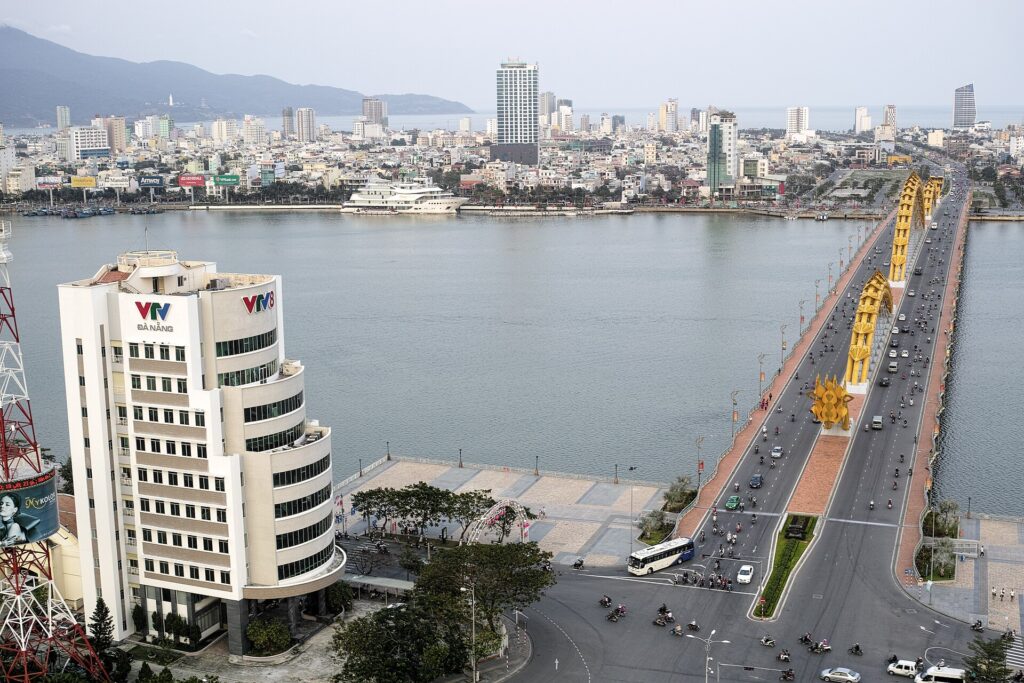
Da Nang International Airport (DAD). The central gateway, and the most underused option among visitors. It sits close to Da Nang city, and Hoi An is a straightforward road transfer away. If your trip is centred on Hoi An, Hue, and the central coast, flying into DAD instead of connecting through Hanoi or Saigon can remove an entire domestic flight from your itinerary.
The routing point worth absorbing: Vietnam is roughly 1,650 km long, and a great many visitors fly into Hanoi, work south, and fly out of Ho Chi Minh City. That is an efficient shape. Flying in and out of the same city and doubling back is the single most common way to donate a day of a holiday to an aeroplane.
Before you fly: the things that turn people around
Being denied boarding or refused entry is rare and almost always preventable. The recurring causes:
- Passport validity. Vietnam, like most of the region, expects a passport with a good margin of validity remaining — six months is the standard figure to plan against. A passport expiring two months after your return date is a genuine risk of being stopped at check-in, not a technicality.
- Blank pages. You need physical space for stamps. A full passport is a real problem.
- The visa itself. Vietnam operates an online e-visa system alongside other entry routes, and eligibility, validity and permitted entry points change with policy. Apply through the official government portal rather than an intermediary, apply early rather than the night before, and check the details on the approval carefully — a misspelled name or wrong passport number causes real problems at the border.
- Print the approval. Carry a paper copy even though it is digital. Airline check-in staff at your departure airport are often the first people to ask for it, and that is precisely when a dead phone is most likely.
- Your entry point matters. Some visa types are valid only at specified border gates. If you are entering by land or at a smaller airport, confirm your visa covers that crossing.
- Onward travel. Airlines occasionally ask to see onward or return travel before boarding. Have something to show.
Verify all of this against current official guidance close to your departure date. Entry requirements are exactly the category of information that goes stale, and a guide written months ago is not the authority to rely on.
Immigration, and what actually happens
Arrival is procedurally simple. You queue, you present your passport and visa approval, you get fingerprinted and photographed at most gates, you get a stamp, you collect your bag, you walk through customs. Officers are businesslike rather than chatty. There is no interview to prepare for.
Two practical points. First, know your accommodation address — write it down or have it on paper, because it is occasionally asked for and is genuinely useful for the taxi anyway. Second, check the stamp before you walk away. Confirm the date and the permitted duration. Overstaying in Vietnam carries fines and administrative trouble on departure, and the way people overstay is almost never deliberate — it is miscounting from a stamp they never read.
Count your days from the stamp, not from your flight booking. If the permitted period is shorter than you expected, deal with it in the first few days through the proper channels rather than discovering it at the departure gate.
The arrivals hall, in the right order
This is the part that actually saves you time and money, and the order matters more than any individual step.
1. Connect first
Everything downstream is easier with data. Ride-hailing needs it, maps need it, and contacting your accommodation needs it. The cleanest version of this is an eSIM installed at home and switched on after landing, which turns the whole problem into a toggle in the taxi queue — our Vietnam eSIM and mobile data guide covers the setup and the one roaming setting people miss.
If you have not done that, free wi-fi is available in the major terminals and is enough to get a ride booked. The official carrier counters in arrivals will also sell you a registered local SIM, which is a reasonable choice if you specifically want a Vietnamese number, at the cost of queue time.
2. Get a small amount of cash, and only a small amount
You need some dong for a taxi, a bottle of water, and small purchases before you reach a bank in town. You do not need a week’s budget.
Airport exchange rates are consistently among the worst you will encounter in Vietnam. Airport ATMs are usually a better deal than airport exchange counters, but both are beaten by a bank branch in the city. So take enough for the first day and no more — the details of why, and the three fees stacked on every withdrawal, are in our guide to money in Vietnam.
One thing to do at the ATM: decline any offer to be charged in your home currency. Choose dong. That single screen is worth several percent.
3. Then arrange transport
Not before. A traveller with data and a little cash has all the options; a traveller with neither has only the ones being offered to them in the arrivals hall, which are the worst ones.
The airport taxi problem, and the three ways around it
The pattern is consistent across the region and Vietnam is no exception: the people who approach you in the arrivals hall offering a taxi are not the good option. Neither is the unmarked car outside. The specific things that go wrong are an unmetered fare agreed vaguely and inflated on arrival, a meter that runs unusually fast, a sudden claim that your hotel is closed or full and a “better” one is available, and a route that takes a scenic detour.
Three reliable ways around it, in rough order of ease:
- Ride-hailing. Grab is the dominant app in Vietnam and the price is fixed in the app before you get in, which removes the entire negotiation. Airports usually designate a specific pickup zone for app cars — look for the signage rather than standing at the taxi rank, and follow the app’s instructions on where to wait. This is why step one is connecting.
- The official metered taxi rank. Join the marked queue and use the companies with a visible presence at the airport rather than a car that pulls up. Confirm the meter is running and zeroed when you set off.
- A transfer booked in advance. Your accommodation can almost always arrange this. It costs more than a metered taxi and buys certainty: a named driver, a fixed price, and someone holding a sign. For a late-night arrival, a first trip to Asia, or a group with luggage, it is money well spent.
Whichever you use: have your destination written in Vietnamese if you can, or shown on a map on your phone. Vietnamese addresses use alley numbering that is genuinely hard to interpret, and “it is near this pin” is far more useful to a driver than a street name pronounced badly.
Noi Bai into Hanoi
This is the longest of the three transfers and the one worth planning. Noi Bai sits roughly 35 km north of the city, across the Red River, and the drive is a real journey rather than a hop — expect something in the region of 40 minutes to an hour depending on traffic and where in the city you are going.
Your options are a ride-hailing car, an official metered taxi, a pre-booked private transfer, or a public airport bus service. The bus is far and away the cheapest and is a genuinely reasonable choice in daylight if you are travelling light and staying centrally; the trade is that it runs to a route and a timetable rather than to your door, and wrestling luggage onto it after a long-haul flight is nobody’s favourite activity. Confirm current services and fares locally, as operators and routes change.
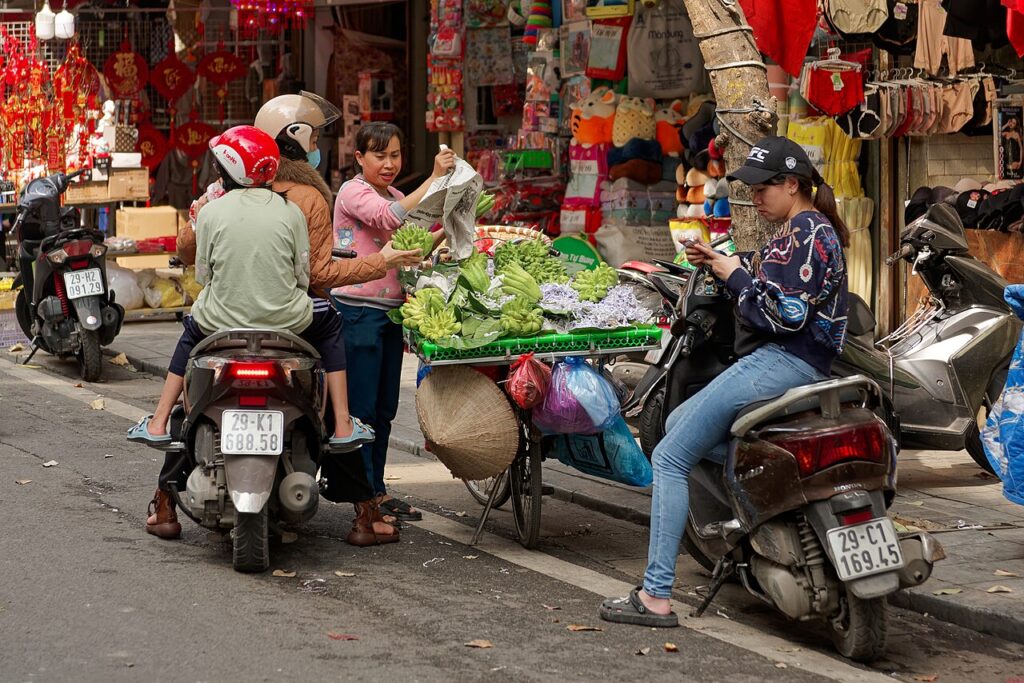
Most people arriving into Hanoi for the first time, especially with luggage or at night, are best served by a fixed-price app car or a pre-booked transfer. The Old Quarter compounds the problem at the other end: its streets are narrow, some are pedestrianised at certain hours, and a driver may legitimately have to drop you a short walk from the door. Knowing that in advance stops it feeling like a problem.
Tan Son Nhat into Ho Chi Minh City
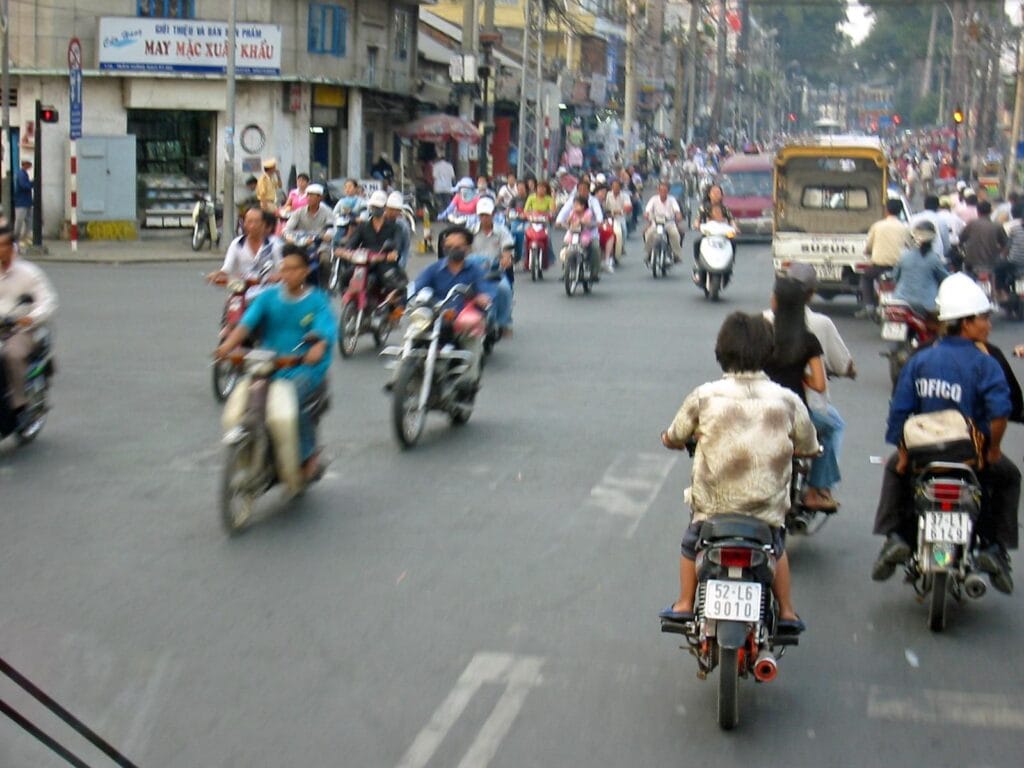
Tan Son Nhat is unusually close to the centre — close enough that the distance is not the issue. Traffic is. A transfer that takes twenty minutes at 6 a.m. can take considerably longer in the evening peak, and this asymmetry catches people out on departure far more than on arrival.
Arriving, the same three options apply and ride-hailing is the straightforward default. Note that the international and domestic terminals are separate buildings connected by a walk, which matters if you are connecting onward — more on that below.
Ho Chi Minh City has been building out its urban rail, and public transport options from the airport area continue to develop. Check what is currently running when you arrive rather than relying on a guide; the direction of travel is toward more options, not fewer.
Da Nang into Da Nang or Hoi An
Da Nang airport is the easiest arrival in the country. It is close to the city, the roads are good, and the transfer into central Da Nang is short.
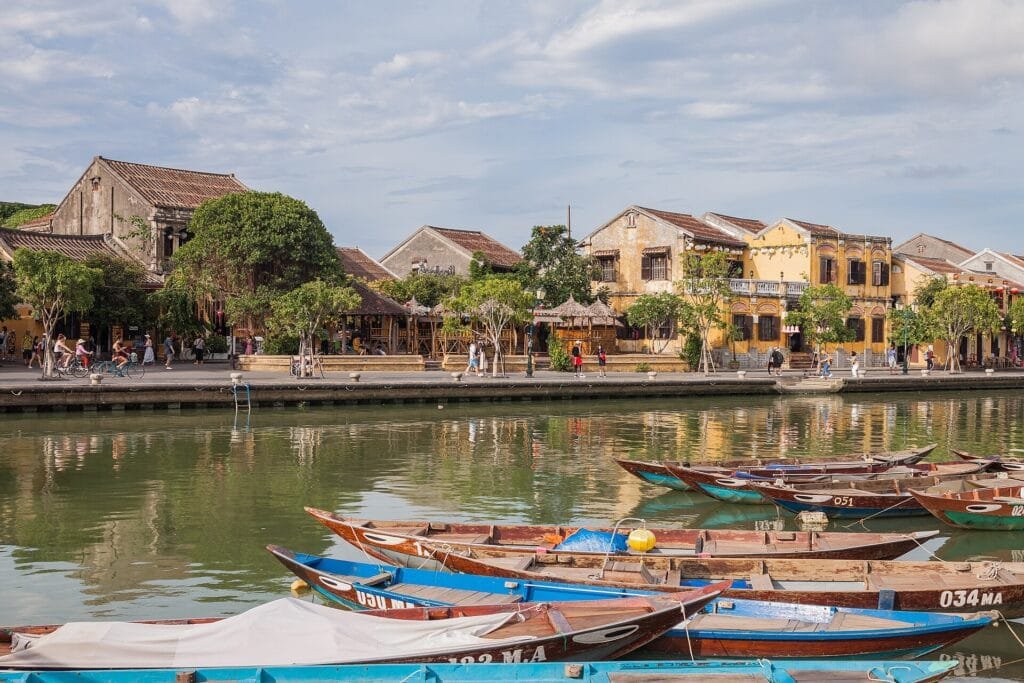
For Hoi An, the transfer is a road journey of roughly 45 minutes to an hour along the coast. Ride-hailing works, metered taxis work, and a very large number of Hoi An hotels will arrange a transfer if you ask — which for a first arrival is worth doing, because Hoi An’s Old Town is largely vehicle-restricted and a driver who knows where to actually stop for your accommodation saves a hot walk with bags.
If your itinerary is built around Hoi An, Hue and the central coast, this is the arrival that removes a domestic flight from your plans. It is consistently underrated by first-time visitors, who default to Hanoi or Saigon and then fly again.
Arriving late at night
Long-haul schedules into Vietnam produce a lot of arrivals between midnight and 4 a.m., and the calculus changes at that hour.
- Pre-book the transfer. Fewer drivers, fewer official staff, less oversight, and you are at your least sharp. The premium over a metered taxi is small against the alternative.
- Tell your accommodation your arrival time. Small hotels and guesthouses may not staff a 24-hour desk, and arriving at 2 a.m. to a locked door is a genuinely bad start. Most will arrange a late check-in if told; almost none can improvise one.
- Consider paying for the previous night. If you land at 1 a.m. on the 14th, you need a room on the night of the 13th. This is the single most common late-arrival booking error.
- Have some cash already. Airport exchange counters may be closed even if ATMs are not.
Domestic connections, and the trap in them
A great many Vietnam itineraries include one or two internal flights, and the trap is the same each time: treating an international-to-domestic connection as if it were a single journey.
If your international arrival and your domestic onward flight are on separate tickets, you must clear immigration, collect your checked bag, walk or transfer to the domestic terminal, and check in again from scratch. That is not a 45-minute exercise. Allow generous time — three hours is not excessive at a busy airport, and more if you are arriving in the evening peak.
On separate tickets you also carry the risk yourself: if the first flight is late and you miss the second, no airline owes you a replacement. Booking the domestic leg with more margin than feels necessary is much cheaper than buying a new ticket at the counter.
Your first hour at the accommodation
Five minutes of admin on arrival prevents most of the small frictions of the following days.
- Photograph the hotel’s business card or door number, ideally with the address in Vietnamese. This is what you show a driver at 11 p.m. when you cannot pronounce the street.
- Download offline maps for the city while you are on hotel wi-fi.
- Ask the front desk two questions: where the nearest bank ATM is, and roughly what a taxi to the places you plan to go should cost. The second answer is the benchmark that protects you all week.
- Break a large note. Get change while you are somewhere unhurried with a till.
- Confirm your onward bookings exist. Trains, internal flights, tours. Now, not the night before.
- Check the stamp in your passport again, properly, in good light.
Departure: what catches people on the way out
Leaving is where the avoidable problems cluster, mostly because people budget for distance rather than for traffic and queues.
- Leave far earlier than the distance suggests. This is the Tan Son Nhat trap specifically: the airport is close and the traffic is not cooperative. Three hours before an international departure is sensible, more in the evening peak.
- Spend your dong. It is difficult and expensive to exchange outside Vietnam and many foreign banks will not take it at all. Buy something at the airport rather than carrying it home as a souvenir you did not want.
- Check the terminal. International and domestic are separate buildings at the major airports, and arriving at the wrong one costs you a walk you did not budget for.
- Duty-free liquids and connections. If you have an onward connection outside Vietnam, liquids bought here may be confiscated at the transfer point depending on the route. Check before you buy.
- Keep your boarding pass and any customs paperwork until you have physically left.
- Do not cut it fine on an overstay. If your permitted stay and your flight date are close together, get that resolved days beforehand, not at the counter.
Arriving overland
Not everyone flies in. Vietnam shares land borders with Cambodia, Laos and China, and overland arrival is common on a wider Southeast Asia route — particularly the Phnom Penh to Ho Chi Minh City corridor, and the crossings from Laos into the north-central provinces.
Overland entry works, and it introduces exactly one issue that catches people badly: not every visa type is valid at every border gate. An approval that would sail through at Noi Bai can be refused at a small land crossing if that gate is not listed on it. This is the single most important thing to verify before you commit to a bus ticket, because the consequence is being turned back at a remote border with no easy alternative.
What to check and expect:
- Confirm your visa explicitly permits your specific crossing point. Check the approval document itself, and check against current official guidance rather than a forum post from last year.
- Allow far more time than the bus company suggests. Border formalities on both sides, with a full coach of passengers processed together, routinely take longer than the schedule implies.
- Have local currency for both sides. Facilities at land crossings are thin, and you may need small amounts in the currency of the country you are leaving as well as dong.
- Expect no data for a stretch. Border zones are a poor place to discover your eSIM has not attached. Install and test before you set off.
- Be wary of “visa assistance” offered on the bus. Fees collected onboard for help with formalities are a well-established pattern on these routes and are not an official charge.
- Keep your passport on your person, not in a bag in the hold, and not collected by a bus attendant if you can reasonably avoid it.
Done with the paperwork checked in advance, an overland arrival is straightforward and often a more interesting way into the country than a terminal building. Done on assumptions, it is the worst place in Vietnam to discover a problem.
Frequently asked questions
Which airport should I fly into for Vietnam?
Hanoi’s Noi Bai (HAN) for a northern or north-to-south trip, Ho Chi Minh City’s Tan Son Nhat (SGN) for the south, and Da Nang (DAD) if your trip is centred on Hoi An, Hue and the central coast. Flying into one and out of the other avoids doubling back across a 1,650 km country.
How do I get from Noi Bai airport into Hanoi?
Ride-hailing, an official metered taxi from the marked rank, a pre-booked private transfer, or a public airport bus. It is roughly 35 km and typically 40 minutes to an hour. For a first arrival or a night landing, a fixed-price app car or pre-booked transfer is the low-stress choice.
Should I buy a SIM at the airport in Vietnam?
You can, at the official carrier counters in arrivals, and it gets you a registered local number. An eSIM installed before you fly is faster and skips the queue entirely. Either way, sort data before you sort transport.
Should I change money at the airport?
Only a small amount — enough for a taxi and the first day. Airport rates are among the worst in the country, and a bank branch in the city will do considerably better.
How much time do I need between an international arrival and a domestic flight?
If they are on separate tickets, allow three hours or more. You must clear immigration, collect your bag, move to the domestic terminal and check in again, and if you miss the second flight on a separate ticket nobody owes you a replacement.
Is the airport taxi rank safe to use?
The official marked rank with established companies is fine — check the meter is zeroed. What to avoid is anyone who approaches you inside the terminal, and unmarked cars outside it.
What if I arrive at 2 a.m.?
Pre-book the transfer, tell your accommodation your arrival time, and make sure you have booked the room for the night before the calendar date you land on. That last one is the most common late-arrival mistake.
Do I need to print my e-visa approval?
Carry a paper copy even though it is digital. Airline staff at your departure airport frequently ask for it, and that is exactly when a phone is most likely to be flat.
The short version
Land with working data, a small amount of dong, and a transfer you already decided on. That is the whole guide. Those three things convert arrival from the most stressful part of a Vietnam trip into twenty unremarkable minutes, and they all have to be arranged before you are standing in the arrivals hall.
Then, on the way out, leave earlier than the map suggests and spend your dong before you reach the gate.
Next: Vietnam eSIM and mobile data covers landing connected, money in Vietnam covers the cash and card side, getting around Vietnam covers what to do once you have left the airport, and our 10-day Vietnam itinerary shows the north-to-south shape this arrival planning is built around.
You Might Also Love





Written by
John Morrison is the founder and lead travel writer at Packzup. Over the past decade he has explored destinations across Africa, the Americas, Asia, Europe, the Middle East, and Oceania — always self-funded, never on a press trip.
