
Last updated August 27, 2026 · Editorial policy
- Where to stay in Jericoacoara: best areas
- Vila centre: the classic
- Beachfront & Malhada side
- Prea & the outskirts
- Booking reality
- Pick your pousada around the cash, the sand, and the dark
- FAQ
- Getting there: why your arrival plan matters before you book a room
- When to book: wind season, rain, and price swings by month
- What's a short walk from your bed: food, sunset, and tour pickups
Quick answer: Stay in Jeri’s sandy-laned vila centre for everything-on-foot (sunset dune included): the Princesinha/beachfront edge for waves at your window: or outside town toward Prea for kite-wind and calm. Pousadas rule here: book windy-season (Jul-Dec) months ahead.
Where to stay in Jericoacoara: best areas
| Area | Best for | The vibe |
|---|---|---|
| The village | Base & nightlife | Sandy streets, bohemian |
| Near the dunes | Sunset & kitesurf | Scenic |
| Beachfront pousadas | Sea & calm | Relaxed |
| Outskirts | Quiet & value | Off-grid |
Vila centre: the classic
Sand streets, capoeira at sunset, forró nights and every restaurant within barefoot range: pousadas €60-150: charming over polished: noise fades by midnight.
Beachfront & Malhada side
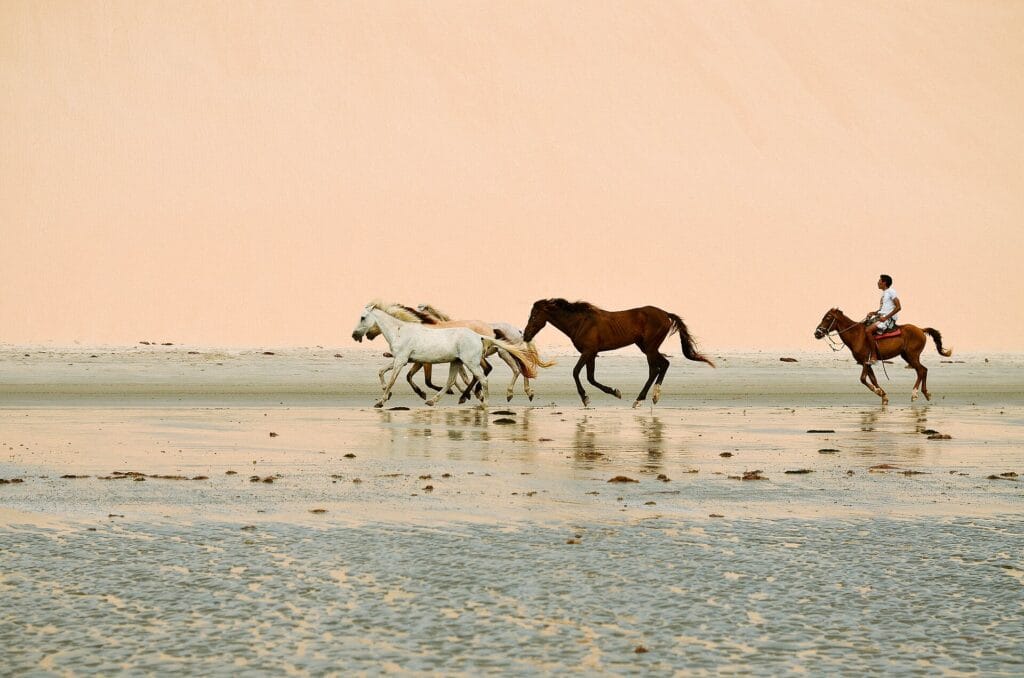
Steps to the water and the Pedra Furada walk: quieter evenings, sea-breeze rooms: the romantic pick.
Prea & the outskirts
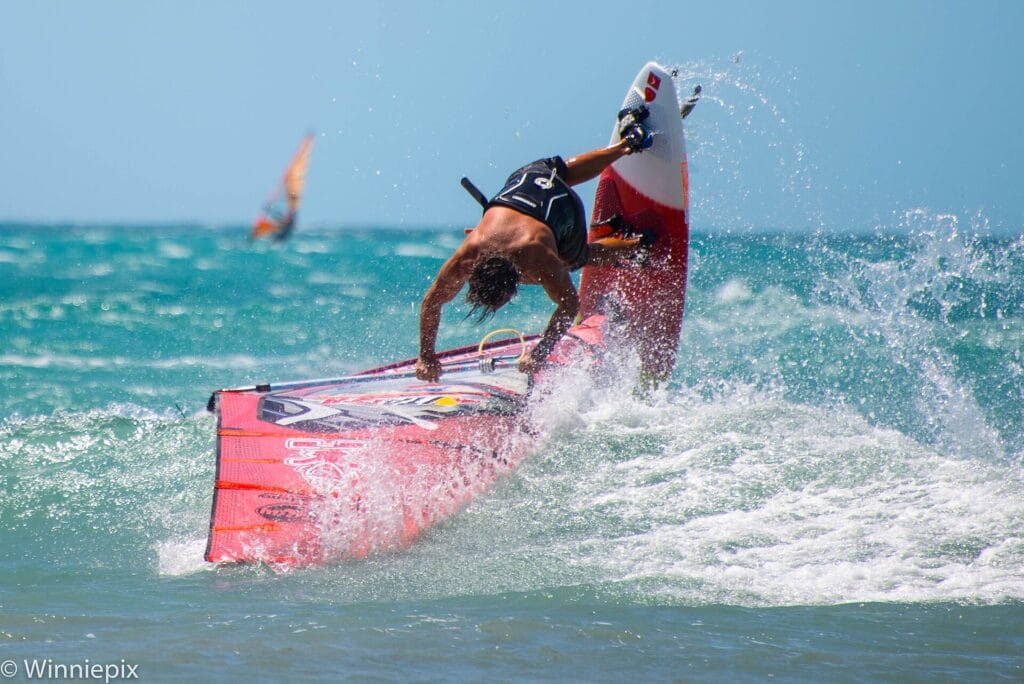
Kitesurf country: steady wind, wide beach, lodge-style stays: a buggy/transfer ride from Jeri’s nightlife: choose deliberately.
Booking reality
No real roads in: everything arrives by 4×4: peak wind season and Brazilian holidays sell the good pousadas out early: confirm transfer arrangements WITH the booking: see what to do once there.
Pick your pousada around the cash, the sand, and the dark
Jeri runs on rules that quietly decide where you should sleep. Cars can’t enter the village, so you arrive by 4×4 transfer from Jijoca (about 20 km away), and every street is loose sand, which means rolling luggage is useless and a beachfront room two sandy blocks from the entrance is a real haul after dark. And it does get dark: street lighting is banned by local law, so nights are genuinely lit by moon and stars. That’s magical and also a reason to stay central your first night, near Rua Principal, until you’ve learned the lanes.
- First-timers: a Vila-centre pousada within walking range of the restaurants, from roughly $41 a night, so you’re not crossing dark sand to dinner
- Kitesurfers: Prea, where the wind is steadiest October to February, accepting a buggy ride from the village in exchange for the conditions
One more practical thing: there’s no ATM in the village. You can pull small amounts at the Bradesco on Rua Principal or the Banco do Brasil counter at the post office, but the reliable cash machine is back in Jijoca. Arrive with reais in hand, because plenty of pousadas and beach kiosks still prefer it.
FAQ
How do you reach Jericoacoara?
Best area for first-timers?
When is kite season?
Is Jeri expensive?
Getting there: why your arrival plan matters before you book a room
Jericoacoara sits inside a national park with no paved road in and a ban on regular cars, so where you stay is inseparable from how you arrive. There are two realistic routes, and both end the same way: a 4×4 (locally the open-sided jardineira) hauls you the final stretch over sand from Jijoca into the village.
The airport route (fastest). Jericoacoara Airport (code JJD, actually near Cruz) takes direct flights from São Paulo (GRU) on Gol, LATAM and Azul, roughly a 3.5-hour hop. From JJD it’s about 16 km / 20 minutes to Jijoca, then the sand transfer into town. Budget around US$30–55 per person for a shared airport-to-village transfer.
The Fortaleza route (cheapest, longest). From Fortaleza’s Pinto Martins airport it’s roughly 300 km and 4.5–5 hours, done in two legs: an air-conditioned van to Jijoca, then the 4×4 over the dunes. Shared seats are the budget pick; a private 4×4 costs more but lets you leave on your own schedule.
- Book a stay that offers or arranges the final 4×4 leg — arriving after dark without one is a headache.
- Confirm your hotel’s exact drop point; the jardineira stops in the sandy village centre, not at your door.
- Give the driver a hotel name, not GPS coordinates — there are no street numbers you’ll recognise.
When to book: wind season, rain, and price swings by month
Jeri has two completely different personalities, and the calendar decides which room you should chase and what you’ll pay. The dry, windy stretch runs roughly July through January; the wetter, calmer months are February through June, with the heaviest rain in March and April.
August to December is peak. Trade winds blow on around 95% of days, often 20–38 knots in the afternoon — this is why the Malhada and beachfront kite crowd fills up first. August historically has the strongest wind. If you’re here to kite or windsurf, book a beach-side or Malhada room early; they sell out and price up hardest in this window.
September to November is the sweet spot for everyone else — reliable wind, dry skies, and slightly softer rates than the December–January holiday surge, when Brazilian domestic tourism peaks and prices spike.
- Feb–June (low/green season): cheapest rooms, calmer water, occasional rain; lagoon-day tour fees drop (park lagoon access is around US$7 low vs US$10 high season per person).
- Réveillon (New Year) and Carnival: book months ahead — this is when Vila-centre pousadas hit their ceiling.
- If you want quiet beachfront at a fair price, target May–June: warm, mostly dry, and far emptier than the wind-season crush.
What’s a short walk from your bed: food, sunset, and tour pickups
Jeri is tiny and sandy — you’ll walk everywhere barefoot — so a good room is really about what’s within a five-minute stroll. Stay near Rua Principal and you’re beside the food, the nightlife and the tour pickups; drift toward the edges and you trade convenience for quiet.
Eating. Rua Principal is the dinner strip. Reliable, specific picks: Tamarindo (Rua Principal 120), elegant seafood under a tamarind tree, roughly US$11–19 pp; Bistrôgonoff (Rua Principal 16), stroganoff and shrimp-with-catupiry, about US$17–28 pp, with genuine half portions at half price; and Lagosteiro (Rua Principal 121) for lobster plates built to share between two or three.
Sunset. Every evening the village empties onto the Duna do Pôr do Sol (Sunset Dune) — one of the rare Brazilian spots where the sun drops straight into the ocean. In July it lines up inside the arch of Pedra Furada, a wind-carved rock reachable on foot along the shore at low tide.
- Nightlife starts on Rua Principal after dark — capoeira circles in the square, then cocktail bars and live forró music.
- Buggy tours to Lagoa do Paraíso and Lagoa Azul (hammocks in the water) and to Tatajuba’s dunes leave from town around 9 a.m.; expect from ~US$45+ for a shared buggy, more private.
- Choose a Vila-centre room if you value stumbling home after dinner over absolute silence.
Torn between destinations? See our honest comparisons: Jericoacoara vs Canoa Quebrada.
You Might Also Love



Written by
John Morrison is the founder and lead travel writer at Packzup. Over the past decade he has explored destinations across Africa, the Americas, Asia, Europe, the Middle East, and Oceania — always self-funded, never on a press trip.
