
Last updated September 4, 2026 · Editorial policy
- Where to stay in Mexico City: best areas
- Roma Norte: the headline neighbourhood
- Condesa: parks and patios
- Polanco: five-star row
- Centro Histórico & Coyoacán
- Quick picks by traveler type
- Juarez and Cuauhtemoc: the budget-and-nightlife alternative to Roma
- FAQ
- Arriving: why AICM and AIFA lead to different first nights
- What changed in Roma and Condesa after 2020
- Altitude at 2,240 m, and other first-day surprises
- How far south is Coyoacan, really?
Quick answer: Roma Norte and Condesa are the answer for most visitors: leafy, walkable, cafe-and-taco dense, and central to everything. Polanco buys five-star polish: Centro puts the Zócalo at your door (by day): Coyoacán charms those prioritizing Frida-era calm.
Where to stay in Mexico City: best areas
| Area | Best for | The vibe |
|---|---|---|
| Roma & Condesa | First-timers, foodie | Hip, leafy, trendy |
| Polanco | Upscale & dining | Chic, museums |
| Centro Histórico | Sights & value | Historic, busy |
| Coyoacán | Charm & quiet | Bohemian, Frida country |
Roma Norte: the headline neighbourhood
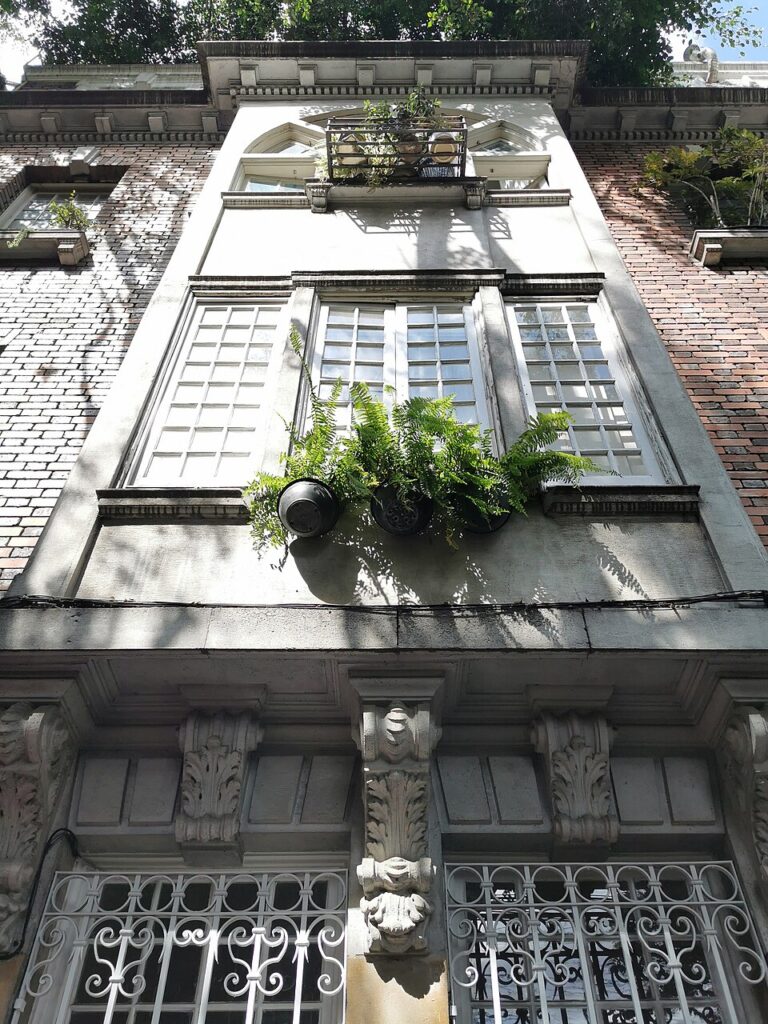
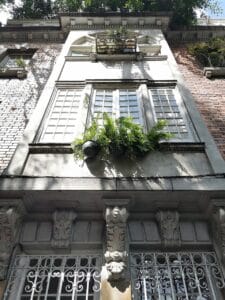
Art-deco facades, plazas, natural-wine bars and the city’s most exciting eating: boutique hotels and apartments US$60–180. Walk to Condesa, ride-hail everywhere else: first-timers rarely regret it.

Condesa: parks and patios
Amsterdam Avenue’s running loop, Parque México’s dog parade and breakfast terraces: slightly calmer than Roma, equally lovely: the two function as one super-zone.
Polanco: five-star row
Masaryk’s luxury retail, the Anthropology Museum nearby and the city’s grand hotels: polished, safe-feeling, pricier: business and museum-first stays thrive here.
Centro Histórico & Coyoacán
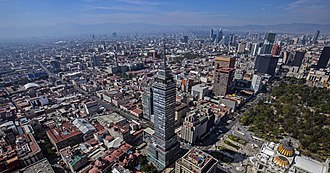
Centro: the Zócalo, Templo Mayor and palaces: electric by day, quiet-to-empty blocks at night: choose flagged hotels and taxi after dark. Coyoacán: cobbled plazas and Frida’s Casa Azul: village-calm, 30–45 minutes from the action.
Quick picks by traveler type
First visit: Roma Norte. Runners/families: Condesa. Luxury: Polanco. History-immersion: one Centro night, then move. Long stays: Roma/Condesa apartments.
Juarez and Cuauhtemoc: the budget-and-nightlife alternative to Roma
If Roma and Condesa rates have crept past your budget, walk ten minutes north to Colonia Juarez and Colonia Cuauhtemoc, the two colonias straddling Paseo de la Reforma. Beds here run roughly 20–30% cheaper than equivalent rooms in Roma Norte: hostel dorms start around USD 15, and design hotels like Hotel Carlota in Cuauhtemoc sit at USD 85–110 a night with a rooftop pool. You are walking distance from the Angel of Independence, Chapultepec Park, and the Metrobus down Reforma, and on Sundays the whole boulevard closes to cars for cyclists and Ecobici bikes.
This is also the better base if nightlife is the point. The Zona Rosa half of Juarez packs bars and clubs that stay loud past 3am, which is a feature or a problem depending on your sleep. Stick to lit main streets like the Calle Genova pedestrian strip after dark; the area feels marginally edgier late at night than leafy Condesa. The hard rule: do not book on price alone into Doctores, which borders Roma but turns sketchy after dark, and steer clear of Tepito entirely. A USD 4 Uber back to your room beats walking those blocks at midnight.
FAQ
Is Mexico City safe to stay?
Roma or Condesa?
Altitude tips?
How many nights?
Arriving: why AICM and AIFA lead to different first nights
Mexico City has two airports and they are not interchangeable. Benito Juarez (AICM) sits inside the city, in the Venustiano Carranza borough. Felipe Angeles (AIFA) is in Zumpango, State of Mexico, about 35 km north, and reaching Roma or Condesa from it is a journey, not a transfer.
From AICM, the Metrobus Line 4 airport route runs from both terminals through San Lazaro to Bellas Artes and Buenavista for a flat 30 pesos, against 6 pesos on the rest of the system. You cannot pay cash: you need a Tarjeta de Movilidad Integrada, or a contactless bank card or phone. Metro Line 5 stops at Terminal Aerea beside Terminal 1 and is cheaper, though a poor fit for a large suitcase at rush hour. On taxis the UK Foreign Office is blunt: at airports, only use authorised pre-paid airport taxi services, because unlicensed drivers have robbed and assaulted passengers, including in Mexico City. Buy the fixed-price zone ticket at a counter inside the terminal before you step outside.
The two AICM terminals are about 3 km apart, too far to walk. The free Aerotren covers that in under five minutes, 05:00 to 23:00, for passengers holding a same-day boarding pass, but it has been pulled out of service for maintenance more than once during 2026, including a closure from the end of July, so treat it as a bonus rather than a plan. The inter-terminal bus runs 24 hours and costs 16 pesos for the general public. Since 1 August 2026 Metrobus has also operated a terminal-to-terminal route at 30 pesos, roughly every 12 minutes from 04:30 to midnight.
AIFA gained a rail link on 26 April 2026, when the Tren Felipe Angeles opened between Buenavista and the airport: 12 stations, roughly 45 minutes to an hour end to end. It launched on a promotional fare of 45 pesos for the full run, which the operator has kept until further notice, while Fonadin has published a standard tariff of 110 pesos for the same trip with no confirmed switch date, so price it on the day. Buenavista is in Cuauhtemoc, so a cheap AIFA arrival only stays cheap if you are sleeping on that side of the city.
What changed in Roma and Condesa after 2020
The Roma and Condesa you will book into are the product of policy as much as fashion. In October 2022 the city government signed an agreement with Airbnb and UNESCO to market Mexico City to remote workers and creative tourism. Long-stay foreign demand landed in these colonias, and rents followed.
The backlash arrived in July 2025. A march against gentrification set off through Roma and Condesa on 4 July, a second followed on 20 July, and a third ended near the United States embassy on 26 July. Rent was the core grievance.
Regulation has moved on two tracks, and neither is as settled as the headlines suggest. A reform to the city Tourism Law approved in October 2024 caps a registered short-let property at 50 per cent of the nights in a year, roughly 183. Hundreds of hosts and Airbnb itself have filed amparos against it, and while a federal ruling in February 2026 barred judges from suspending the cap, enforcement has stayed patchy. In July 2025 the city presented Bando 1, a 14-point plan for a habitable and affordable city that includes a reasonable rent price index for areas under property pressure, a tenants’ rights office and tighter regulation of short-stay platforms. The measure with real teeth is older: article 2448-D of the city Civil Code, upheld unanimously by the Supreme Court on 18 February 2026, caps an annual residential rent rise at the previous year’s inflation, which means 3.69 per cent during 2026.
The host registry is the part people ask about. It opened in May 2026 at estanciaeventual.cdmx.gob.mx, and a registered property is meant to show its folio on the listing. The deadline was then pushed back to December 2026 after a flood of applications and legal challenges, so:
- A folio on a Roma Norte or Condesa listing is a good sign, but a missing one does not yet mean the listing is unlawful.
- None of these rules bind you as a guest. They bind hosts and platforms.
- A hotel room is not competing for the housing stock the protests were about.
Altitude at 2,240 m, and other first-day surprises
The figure is right but the risk framing usually is not. Mexico City sits at roughly 2,240 m. US CDC guidance puts the risk line for altitude illness at a sleeping altitude of 2,450 m or higher, and sometimes lower, so the city sits just under it and classic altitude sickness is uncommon here. The CDC lists the drivers of risk as the altitude you enter at, how fast you ascend, individual genetic susceptibility and any previous altitude illness. Training and physical fitness do not affect risk.
What that means in practice is modest. A flight is a fast ascent, and a first day of stairs, rooftops and long museum halls often feels heavier than it should, with a broken first night’s sleep. That does not argue for a different neighbourhood. It argues for putting your Teotihuacan or Xochimilco day later in the trip, and for not reading one poor night as illness.
One more thing to expect: Mexico runs a national earthquake drill on 19 September, the anniversary of the 1985 and 2017 quakes. In 2026 it falls on a Saturday at 12:00, with the seismic alert sounded through street loudspeakers across Mexico City and pushed to mobile phones. It is loud, it is scheduled, and it is not an emergency.
How far south is Coyoacan, really?
Coyoacan is a borough, not just the cobbled square, and the gap between the two catches people out. The nearest Metro stop to the old centre is Viveros/Derechos Humanos on Line 3, roughly a 15 minute walk from Casa Azul. A Coyoacan base makes evenings elsewhere a deliberate trip, not a stroll.
The same borough holds Estadio Azteca, out at Santa Ursula Coapa, far south of Roma Norte at its own station on the Tren Ligero line running from Tasquena. That distance is part of why the 2026 World Cup did so little for the colonias travellers actually stay in. The city hosted five matches, on 11, 17, 24 and 30 June and 5 July 2026, and the tournament is over. It did not deliver the boom the trade expected: Coparmex CDMX put hotel occupancy at the opening at about 65 per cent, against February projections that Mexico’s three host cities would clear 80 per cent, and a study put Airbnb occupancy in Mexico City at 28.2 per cent, the lowest of the host cities. FIFA had freed up 800 of the roughly 2,000 rooms it was holding in the city as early as March 2026, which the federal government described as a release rather than a cancellation. Any June or July 2026 quote you saw was a tournament price and is not the market you are booking in now.
You Might Also Love

Written by
John Morrison is the founder and lead travel writer at Packzup. Over the past decade he has explored destinations across Africa, the Americas, Asia, Europe, the Middle East, and Oceania — always self-funded, never on a press trip.
