Quick Answer
Retirement visas let you live abroad on pension or passive income. Portugal, Spain, Italy and Greece lead in Europe; Panama, Costa Rica, Mexico, Ecuador and Colombia in the Americas; Thailand and Malaysia in Asia. Requirements centre on proven income, health insurance and a clean record.
Retiring abroad is mostly an administrative problem: proving stable income, arranging healthcare, and understanding where you will be taxed. These countries all offer a formal route — here is what each generally requires and, more importantly, what to check before committing.
Countries Offering Retirement Visas
1. Portugal
Best months: Jun–Aug · 18–28°C days · dry (climate data)
Long the most popular European choice, via a passive-income route for retirees with pension or investment income. Tax treatment has changed since the original NHR scheme closed to new entrants — check the current position.
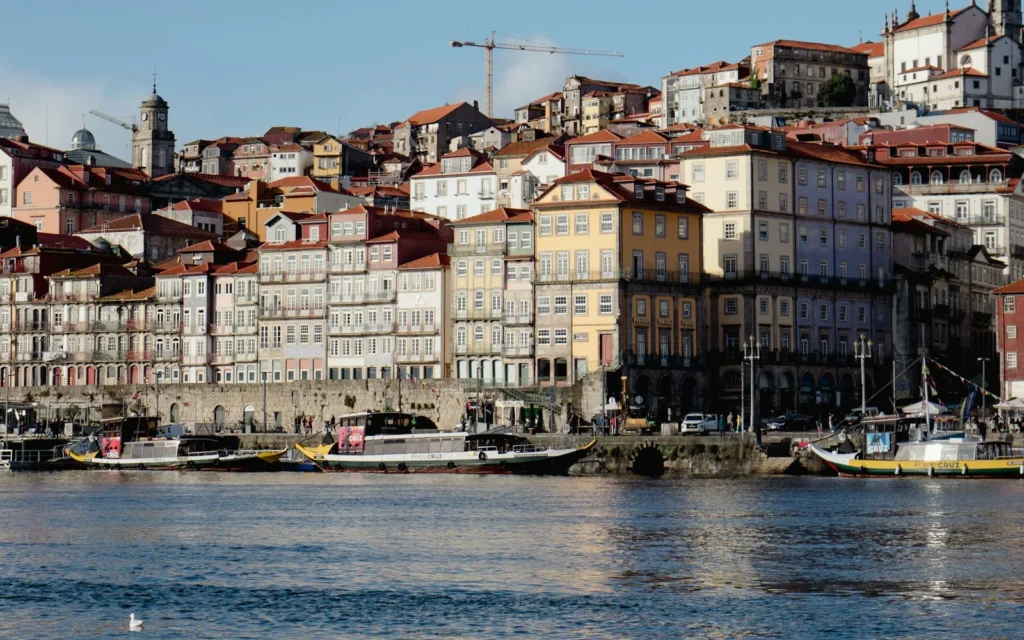
Portugal’s D7 is the standard route for retirees with stable passive income, requiring proof of means and health cover and leading to permanent residence after five years. Two changes are widely misreported: the Non-Habitual Resident tax regime closed to new entrants and was replaced by a much narrower scheme aimed at scientific and technical roles, and the Golden Visa no longer accepts residential property. Confirm current terms with a Portuguese consulate before committing.
2. Spain
Best months: Apr–Jun · 12–25°C days · some rain (climate data)
A non-lucrative visa for those living on savings or pension income, requiring private health insurance and proof of funds.
Spain’s non-lucrative visa is the retirement route – it requires proof of passive income and private health insurance and explicitly prohibits working, including remotely, which catches out people who assume they can keep a little freelance income. The Golden Visa is gone: Spain ended property-based investor residency on 3 April 2025, though existing holders keep their status. Tax residency begins at 183 days and brings worldwide income into scope.
3. Panama
The Pensionado programme is among the most established in the Americas, with discounts on healthcare, transport and utilities built into the scheme.
Panama’s Pensionado is the best known programme in the Americas and is unusual in offering legislated discounts to retirees – on flights, medical services, restaurants and utilities – rather than residency alone. It requires a verifiable lifetime pension. Panama uses the US dollar as legal tender alongside the balboa, which removes currency risk for American retirees. The Friendly Nations visa is a separate route with different requirements.
4. Costa Rica
Best months: Jan–Mar · 16–26°C days · dry (climate data)
The Pensionado route requires a guaranteed lifetime pension income and gives access to the public healthcare system after enrolment.
Costa Rica’s Pensionado category requires a guaranteed lifetime pension paid monthly, with a separate Rentista option for those with other stable income and an Inversionista route for investors. Residents can join the public Caja healthcare system by paying an income-based monthly contribution, which is what makes the healthcare argument work. Costa Rica is not as cheap as its neighbours, and imported goods and vehicles are heavily taxed.
5. Mexico
Best months: Dec–Feb · 7–23°C days · dry (climate data)
Temporary and permanent residency based on income or savings thresholds, applied for at a consulate outside Mexico.
Mexico’s temporary and permanent resident visas are applied for at a consulate outside the country rather than on arrival, and approval turns on proving income or savings at thresholds each consulate sets and revises independently – two consulates can genuinely ask for different figures, which is the single most confusing feature of the system. Temporary residency typically converts to permanent after four years. Healthcare is largely private and inexpensive by US standards.
6. Malaysia (MM2H)
Best months: Jun–Aug · 24–31°C days · rainy (climate data)
Malaysia My Second Home has been repeatedly revised, with thresholds raised significantly — verify the current tier structure before planning.
Malaysia My Second Home is the clearest example on this list of why current rules must be checked: the financial requirements were raised sharply in 2021, revised again afterwards, and a tiered structure with different thresholds and a separate Sarawak programme now operates. English is widely spoken and private healthcare is good and cheap. The climate is equatorial and constant rather than seasonal, which suits some retirees and not others.
7. Thailand
Best months: Nov–Jan · 22–31°C days · dry (climate data)
A long-stay visa for over-50s requiring a deposit in a Thai bank account or monthly income, renewable annually.
Thailand’s Non-Immigrant O-A retirement visa is available from age 50 with a financial requirement held in a Thai bank or shown as monthly income, plus mandatory health insurance for that category, and it requires reporting to immigration every 90 days. The newer Long-Term Resident visa offers a ten-year option for wealthier applicants. Private hospitals are excellent and inexpensive, but foreigners cannot own land outright, only condominium units within a quota.
8. Greece
Best months: Sep–Nov · 15–24°C days · dry (climate data)
A financially independent person visa, plus a golden-visa property route that has seen threshold increases in popular areas.
Greece offers a financially independent person visa for those with sufficient passive income, and a separate tax incentive allowing qualifying foreign pensioners to elect a flat rate on foreign-source income for a fixed number of years. The Golden Visa still exists but its property thresholds were raised substantially in 2024 and now vary by region. Island living is cheaper than Athens but comes with ferry dependence and thinner medical services.
9. Italy
Best months: Apr–Jun · 13–23°C days · rainy (climate data)
An elective residence visa for those with stable passive income — notably, it does not permit working.
Italy’s elective residence visa is the retirement route and is applied more strictly than its reputation suggests – it requires substantial passive income, explicitly excludes employment, and consulates interpret it conservatively. The notable incentive is a flat tax available to foreign pensioners who move their residence to a small municipality in the south, fixed for a set number of years. Bureaucracy is slow and rural healthcare is thinner than in the north.
10. Ecuador and Colombia
Best months: Dec–Feb · 15–26°C days · some rain (climate data)
Among the lowest income thresholds anywhere, with established expat communities in Cuenca and Medellín.
Before you act on this: visa rules, income thresholds and tax treatment change frequently and vary by nationality. Confirm the current position with the relevant consulate and take professional advice before making decisions.
Both are among the most accessible options in the Americas. Ecuador’s pensioner visa threshold is tied to a multiple of the national basic salary, which keeps it low, and the country uses the US dollar. Colombia offers a retirement visa based on pension income at a multiple of the minimum wage, also comparatively low. Both have inexpensive healthcare and established foreign communities – Cuenca and Medellin respectively. Altitude is a medical factor in both.
The four questions that decide it
Healthcare is usually the deciding factor, not the visa. Check whether you can join the public system, what private cover costs at your age, and whether pre-existing conditions are excluded — premiums rise steeply after 70 and some insurers will not write new policies at all.
Tax comes second: where your pension is taxed depends on the double-taxation treaty between your home country and the destination, not on the visa name. Several countries have narrowed or closed favourable schemes in recent years.
Then renewal and permanence — whether the permit renews indefinitely and whether it leads to permanent residency or citizenship — and practicalities: banking, driving licence recognition, and how easily family can visit or join you. Rent for six months before buying anything.
Frequently Asked Questions
Which country has the best retirement visa?
Portugal and Spain lead in Europe for healthcare and infrastructure; Panama’s Pensionado is the most established in the Americas.
Do you pay tax on your pension abroad?
It depends on the double-taxation treaty between the two countries. Take professional advice — this is the most common and costly mistake.
Can you access public healthcare?
Sometimes, after enrolment or contributions. Many retirees need private cover, which becomes expensive with age.