Skip to content

Best Time to Visit Mallorca: Month-by-Month Guide

Reviewed July 2026

Last updated July 16, 2026 · Editorial policy

6 min read·Updated Jul 2026
Quick Answer
Best time to visit Mallorca (2026): Mallorca best months + season-by-season breakdown + festivals + weather + peak/shoulder/off seasons. Includes when to avoid.

📅
Plan around the seasons
See our full Travel Calendar 2026
Where to go every month of the year, with the best destinations for weather, wildlife, and value.
View calendar →
⏱ 5 min read📖 1,009 words📅 Jul 2026

Best time to visit Mallorca: at a glance

Short answer: April–June and September–October for warm, calmer days.

SeasonMonthsWhat to expect
PeakJul–AugHot, packed beaches; priciest
Shoulder (best value)Apr–Jun, Sep–OctWarm sea, ideal hiking & cycling, fewer crowds
LowNov–MarMild, quiet; many resorts shut

Best Time to Visit Mallorca: Month-by-Month Guide

Quick take: Mallorca changes dramatically depending on when you visit. Here’s what each month actually looks like on the ground.

Mallorca

Peak: summer (June-August) · Off-season: winter (December-February)

Knowing the best time to visit Mallorca can transform your trip — saving you hundreds on flights and hotels while putting you in better weather with fewer crowds. This guide breaks down each season, key events, and what to expect month by month so you can pick the right travel dates.

Best Months to Visit Mallorca

Top pick: shoulder seasons (typically April-May and September-October). You get the best balance of weather, crowds, and price. Hotels and flights typically run 15-30% below peak season, the weather is comfortable, and major attractions are open without the high-summer chaos.

Mallorca Travel Seasons at a Glance

SeasonMonthsWhat to Expect
Peaksummer (June-August)Best weather (for that region), highest prices, biggest crowds. Book hotels 3-6 months ahead.
Shouldershoulder seasons (typically April-May and September-October)Sweet spot: good weather, moderate crowds, 15-30% lower prices than peak.
Off-seasonwinter (December-February)Cheapest, quietest. Some sights may be closed. Best for budget travelers and shoulder-month flexibility.

Festivals & Events in Mallorca

If you’re planning around a specific event, book early — major festivals spike hotel prices 50-200% and sell out 3-6 months ahead.

  • Sant Antoni (bonfires & demons) (mid-Jan)
  • Sant Sebastià (Palma patron festival) (Jan)
  • Nit de Foc / Sant Joan (late Jun)
  • Moros i Cristians (Pollença) (early Aug)
  • Festa des Vermar (Binissalem) (late Sep)

When to Visit by Travel Goal

  • Best weather: Visit during shoulder seasons (typically April-May and September-October). Comfortable temperatures, low rainfall, manageable crowds.
  • Lowest prices: winter (December-February). Hotels and flights cut 30-50%. Trade weather for savings.
  • Fewest crowds: Just outside peak season — first 2 weeks before peak begins or last 2 weeks after peak ends.
  • Festivals & culture: See the events list above. Book 3-6 months ahead for major dates.
  • Outdoor activities: Avoid peak rain/hurricane months. shoulder seasons (typically April-May and September-October) is generally optimal.
  • Budget travelers: Mid-week flights in off-season offer the best deals. Set Google Flights alerts 6-8 weeks ahead.

What to Avoid

  • Peak crowds: summer (June-August) brings 2-3x the visitors. Major sites require ticket reservations weeks ahead.
  • Major holidays: Local school holidays and religious festivals drive domestic travel surges — popular spots fill up.
  • Closures: Some sights and restaurants close during deep off-season. Verify business hours before booking.

Booking Tips

  • Book flights 8-12 weeks ahead for peak season; 4-6 weeks for off-season usually works.
  • Set Google Flights price alerts for your target dates.
  • Watch shoulder weeks: the week just before/after peak season often has near-peak weather at 30% lower prices.
  • Check local school holidays — these spike domestic travel and crowd major sites.
  • Travel insurance is wise for any peak-season trip given high prices and harder-to-rebook flights.

September Is the Shoulder-Season Pick, and Why August Is the Month to Skip

If you only remember one thing, make it this: September quietly beats every other month for a Mallorca trip. The sea has soaked up the whole summer and still sits at around 24-26C, warmer than it is in June (about 22-23C), while daytime air settles near 22C average and the July-August crowds have thinned. May into June runs a close second, with blooming countryside, calm coves opening up for early swims, and prices roughly 15-30% under peak.

Mallorca
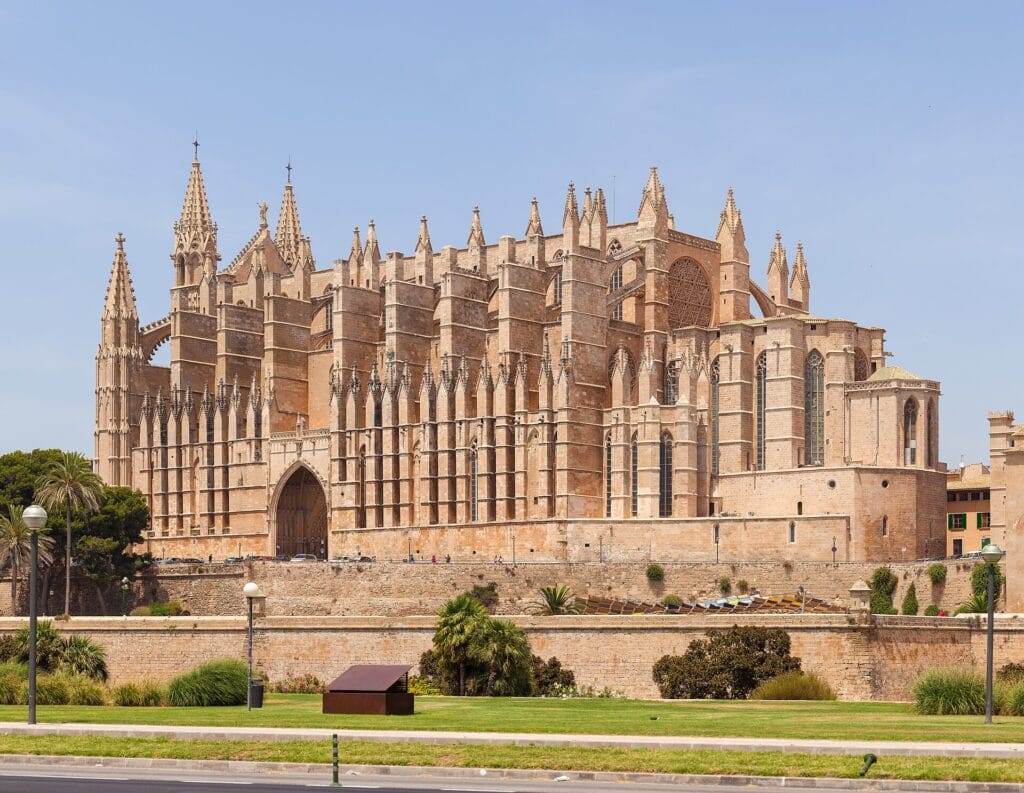
Kathedrale von Palma II

The period to plan around is high August. Palma highs sit near 31-32C, beaches fill by late morning, and accommodation runs at its dearest. It also overlaps Pollenca’s La Patrona fiesta, whose Moors and Christians mock battle on 2 August packs the north of the island. Heat plus full hotels makes it the least relaxed window.

Each season pays off differently:

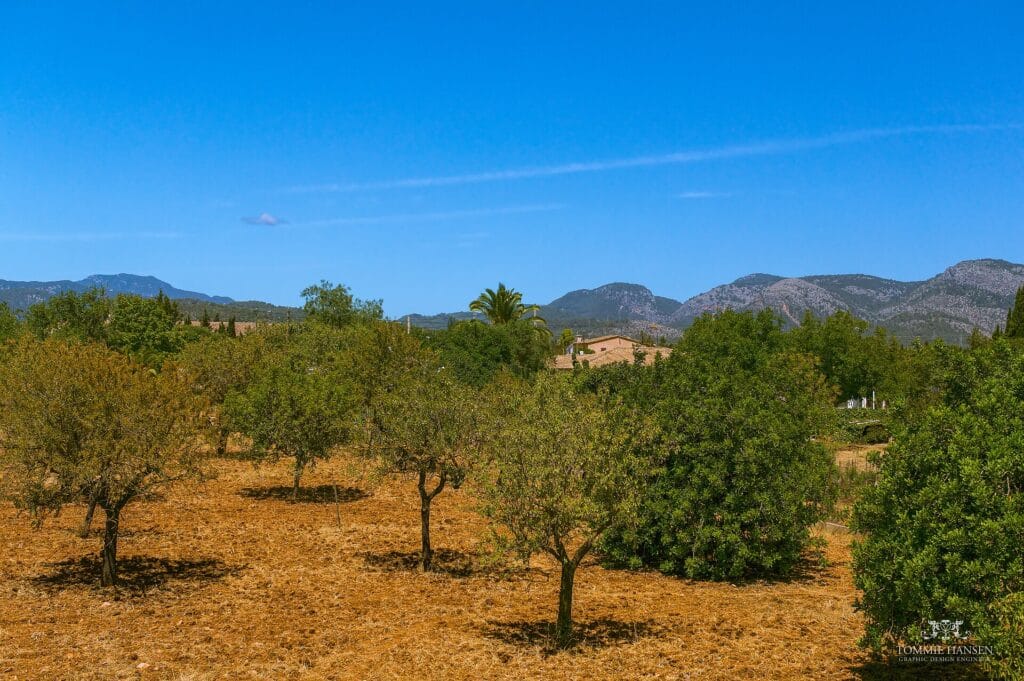
  • Spring (Apr-Jun): almond-blossom landscapes earlier on, cool walking weather, sea warming through June.
  • Autumn (Sep-Oct): warmest swimming of the year early on, with the sea cooling toward around 19-22C by mid-October.
  • Winter (Dec-Feb): cheapest rates and Palma’s Sant Sebastia bonfires around 19-21 January, but cooler, quieter resorts.

Frequently Asked Questions

What is the best month to visit Mallorca?

The single best time to visit Mallorca depends on your priorities. For ideal weather plus reasonable crowds, target shoulder seasons (typically April-May and September-October). Peak season is summer (June-August) (busiest, highest prices). Off-season is winter (December-February) (cheapest, least crowded — but check what’s open).

What’s the cheapest time to visit Mallorca?

The cheapest time to visit Mallorca is during the off-season: winter (December-February). Flights and hotels drop 30-50%. Trade-offs: some sights/restaurants may close, weather may be less favorable, fewer events.

When should I avoid Mallorca?

Avoid Mallorca during peak season (summer (June-August)) if you want fewer crowds and lower prices. Also consider local school holidays (when domestic travel surges) and weather extremes (varies by region during peak heat).

What is the weather like in Mallorca?

Check regional climate maps for the specific area you plan to visit. Summer highs and winter lows vary by altitude, coast vs. inland, and exact location within Mallorca. Always check the specific city forecast a week before departure.

Are there major festivals in Mallorca?

Yes — Mallorca hosts notable events including: Sant Antoni (bonfires & demons) (mid-Jan), Sant Sebastià (Palma patron festival) (Jan), Nit de Foc / Sant Joan (late Jun), Moros i Cristians (Pollença) (early Aug), Festa des Vermar (Binissalem) (late Sep). Major festivals can spike hotel prices 50-200% — book 3-6 months ahead if attending.

What should I pack for Mallorca?

Pack for the season you’re visiting and the climate zone. Summer in Mallorca: lightweight breathable clothes, sunscreen, hat, comfortable walking shoes. Winter: layers, waterproof jacket, warm accessories. Check the 10-day forecast 1-2 weeks before departure and adjust.

Mallorca weather & climate by month

Best months to visit: April, May, June, September, October, November. Mallorca’s warmest month is July (avg 33°C / 91°F), the coolest is January (low 7°C / 45°F). The wettest is September (78 mm) and the driest is February.

MonthAvg highAvg lowRainfallRainy days
January14°C / 58°F7°C / 45°F43 mm6
February17°C / 62°F8°C / 46°F31 mm3
March18°C / 64°F10°C / 50°F34 mm8
April20°C / 68°F12°C / 53°F59 mm9
May24°C / 76°F15°C / 59°F53 mm8
June29°C / 85°F20°C / 67°F23 mm5
July33°C / 91°F23°C / 73°F9 mm3
August32°C / 90°F23°C / 73°F25 mm5
September28°C / 83°F20°C / 68°F78 mm10
October24°C / 76°F17°C / 62°F56 mm8
November19°C / 66°F13°C / 55°F71 mm10
December17°C / 62°F10°C / 50°F27 mm6

Climate source: Open-Meteo ERA5 reanalysis (2019–2023). Compare destinations in the Best Time to Visit Index.

Power, Plugs & Voltage in Mallorca

  • Plug types: Type C (European Europlug (2-pin)); Type F (Schuko (German 2-pin + earth))
  • Voltage: 230 V
  • Frequency: 50 Hz
  • Driving side: they drive on the right (left-hand-drive vehicles)

Outlets here run at 230 V. Devices built only for 110–127 V (typical in the US, Canada and Japan) need a voltage converter — but phone and laptop chargers are almost always dual-voltage (check the label for “100–240V”) and just need a plug adapter.

Source: Wikipedia — Mains electricity by country (CC BY-SA). Confirm before travel.