

Last updated September 11, 2026 · Editorial policy
Quick verdict: Costa Rica is THE wildlife-with-kids destination — sloths + monkeys + sea turtles + volcanoes + zip-lining. Refined across 2 personal Costa Rica trips.
More: When to visit Costa Rica · Costa Rica travel guide
8 best family activities in Costa Rica
Manuel Antonio National Park
Ages 3+ | $18/adult
Beach + jungle combo. Sloths in trees + monkeys overhead + Pacific Ocean swimming. Most-loved kids destination.
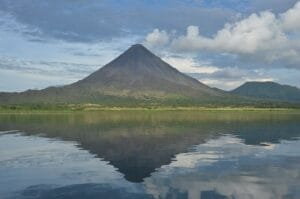
Arenal Volcano + Hot Springs
Continue planning your Costa Rica trip
Ages 5+ | $50-100/family
Hike around active volcano + soak in natural thermal pools. La Fortuna town is family-friendly base.
Zip-Lining in Monteverde
Ages 6+ | $50-100/person
World’s longest zip-lines through cloud forest. Multi-platform adventure for kids 6+.
Sea Turtle Watching (Tortuguero)
Ages 6+ | $50-150/family
Sea turtles nesting July-October. Boat through canals. Sloths + monkeys + crocodiles + turtles.
Coffee Farm Tour
Ages 6+ | $30-50/family
Hands-on coffee picking + processing. Kids 6+ learn farm-to-cup process. Includes tasting (kids skip).
White Water Rafting (Pacuare)
Ages 10+ | $80-200/family
Class III rapids. Older kids only. Most adrenaline family experience in Costa Rica.
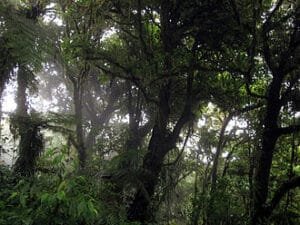
Cloud Forest Hanging Bridges
Ages 5+ | $30-50/family
Walk through tree canopy on suspension bridges. Monteverde region. Kids 5+ love the high-altitude jungle perspective.
Beach + Surfing in Tamarindo
Ages 6+ | $20-50 lesson
Calm beach for kids. Surfing schools for kids 6+. Family-friendly beach town.
Compare Costa Rica family tours →
Helpful Packzup guides
Where in Costa Rica works best with children, and why?
Match the region to the child’s age and to the transfer from the airport, because the transfer, not the destination, is what wrecks the first day.
Under five: fly into Liberia (LIR) and stay on the Guanacaste coast. Tamarindo is about an hour from that airport, the Pacific dry season runs roughly December to April, and days can be built around a pool and a calm beach with no further driving. Manuel Antonio is the other toddler-friendly base: about three hours from San Jose (SJO), but the park, the beach and the hotels sit within a few kilometres of one another, so the driving stops once you arrive.
Five to nine: La Fortuna and the Arenal area, about 2.5 to 3 hours from SJO. Hot springs and hanging bridges suit this age.
Six and up, with patience for transfers: Monteverde is about 3.5 hours from SJO on winding roads and sits in cool cloud forest, so pack layers. Tortuguero has no road access: it is roughly 2.5 hours by road from San Jose to the La Pavona dock, then about an hour by boat, longer at low tide, and the reward is canals full of wildlife and the July to October green turtle nesting season.
Older children and teens: the Caribbean coast around Puerto Viejo is about 4.5 hours from SJO via Route 32 and is at its driest in September and October, the opposite of the Pacific. Whatever the region, treat every drive time here as a no-traffic estimate and add an hour.
How do you get around Costa Rica with kids?
Drive in daylight, fit the legally required child seats, and fly or take a shuttle for any leg over four hours.
- Car seats are law. Children under 12 who are under 145 cm must ride in an approved restraint: rear-facing to about one year, a forward-facing seat to about four, a high-back booster to about six and a backless booster after that. Rental agencies supply seats; ask for a photo of the model before committing.
- Dark arrives early. Sunset is between about 5:15 and 6:00 pm all year and darkness follows quickly. Unlit rural roads are no place for a first-time driver with children aboard, so aim to reach each base by mid-afternoon.
- Short distances can be long drives. La Fortuna and Monteverde are only about 40 km apart in a straight line, yet the road route around Lake Arenal takes three to 3.5 hours. The jeep-boat-jeep transfer across the lake takes about 2.5 to 3 hours including a 45-minute boat ride and is far easier on small passengers.
- Route 32 closes. The highway from San Jose to the Caribbean through Braulio Carrillo National Park is landslide-prone in the rainy season; it closed at least three times in August 2026. Build a spare half-day into any Caribbean plan.
- Fly the long legs. Sansa’s domestic network is built around SJO: San Jose to Liberia is around 50 minutes and to Quepos, for Manuel Antonio, around 30 minutes. For Guanacaste, flying into LIR beats the roughly 4.5-hour drive from SJO to Tamarindo.
What health and safety issues do families underestimate?
The two real dangers to children in Costa Rica are the sun and the sea, and both get less attention than the wildlife.
- Sun. The UV index runs at extreme levels, roughly 11 to 16, for most of the year and peaks from January to April. Shade between about 10 am and 2 pm, hats and UPF shirts matter more than sunscreen alone; reapply after every swim.
- The sea. Rip currents cause more than 80 percent of Costa Rica’s drownings, over 50 deaths a year, and most beaches have no lifeguards. Swim only where lifeguards are posted, keep children waist-deep, and teach the rule: float rather than fight the current, then swim parallel to shore.
- Drinking water. Tap water is treated and tested by the national utility and is fine in the Central Valley and main tourist towns such as La Fortuna and Manuel Antonio. In remote rural areas use bottled water or a filter bottle.
- Mosquitoes. Dengue cases rise every rainy season. Use a CDC-recognised repellent, DEET or picaridin for adults and older children, and note that oil of lemon eucalyptus is not for children under three.
- Medical access. Dial 911; bilingual call-takers are available, though not on every call. The largest private hospitals are in the San Jose area, Hospital CIMA in Escazu and Hospital Clinica Biblica in the centre, and near Liberia, where CIMA Guanacaste sits a short drive from LIR. From La Fortuna, Monteverde, Manuel Antonio and the Caribbean coast they are two to four hours away, so travel insurance with medical evacuation is not optional. Carry children’s fever medicine and rehydration salts.
- Paperwork. Arrivals from yellow-fever-risk countries, including Brazil, Colombia and Peru, must show a vaccination certificate that is at least 10 days old.
| Base | Airport | Approximate transfer | Suits |
|---|---|---|---|
| Tamarindo and the Guanacaste coast | LIR | About 1 hour | All ages |
| Manuel Antonio | SJO | About 3 hours | Ages 3+ |
| La Fortuna / Arenal | SJO | About 2.5 to 3 hours | Ages 5+ |
| Monteverde | SJO | About 3.5 hours | Ages 6+ |
| Tortuguero | SJO | About 2.5 hours by road plus 1 hour by boat | Ages 6+ |
| Puerto Viejo (Caribbean) | SJO | About 4.5 hours via Route 32 | Ages 8+ |
Why the rental car, not the parks, blows the family budget
The number that wrecks family budgets in Costa Rica isn’t park tickets, it’s the rental car. By law every driver must carry third-party liability insurance (TPL), and the catch is that almost no online booking site includes it in the headline price. So that $12-a-day economy car you reserved suddenly costs $15 more per day for a sedan, or about $20 for an SUV, when the agent adds the mandatory cover at the SJO counter. For a two-week family trip that’s an unbudgeted $200-300. Either confirm the all-in price in writing before you fly, or skip the car entirely.
For families staying in one or two spots, shared shuttles often beat driving once you count fuel, tolls and that insurance. Interbus and similar operators run SJO to La Fortuna for around $65 per adult and $32 per child, door to door. And buy national park entry ahead through the official SINAC site (serviciosenlinea.sinac.go.cr), bookable up to 60 days out. Manuel Antonio in particular requires a reservation, and showing up without one with tired kids in tow is a guaranteed bad morning.
Frequently asked questions
Is Costa Rica safe for kids?
Best Costa Rica age for kids?
Best Costa Rica family destination?
Costa Rica wildlife safety?
Costa Rica visa for families?
Updated 2026. Some links on Packzup are affiliate links.
You Might Also Love

Written by
John Morrison is the founder and lead travel writer at Packzup. Over the past decade he has explored destinations across Africa, the Americas, Asia, Europe, the Middle East, and Oceania — always self-funded, never on a press trip.
Working out the money? Check whether your destination is a cash or card country, how much to bring, and how to dodge ATM fees and the DCC trap.
